
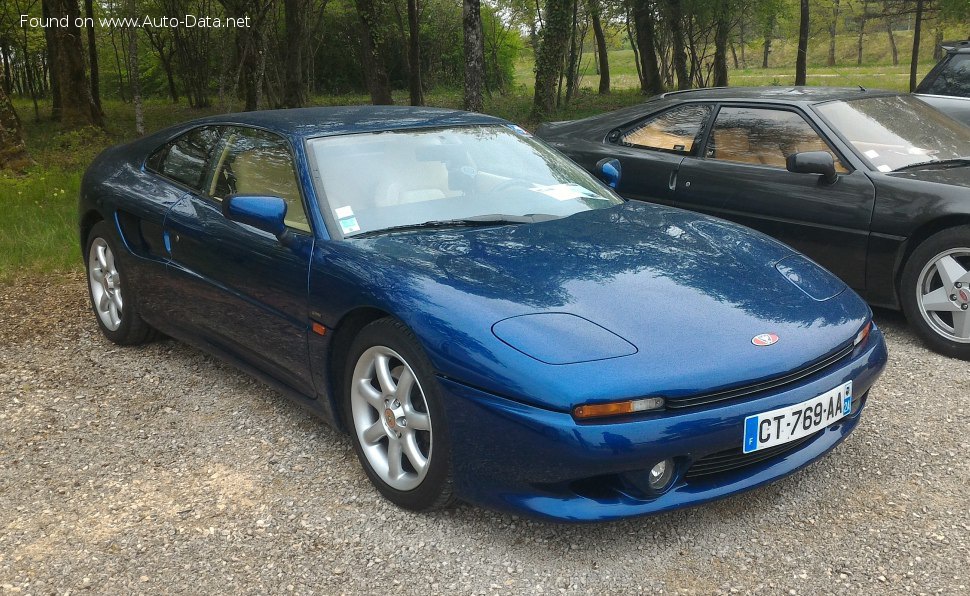
The Venturi 300 Atlantiq, specifically the 3.0 i V6 variant producing 282 horsepower, was a limited-production, high-performance coupe manufactured by the French automaker Venturi between 1996 and 1998. Positioned as the flagship model within the 300 range, it represented the pinnacle of Venturi’s engineering capabilities during that period. The Atlantiq was built on the 300 platform, sharing its core structure but distinguished by its more powerful engine, refined interior, and exclusive styling cues. It aimed to compete with established grand tourers from manufacturers like Porsche and Ferrari, offering a unique blend of French design and robust performance.
Venturi 300 3.0 i V6 Atlantiq: An Overview
The Venturi 300 Atlantiq was conceived as a successor to the earlier Venturi Atlantique, building upon its mid-engine, rear-wheel-drive layout. The “300” designation referred to the intended power output in metric horsepower (though the final production version exceeded this target). The Atlantiq was a relatively rare vehicle, with only a small number produced during its short production run, making it a sought-after collector’s item today. It represented a final attempt by Venturi to establish itself as a serious player in the high-end sports car market before the company faced financial difficulties.
Powertrain & Engine Architecture
The heart of the Venturi 300 3.0 i V6 Atlantiq is its 2,975 cc (181.55 cubic inches) 60-degree V6 engine. This engine, designated as a 3.0 i, featured a longitudinal mounting within the chassis. It produced 282 hp at 5,300 rpm and 420 Nm (309.78 lb-ft) of torque at 2,500 rpm. The engine employed multi-port fuel injection and a single turbocharger to achieve its impressive output. The valvetrain utilized a Double Overhead Camshaft (DOHC) configuration with two valves per cylinder. The compression ratio was set at 7.3:1. Engine oil capacity was 10.5 liters (11.1 US quarts), and the cooling system held 20 liters (21.13 US quarts) of coolant.
The engine was mated to a 5-speed manual transmission, delivering power to the rear wheels. This transmission was chosen to provide a direct and engaging driving experience, befitting the car’s sporting intentions. The drivetrain architecture was a traditional rear-wheel-drive setup, prioritizing handling balance and driver control.
Driving Characteristics
The Venturi 300 3.0 i V6 Atlantiq offered a distinctly sporty driving experience. Acceleration from 0 to 100 km/h (0-62 mph) was achieved in 5.3 seconds, while 0-60 mph took approximately 5 seconds. The car boasted a top speed of 280 km/h (173.98 mph). The turbocharger provided a noticeable boost in power, delivering strong acceleration throughout the rev range. The rear-wheel-drive configuration and relatively lightweight construction (1,250 kg / 2,755.78 lbs kerb weight) contributed to agile handling and responsive steering. The weight-to-power ratio of 4.4 kg/hp further enhanced the car’s performance capabilities. Compared to potential future, less powerful Venturi models, the Atlantiq offered a significantly more exhilarating driving experience, prioritizing performance over fuel efficiency.
Equipment & Trim Levels
The Venturi 300 3.0 i V6 Atlantiq was positioned as a premium offering, and its standard equipment reflected this. The interior featured leather upholstery, power windows, and central locking. Air conditioning was standard. The dashboard layout was driver-focused, with clearly arranged gauges and controls. Optional extras included upgraded audio systems, and bespoke interior trim options. The car’s two-seat configuration emphasized its sporting nature. While not lavishly equipped by modern standards, the Atlantiq prioritized a focused and driver-centric experience over extensive luxury features.
Chassis & Braking
The Venturi 300 3.0 i V6 Atlantiq utilized a double wishbone suspension setup at the front and a spring strut arrangement at the rear. This suspension configuration was designed to provide a balance between ride comfort and handling precision. The car was equipped with ventilated disc brakes on all four wheels, providing ample stopping power. An Anti-lock Braking System (ABS) was included as standard, enhancing safety and control. The steering system was a rack and pinion type with hydraulic power assistance, offering precise and responsive steering feel. The car rode on 205/50 ZR17 tires at the front and 255/40 ZR17 tires at the rear, providing excellent grip and stability.
Market Reception & Comparison
The Venturi 300 3.0 i V6 Atlantiq received generally positive reviews from automotive critics. It was praised for its strong performance, engaging handling, and distinctive styling. However, its limited production run and relatively high price point restricted its market appeal. Compared to other models in the Venturi lineup, the Atlantiq represented the top-tier offering, significantly outperforming the base 300 models in terms of power and performance. Fuel economy was a notable drawback, with combined fuel consumption of 13.8 l/100 km (17 US mpg), reflecting the car’s high-performance engine. Reliability was generally considered acceptable, although the car’s complex engine and limited production volume meant that parts availability could be an issue.
Technical Specifications
| Brand | Venturi |
| Model | 300 |
| Generation | 300 |
| Type (Engine) | 3.0 i V6 Atlantiq (282 Hp) |
| Start of production | 1996 |
| End of production | 1998 |
| Body type | Coupe |
| Seats | 2 |
| Doors | 2 |
| Fuel consumption (urban) | 19 l/100 km (12.4 US mpg) |
| Fuel consumption (extra urban) | 9.5 l/100 km (24.8 US mpg) |
| Fuel consumption (combined) | 13.8 l/100 km (17 US mpg) |
| Fuel Type | Petrol (Gasoline) |
| Acceleration 0 – 100 km/h | 5.3 sec |
| Acceleration 0 – 62 mph | 5.3 sec |
| Acceleration 0 – 60 mph | 5 sec |
| Maximum speed | 280 km/h (173.98 mph) |
| Weight-to-power ratio | 4.4 kg/Hp |
| Weight-to-torque ratio | 3 kg/Nm |
| Power | 282 Hp @ 5300 rpm |
| Torque | 420 Nm @ 2500 rpm (309.78 lb.-ft. @ 2500 rpm) |
| Engine layout | Middle, Longitudinal |
| Engine displacement | 2975 cm3 (181.55 cu. in.) |
| Number of cylinders | 6 |
| Engine configuration | V-engine |
| Cylinder Bore | 93 mm (3.66 in.) |
| Piston Stroke | 73 mm (2.87 in.) |
| Compression ratio | 7.3:1 |
| Number of valves per cylinder | 2 |
| Fuel injection system | Multi-port manifold injection |
| Engine aspiration | Turbocharger |
| Valvetrain | DOHC |
| Engine oil capacity | 10.5 l (11.1 US qt | 9.24 UK qt) |
| Coolant | 20 l (21.13 US qt | 17.6 UK qt) |
| Kerb Weight | 1250 kg (2755.78 lbs.) |
| Max. weight | 1450 kg (3196.7 lbs.) |
| Max load | 200 kg (440.92 lbs.) |
| Fuel tank capacity | 90 l (23.78 US gal | 19.8 UK gal) |
| Length | 4240 mm (166.93 in.) |
| Width | 1840 mm (72.44 in.) |
| Height | 1180 mm (46.46 in.) |
| Wheelbase | 2500 mm (98.43 in.) |
| Front track | 1500 mm (59.06 in.) |
| Rear track | 1590 mm (62.6 in.) |
| Drivetrain Architecture | Rear wheel drive |
| Number of gears | 5 |
| Gearbox type | Manual transmission |
Legacy
The Venturi 300 3.0 i V6 Atlantiq remains a relatively obscure but highly regarded sports car. Its limited production numbers and unique character have made it a desirable collectible for enthusiasts. The engine, while complex, has proven to be reasonably durable when properly maintained. However, sourcing parts can be challenging due to the car’s rarity. In the used car market, the Atlantiq commands a premium price, reflecting its exclusivity and performance potential. It stands as a testament to Venturi’s ambition and engineering prowess during a challenging period for the company.
