
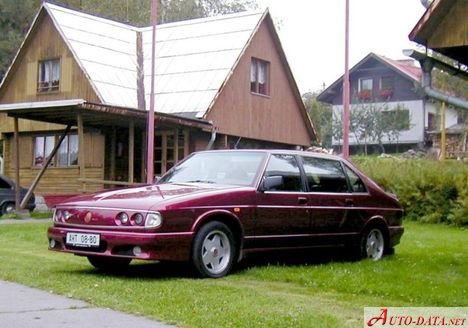
The Tatra T700 3.5 i V8 16V was a luxury sedan produced by the Czech manufacturer Tatra between 1996 and 1999. Representing the final evolution of the T700 model line, it was positioned as the flagship of the Tatra range, offering a blend of traditional Tatra engineering with more modern appointments. The T700, and specifically this 3.5 i V8 variant, was built upon the foundations of the earlier T603, continuing Tatra’s long history of rear-engined, air-cooled vehicles. Production numbers were limited, reflecting the niche market and the company’s financial challenges during this period.
Tatra T700 3.5 i V8 16V: An Overview
The T700 series was intended to replace the aging T603, offering improved performance, comfort, and safety. The 3.5 i V8 16V represented the highest specification available, boasting a more powerful engine and refined features compared to earlier T700 models. It was a relatively short-lived production run, with only a small number of these vehicles manufactured before Tatra ceased passenger car production. The car’s unique design and engineering, particularly its rear-engine layout and air-cooled system, set it apart from contemporary vehicles.
Powertrain & Engine Architecture
The heart of the T700 3.5 i V8 16V is its 3.5-liter, naturally aspirated V8 engine. This engine, designated as a 3.5 i, produced 168 horsepower at 5200 rpm and 270 Nm (199.14 lb-ft) of torque at 3300 rpm. The engine featured multi-port fuel injection and a double overhead camshaft (DOHC) valvetrain, contributing to its improved performance over previous Tatra engines. The engine’s layout was longitudinal, positioned at the rear of the vehicle. The air-cooled design, a hallmark of Tatra engineering, eliminated the need for a traditional radiator and water pump, simplifying the cooling system and reducing weight. However, it also presented challenges in terms of maintaining consistent engine temperatures and managing noise levels.
The T700 3.5 i V8 16V was exclusively offered with a 5-speed manual transmission. This transmission was chosen to complement the engine’s power output and provide a more engaging driving experience. The rear-wheel drive configuration was consistent with Tatra’s historical engineering approach.
Driving Characteristics
The driving experience in the T700 3.5 i V8 16V was unique, largely due to its rear-engine layout and air-cooled design. The rearward weight distribution contributed to a distinctive handling balance, requiring a degree of driver adaptation. Acceleration from 0 to 100 km/h (0-62 mph) took approximately 11.4 seconds, while 0 to 60 mph was achieved in around 10.8 seconds. The top speed was rated at 190 km/h (118.06 mph). While not exceptionally quick by modern standards, the T700 offered a smooth and refined driving experience, particularly on well-maintained roads. The engine delivered a relatively flat torque curve, providing usable power throughout the rev range. The manual transmission allowed for precise control, but required a firm hand due to the engine’s characteristics.
Equipment & Trim Levels
The T700 3.5 i V8 16V was equipped with a relatively high level of standard features for its time, reflecting its position as Tatra’s flagship model. The interior typically featured comfortable seating for four passengers, upholstered in high-quality materials. The dashboard layout was functional and well-designed, with clear instrumentation. Standard equipment included power steering, ventilated disc brakes on all four wheels, and a comprehensive suite of gauges. Optional extras could include upgraded audio systems, leather upholstery, and various cosmetic enhancements. The car’s interior was designed to provide a luxurious and comfortable environment for both driver and passengers.
Chassis & Braking
The T700 3.5 i V8 16V utilized a robust chassis designed to handle the stresses of its rear-engine layout. The front suspension employed a spring-loaded rack system, while the rear suspension featured an inclined lever design. This suspension setup aimed to provide a balance between ride comfort and handling stability. The braking system consisted of ventilated disc brakes on all four wheels, providing ample stopping power. Hydraulic power steering was standard, making the car easier to maneuver at low speeds. The car rode on 205/65 R15 tires, which provided a good compromise between grip and ride comfort.
Market Reception & Comparison
The Tatra T700 3.5 i V8 16V received limited attention from automotive critics due to its small production numbers and limited availability outside of Central Europe. Reviews generally praised the car’s unique engineering, comfortable ride, and distinctive styling. However, the air-cooled engine and rear-engine layout were sometimes criticized for their complexity and potential maintenance issues. Compared to other luxury sedans of the era, the T700 offered a unique and unconventional alternative. Its fuel economy was comparable to other V8-powered vehicles of the time, but its maintenance costs were potentially higher due to the specialized nature of its engineering. Compared to earlier T700 models, the 3.5 i V8 16V offered a significant performance improvement, making it the most desirable variant in the range.
Technical Specifications
| Brand | Tatra |
| Model | T700 |
| Generation | T700 |
| Type (Engine) | 3.5 i V8 16V (168 Hp) |
| Start of production | 1996 year |
| End of production | 1999 year |
| Powertrain Architecture | Internal Combustion engine |
| Body type | Sedan |
| Seats | 4 |
| Doors | 4 |
| Fuel Type | Petrol (Gasoline) |
| Acceleration 0 – 100 km/h | 11.4 sec |
| Acceleration 0 – 62 mph | 11.4 sec |
| Acceleration 0 – 60 mph | 10.8 sec |
| Maximum speed | 190 km/h (118.06 mph) |
| Weight-to-power ratio | 10.8 kg/Hp, 92.8 Hp/tonne |
| Weight-to-torque ratio | 6.7 kg/Nm, 149.2 Nm/tonne |
| Power | 168 Hp @ 5200 rpm |
| Power per litre | 48.1 Hp/l |
| Torque | 270 Nm @ 3300 rpm (199.14 lb.-ft. @ 3300 rpm) |
| Engine layout | Rear, Longitudinal |
| Engine displacement | 3495 cm3 (213.28 cu. in.) |
| Number of cylinders | 8 |
| Engine configuration | V-engine |
| Cylinder Bore | 85 mm (3.35 in.) |
| Piston Stroke | 77 mm (3.03 in.) |
| Compression ratio | 9.3:1 |
| Number of valves per cylinder | 2 |
| Fuel injection system | Multi-port manifold injection |
| Engine aspiration | Naturally aspirated engine |
| Valvetrain | DOHC |
| Kerb Weight | 1810 kg (3990.37 lbs.) |
| Max. weight | 2260 kg (4982.45 lbs.) |
| Max load | 450 kg (992.08 lbs.) |
| Trunk (boot) space – minimum | 430 l (15.19 cu. ft.) |
| Fuel tank capacity | 72 l (19.02 US gal | 15.84 UK gal) |
| Length | 5135 mm (202.17 in.) |
| Width | 1800 mm (70.87 in.) |
| Height | 1500 mm (59.06 in.) |
| Wheelbase | 3130 mm (123.23 in.) |
| Front track | 1530 mm (60.24 in.) |
| Rear (Back) track | 1530 mm (60.24 in.) |
| Drivetrain Architecture | The Internal combustion engine (ICE) drives the rear wheels of the vehicle. |
| Drive wheel | Rear wheel drive |
| Number of gears and type of gearbox | 5 gears, manual transmission |
| Front suspension | Spring-loaded rack |
| Rear suspension | Inclined Lever |
| Front brakes | Ventilated discs |
| Rear brakes | Ventilated discs |
| Power steering | Hydraulic Steering |
| Tires size | 205/65 R15 |
Legacy
The Tatra T700 3.5 i V8 16V represents a fascinating chapter in automotive history. While production numbers were low, the car remains a sought-after collectible among enthusiasts who appreciate its unique engineering and distinctive styling. The air-cooled V8 engine, while complex, is known for its durability when properly maintained. Today, the T700 3.5 i V8 16V is a rare sight on the road, but it continues to be celebrated as a testament to Tatra’s innovative spirit and commitment to automotive excellence. The car’s long-term reliability is generally good, provided that regular maintenance is performed by a mechanic familiar with Tatra’s unique engineering. In the used car market, prices for well-maintained examples can be substantial, reflecting the car’s rarity and historical significance.
