
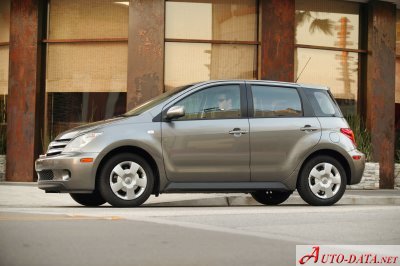
The Scion xA 1.5 i 16V (108 hp) Automatic, produced between 2003 and 2006, was the entry-level model in Scion’s initial lineup. Positioned as an affordable and practical subcompact hatchback, the xA aimed to attract a younger demographic with its distinctive styling and value-oriented pricing. It was built on Toyota’s MC platform (internally known as the XP10 series), shared with the Toyota Echo. The xA represented Scion’s attempt to establish a unique brand identity separate from Toyota, focusing on customization and a more urban lifestyle.
Powertrain & Engine Architecture
The heart of the Scion xA 1.5 i was the 1NZ-FE 1.5-liter inline-four cylinder gasoline engine. This engine, a member of Toyota’s NZ engine family, was known for its reliability and fuel efficiency, rather than outright performance. The 1NZ-FE featured a cast iron block and an aluminum cylinder head, incorporating a double overhead camshaft (DOHC) valvetrain with four valves per cylinder. This configuration contributed to its relatively smooth operation and decent power output for its displacement.
Fuel delivery was handled by a multi-port fuel injection system, precisely metering fuel into each intake port. The engine’s compression ratio was 10.5:1, a balance between efficiency and performance. The engine produced 108 horsepower at 6000 rpm and 105 Nm (77.44 lb-ft) of torque at 4200 rpm. The engine was transversely mounted in the front of the vehicle, driving the front wheels.
Paired with the 1NZ-FE engine was a four-speed automatic transmission. This transmission was a conventional hydraulic automatic, chosen for its simplicity and cost-effectiveness. While not offering the responsiveness of a manual transmission or the efficiency of more modern automatics, it provided smooth and predictable shifts, making it well-suited for urban driving. The automatic transmission contributed to the xA’s ease of use and appeal to a broader range of drivers.
Engine Code Specifics
The 1NZ-FE engine code designates a specific iteration of the NZ engine family. It was a relatively common engine in Toyota and Scion vehicles of the early 2000s, benefitting from Toyota’s extensive manufacturing experience and quality control. The engine was designed to meet increasingly stringent emissions standards, incorporating features like a catalytic converter and electronic fuel injection. Regular maintenance, including oil changes and timing belt replacements (typically around 90,000 miles), were crucial for ensuring the engine’s longevity.
Driving Characteristics
The Scion xA 1.5 i Automatic was not designed for spirited driving. Its 108 horsepower and four-speed automatic transmission resulted in modest acceleration. The focus was on fuel economy and ease of driving in urban environments. The automatic transmission’s gear ratios were optimized for low-speed drivability and fuel efficiency, rather than maximizing performance. The xA felt adequate for merging onto highways, but overtaking maneuvers required careful planning.
Compared to a manual transmission-equipped xA, the automatic version offered less driver engagement and slightly reduced fuel economy. However, it provided a more relaxed driving experience, particularly in stop-and-go traffic. The automatic transmission’s shift points were generally smooth, but could sometimes feel hesitant during quick acceleration. The xA’s relatively light weight (1061 kg / 2339.1 lbs) helped to mitigate the effects of its modest power output.
Equipment & Trim Levels
The Scion xA 1.5 i Automatic was relatively sparsely equipped, reflecting its entry-level positioning. Standard features included air conditioning, power windows and locks, and an AM/FM stereo with a CD player. The interior featured cloth upholstery and a simple, functional dashboard layout. Safety features included dual front airbags and anti-lock brakes (ABS).
Optional extras were limited but included features like a sunroof, upgraded audio systems, and alloy wheels. Scion also offered a range of aftermarket accessories, allowing owners to personalize their xA. The xA’s interior was known for its surprisingly spaciousness for a subcompact hatchback, offering ample headroom and legroom for both front and rear passengers. The rear seats could also be folded down to increase cargo capacity.
Chassis & Braking
The Scion xA utilized a front-wheel-drive layout with a simple suspension system. The front suspension consisted of a MacPherson strut setup, while the rear suspension employed a torsion beam. This configuration provided a comfortable ride quality, but did not offer particularly sporty handling characteristics. The torsion beam rear suspension was a cost-saving measure, common in vehicles of this class.
Braking duties were handled by ventilated discs at the front and drum brakes at the rear. The ABS system helped to prevent wheel lockup during hard braking, enhancing safety. The xA’s steering was a rack-and-pinion system, providing reasonably precise steering feel. The vehicle rode on 185/60 R15 tires mounted on 5.5J x 15 inch steel or alloy wheels.
Market Reception & Comparison
The Scion xA received mixed reviews from automotive critics. It was praised for its affordability, fuel efficiency, and spacious interior. However, it was criticized for its lack of power and somewhat bland styling. Compared to other subcompact hatchbacks of the time, such as the Honda Fit and Toyota Echo, the xA offered a competitive price point but lacked the refinement and performance of some of its rivals.
In terms of fuel economy, the xA achieved approximately 30.9 US mpg in the city and 37.9 US mpg on the highway. Its reliability was generally good, benefiting from Toyota’s reputation for building durable vehicles. However, some owners reported issues with the automatic transmission over the long term. The xA’s target audience was young, urban drivers seeking an affordable and practical vehicle for daily commuting.
Technical Specifications
| Engine Model/Code | 1NZ-FE |
| Engine Displacement | 1496 cm3 (91.29 cu. in.) |
| Number of Cylinders | 4, Inline |
| Cylinder Bore | 75 mm (2.95 in.) |
| Piston Stroke | 84.7 mm (3.33 in.) |
| Compression Ratio | 10.5:1 |
| Valvetrain | DOHC, 4 valves per cylinder |
| Fuel Injection | Multi-port manifold injection |
| Maximum Power | 108 hp @ 6000 rpm |
| Maximum Torque | 105 Nm (77.44 lb-ft) @ 4200 rpm |
| Engine Oil Capacity | 3.7 l (3.91 US qt | 3.26 UK qt) |
| Kerb Weight | 1061 kg (2339.1 lbs) |
| Fuel Tank Capacity | 45 l (11.89 US gal | 9.9 UK gal) |
| Length | 3914 mm (154.09 in.) |
| Width | 1694 mm (66.69 in.) |
| Height | 1529 mm (60.2 in.) |
| Wheelbase | 2370 mm (93.31 in.) |
| Transmission | 4-speed automatic |
| Drive Wheels | Front Wheel Drive |
| Front Brakes | Ventilated Discs |
| Rear Brakes | Drum |
| Tire Size | 185/60 R15 |
Legacy
The Scion xA, particularly the 1.5 i Automatic variant, has developed a reputation for being a reliable and affordable used car. The 1NZ-FE engine is known for its durability, and with proper maintenance, can last for many years. However, the automatic transmission can be a potential weak point, and should be inspected carefully before purchasing a used xA. Today, the xA is often seen as a practical and economical choice for first-time car buyers or those seeking a simple and reliable commuter vehicle. Its quirky styling has also gained a cult following among some enthusiasts. While not a performance car, the xA’s affordability and dependability have ensured its continued presence on roads today.
