
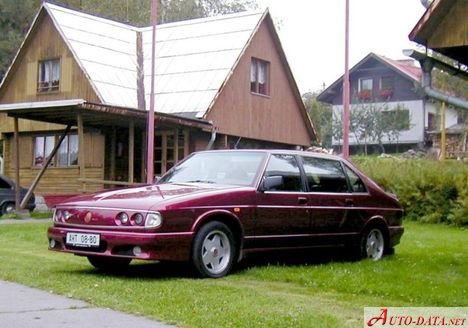
The Tatra T700 3.5 i V8 16V, produced between 1996 and 1999, represents a significant, though ultimately short-lived, chapter in the storied history of the Czech automaker Tatra. This model was part of the T700 series, a luxury sedan intended to replace the aging T603. The 3.5 i V8 16V variant occupied the top-tier position within the T700 lineup, offering the most powerful engine option and a higher level of refinement compared to the lower-specification models. It was built on the foundation of Tatra’s long-standing engineering principles, emphasizing a rear-mounted, air-cooled V8 engine and a robust, body-on-frame construction.
Tatra T700 3.5 i V8 16V: An Overview
The T700 was Tatra’s attempt to modernize its image and compete in the luxury car segment. However, it faced challenges including a high price point, limited production numbers, and the changing automotive landscape of the late 1990s. The 3.5 i V8 16V, with its 200 horsepower engine, was designed to appeal to buyers seeking a unique and powerful grand tourer. Despite its limited production run, the T700 remains a collectible vehicle, appreciated for its distinctive design and engineering.
Powertrain & Engine Architecture
The heart of the T700 3.5 i V8 16V is its 3.5-liter, naturally aspirated V8 engine. Designated as a 3.5 i, this engine is a further development of the air-cooled V8 that Tatra had been perfecting for decades. The engine code is not widely documented, but it represents a significant upgrade over the engines found in earlier Tatra models. The engine features a 9.3:1 compression ratio and utilizes a dual overhead camshaft (DOHC) valvetrain with two valves per cylinder. Notably, despite the “i” designation, the engine employed a carburetor fuel injection system, a somewhat unusual choice for a vehicle of this class in the mid-1990s. This carburetor system, while maintaining the air-cooled design’s simplicity, contributed to the engine’s relatively lower fuel efficiency. The engine is mounted longitudinally in the rear of the vehicle, a hallmark of Tatra’s engineering philosophy. The engine produces 200 hp at 5750 rpm and 300 Nm (221.27 lb-ft) of torque at 4000 rpm. Power per liter is rated at 57.2 hp/l.
The T700 3.5 i V8 16V was exclusively offered with a 5-speed manual transmission. An automatic transmission was never offered on this high-performance variant. The rear-wheel drive configuration, combined with the engine’s torque characteristics, provided a unique driving experience.
Driving Characteristics
The driving experience of the T700 3.5 i V8 16V is distinctly different from that of contemporary front-engined sedans. The rear-mounted engine and rear-wheel drive configuration contribute to a noticeable weight bias at the rear, influencing handling characteristics. Acceleration from 0 to 100 km/h (0-62 mph) takes 10.8 seconds, while 0 to 60 mph is achieved in approximately 10.3 seconds. The top speed is rated at 190 km/h (118.06 mph). While these figures aren’t particularly impressive by modern standards, they were respectable for a large, luxury sedan of the era. The engine delivers a smooth power delivery, with peak torque available at 4000 rpm. The manual transmission allows for precise control, but requires a degree of driver involvement. The rear weight bias can make the car feel somewhat tail-heavy in corners, demanding a careful driving style.
Equipment & Trim Levels
The T700 3.5 i V8 16V was equipped with a relatively high level of standard features, befitting its position as the flagship model. The interior typically featured leather upholstery, wood trim, and power windows. Air conditioning was standard, as were central locking and power steering. The dashboard layout was functional and straightforward, reflecting the car’s overall design philosophy. Optional extras included a sunroof, upgraded audio system, and various customization options for the interior trim. The exterior was typically finished in a metallic paint color, and featured chrome accents.
Chassis & Braking
The T700 3.5 i V8 16V utilizes a traditional body-on-frame construction, providing a robust and durable chassis. The front suspension employs a spring-loaded rack system, while the rear suspension features an inclined lever design. This suspension setup was designed to provide a comfortable ride, while also maintaining reasonable handling characteristics. The braking system consists of ventilated discs on all four wheels, providing adequate stopping power. Hydraulic power steering is standard, making the car relatively easy to maneuver at low speeds. The vehicle rides on 205/65 R15V tires.
Market Reception & Comparison
The Tatra T700 3.5 i V8 16V received mixed reviews from automotive critics. While the engine was praised for its smoothness and power, the carburetor fuel injection system and the car’s overall design were seen as somewhat outdated. The high price point, combined with the limited availability of spare parts and service, also hindered its market success. Compared to other luxury sedans of the era, such as the Mercedes-Benz E-Class or the BMW 5 Series, the T700 offered a unique and unconventional alternative. However, it lacked the brand recognition and established reputation of its German competitors. Fuel consumption is rated at 12.5 l/100 km (18.8 US mpg, 22.6 UK mpg, 8 km/l).
Technical Specifications
| Brand | Tatra |
| Model | T700 |
| Generation | T700 |
| Type (Engine) | 3.5 i V8 16V (200 Hp) |
| Start of production | 1996 year |
| End of production | 1999 year |
| Powertrain Architecture | Internal Combustion engine |
| Body type | Sedan |
| Seats | 4 |
| Doors | 4 |
| Fuel consumption (economy) – combined | 12.5 l/100 km |
| Fuel Type | Petrol (Gasoline) |
| Acceleration 0 – 100 km/h | 10.8 sec |
| Acceleration 0 – 62 mph | 10.8 sec |
| Acceleration 0 – 60 mph | 10.3 sec |
| Maximum speed | 190 km/h (118.06 mph) |
| Weight-to-power ratio | 9.2 kg/Hp, 108.7 Hp/tonne |
| Weight-to-torque ratio | 6.1 kg/Nm, 163 Nm/tonne |
| Power | 200 Hp @ 5750 rpm |
| Power per litre | 57.2 Hp/l |
| Torque | 300 Nm @ 4000 rpm (221.27 lb.-ft. @ 4000 rpm) |
| Engine layout | Rear, Longitudinal |
| Engine displacement | 3495 cm3 (213.28 cu. in.) |
| Number of cylinders | 8 |
| Engine configuration | V-engine |
| Cylinder Bore | 85 mm (3.35 in.) |
| Piston Stroke | 77 mm (3.03 in.) |
| Compression ratio | 9.3:1 |
| Number of valves per cylinder | 2 |
| Fuel injection system | Carburettor |
| Engine aspiration | Naturally aspirated engine |
| Valvetrain | DOHC |
| Kerb Weight | 1840 kg (4056.51 lbs.) |
| Max. weight | 2250 kg (4960.4 lbs.) |
| Max load | 410 kg (903.9 lbs.) |
| Trunk (boot) space – minimum | 630 l (22.25 cu. ft.) |
| Fuel tank capacity | 80 l (21.13 US gal | 17.6 UK gal) |
| Length | 5135 mm (202.17 in.) |
| Width | 1800 mm (70.87 in.) |
| Height | 1440 mm (56.69 in.) |
| Wheelbase | 3130 mm (123.23 in.) |
| Front track | 1532 mm (60.31 in.) |
| Rear (Back) track | 1532 mm (60.31 in.) |
| Drivetrain Architecture | The Internal combustion engine (ICE) drives the rear wheels of the vehicle. |
| Drive wheel | Rear wheel drive |
| Number of gears and type of gearbox | 5 gears, manual transmission |
| Front suspension | Spring-loaded rack |
| Rear suspension | Inclined Lever |
| Front brakes | Ventilated discs |
| Rear brakes | Ventilated discs |
| Power steering | Hydraulic Steering |
| Tires size | 205/65 R15V |
Legacy
The Tatra T700 3.5 i V8 16V, while not a commercial success, remains a significant vehicle in Tatra’s history. Its unique engineering and distinctive design have earned it a dedicated following among collectors and enthusiasts. The air-cooled V8 engine, while somewhat archaic by modern standards, is known for its durability and reliability. However, sourcing parts for these vehicles can be challenging due to the limited production run. On the used car market, well-maintained examples of the T700 3.5 i V8 16V command a premium price, reflecting their rarity and historical significance. The car represents a final flourish of Tatra’s independent engineering spirit before the company faced financial difficulties and ultimately ceased independent production.
