
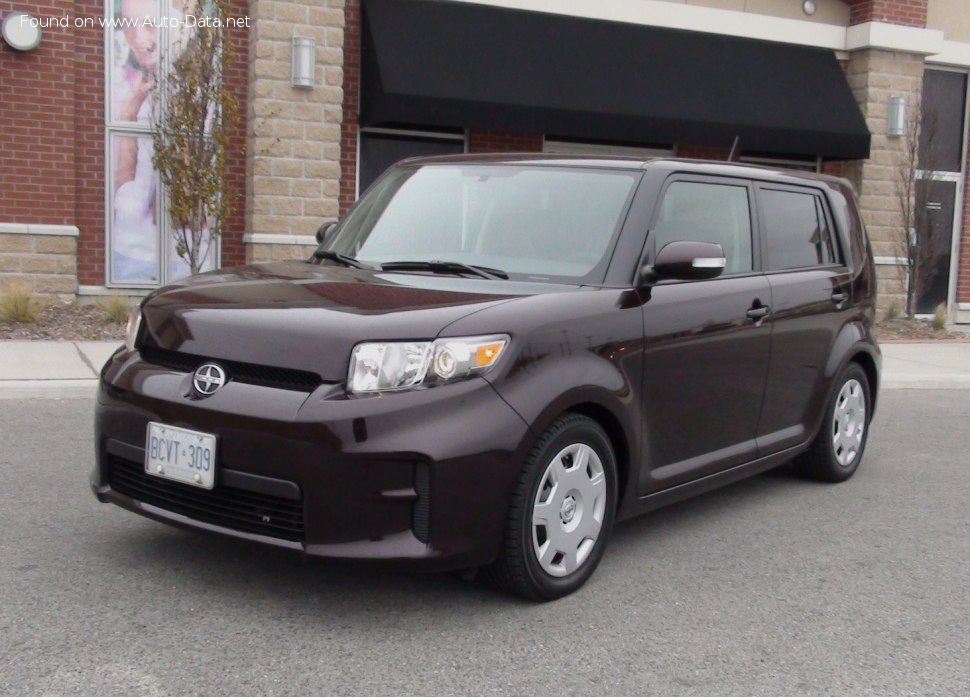
The Scion xB II 2.4i, produced from 2007 to 2011, represented a significant evolution of Scion’s distinctive boxy urban crossover. This second generation, internally designated as the XB2, continued the first generation’s appeal to a younger demographic seeking a unique and practical vehicle. The 2.4i variant, powered by the 2AZ-FE engine producing 158 horsepower, served as the primary and most widely available trim level throughout its production run. It occupied a middle ground within the xB II lineup, offering a balance between affordability and performance, appealing to buyers who desired more power than the earlier, smaller-displacement engines but didn’t require the potential modifications often associated with the aftermarket tuning scene.
The 2.4i Variant: Positioning and Overview
The Scion xB II 2.4i was positioned as the mainstream offering within the second-generation xB range. While Scion encouraged personalization and customization, the 2.4i came standard with a relatively well-equipped package, making it an attractive option for buyers seeking a ready-to-go vehicle. It directly superseded the earlier 1.5-liter engine option available in some markets and provided a substantial power increase. Compared to potential aftermarket modifications of the first-generation xB, the 2.4i offered a factory-backed, reliable performance upgrade. The xB II, in general, aimed to broaden the appeal of the original xB by offering increased interior space, improved refinement, and a more modern feature set.
Powertrain & Engine Architecture
At the heart of the Scion xB II 2.4i lies the 2AZ-FE inline-four cylinder engine. This 2.4-liter (2362 cc) engine is a naturally aspirated powerplant featuring a cast iron block and an aluminum cylinder head. It utilizes a double overhead camshaft (DOHC) valvetrain with four valves per cylinder, contributing to its respectable power output. The 2AZ-FE employs multi-port fuel injection, delivering fuel directly into the intake ports. The engine’s bore measures 88.5 mm (3.48 inches) and its stroke is 96 mm (3.78 inches), resulting in a compression ratio of 9.8:1. The engine oil capacity is 3.8 liters (4.02 US quarts / 3.34 UK quarts), and the recommended oil specification should be consulted in the vehicle’s owner’s manual.
The 2AZ-FE engine was widely used across various Toyota and Scion models during this period, known for its reliability and relatively straightforward maintenance. While not a particularly high-performance engine, it provided adequate power for the xB II’s intended purpose as an urban commuter and small family vehicle. The engine was typically paired with a four-speed automatic transmission, although a five-speed manual transmission was also available, catering to drivers who preferred more control over gear selection.
Driving Characteristics
The driving experience in the Scion xB II 2.4i is characterized by its comfortable ride and predictable handling. The 158 hp engine, while not exceptionally powerful, provides sufficient acceleration for everyday driving situations. The four-speed automatic transmission, while not the most modern, offers smooth shifts and contributes to the vehicle’s ease of use. The gear ratios are tuned for fuel efficiency and relaxed cruising, rather than outright performance. Compared to the five-speed manual version, the automatic transmission results in slightly slower acceleration times, but offers greater convenience, particularly in stop-and-go traffic. The xB II’s relatively high center of gravity and soft suspension tuning result in noticeable body roll during cornering, but this is generally acceptable for its intended use as a practical and comfortable urban vehicle.
Equipment & Trim Levels
The Scion xB II 2.4i came standard with a number of features designed to appeal to its target demographic. Standard equipment typically included air conditioning, power windows and locks, a CD player with MP3 compatibility, and an auxiliary audio input jack. Interior upholstery was typically cloth, with a variety of color options available. The dashboard featured a straightforward layout with easy-to-use controls. Optional extras included a premium audio system, alloy wheels, and a sunroof. Scion also offered a range of factory-installed accessories, allowing buyers to further personalize their vehicles. The xB II’s interior was praised for its spaciousness, particularly considering its compact exterior dimensions. The rear seats offered ample legroom and headroom, making it a comfortable vehicle for passengers.
Chassis & Braking
The Scion xB II utilizes a front-wheel-drive platform with a MacPherson strut front suspension and a torsion beam rear suspension. This suspension setup provides a comfortable ride, but is not particularly sporty. The front brakes are ventilated discs, while the rear brakes are solid discs. The braking system is assisted by an Anti-lock Braking System (ABS), enhancing safety and control during emergency braking situations. The xB II’s steering is power-assisted, providing light and easy steering feel. The vehicle’s relatively lightweight construction contributes to its nimble handling characteristics. The standard tire size is typically 195/60R15, although larger wheels and tires were available as optional extras.
Market Reception & Comparison
The Scion xB II 2.4i was generally well-received by automotive critics and consumers alike. It was praised for its unique styling, spacious interior, and comfortable ride. The 2.4-liter engine was considered a significant improvement over the earlier, smaller-displacement engines, providing adequate power for everyday driving. Fuel economy was generally considered to be average for its class, with EPA estimates ranging from 22 to 28 mpg depending on driving conditions. Compared to other small crossovers and hatchbacks of the time, the xB II offered a distinctive alternative with its boxy styling and spacious interior. Reliability was generally good, with few major issues reported. However, some owners reported minor issues with the automatic transmission and the air conditioning system.
Technical Specifications
| Engine Model/Code | 2AZ-FE |
| Engine Displacement | 2362 cm3 (144.14 cu. in.) |
| Number of Cylinders | 4, Inline |
| Cylinder Bore | 88.5 mm (3.48 in.) |
| Piston Stroke | 96 mm (3.78 in.) |
| Compression Ratio | 9.8:1 |
| Number of Valves per Cylinder | 4 |
| Fuel Injection System | Multi-port manifold injection |
| Engine Aspiration | Naturally aspirated |
| Maximum Power | 158 Hp @ 6000 rpm |
| Maximum Torque | 162 Nm @ 4000 rpm (119.49 lb.-ft. @ 4000 rpm) |
| Engine Oil Capacity | 3.8 l (4.02 US qt | 3.34 UK qt) |
| Fuel Tank Capacity | 55 l (14.53 US gal | 12.1 UK gal) |
| Length | 4250 mm (167.32 in.) |
| Width | 1760 mm (69.29 in.) |
| Height | 1600 mm (62.99 in.) |
| Wheelbase | 2600 mm (102.36 in.) |
| Drivetrain | Front wheel drive |
| Number of Gears | 4 (Automatic) or 5 (Manual) |
| Front Brakes | Ventilated discs |
| Rear Brakes | Disc |
Legacy
The Scion xB II 2.4i has maintained a relatively good reputation for reliability in the used car market. The 2AZ-FE engine is known for its durability, and with proper maintenance, can provide many years of service. The xB II’s unique styling continues to appeal to buyers seeking a distinctive and affordable vehicle. While the Scion brand was discontinued in 2016, the xB II remains a popular choice among enthusiasts and those looking for a practical and reliable urban crossover. Parts availability is generally good, as many components are shared with other Toyota and Scion models. The xB II 2.4i represents a significant chapter in Scion’s history, showcasing the brand’s commitment to individuality and affordability.

