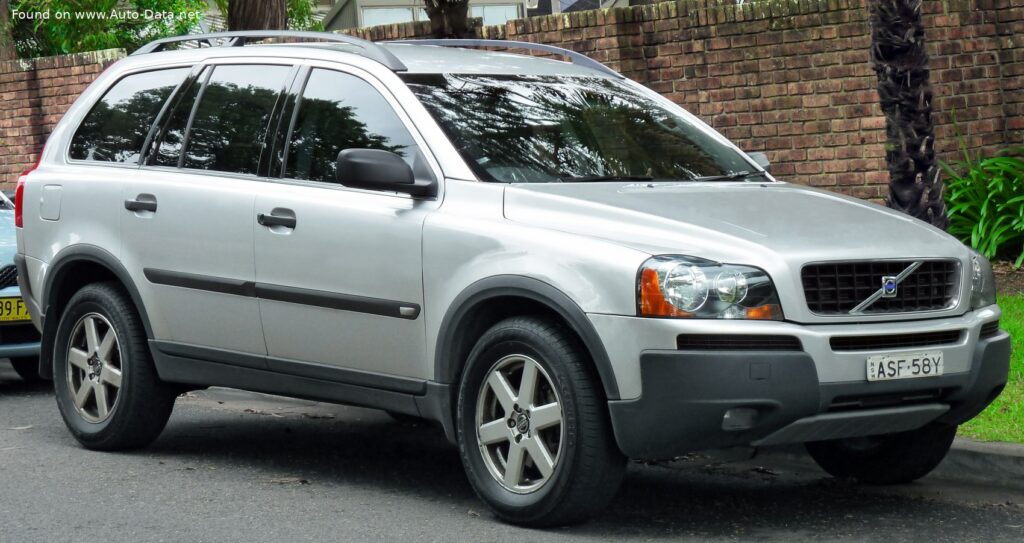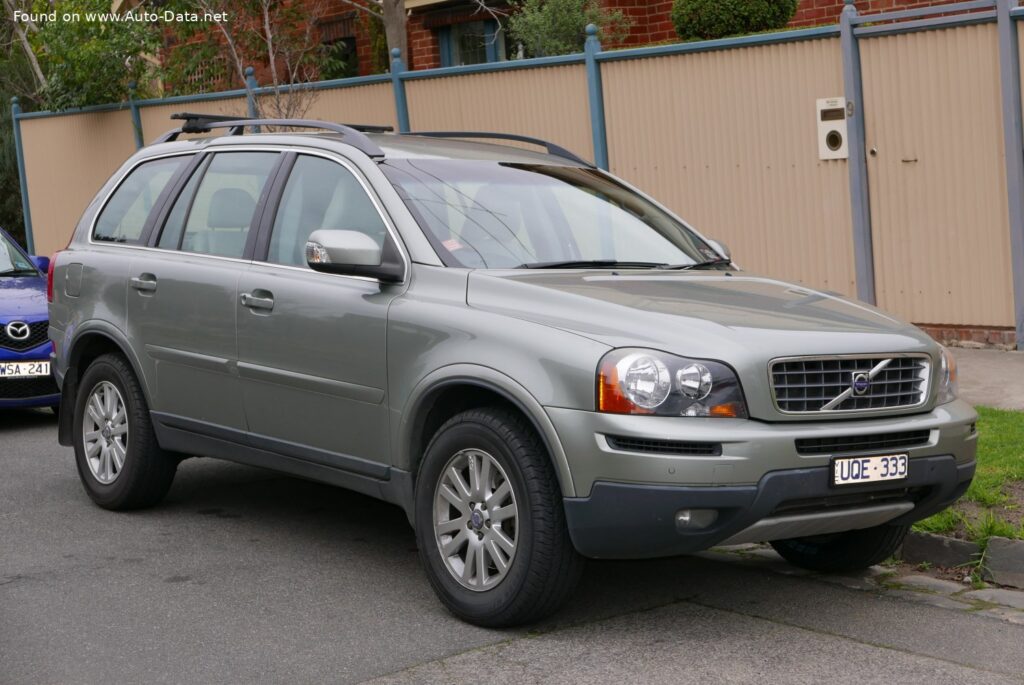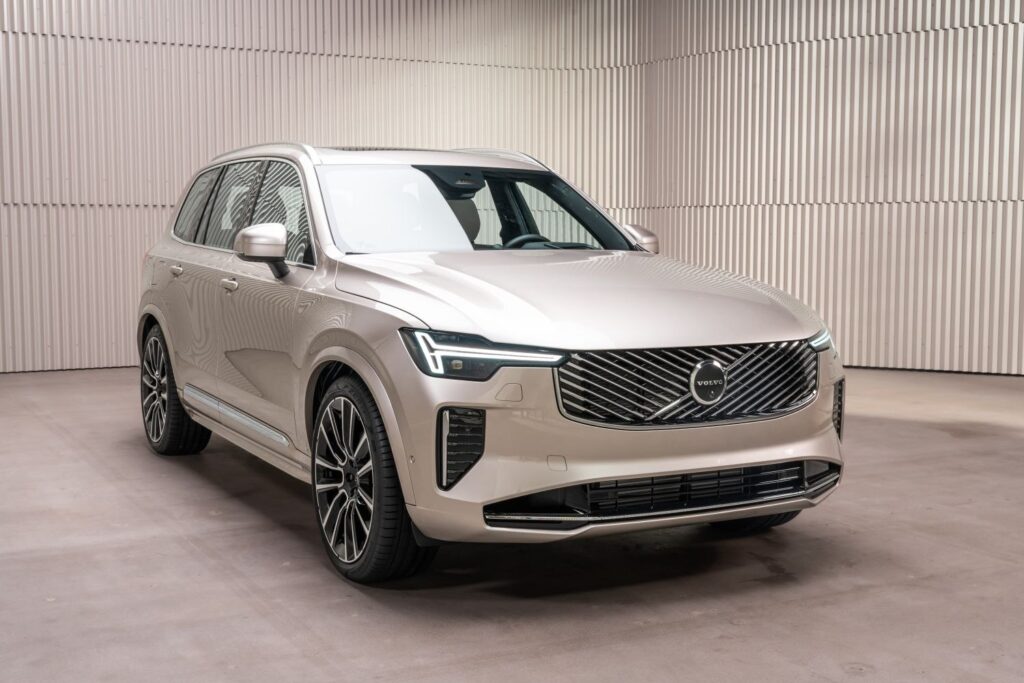
The Volvo XC90 II facelift, introduced in September 2024, represents the latest iteration of Volvo’s flagship seven-passenger SUV. Among the various powertrain options available, the 2.0 T8 (455 Hp) Plug-in Hybrid AWD Automatic variant occupies a premium position in the lineup, offering a blend of performance, efficiency, and luxury. This model builds upon the foundation of the XC90 II (launched in 2014 as part of Volvo’s move to the Scalable Product Architecture – SPA platform) with updated styling, enhanced technology, and a refined powertrain. The 2.0 T8 is positioned as a top-tier offering, appealing to buyers seeking a sophisticated and environmentally conscious SUV experience.
Volvo XC90 II (2024) 2.0 T8: An Overview
The 2024 XC90 II 2.0 T8 is a plug-in hybrid electric vehicle (PHEV) combining a turbocharged and supercharged 2.0-liter inline-four gasoline engine with an electric motor. This configuration delivers a combined system output of 455 horsepower and 522.93 lb-ft of torque, channeled to all four wheels via an eight-speed automatic transmission. The inclusion of a substantial 18.8 kWh (gross) battery pack allows for a significant all-electric driving range, making it a compelling option for those seeking to reduce their carbon footprint. The facelifted model features subtle exterior revisions, a modernized interior with updated infotainment, and enhanced safety features.
Powertrain & Engine Architecture
At the heart of the XC90 II 2.0 T8 lies the Volvo B4204T56 engine, a 2.0-liter inline-four cylinder gasoline engine. This engine utilizes both a turbocharger and a supercharger – a configuration Volvo refers to as “Drive-E” – to deliver responsive performance across the rev range. The supercharger provides immediate boost at lower engine speeds, while the turbocharger takes over at higher speeds for sustained power. Direct fuel injection is employed for precise fuel delivery and optimized combustion. The engine produces 310 hp at 6000 rpm and 295.02 lb-ft of torque between 3000-4800 rpm.
The electric motor, located on the rear axle, contributes an additional 145 hp at 15900 rpm and 227.91 lb-ft of torque. This rear-wheel drive electric assist provides all-wheel drive capability and enhances acceleration. The 18.8 kWh lithium-ion battery pack is strategically positioned in the central tunnel, minimizing impact on passenger space. The battery utilizes a 400V architecture. The eight-speed automatic transmission, sourced from Aisin, is specifically calibrated to work seamlessly with the hybrid powertrain, providing smooth and efficient gear changes.
Driving Characteristics
The 2.0 T8 delivers a markedly different driving experience compared to lower-powered XC90 variants. The instant torque from the electric motor provides brisk acceleration, with a 0-60 mph time of approximately 5.1 seconds. In hybrid mode, the powertrain intelligently manages the interplay between the gasoline engine and electric motor, prioritizing efficiency and performance as needed. The all-wheel drive system provides excellent traction in various weather conditions. The steering is light and precise, offering a comfortable driving experience. The suspension is tuned for comfort, absorbing bumps and providing a stable ride, although it may exhibit some body roll during aggressive cornering. The electric-only range of 39.15 – 44.12 miles allows for emission-free commuting for many drivers. Switching between driving modes – such as Pure Electric, Hybrid, Power, and Off-Road – allows the driver to tailor the vehicle’s behavior to their preferences and driving conditions.
Equipment & Trim Levels
The 2.0 T8 typically comes standard with a high level of equipment, reflecting its premium positioning. Standard features generally include leather upholstery, heated and ventilated front seats, a panoramic sunroof, a premium sound system, and a comprehensive suite of driver-assistance technologies. The interior boasts a minimalist Scandinavian design with high-quality materials. The infotainment system, centered around a large touchscreen display, provides access to navigation, climate control, and various vehicle settings. Optional extras may include advanced driver-assistance systems like Pilot Assist (adaptive cruise control and lane keeping assist), upgraded interior trim options, and a head-up display. The 2024 facelift brought enhancements to the infotainment system and interior materials.
Chassis & Braking
The XC90 II utilizes a robust chassis designed to accommodate the weight of the hybrid powertrain. The suspension consists of double-wishbone front suspension and multi-link rear suspension, providing a comfortable and controlled ride. Ventilated disc brakes are employed on all four wheels, providing ample stopping power. The electronic stability control (ESC) system integrates with the all-wheel drive system to enhance stability and traction. The steering system is an electric power-assisted rack-and-pinion setup, offering precise and responsive steering feel. Wheel sizes range from 20 to 22 inches, depending on the trim level and options selected.
Market Reception & Comparison
The XC90 II 2.0 T8 has been well-received by critics and consumers alike. It is praised for its luxurious interior, comfortable ride, strong performance, and impressive fuel efficiency. Compared to the base XC90 T5 (2.0-liter turbocharged four-cylinder), the T8 offers significantly more power and the added benefit of electric driving capability. Compared to the XC90 T6 (supercharged and turbocharged 2.0-liter four-cylinder), the T8 provides similar overall performance but with the added environmental benefits of a plug-in hybrid system. Fuel economy is a key advantage, with combined fuel consumption ranging from 1.2-1.6 l/100 km (196-147 US mpg). Reliability has generally been good, although some owners have reported minor issues with the hybrid system components.
Technical Specifications
| Brand | Volvo |
| Model | XC90 |
| Generation | XC90 II (facelift 2024) |
| Type | 2.0 T8 (455 Hp) Plug-in Hybrid AWD Automatic |
| Start of production | September, 2024 |
| Powertrain Architecture | PHEV (Plug-in Hybrid Electric Vehicle) |
| Body type | SUV |
| Seats | 7 |
| Doors | 5 |
| Combined fuel consumption (WLTP) | 1.2-1.6 l/100 km |
| CO2 emissions (WLTP) | 30-36 g/km |
| Fuel Type | Petrol / electricity |
| Acceleration 0 – 100 km/h | 5.4 sec |
| Acceleration 0 – 62 mph | 5.4 sec |
| Acceleration 0 – 60 mph | 5.1 sec |
| Maximum speed | 180 km/h (111.85 mph) |
| Gross battery capacity | 18.8 kWh |
| Net (usable) battery capacity | 14.7 kWh |
| Battery voltage | 400 V |
| All-electric range (WLTP) | 63-71 km (39.15 – 44.12 mi) |
| Engine Power | 310 Hp @ 6000 rpm |
| Engine Torque | 400 Nm @ 3000-4800 rpm |
| Engine Displacement | 1969 cm3 (120.16 cu. in.) |
| Electric Motor Power | 145 Hp @ 15900 rpm |
| Electric Motor Torque | 309 Nm @ 0-3280 rpm (227.91 lb.-ft.) |
| Kerb Weight | 2222 kg (4898.67 lbs.) |
| Max. weight | 2950 kg (6503.64 lbs.) |
| Trunk (boot) space – minimum | 262 l (9.25 cu. ft.) |
| Trunk (boot) space – maximum | 1816 l (64.13 cu. ft.) |
| Fuel tank capacity | 71 l (18.76 US gal) |
| Number of gears | 8 |
| Gearbox type | Automatic transmission |
Legacy
The Volvo XC90 II 2.0 T8 represents a significant step forward in plug-in hybrid technology. Its combination of performance, efficiency, and luxury has established it as a benchmark in the premium SUV segment. While long-term reliability data is still emerging, the powertrain has generally proven to be robust. On the used car market, the XC90 II 2.0 T8 commands a premium price due to its desirable features and environmental benefits. As battery technology continues to evolve, the XC90 II 2.0 T8 will likely remain a sought-after vehicle for years to come.