
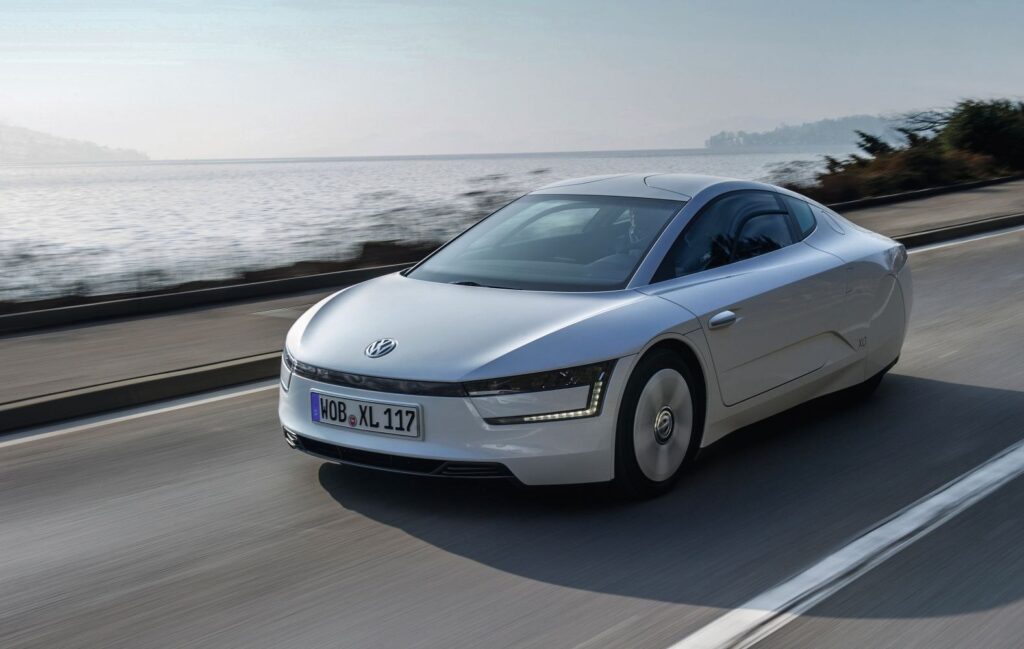
The Volkswagen XL1 0.8 TDI (69 hp) Plug-in Hybrid DSG is a groundbreaking two-seater coupe produced by Volkswagen from 2014 to 2016. Representing a significant engineering exercise in fuel efficiency, the XL1 was designed as a real-world demonstration of extreme aerodynamic efficiency and lightweight construction. It wasn’t intended for mass production, but rather as a rolling laboratory for future technologies. The XL1 utilized a unique plug-in hybrid powertrain combining a small diesel engine with an electric motor, achieving remarkable fuel economy figures. It was built on a bespoke chassis and featured extensive use of carbon fiber reinforced polymer (CFRP) to minimize weight. The XL1 sits apart from traditional Volkswagen models, being a limited-production, highly specialized vehicle.
Powertrain & Engine Architecture
The heart of the XL1 is its highly efficient powertrain. It combines a 0.8-liter, two-cylinder common rail turbocharged diesel engine (CSCA engine code) with a 27 hp electric motor. The diesel engine produces 48 hp at 4000 rpm and 88.51 lb-ft of torque at 2000 rpm. This engine is mounted transversely at the rear of the vehicle. The electric motor is positioned between the engine and the 7-speed dual-clutch gearbox (DSG). The combined system output is 69 hp and 103.26 lb-ft of torque.
The diesel engine features a sophisticated common rail direct injection system, optimized for efficiency and low emissions. It also incorporates a turbocharger with an intercooler to enhance power output. The valvetrain utilizes a double overhead camshaft (DOHC) configuration with four valves per cylinder. The 7-speed DSG transmission was specifically calibrated for the XL1, prioritizing fuel economy and smooth operation. The transmission allows for both fully electric driving and a blended mode where the diesel engine and electric motor work in conjunction. The engine also features a particulate filter and a start/stop system to further reduce emissions.
Fuel Injection and Hybrid System
The diesel engine employs a piezo common rail injection system, capable of multiple injections per combustion cycle. This allows for precise fuel metering and optimized combustion. The hybrid system operates in several modes: EV mode (electric only, up to 50 km/31.07 miles range), Cruise mode (diesel engine and electric motor combined for efficient cruising), Boost mode (both engine and motor provide maximum power for acceleration), and Sailing mode (engine disengaged, coasting with minimal resistance). The system intelligently manages the power flow between the engine, motor, and battery to maximize efficiency.
Driving Characteristics
The XL1’s driving experience is unique, prioritizing efficiency over outright performance. Acceleration from 0-60 mph takes approximately 12.1 seconds, and the top speed is electronically limited to 99.42 mph (160 km/h). The 7-speed DSG transmission provides quick and smooth gear changes, but the focus is on keeping the engine operating in its most efficient range. In EV mode, the XL1 offers near-silent operation and instant torque from the electric motor. The combined power delivery is linear, but the limited horsepower means that overtaking maneuvers require careful planning. The low weight (1752.67 lbs/795 kg) contributes to a surprisingly agile feel, despite the modest power output. The steering is precise, and the suspension is tuned for comfort and stability.
Compared to other Volkswagen models of the time, such as the Golf TDI, the XL1 offers significantly better fuel economy but considerably less performance. The Golf TDI, with its more powerful engine and conventional drivetrain, provided a more versatile and practical driving experience, while the XL1 was solely focused on maximizing efficiency.
Equipment & Trim Levels
Given its limited production run and experimental nature, the XL1 was sparsely equipped by modern standards. The interior was minimalist and functional, prioritizing weight reduction. Standard features included air conditioning, power windows, and a basic infotainment system. The seats were lightweight bucket seats designed for comfort during longer journeys. Interior upholstery was primarily a combination of durable fabrics and leather accents. Options were limited, but included different exterior colors and a few minor trim upgrades. The dashboard layout was clean and straightforward, with a focus on displaying key information related to the hybrid system and fuel economy. The XL1 did not offer traditional trim levels; all vehicles were essentially equipped to the same specification.
Chassis & Braking
The XL1’s chassis is a monocoque construction utilizing extensive CFRP, contributing significantly to its low weight. The front suspension features a double wishbone setup with a transverse stabilizer bar, while the rear suspension employs a transverse stabilizer bar. The braking system consists of disc brakes on all four wheels, equipped with ABS (Anti-lock Braking System). The tires are specially designed for low rolling resistance, further enhancing fuel efficiency. Front tires are 115/80 R15 and rear tires are 145/55 R16. The steering system is a rack and pinion type, providing precise and responsive handling.
Market Reception & Comparison
The Volkswagen XL1 received widespread critical acclaim for its innovative engineering and exceptional fuel economy. Automotive journalists praised its aerodynamic design, lightweight construction, and efficient powertrain. However, its limited practicality, high price (approximately $111,000 when briefly available for lease in the US), and lack of performance meant it was never intended for mainstream appeal. Compared to other hybrid and diesel vehicles of the time, the XL1 stood out as a radical departure from conventional automotive design. Its fuel economy of 261.3 US mpg (0.9 l/100 km) was unmatched by any other production vehicle. While the BMW i8 offered a similar level of technological innovation, it prioritized performance and luxury over pure efficiency.
Technical Specifications
| Brand | Volkswagen |
| Model | XL1 |
| Generation | XL1 |
| Type (Engine) | 0.8 TDI (69 Hp) Plug-in Hybrid DSG |
| Start of production | 2014 |
| End of production | 2016 |
| Fuel consumption (economy) – combined (NEDC) | 0.9 l/100 km |
| CO2 emissions (NEDC) | 21 g/km |
| Fuel Type | Diesel |
| Acceleration 0 – 100 km/h | 12.7 sec |
| Acceleration 0 – 62 mph | 12.7 sec |
| Acceleration 0 – 60 mph | 12.1 sec |
| Maximum speed | 160 km/h (99.42 mph) |
| Gross battery capacity | 5.5 kWh |
| All-electric range (NEDC) | 50 km (31.07 mi) |
| Average Energy consumption (NEDC) | 7.2 kWh/100 km |
| Electric motor power | 27 Hp |
| Electric motor Torque | 140 Nm (103.26 lb.-ft.) |
| Power | 48 Hp @ 4000 rpm |
| Torque | 120 Nm (88.51 lb.-ft.) @ 2000 rpm |
| Engine displacement | 800 cm3 (48.82 cu. in.) |
| Number of cylinders | 2 |
| Compression ratio | 16:1 |
| Kerb Weight | 795 kg (1752.67 lbs.) |
| Max. weight | 1000 kg (2204.62 lbs.) |
| Trunk (boot) space – minimum | 120 l (4.24 cu. ft.) |
| Length | 3888 mm (153.07 in.) |
| Width | 1665 mm (65.55 in.) |
| Height | 1153 mm (45.39 in.) |
| Number of gears and type of gearbox | 7 gears, automatic transmission DSG |
Legacy
The Volkswagen XL1, while not a commercial success in the traditional sense, has left a lasting legacy in the automotive industry. It demonstrated the potential of extreme aerodynamic efficiency and lightweight construction to achieve remarkable fuel economy. Many of the technologies developed for the XL1, such as the use of CFRP and advanced hybrid powertrains, have found their way into other Volkswagen models and vehicles from other manufacturers. In the used car market, the XL1 remains a highly sought-after collector’s item, commanding premium prices due to its rarity and technological significance. The powertrain, while complex, has proven relatively reliable, with few reported issues. The XL1 serves as a testament to Volkswagen’s commitment to innovation and its willingness to push the boundaries of automotive engineering.
