
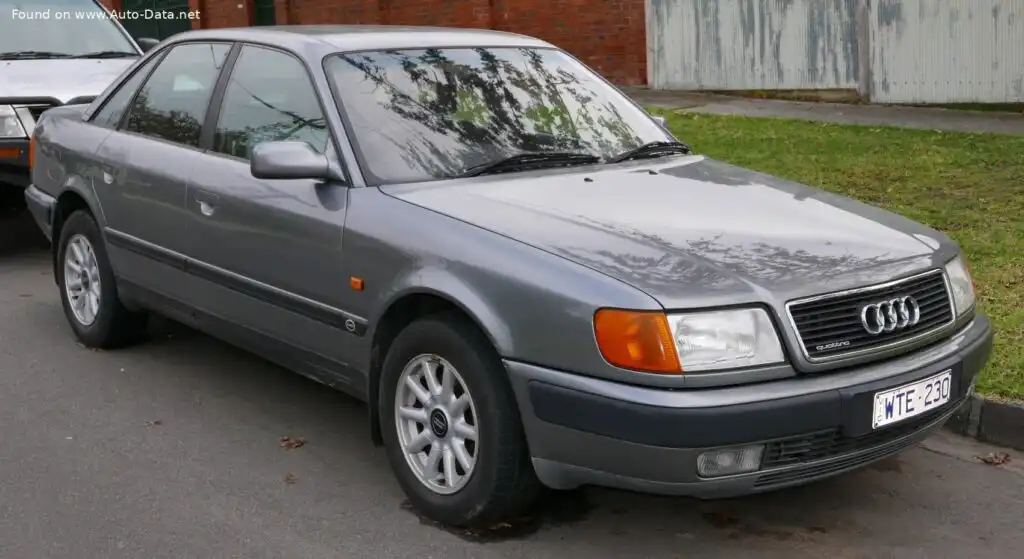
The Audi 100 (4A,C4), produced between 1990 and 1994, represents the fourth generation of Audi’s executive sedan, a vehicle that played a pivotal role in cementing the brand’s position in the premium automotive market. Among the various configurations offered, the Audi 100 (4A,C4) 2.3 E (133 Hp) quattro is a particularly noteworthy model, embodying a core philosophy of the Ingolstadt manufacturer: advanced engineering, robust build quality, and superior all-weather capability. This specific variant combined the charismatic, naturally aspirated 2.3-litre inline five-cylinder engine with Audi’s legendary quattro permanent all-wheel-drive system, creating a saloon that offered a unique blend of performance, stability, and character. It was a car designed not just for transport, but for confident, secure travel under a wide range of driving conditions, setting a high standard for its class during the early 1990s.
Historical Context and C4 Generation Development
The C4 generation of the Audi 100 was a significant evolution from its predecessor, the aerodynamically revolutionary but aging C3. Launched in late 1990, the C4 presented a more substantial and modern aesthetic, with smoother, more rounded lines that aligned with the design trends of the new decade. While it retained a similar silhouette to the C3, virtually every body panel was new. The focus of the C4’s development was on refinement, safety, and build quality. Audi invested heavily in creating a vehicle that felt solid and durable, employing high-quality materials throughout the cabin and pioneering the use of a fully galvanized steel bodyshell for comprehensive corrosion resistance.
This generation also saw the introduction of new engine options. While the C3 had laid the groundwork with five-cylinder powerplants, the C4 refined them. It was also the platform that first introduced Audi’s V6 engine to the 100/A6 series, marking a shift in the brand’s powertrain strategy. However, the inline-five engine remained a popular and distinctive choice, celebrated for its unique acoustic signature and smooth torque delivery. The C4 was later restyled and renamed the Audi A6 in 1994, initiating the A-series nomenclature that Audi uses today. This makes the C4-generation Audi 100 the final model to bear the historic 100 nameplate and a direct ancestor to the modern A6.
Powertrain and Performance of the Audi 100 (4A,C4) 2.3 E (133 Hp) quattro
The heart of this specific model is its powertrain combination, which defined its character and appeal.
Engine: The 2.3 E Inline-Five
The vehicle is powered by the 2.3-litre (2309 cm³) naturally aspirated inline five-cylinder engine, designated by the engine code AAR. This engine configuration is an Audi hallmark, known for its distinctive warble reminiscent of the legendary Group B quattro rally cars. In the 2.3 E, it was engineered for smoothness and reliability. It utilizes a Single Overhead Camshaft (OHC) design with two valves per cylinder.
Output is rated at 133 horsepower (99 kW) at a modest 5,500 rpm, with a peak torque of 186 Nm (137 lb-ft) available at 4,000 rpm. This power delivery provides a flexible and linear response, making the car feel capable and unstressed during normal driving and confident during acceleration. The fuel system employed is a multi-port manifold injection system, specifically a Bosch KE-Jetronic (CIS-E), a sophisticated continuous injection system that offered reliable performance for its time. The engine’s power-per-litre figure of 57.6 Hp/l is typical for a naturally aspirated engine of this era, prioritizing longevity and smooth operation over high-strung performance.
quattro All-Wheel Drive System
The quattro badge signifies the inclusion of Audi’s signature permanent all-wheel-drive system. In the C4 generation, this system was typically based on a Torsen (Torque Sensing) Type 1 center differential. This purely mechanical differential automatically distributes engine torque between the front and rear axles. Under normal driving conditions, the torque split is 50:50, providing balanced handling. If slippage is detected on one axle, the Torsen differential can instantly and seamlessly divert up to 75% of the torque to the axle with more grip.
This system provided a significant advantage in traction and stability over its rear-wheel-drive and front-wheel-drive competitors, especially on wet, snowy, or loose surfaces. Furthermore, the driver could manually engage a rear differential lock via a button on the center console at low speeds (typically below 25 km/h or 15 mph) for maximum traction in extremely slippery conditions, such as getting unstuck from deep snow or mud.
Transmission and Performance Figures
The Audi 100 (4A,C4) 2.3 E (133 Hp) quattro was equipped with a 5-speed manual transmission as standard. This gearbox was well-matched to the engine’s characteristics, with ratios that allowed for brisk acceleration while enabling relaxed highway cruising. The combination of the 133 Hp engine, manual gearbox, and quattro drivetrain resulted in a respectable acceleration time from 0 to 100 km/h (62 mph) in 10.4 seconds. The vehicle’s maximum speed was rated at 202 km/h (125.5 mph), making it a capable performer on the Autobahn. Its fuel economy was rated at a combined 9.6 l/100 km, with urban consumption at 12.7 l/100 km and extra-urban at 7.3 l/100 km.
Chassis, Body, and Handling
The C4 platform was engineered to provide a comfortable yet secure ride. The quattro models featured a more advanced suspension setup compared to their front-wheel-drive counterparts. The front suspension consisted of a MacPherson strut design, while the rear utilized a sophisticated independent multi-link coil spring arrangement. This fully independent setup allowed for better road holding, improved ride comfort over uneven surfaces, and greater stability during cornering, complementing the capabilities of the all-wheel-drive system.
The vehicle’s unibody chassis was constructed from fully galvanized steel, a major selling point that offered a 10-year (later 12-year) warranty against corrosion perforation and contributed to the car’s reputation for longevity. The body itself was aerodynamically efficient for its time, with a drag coefficient (Cd) of 0.32, which helped to reduce wind noise and improve fuel efficiency at higher speeds.
Braking was handled by a four-wheel disc brake system, with ventilated discs at the front and solid discs at the rear. An Anti-lock Braking System (ABS) was standard, enhancing safety and control during emergency braking maneuvers. The steering was a power-assisted rack-and-pinion system, providing precise control with a comfortable level of assistance.
Design, Dimensions, and Interior
As an executive sedan, the Audi 100 C4 offered generous proportions. It measured 4,790 mm in length and 1,777 mm in width, giving it a commanding presence on the road. The long 2,692 mm wheelbase contributed to a spacious interior and a stable ride. The interior was a bastion of early 1990s German build quality, characterized by high-grade plastics, wood trim options, and durable fabrics or optional leather upholstery. The dashboard was ergonomically designed, with clear instrumentation and intuitive controls, reflecting Audi’s driver-focused philosophy. The car could comfortably seat five adults, and its large trunk (boot) capacity of 510 liters made it a practical choice for families or business travel. With a kerb weight of 1,470 kg, it was a substantial vehicle, and its solid construction added to the feeling of safety and security from behind the wheel.
Conclusion
The Audi 100 (4A,C4) 2.3 E (133 Hp) quattro remains a significant model from a transformative era for the Audi brand. It successfully combined the brand’s most iconic technologies—the characterful five-cylinder engine and the world-renowned quattro all-wheel-drive system—in a package that exuded quality, safety, and understated style. While not the most powerful variant in the C4 lineup, its balanced performance, exceptional all-weather capability, and robust engineering made it a highly desirable executive sedan. Today, it is appreciated by enthusiasts for its unique engine note, mechanical durability, and its role as the final Audi 100 before the dawn of the A6 era, representing a pinnacle of classic Audi design and innovation.
Full Technical Specifications
| Specification Category | Detail |
| ————————– | ———————————————————————– |
| General Information | |
| Brand | Audi |
| Model | 100 |
| Generation | 100 (
