
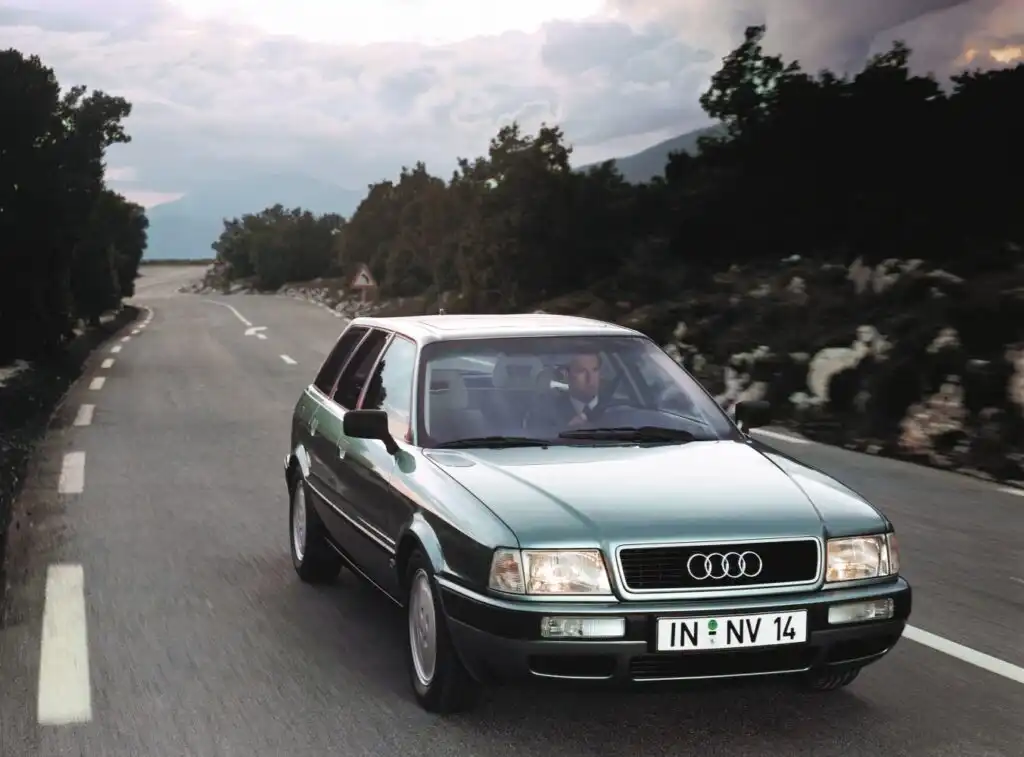
The Audi 80 Avant (B4, Typ 8C) 1.9 TDI represents a pivotal moment in the history of Audi and the automotive industry. Produced from September 1991 to July 1995, this model was more than just a practical station wagon; it was a standard-bearer for the burgeoning diesel revolution. By combining the legendary build quality and understated design of the B4 platform with the groundbreaking efficiency and torque of its Turbocharged Direct Injection (TDI) engine, the Audi 80 Avant 1.9 TDI established a new benchmark for premium compact executive estates. It offered families and professionals a vehicle that was economical to run, versatile in its utility, and engineered to the high standards expected of the German marque, solidifying Audi’s reputation as an innovator in diesel technology.
History and Development of the B4 Generation
The Audi 80 B4 (designated internally as the Typ 8C) was a significant evolution of its B3 predecessor. While it retained the B3’s core bodyshell, Audi implemented extensive modifications to address the earlier model’s limitations and enhance its market competitiveness. The most substantial change was a move to a longer wheelbase, achieved by re-engineering the rear axle and relocating the fuel tank. The B3’s torsion beam axle with integrated track-bar was replaced by a more refined torsion-beam setup, which allowed for a deeper, more practical boot. The fuel tank, previously positioned vertically behind the rear seats, was redesigned to lie flat under the boot floor.
This redesign had a transformative effect on the car’s practicality. For the first time in the Audi 80’s history, the B4 generation offered fully folding rear seats, a feature conspicuously absent in the B3 that had drawn criticism. This change was particularly crucial for the introduction of the Avant (station wagon) body style in 1992, a model that would become a cornerstone of Audi’s lineup. The B4 Avant was Audi’s first mid-size estate since the C2 Audi 100 Avant of the late 1970s, and it immediately found favour for its blend of style and utility.
Aesthetically, the B4 received a subtle but effective facelift. It featured a redesigned bonnet with a more integrated grille, restyled bumpers, and higher-quality materials throughout the cabin, elevating its premium feel. Safety was also a major focus, with the B4 offering Audi’s Procon-ten safety system as standard, alongside options for a driver’s side airbag and, later, a passenger airbag, making it one of the safest vehicles in its class.
The 1.9 TDI Engine: A Landmark in Powertrain Technology
At the heart of this particular model was the 1.9-litre TDI engine, engine code 1Z. This power unit was a direct descendant of the revolutionary 2.5-litre five-cylinder TDI first seen in the Audi 100 in 1989. Its introduction into the smaller, more accessible Audi 80 platform was a strategic move that democratized advanced diesel technology.
The TDI acronym, which stands for Turbocharged Direct Injection, signified a major technological leap over the older, more common indirect injection (IDI) diesel engines. In an IDI engine, fuel is injected into a pre-combustion chamber connected to the main cylinder. In contrast, the 1Z engine’s direct injection system sprayed fuel directly into the main combustion chamber atop the piston. This method, controlled by an electronic distribution injection pump, resulted in a more efficient and complete combustion process.
The benefits were immediately apparent. The engine produced a respectable 90 horsepower (66 kW) at 4000 rpm and a substantial 182 Newton-metres (134 lb-ft) of torque at a low 2300 rpm. While the horsepower figure was modest, the ample low-end torque gave the Audi 80 Avant 1.9 TDI excellent in-gear acceleration and tractability, making it feel more responsive in everyday driving conditions than its on-paper acceleration figures might suggest. The inclusion of a turbocharger and an intercooler further enhanced performance and efficiency, ensuring a better air-fuel mixture for combustion.
Performance and Drivability of the Audi 80 Avant 1.9 TDI
Performance was defined by efficiency and usability rather than outright speed. The Audi 80 Avant 1.9 TDI could accelerate from 0 to 100 km/h (62 mph) in a leisurely 14.6 seconds and reach a maximum speed of 170 km/h (106 mph). These figures were secondary to its primary mission: to provide comfortable, reliable, and exceptionally economical transportation.
The model’s standout feature was its fuel consumption. It achieved an urban economy of 6.4 l/100 km (36.8 US mpg), an extra-urban figure of just 4.1 l/100 km (57.4 US mpg), and a combined consumption of 5.6 l/100 km (42 US mpg). These numbers were outstanding for a premium family estate of its era, offering a driving range of well over 1,000 kilometres from its 66-litre fuel tank. This fuel-sipping nature made it an ideal vehicle for long-distance commuting and family holidays.
The powertrain was mated to a smooth and precise 5-speed manual transmission, which drove the front wheels. The B4’s chassis provided a secure and comfortable ride. The front suspension consisted of an independent MacPherson strut setup, while the rear used the aforementioned independent torsion suspension. This combination provided a good balance between ride comfort and handling stability. Disc brakes were fitted on all four corners, with an Anti-lock Braking System (ABS) included as a key safety feature, ensuring controlled stops under various conditions. The hydraulic power steering, using a rack and pinion system, offered light yet communicative feedback, making the car easy to manoeuvre in city traffic and confident on the open road.
Design, Interior, and Practicality
The Audi 80 Avant B4 was penned with a timeless, function-oriented design philosophy. Its clean lines, flush-mounted windows, and solid stance exuded a sense of quality and durability. The drag coefficient (Cd) of 0.34 was respectable for a station wagon, contributing to its fuel efficiency and quiet cruising demeanour. Build quality was exceptional, with fully galvanized bodyshells offering a long-term warranty against corrosion, a key factor in the model’s longevity.
Inside, the B4’s cabin was a testament to Audi’s commitment to superior ergonomics and materials. The dashboard was logically laid out, with clear instrumentation and intuitive controls. The quality of the plastics, fabrics, and switchgear was a step above most mainstream rivals, creating a premium ambiance. The car offered seating for five, with comfortable and supportive seats designed for long journeys.
The Avant designation, however, was all about practicality. With the rear seats in place, the boot offered a useful 370 litres of cargo space. By folding the split-rear seats down, this capacity expanded to an impressive 1200 litres, creating a large, flat load floor capable of accommodating bulky items. With a maximum payload of 550 kg, the Avant was a truly versatile workhorse, equally adept at carrying luggage for a family vacation or transporting goods for a small business.
Legacy and Market Impact
The Audi 80 Avant 1.9 TDI was a resounding success and played a crucial role in shaping Audi’s brand identity. It demonstrated that diesel engines could be refined, efficient, and suitable for premium vehicles. It successfully challenged competitors like the BMW 3 Series Touring and the Mercedes-Benz C-Class Estate by offering a compelling combination of economy, quality, and practicality that was hard to ignore.
Its legacy is twofold. Firstly, it helped popularize the TDI engine, paving the way for its widespread adoption across the entire Volkswagen Group and influencing the broader automotive landscape. Secondly, it cemented the Avant as a highly desirable and core part of Audi’s model range. The success of the B4 Avant ensured that Audi would continue to develop and refine its premium estate cars, leading to the iconic models that followed. Today, the B4 1.9 TDI is remembered as a durable, reliable, and incredibly efficient classic, celebrated by enthusiasts for its simple yet robust engineering.
Complete Technical Specifications
| Category | Specification |
| ————————— | ————————————————————————————————————————————————————————————————————————– |
| General Information | |
| Brand | Audi |
| Model | 80 |
| Generation | 80 Avant (B4, Typ 8C) |
| Engine | 1.9 TDI (90 Hp) |
| Body Type | Station wagon (estate) |
| Production Start | September 1991 |
| Production End | July 1995 |
| Seats | 5 |
| Doors | 5 |
| Performance | |
| Acceleration (0-100 km/h) | 14.6 seconds |
| Maximum Speed | 170 km/h (105.63 mph) |
| Fuel Type | Diesel |
| Fuel Consumption (Urban) | 6.4 l/100 km (36.8 US mpg / 44.1 UK mpg) |
| Fuel Consumption (Extra-Urban)| 4.1 l/100 km (57.4 US mpg / 68.9 UK mpg) |
| Fuel Consumption (Combined) | 5.6 l/100 km (42 US mpg / 50.4 UK mpg) |
| Engine Specifications | |
| Power | 90 Hp @ 400
