
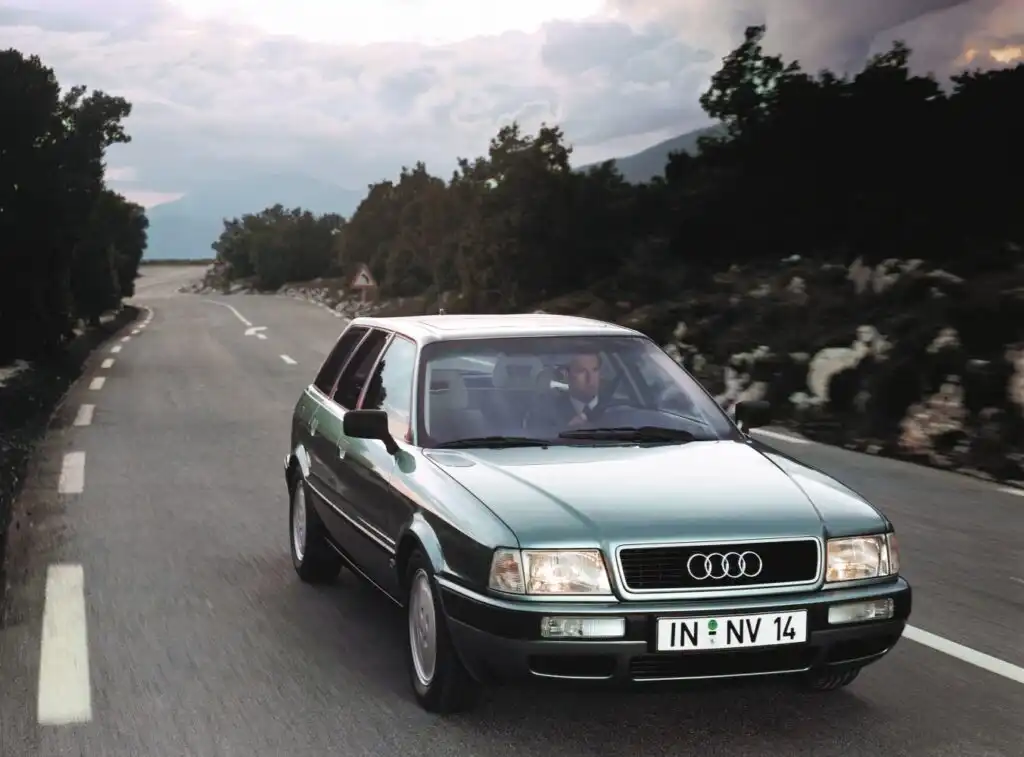
The Audi 80 Avant (B4, Typ 8C), particularly the variant equipped with the 1.9 TDI engine and automatic transmission, represents a significant milestone in Audi’s history. Produced from 1991 to 1995, this model combined the practicality of a station wagon with the groundbreaking efficiency of Volkswagen Group’s Turbocharged Direct Injection diesel technology. It was a vehicle that helped solidify Audi’s position in the premium compact executive segment, offering a compelling blend of build quality, economy, and everyday usability. The Audi 80 Avant 1.9 TDI marked a turning point, demonstrating that diesel-powered vehicles could be refined, reliable, and desirable for more than just commercial use, setting a precedent for decades of diesel engine development.
History and Development
The B4 generation of the Audi 80 was a substantial evolution of its B3 predecessor. Launched in 1991, the B4 addressed several of the B3’s shortcomings and aimed to move the model further upmarket. A key structural change was the redesign of the rear axle and fuel tank assembly. This allowed for the implementation of a split-folding rear seat, a feature conspicuously absent in the B3 sedan due to its transversely mounted fuel tank located behind the rear seatback. This redesign was fundamental to the development of the Avant (Audi’s designation for a station wagon or estate), which joined the lineup in 1992.
Unlike the B3, the B4 featured a longer wheelbase, flared wheel arches to accommodate larger wheels, and a completely redesigned rear suspension. The B4 abandoned the B3’s torsion crank-axle with an integrated anti-roll bar in favor of a more space-efficient torsion beam axle. This not only improved ride and handling characteristics but, crucially for the Avant, created a wider, flatter, and more practical luggage compartment.
Visually, the B4 was distinguished by its new front end, which integrated the grille into the bonnet in the style of Audi’s V8 flagship, a design cue that would become a signature for the brand. The use of fully galvanized body panels continued, underpinning Audi’s reputation for exceptional corrosion resistance and long-term durability. The introduction of the Avant body style was a strategic move to compete directly with German rivals like the BMW 3 Series Touring and the Mercedes-Benz C-Class Estate.
Powertrain: The Revolutionary Audi 80 Avant 1.9 TDI Engine
The heart of this specific model is the 1.9-liter Turbocharged Direct Injection (TDI) diesel engine, factory-coded 1Z. This engine was a landmark achievement for the Volkswagen Group and played a pivotal role in the popularization of diesel passenger cars across Europe. Prior to TDI, most passenger car diesels utilized indirect injection, where fuel was injected into a pre-combustion chamber. This design was generally less efficient and produced more noise and vibration.
The 1Z engine, however, featured a direct injection system where fuel was sprayed directly into the combustion chamber on top of the piston. Combined with a turbocharger and an intercooler, this architecture resulted in a more efficient and complete combustion process. The engine produced a modest 90 horsepower (66 kW) at 4000 rpm, but its real-world advantage lay in its torque delivery. It generated a substantial 182 Newton-metres (134 lb⋅ft) of torque at a low 2300 rpm. This low-end torque gave the Audi 80 Avant 1.9 TDI strong pulling power and made for relaxed, effortless cruising and confident overtaking, particularly in the mid-range.
Mated to this engine was a 4-speed automatic transmission. While this gearbox slightly blunted the outright performance compared to the standard 5-speed manual, it offered a significant enhancement in driving comfort and convenience, especially in urban traffic. The combination of a high-torque diesel engine with a smooth-shifting automatic transmission made the Avant an exceptionally versatile vehicle, equally adept at city commuting and long-distance touring.
This powertrain was lauded for its exceptional fuel economy. With a combined consumption figure of just 5.7 l/100 km (41.3 US mpg), it was one of the most economical family cars of its era, offering a range that could exceed 1000 kilometers on a single 66-liter tank of fuel.
Chassis and Handling
The B4 platform provided the Audi 80 Avant with a comfortable and secure driving experience. The front suspension consisted of an independent MacPherson strut setup, while the rear utilized the aforementioned space-saving torsion beam axle with separate coil springs and shock absorbers. This configuration provided a good balance between ride comfort and stable handling. The longer wheelbase compared to the B3 contributed to improved straight-line stability, making it a capable long-distance cruiser.
The vehicle featured a front-wheel-drive layout, which was standard for the Audi 80 range (with the exception of Quattro models). Steering was a rack and pinion system with hydraulic power assistance, providing a light but precise feel. Braking was handled by disc brakes on all four corners, with an Anti-lock Braking System (ABS) included as a key safety feature, enhancing driver control during emergency stops.
While not designed as a performance car, the Avant’s handling was predictable and safe. The 195/65 R15 tires offered a good compromise between grip and comfort. The overall setup was geared towards providing a refined and composed driving experience, in line with Audi’s premium brand positioning.
Design, Interior, and Practicality
The Audi 80 Avant B4 was praised for its timeless and understated design. The clean lines, penned under the direction of J Mays, gave the car a sleek and aerodynamic appearance, with a drag coefficient (Cd) of 0.34. The build quality was a significant selling point, with tight panel gaps and high-quality materials that gave the vehicle a durable, premium feel.
Inside, the cabin was a model of ergonomic efficiency and quality construction. The dashboard was logically laid out, with clear instrumentation and controls that were easy to operate. Materials were of a high standard for the class, with soft-touch plastics and durable fabrics that held up well over time. Standard equipment was respectable for the period, and a range of options, including air conditioning, sunroof, and upgraded audio systems, were available.
The primary appeal of the Avant body style was its practicality. With the rear seats in place, the luggage compartment offered 370 liters of space. By folding down the 60/40 split rear seats, this capacity expanded to an impressive 1200 liters. The low loading lip and wide tailgate opening made it easy to load bulky items, making it an ideal choice for families and individuals with active lifestyles. With a maximum payload of 550 kg, it was a truly versatile workhorse.
Market Position and Legacy
The Audi 80 Avant 1.9 TDI was a critical success. It entered a competitive market and established itself as a formidable contender against its key German rivals. Its unique selling proposition was the combination of Audi’s premium build quality, the practicality of the Avant body style, and the revolutionary fuel efficiency and performance of the TDI engine.
This model helped to change public perception of diesel engines. It proved that a diesel car could be quiet, refined, and economical without being slow or agricultural. The success of the 1.9 TDI engine in the Audi 80 and other Volkswagen Group vehicles paved the way for the widespread adoption of diesel technology across Europe in the following decades.
Today, the B4 Audi 80 Avant is regarded as a modern classic. It is remembered for its robust engineering, exceptional durability, and the groundbreaking TDI engine that powered it. Many examples remain on the road, a testament to the quality of their construction and the reliability of their mechanical components. The model’s legacy is evident in Audi’s continued success with its Avant and TDI models, having set a high standard for premium estate cars that the company continues to build upon.
Full Technical Specifications
| Specification | Value |
| :——————————- | :—————————————————————– |
| General Information | |
| Brand | Audi |
| Model | 80 Avant |
| Generation | B4 (Typ 8C) |
| Engine Type | 1.9 TDI (90 Hp) Automatic |
| Production Period | September 1991 – July 1995 |
| Body Type | Station Wagon (Estate) |
| Seats | 5 |
| Doors | 5 |
| Performance | |
| Maximum Speed | 170 km/h (105.63 mph) |
| Acceleration 0-100 km/h | 15.1 seconds |
| Acceleration 0-60 mph | 14.3 seconds |
| Fuel Consumption (Urban) | 6.4 l/100 km (36.8 US mpg / 44.1 UK mpg) |
| Fuel Consumption (Extra-Urban) | 4.1 l/100 km (57.4 US mpg / 68.9 UK mpg) |
| Fuel Consumption (Combined) | 5.7 l/100 km (41.3 US mpg / 49.6 UK mpg) |
| Fuel Type | Diesel |
| Engine | |
| Power | 90 Hp @ 4000 rpm |
| Torque | 182 Nm @ 2300 rpm (134.24 lb.-ft.) |
| Engine Layout | Front, Longitudinal |
| Engine Model/Code | 1Z |
| Engine Displacement | 1896 cm³ (115.7 cu. in.) |
| Number of Cylinders | 4 |
| Cylinder Configuration | Inline |
| Cylinder Bore | 79.5 mm (3.13 in.) |
| Piston Stroke | 95.5 mm (3.76 in.) |
| Compression Ratio | 19.5:1 |
| Valves per Cylinder | 2 |
| Valvetrain | Overhead Camshaft (OHC) |
| Fuel System | Direct Injection |
| Aspiration | Turbocharger, Intercooler |
| Engine Oil Capacity | 3.5 l (3.7 US qt / 3.08 UK qt) |
| Coolant Capacity | 6.5 l (6.87 US qt / 5.72 UK qt) |
| Dimensions & Weight | |
| Length | 4482 mm (176.46 in.) |
| Width | 1695 mm (66.73 in.) |
| Height | 1408 mm (55.43 in.) |
| Wheelbase | 2612 mm (102.83 in.) |
| Front Track | 1448 mm (57.01 in.) |
| Rear Track | 1471 mm (57.91 in.) |
| Ground Clearance | 135 mm (5.31 in.) |
| Drag Coefficient (Cd) | 0.34 |
| Turning Circle | 11.2 m (36.75 ft.) |
| Kerb Weight | 1310 kg (2888.06 lbs.) |
| Gross Vehicle Weight | 1860 kg (4100.6 lbs.) |
| Maximum Load | 550 kg (1212.54 lbs.) |
| Capacities | |
| Trunk (Boot) Space – Minimum | 370 l (13.07 cu. ft.) |
| Trunk (Boot) Space – Maximum | 1200 l (42.38 cu. ft.)
