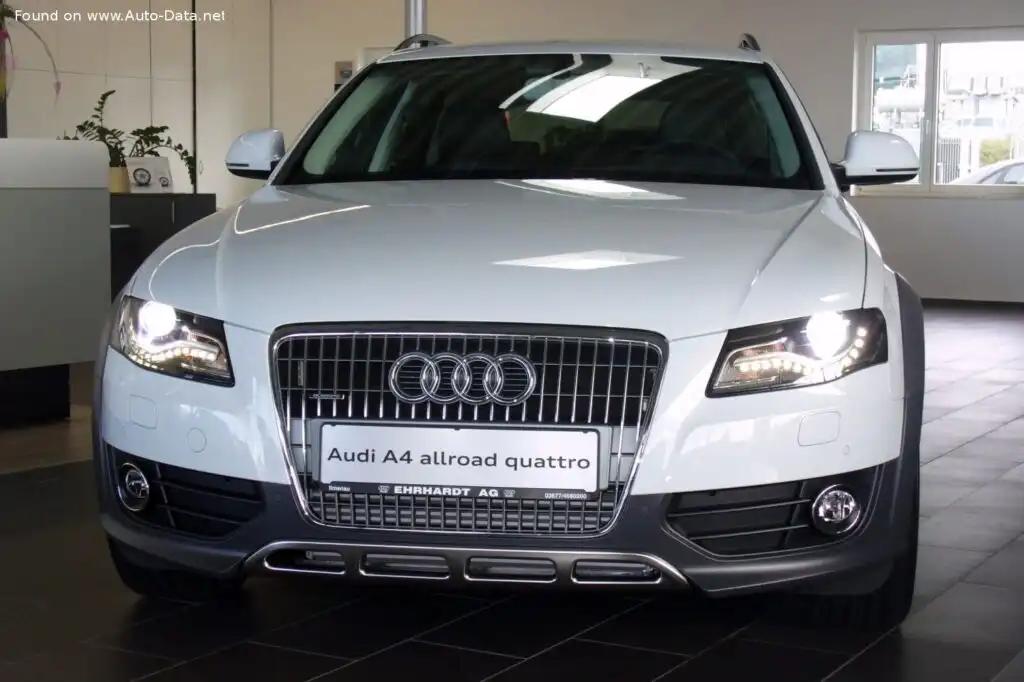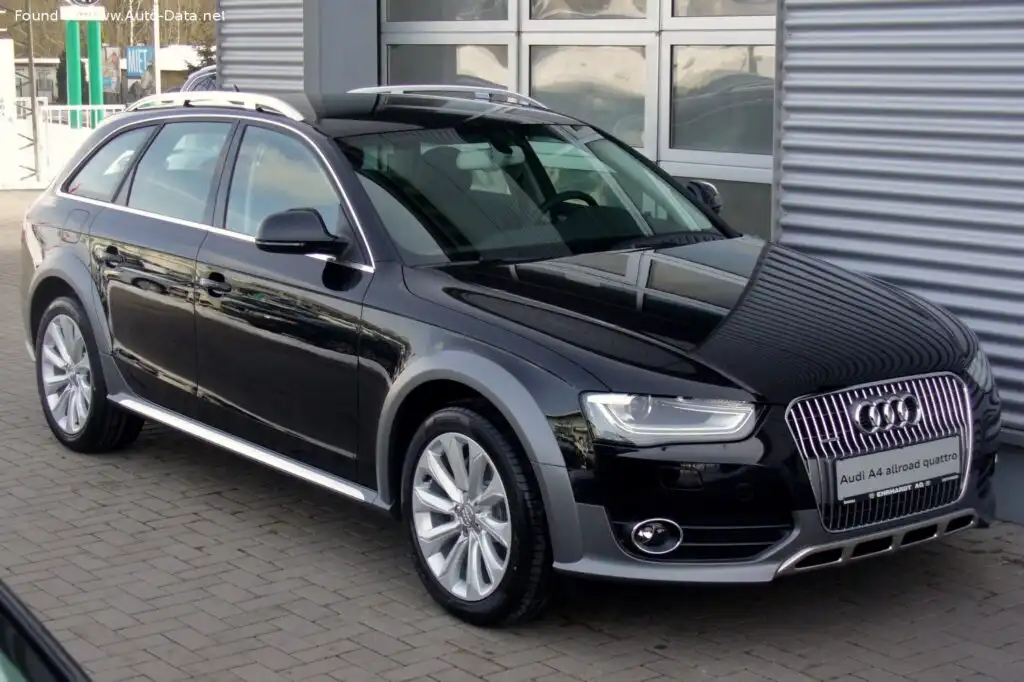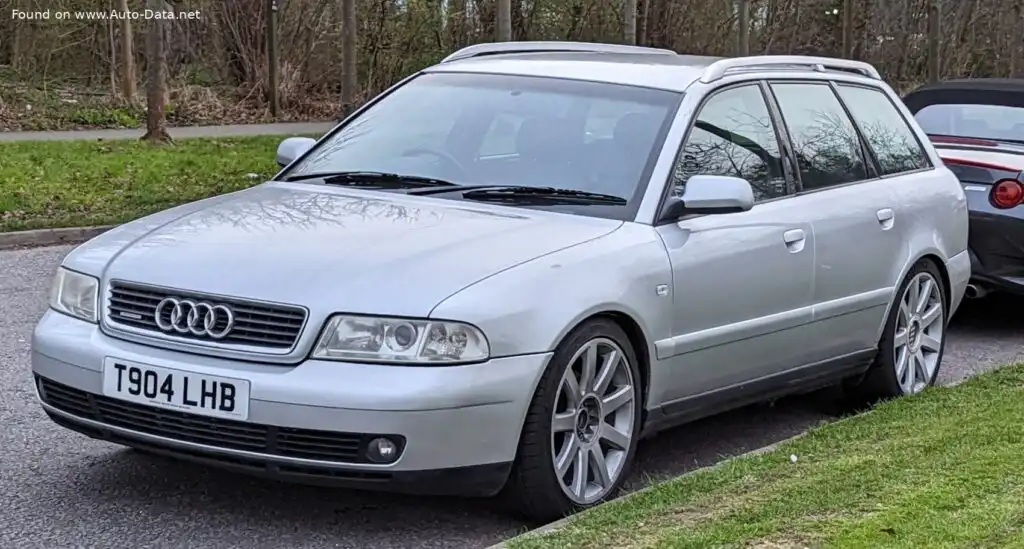
The Audi A4 Avant (B5, Typ 8D) facelift model, specifically the 1.9 TDI variant producing 110 horsepower, was a key offering in Audi’s lineup from 1999 to 2000. Positioned as a practical and fuel-efficient option within the broader A4 range, this station wagon (estate) catered to European buyers seeking a blend of performance, space, and economy. It represented a significant evolution of the original B5 A4, benefiting from the mid-cycle refresh that included styling updates and refinements to the interior and mechanical components. This model played a crucial role in establishing the A4 Avant as a desirable alternative to traditional sedans, offering increased versatility without sacrificing Audi’s reputation for build quality and driving dynamics.
Technical Specifications
| Brand | Audi |
| Model | A4 |
| Generation | A4 Avant (B5, Typ 8D, facelift 1999) |
| Type (Engine) | 1.9 TDI (110 Hp) |
| Start of production | 1999 |
| End of production | 2000 |
| Powertrain Architecture | Internal Combustion engine |
| Body type | Station wagon (estate) |
| Seats | 5 |
| Doors | 5 |
| Fuel consumption (urban) | 6.9 l/100 km (34.1 US mpg, 40.9 UK mpg, 14.5 km/l) |
| Fuel consumption (extra urban) | 4.3 l/100 km (54.7 US mpg, 65.7 UK mpg, 23.3 km/l) |
| Fuel consumption (combined) | 5.3 l/100 km (44.4 US mpg, 53.3 UK mpg, 18.9 km/l) |
| CO2 emissions | 142 g/km |
| Fuel Type | Diesel |
| Acceleration 0 – 100 km/h | 11.7 sec |
| Acceleration 0 – 62 mph | 11.7 sec |
| Acceleration 0 – 60 mph | 11.1 sec |
| Maximum speed | 191 km/h (118.68 mph) |
| Emission standard | Euro 2 |
| Weight-to-power ratio | 12 kg/Hp, 83.7 Hp/tonne |
| Weight-to-torque ratio | 5.6 kg/Nm, 178.7 Nm/tonne |
| Power | 110 Hp @ 4150 rpm |
| Power per litre | 58 Hp/l |
| Torque | 235 Nm @ 1900 rpm (173.33 lb.-ft. @ 1900 rpm) |
| Engine layout | Front, Longitudinal |
| Engine Model/Code | EA180 / AVG |
| Engine displacement | 1896 cm3 (115.7 cu. in.) |
| Number of cylinders | 4 |
| Engine configuration | Inline |
| Cylinder Bore | 79.5 mm (3.13 in.) |
| Piston Stroke | 95.5 mm (3.76 in.) |
| Compression ratio | 19.5:1 |
| Number of valves per cylinder | 2 |
| Fuel injection system | Direct injection |
| Engine aspiration | Turbocharger, Intercooler |
| Valvetrain | SOHC |
| Engine oil capacity | 3.8 l (4.02 US qt | 3.34 UK qt) |
| Coolant | 6.5 l (6.87 US qt | 5.72 UK qt) |
| Kerb Weight | 1315 kg (2899.08 lbs.) |
| Max. weight | 1865 kg (4111.62 lbs.) |
| Max load | 550 kg (1212.54 lbs.) |
| Trunk (boot) space – minimum | 390 l (13.77 cu. ft.) |
| Trunk (boot) space – maximum | 1250 l (44.14 cu. ft.) |
| Fuel tank capacity | 62 l (16.38 US gal | 13.64 UK gal) |
| Max. roof load | 75 kg (165.35 lbs.) |
| Permitted trailer load with brakes (12%) | 1500 kg (3306.93 lbs.) |
| Permitted trailer load without brakes | 690 kg (1521.19 lbs.) |
| Permitted towbar download | 75 kg (165.35 lbs.) |
| Length | 4479 mm (176.34 in.) |
| Width | 1733 mm (68.23 in.) |
| Width including mirrors | 1848 mm (72.76 in.) |
| Height | 1417 mm (55.79 in.) |
| Wheelbase | 2617 mm (103.03 in.) |
| Front track | 1498 mm (58.98 in.) |
| Rear (Back) track | 1479 mm (58.23 in.) |
| Minimum turning circle | 11.1 m (36.42 ft.) |
| Drivetrain Architecture | The Internal combustion engine (ICE) drives the front wheels of the vehicle. |
| Drive wheel | Front wheel drive |
| Number of gears and type of gearbox | 5 gears, manual transmission |
| Front suspension | Coil spring, Independent multi-link suspension, Transverse stabilizer |
| Rear suspension | Transverse stabilizer, Coil spring, Torsion |
| Front brakes | Disc |
| Rear brakes | Disc |
| Assisting systems | ABS (Anti-lock braking system) |
| Steering type | Steering rack and pinion |
| Power steering | Hydraulic Steering |
| Tires size | 195/65 R15 |
| Wheel rims size | 6J x 15 |
Powertrain & Engine Architecture
The heart of this A4 Avant was the 1.9-liter inline-four cylinder diesel engine, designated the EA180 series and specifically coded AVG. This engine was a mainstay of the Volkswagen Group’s diesel offerings during the late 1990s and early 2000s. It featured direct injection technology, a crucial element in maximizing fuel efficiency and reducing emissions. The direct injection system, coupled with a turbocharger and intercooler, allowed the relatively small displacement engine to produce a respectable 110 horsepower and 235 Nm (173 lb-ft) of torque. The engine utilized a single overhead camshaft (SOHC) valvetrain, operating with two valves per cylinder. The five-speed manual transmission was the standard offering, providing a balance between fuel economy and driver control. The engine’s longitudinal mounting within the chassis contributed to a balanced weight distribution.
Driving Characteristics
The 1.9 TDI 110 hp A4 Avant offered a pragmatic driving experience. While not overtly sporty, it provided sufficient power for everyday driving and long-distance cruising. Acceleration from 0-60 mph took around 11.1 seconds, and top speed was approximately 118.68 mph. The turbocharger provided a noticeable boost in power at lower engine speeds, making it easy to keep up with traffic. The five-speed manual transmission allowed for precise gear selection, although the gear ratios were geared towards fuel efficiency rather than outright performance. Compared to the more powerful 1.8T petrol variants or the later 1.9 TDI 130 hp models, this version felt less eager to rev, but it compensated with superior fuel economy and a broader torque curve. The front-wheel-drive configuration provided predictable handling, although it could exhibit some understeer when pushed hard.
Equipment & Trim Levels
The 1.9 TDI 110 hp A4 Avant typically came with a reasonable level of standard equipment. This included power windows, central locking, power steering, and an ABS anti-lock braking system. Interior upholstery was typically cloth, with a functional and durable design. Optional extras included alloy wheels, a sunroof, climate control, and a premium audio system. The dashboard layout was typical of Audi at the time, with a clean and ergonomic design. Trim levels varied slightly depending on the market, but generally, this variant represented a mid-range offering, bridging the gap between the base models and the more luxurious versions.
Chassis & Braking
The A4 Avant’s chassis featured independent multi-link suspension at the front, providing a comfortable ride and good handling characteristics. The rear suspension utilized a torsion beam setup, which was a cost-effective solution that still offered acceptable levels of comfort and stability. Brakes consisted of ventilated discs on all four wheels, providing adequate stopping power for the vehicle’s weight and performance. A transverse stabilizer bar was fitted to both the front and rear axles to reduce body roll during cornering. The steering was a rack-and-pinion system with hydraulic power assistance, offering a precise and responsive feel.
Market Reception & Comparison
The 1.9 TDI 110 hp A4 Avant was well-received in Europe as a practical and economical choice. Critics praised its fuel efficiency, comfortable ride, and spacious interior. Compared to the petrol-powered A4 variants, the TDI offered significantly better fuel economy, making it an attractive option for high-mileage drivers. However, some reviewers noted that the engine could be somewhat noisy and lacked the refinement of some of its competitors. Against other diesel estate cars of the time, the A4 Avant stood out for its build quality, sophisticated interior, and Audi’s reputation for reliability.
Legacy
The 1.9 TDI engine, in its various iterations, proved to be remarkably durable and reliable. The AVG-coded version found in the A4 Avant is known for its longevity, provided it was properly maintained. Today, these cars can still be found on the road, often with high mileage. The 1.9 TDI engine is relatively easy to work on, and spare parts are readily available. While not a collector’s item, the A4 Avant 1.9 TDI 110 hp remains a popular choice for those seeking a practical, economical, and reliable used car. Its blend of space, efficiency, and build quality continues to appeal to buyers looking for a sensible and dependable estate car.