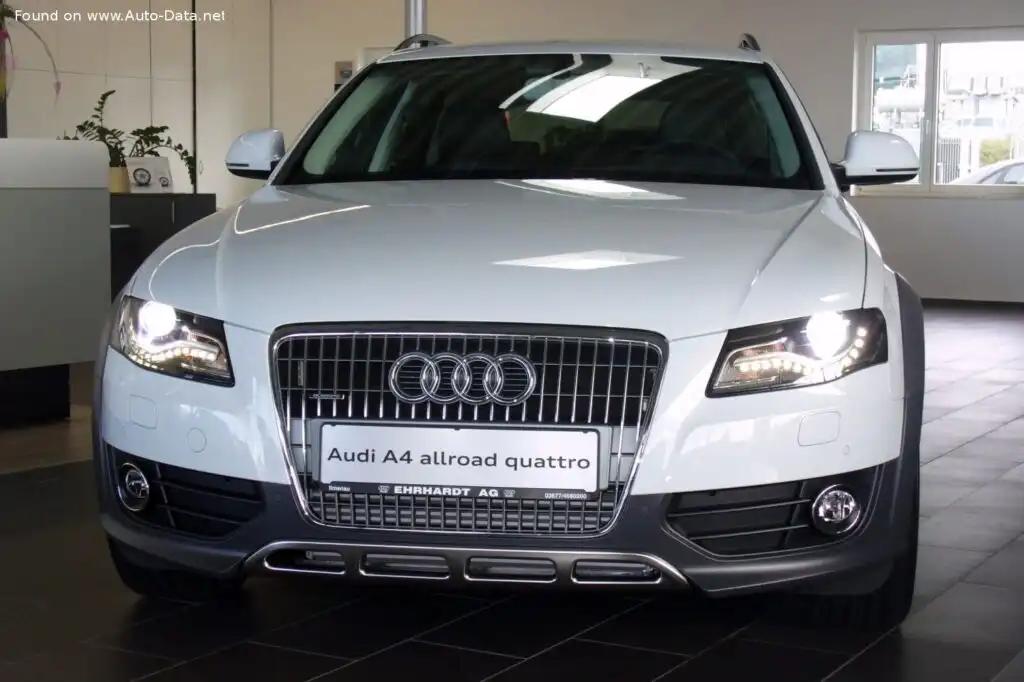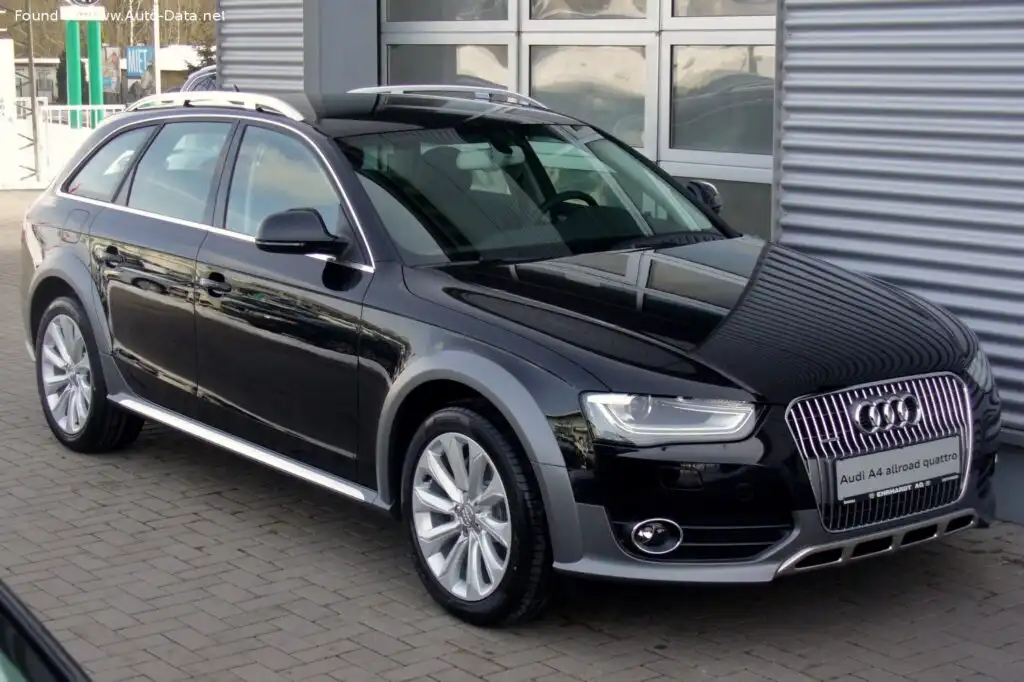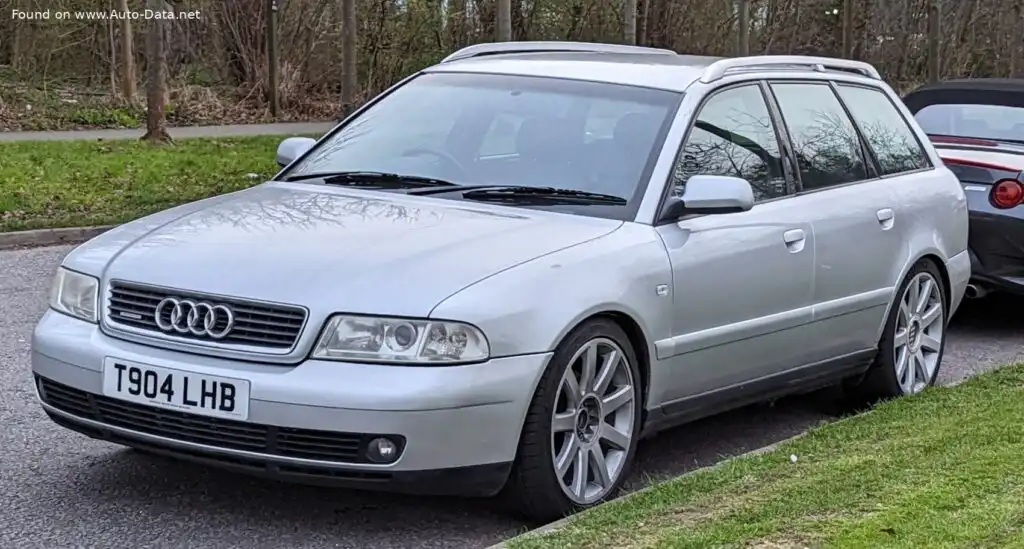
The Audi A4 Avant (B5, Typ 8D) 2.8 V6 30V, produced from 1999 to September 2001, represents a significant iteration of Audi’s popular compact executive car. This facelifted version of the B5 platform A4 Avant – Audi’s designation for the station wagon (estate) body style – offered a blend of practicality, performance, and Audi’s signature refinement. Positioned as a premium offering within the A4 range, the 2.8 V6 model aimed at buyers seeking a more powerful and sophisticated alternative to the base 1.8L four-cylinder engines. It sat near the top of the A4 Avant lineup, below the high-performance S4 models.
Technical Specifications
| Brand | Audi |
| Model | A4 |
| Generation | A4 Avant (B5, Typ 8D, facelift 1999) |
| Type (Engine) | 2.8 V6 30V (193 Hp) |
| Start of production | 1999 |
| End of production | September, 2001 |
| Powertrain Architecture | Internal Combustion engine |
| Body type | Station wagon (estate) |
| Seats | 5 |
| Doors | 5 |
| Fuel consumption (urban) | 13.7 l/100 km (17.2 US mpg, 20.6 UK mpg, 7.3 km/l) |
| Fuel consumption (extra urban) | 7.1 l/100 km (33.1 US mpg, 39.8 UK mpg, 14.1 km/l) |
| Fuel consumption (combined) | 9.5 l/100 km (24.8 US mpg, 29.7 UK mpg, 10.5 km/l) |
| Fuel Type | Petrol (Gasoline) |
| Acceleration 0 – 100 km/h | 7.6 sec |
| Acceleration 0 – 62 mph | 7.6 sec |
| Acceleration 0 – 60 mph | 7.2 sec |
| Maximum speed | 236 km/h (146.64 mph) |
| Weight-to-power ratio | 7.1 kg/Hp, 141.4 Hp/tonne |
| Weight-to-torque ratio | 4.9 kg/Nm, 205.1 Nm/tonne |
| Power | 193 Hp @ 6000 rpm |
| Power per litre | 69.6 Hp/l |
| Torque | 280 Nm @ 3200 rpm (206.52 lb.-ft. @ 3200 rpm) |
| Engine layout | Front, Longitudinal |
| Engine Model/Code | AMX, APR, AQD |
| Engine displacement | 2771 cm3 (169.1 cu. in.) |
| Number of cylinders | 6 |
| Engine configuration | V-engine |
| Cylinder Bore | 82.5 mm (3.25 in.) |
| Piston Stroke | 86.4 mm (3.4 in.) |
| Compression ratio | 10.6:1 |
| Number of valves per cylinder | 5 |
| Fuel injection system | Multi-port manifold injection |
| Engine aspiration | Naturally aspirated engine |
| Valvetrain | OHC |
| Engine oil capacity | 5.7 l (6.02 US qt | 5.02 UK qt) |
| Coolant | 8 l (8.45 US qt | 7.04 UK qt) |
| Kerb Weight | 1365 kg (3009.31 lbs.) |
| Max. weight | 1915 kg (4221.85 lbs.) |
| Max load | 550 kg (1212.54 lbs.) |
| Trunk (boot) space – minimum | 390 l (13.77 cu. ft.) |
| Trunk (boot) space – maximum | 1250 l (44.14 cu. ft.) |
| Fuel tank capacity | 62 l (16.38 US gal | 13.64 UK gal) |
| Length | 4479 mm (176.34 in.) |
| Width | 1733 mm (68.23 in.) |
| Height | 1417 mm (55.79 in.) |
| Wheelbase | 2607 mm (102.64 in.) |
| Front track | 1498 mm (58.98 in.) |
| Rear (Back) track | 1478 mm (58.19 in.) |
| Drag coefficient (Cd) | 0.32 |
| Minimum turning circle | 11.1 m (36.42 ft.) |
| Drivetrain Architecture | The Internal combustion engine (ICE) drives the front wheels of the vehicle. |
| Drive wheel | Front wheel drive |
| Number of gears | 5 |
| Gearbox type | Manual transmission |
| Front suspension | Independent multi-link suspension |
| Rear suspension | Suspension with traction connecting levers |
| Front brakes | Ventilated discs |
| Rear brakes | Disc |
| Assisting systems | ABS (Anti-lock braking system) |
| Steering type | Steering rack and pinion |
| Power steering | Hydraulic Steering |
| Tires size | 205/60 R15 |
| Wheel rims size | 15 |
Powertrain & Engine Architecture
The heart of the A4 Avant 2.8 V6 30V is the AMX, APR, or AQD engine code, a 2.8-liter naturally aspirated V6 engine. This engine is a 90-degree V6, known for its relatively smooth operation and inherent balance. The “30V” designation refers to the five valves per cylinder (three intake, two exhaust), contributing to improved breathing and higher power output. Fuel delivery is managed by a multi-port fuel injection system, providing precise fuel metering for optimal combustion. The engine utilizes an overhead camshaft (OHC) design, simplifying the valvetrain and reducing weight. The 2.8L V6 produced 193 horsepower at 6000 rpm and 280 Nm (206.52 lb-ft) of torque at 3200 rpm. The engine is longitudinally mounted, driving the front wheels through a five-speed manual transmission.
Driving Characteristics
The 2.8 V6 Avant offered a noticeable step up in performance compared to the 1.8L models. Acceleration to 60 mph took approximately 7.2 seconds, and it could reach a top speed of 146.64 mph. While not a sports car, the V6 provided ample power for comfortable highway cruising and confident overtaking. The five-speed manual transmission offered precise shifts, allowing drivers to fully utilize the engine’s powerband. Compared to the 1.8T models, the 2.8 V6 delivered a more linear power delivery, lacking the turbocharger’s lag but offering a broader, more usable torque curve. The heavier V6 engine did slightly impact handling compared to the lighter four-cylinder versions, but the well-tuned suspension minimized body roll and provided a stable driving experience.
Equipment & Trim Levels
The A4 Avant 2.8 V6 typically came well-equipped, reflecting its position as a premium model. Standard features included power windows, power locks, a sunroof, and air conditioning. Interior upholstery was typically cloth, with leather options available. The dashboard featured a straightforward layout with easy-to-read gauges. Optional extras included a premium sound system, heated front seats, and automatic climate control. The specific trim level could vary depending on the market, but generally, the 2.8 V6 Avant offered a comfortable and refined interior environment.
Chassis & Braking
The A4 Avant B5 utilized an independent multi-link front suspension, providing excellent ride quality and handling. The rear suspension employed a semi-independent setup with traction connecting levers. This configuration balanced comfort and stability. Braking duties were handled by ventilated discs at the front and solid discs at the rear, providing adequate stopping power. Anti-lock braking system (ABS) was standard, enhancing safety. The chassis was designed to provide a good balance between rigidity and weight, contributing to the car’s overall handling characteristics.
Market Reception & Comparison
The A4 Avant 2.8 V6 was generally well-received by automotive critics. It was praised for its refined engine, comfortable ride, and practical wagon body style. Compared to the 1.8L models, the V6 offered a significant performance upgrade, making it a more appealing option for drivers who prioritized power and responsiveness. Fuel economy was reasonable for a V6 engine, averaging around 24.8 US mpg in combined driving. However, maintenance costs were higher than the four-cylinder models due to the more complex engine and potential for increased wear and tear. The 2.8 V6 also faced competition from other premium wagons, such as the BMW 3 Series Touring and the Volvo V70.
Legacy
The Audi A4 Avant B5 2.8 V6 30V has developed a reputation for being a reliable and durable vehicle. The 2.8L V6 engine, while requiring regular maintenance, is generally considered to be robust and long-lasting. Today, these cars are increasingly sought after by enthusiasts and collectors. While finding well-maintained examples can be challenging, the A4 Avant 2.8 V6 remains a desirable option for those seeking a classic European wagon with a blend of performance, practicality, and Audi’s signature quality. Common issues include oil leaks and timing belt replacements, which should be addressed proactively to ensure continued reliability.