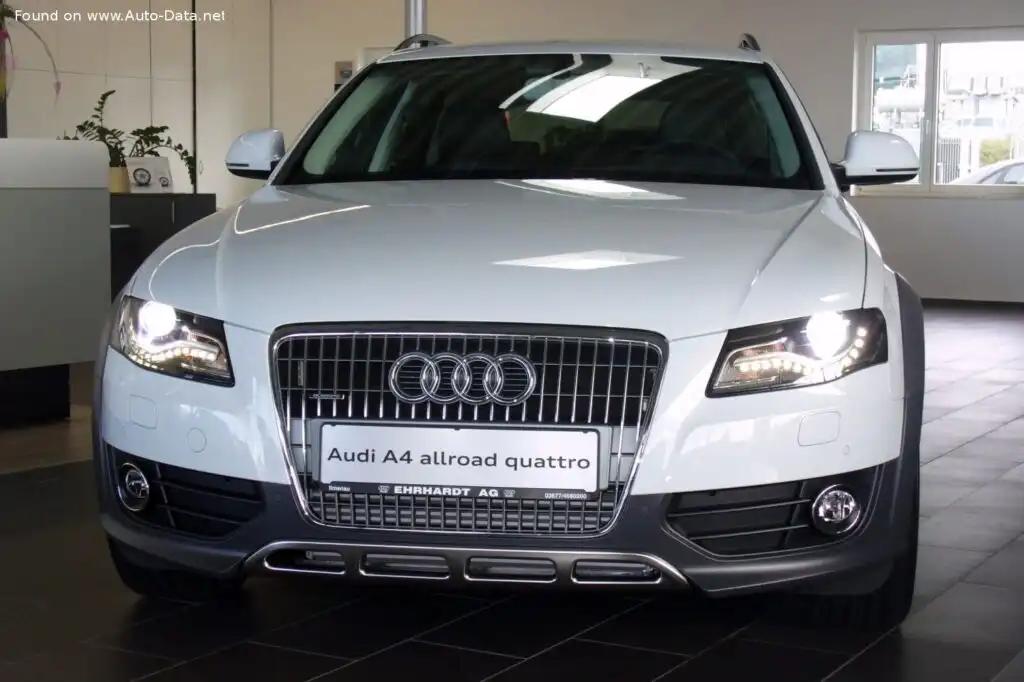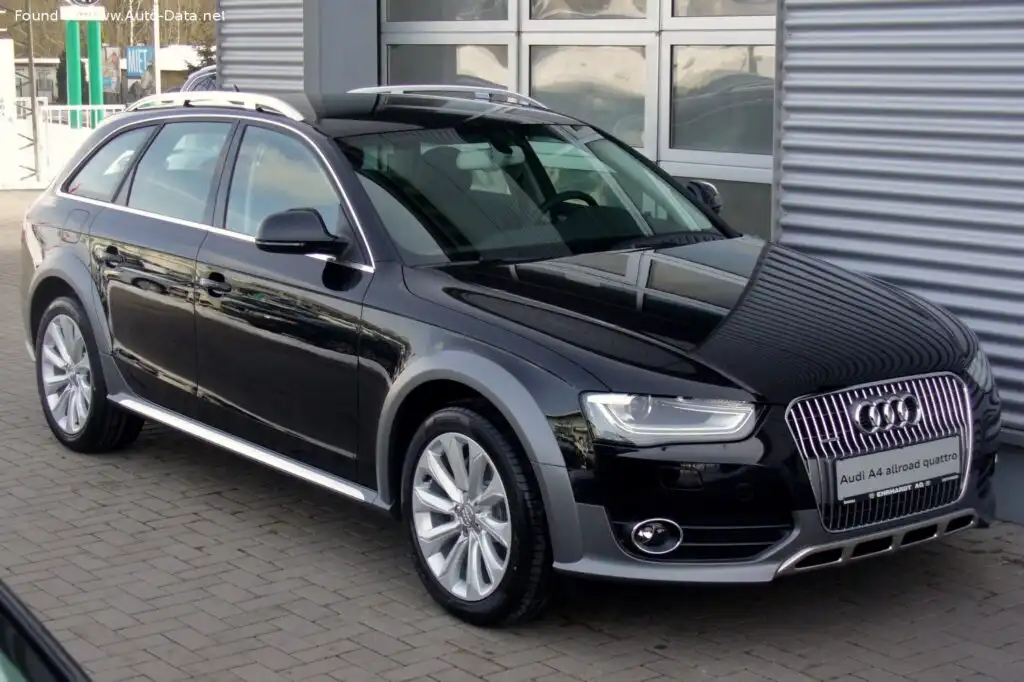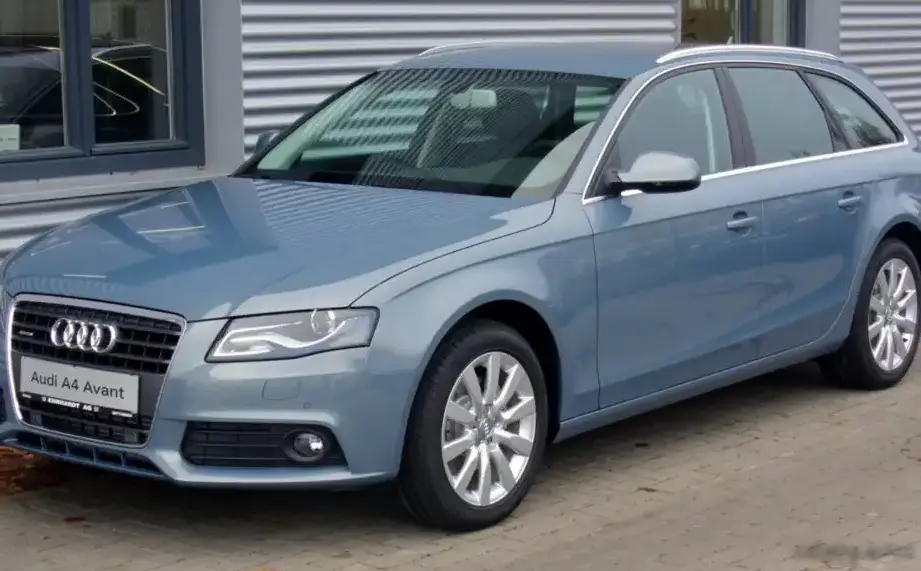
The Audi A4 Avant (B8 8K) 2.0 TDI with 143 horsepower and the Multitronic continuously variable transmission (CVT) was a popular configuration within the broader B8 A4 Avant lineup, produced between 2008 and 2011. Positioned as a mid-range offering, it aimed to balance fuel efficiency with acceptable performance for everyday driving. This variant was primarily sold in the European market, where diesel engines and wagons (Avants in Audi terminology) held significant appeal. The B8 generation A4 represented a significant step forward for Audi, introducing a more refined interior, improved driving dynamics, and a range of advanced technologies.
Technical Specifications
| Brand | Audi |
| Model | A4 |
| Generation | A4 Avant (B8 8K) |
| Type (Engine) | 2.0 TDI (143 Hp) Multitronic |
| Start of production | 2008 |
| End of production | 2011 |
| Powertrain Architecture | Internal Combustion engine |
| Body type | Station wagon (estate) |
| Seats | 5 |
| Doors | 5 |
| Fuel consumption (urban) | 7.8 l/100 km (30.2 US mpg, 36.2 UK mpg, 12.8 km/l) |
| Fuel consumption (extra urban) | 4.7 l/100 km (50 US mpg, 60.1 UK mpg, 21.3 km/l) |
| Fuel consumption (combined) | 5.8 l/100 km (40.6 US mpg, 48.7 UK mpg, 17.2 km/l) |
| Fuel Type | Diesel |
| Acceleration 0 – 100 km/h | 9.7 sec |
| Acceleration 0 – 62 mph | 9.7 sec |
| Acceleration 0 – 60 mph | 9.2 sec |
| Maximum speed | 208 km/h (129.25 mph) |
| Emission standard | Euro 4 |
| Weight-to-power ratio | 10.6 kg/Hp, 94.1 Hp/tonne |
| Weight-to-torque ratio | 4.8 kg/Nm, 210.5 Nm/tonne |
| Power | 143 Hp @ 4200 rpm |
| Power per litre | 72.7 Hp/l |
| Torque | 320 Nm @ 1750-2500 rpm (236.02 lb.-ft. @ 1750-2500 rpm) |
| Engine layout | Front, Longitudinal |
| Engine Model/Code | EA189 / CAGA |
| Engine displacement | 1968 cm3 (120.09 cu. in.) |
| Number of cylinders | 4 |
| Engine configuration | Inline |
| Cylinder Bore | 81 mm (3.19 in.) |
| Piston Stroke | 95.5 mm (3.76 in.) |
| Compression ratio | 16.5:1 |
| Number of valves per cylinder | 4 |
| Fuel injection system | Diesel Commonrail |
| Engine aspiration | Turbocharger, Intercooler |
| Valvetrain | DOHC |
| Engine oil capacity | 5 l (5.28 US qt | 4.4 UK qt) |
| Coolant | 7.5 l (7.93 US qt | 6.6 UK qt) |
| Kerb Weight | 1520 kg (3351.03 lbs.) |
| Max. weight | 2090 kg (4607.66 lbs.) |
| Max load | 570 kg (1256.63 lbs.) |
| Trunk (boot) space – minimum | 490 l (17.3 cu. ft.) |
| Trunk (boot) space – maximum | 1430 l (50.5 cu. ft.) |
| Fuel tank capacity | 65 l (17.17 US gal | 14.3 UK gal) |
| Length | 4703 mm (185.16 in.) |
| Width | 1826 mm (71.89 in.) |
| Height | 1436 mm (56.54 in.) |
| Wheelbase | 2808 mm (110.55 in.) |
| Front track | 1564 mm (61.57 in.) |
| Rear (Back) track | 1551 mm (61.06 in.) |
| Drag coefficient (Cd) | 0.32 |
| Minimum turning circle | 11.4 m (37.4 ft.) |
| Drivetrain Architecture | The Internal combustion engine (ICE) drives the front wheels of the vehicle. |
| Drive wheel | Front wheel drive |
| Number of gears and type of gearbox | automatic transmission Multitronic |
| Front suspension | Independent multi-link suspension |
| Rear suspension | Independent multi-link spring suspension with stabilizer |
| Front brakes | Ventilated discs |
| Rear brakes | Disc |
| Assisting systems | ABS (Anti-lock braking system) |
| Steering type | Steering rack and pinion |
| Power steering | Electric Steering |
| Tires size | 225/65 R16; 225/50 R17 |
| Wheel rims size | 7.5J x 16; 7.5J x 17 |
Powertrain & Engine Architecture
The heart of this A4 Avant is the EA189 series 2.0-liter inline-four diesel engine, specifically the CAGA code. This engine utilizes a common rail direct injection system, delivering fuel at extremely high pressures for optimized combustion. The engine features a turbocharger with an intercooler to increase air density and boost power output. The double overhead camshaft (DOHC) valvetrain, with four valves per cylinder, contributes to efficient gas exchange. The 16.5:1 compression ratio is typical for a diesel engine, maximizing thermal efficiency. The Multitronic transmission is a continuously variable transmission (CVT) that offers smooth, stepless gear changes. Unlike traditional automatic transmissions with fixed gear ratios, the Multitronic uses a chain-driven system to provide an infinite number of ratios within its operating range. This allows the engine to operate at its most efficient point more often, improving fuel economy.
Driving Characteristics
The 143 horsepower and 320 Nm (236 lb-ft) of torque provided by the 2.0 TDI engine and Multitronic transmission resulted in a comfortable and efficient driving experience. Acceleration from 0-100 km/h (0-62 mph) took approximately 9.7 seconds, which was adequate for everyday driving but not particularly sporty. The Multitronic transmission contributed to smooth acceleration and minimized shift shock. Compared to the more powerful 170 hp or 184 hp versions of the 2.0 TDI, this variant felt less responsive, especially during overtaking maneuvers. The Multitronic transmission, while smooth, lacked the direct feel of a traditional automatic or manual gearbox. The gear ratios were optimized for fuel economy, meaning the engine could sometimes feel strained when pushed hard.
Equipment & Trim Levels
The 2.0 TDI 143 hp Multitronic Avant typically came with a respectable level of standard equipment. This included air conditioning, power windows, power mirrors, a multi-function steering wheel, and an Audi Concert radio system. Higher trim levels, such as SE or S-Line, added features like alloy wheels, upgraded interior trim, parking sensors, and a more advanced infotainment system. Optional extras included leather upholstery, a sunroof, and a navigation system. The interior design was typical of Audi at the time, characterized by a clean, functional layout and high-quality materials.
Chassis & Braking
The B8 A4 Avant featured a fully independent suspension system, with multi-link setups at both the front and rear. This provided a comfortable ride and good handling characteristics. The front suspension utilized coil springs and shock absorbers, while the rear suspension also included a stabilizer bar to reduce body roll. Brakes consisted of ventilated discs at the front and solid discs at the rear. Anti-lock braking system (ABS) was standard. The steering was a rack-and-pinion system with electric power assistance, providing precise and responsive steering feel.
Market Reception & Comparison
The Audi A4 Avant 2.0 TDI 143 hp Multitronic was well-received in the European market as a practical and efficient family car. Critics praised its comfortable ride, spacious interior, and fuel economy. However, some reviewers noted that the engine lacked the punch of more powerful alternatives. Compared to the 1.8 TFSI petrol engine, the 2.0 TDI offered significantly better fuel economy but less overall performance. The 2.0 TDI 170 hp version provided a noticeable performance upgrade, but at a higher price point. Reliability was generally good, although the Multitronic transmission required regular servicing to ensure smooth operation.
Legacy
The EA189 engine family, while generally reliable, became subject to scrutiny due to emissions concerns and the “Dieselgate” scandal. However, the 2.0 TDI 143 hp engine itself proved to be a durable unit when properly maintained. Today, used examples of the A4 Avant 2.0 TDI 143 hp Multitronic are readily available and represent a relatively affordable entry point into Audi ownership. The Multitronic transmission remains the primary maintenance concern, requiring fluid changes at the recommended intervals to prevent premature failure. Despite its age, the B8 A4 Avant continues to be a popular choice for those seeking a practical, comfortable, and fuel-efficient estate car.