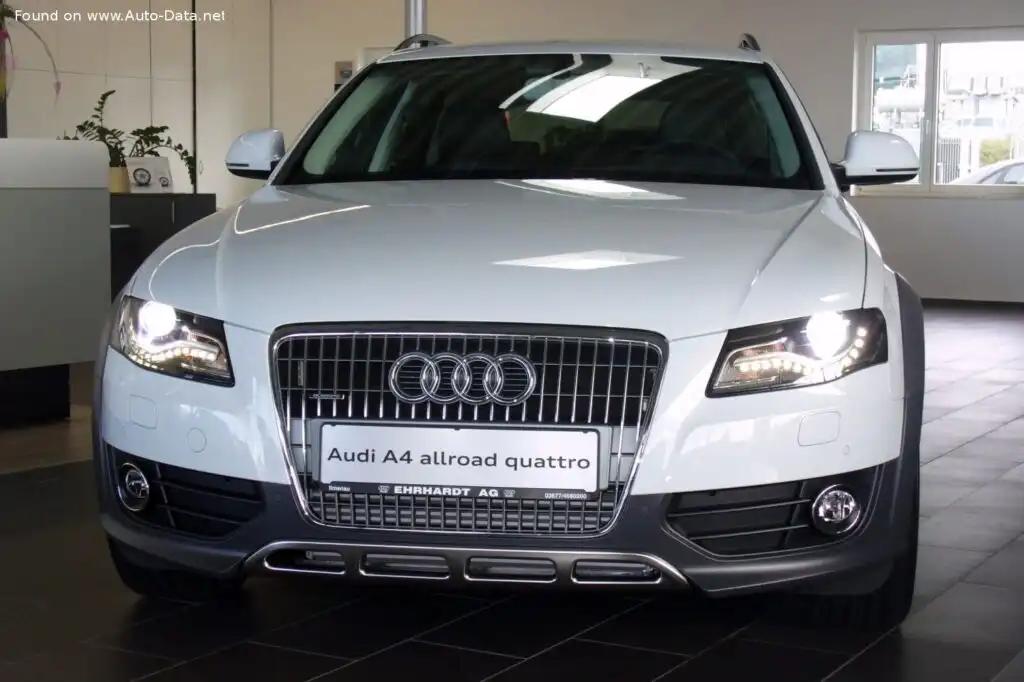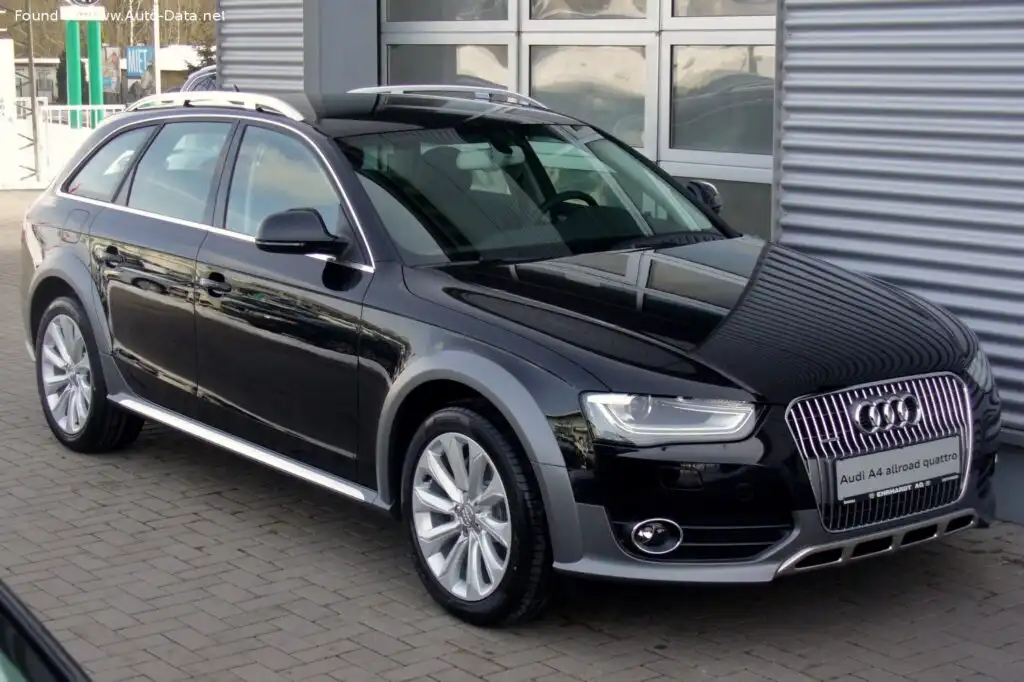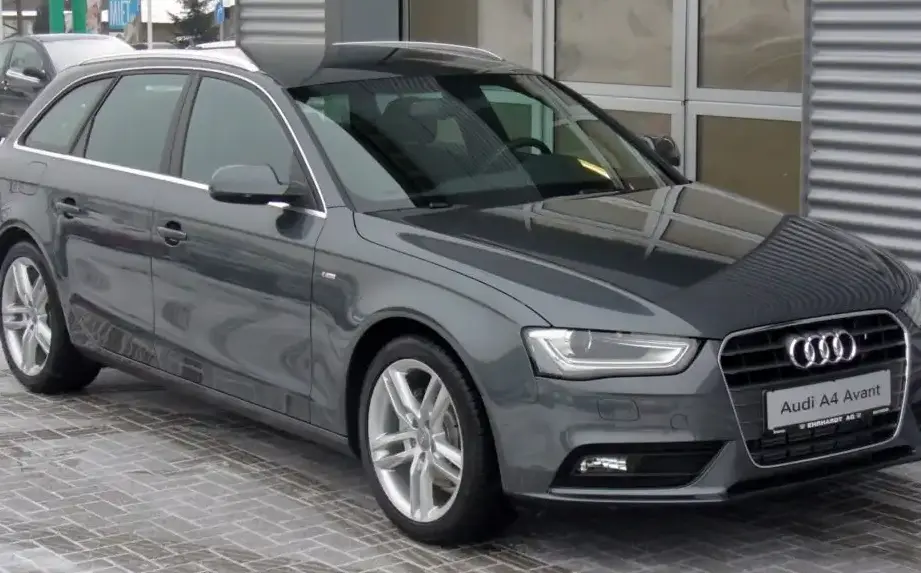
The Audi A4 Avant (B8 8K) facelift, produced from 2011-2013, represented a significant update to Audi’s popular compact executive wagon. The 2.0 TFSI variant, generating 211 horsepower, was a key offering within the B8 range, positioned as a balance between performance and fuel efficiency. This model year saw the introduction of the Start/Stop system, further enhancing its eco-credentials. The A4 Avant competed directly with vehicles like the BMW 3 Series Touring, Mercedes-Benz C-Class Estate, and Volvo V60, offering a premium experience with a focus on technology and driving dynamics.
Technical Specifications
| Brand | Audi |
| Model | A4 |
| Generation | A4 Avant (B8 8K, facelift 2011) |
| Type (Engine) | 2.0 TFSI (211 Hp) start/stop |
| Start of production | January, 2012 |
| End of production | 2013 |
| Powertrain Architecture | Internal Combustion engine |
| Body type | Station wagon (estate) |
| Seats | 5 |
| Doors | 5 |
| Fuel consumption (urban) | 8.2 l/100 km (28.7 US mpg, 34.4 UK mpg, 12.2 km/l) |
| Fuel consumption (extra urban) | 5.3 l/100 km (44.4 US mpg, 53.3 UK mpg, 18.9 km/l) |
| Fuel consumption (combined) | 6.4 l/100 km (36.8 US mpg, 44.1 UK mpg, 15.6 km/l) |
| CO2 emissions | 149 g/km |
| Fuel Type | Petrol (Gasoline) |
| Acceleration 0 – 100 km/h | 7.1 sec |
| Acceleration 0 – 62 mph | 7.1 sec |
| Acceleration 0 – 60 mph | 6.7 sec |
| Maximum speed | 242 km/h (150.37 mph) |
| Emission standard | Euro 5 |
| Weight-to-power ratio | 7.1 kg/Hp, 140.2 Hp/tonne |
| Weight-to-torque ratio | 4.3 kg/Nm, 232.6 Nm/tonne |
| Power | 211 Hp @ 4300-6000 rpm |
| Power per litre | 106.4 Hp/l |
| Torque | 350 Nm @ 1500-4500 rpm (258.15 lb.-ft. @ 1500-4500 rpm) |
| Engine layout | Front, Longitudinal |
| Engine Model/Code | CAEB, CDNC, CPMA |
| Engine displacement | 1984 cm3 (121.07 cu. in.) |
| Number of cylinders | 4 |
| Engine configuration | Inline |
| Cylinder Bore | 82.5 mm (3.25 in.) |
| Piston Stroke | 92.8 mm (3.65 in.) |
| Compression ratio | 9.6:1 |
| Number of valves per cylinder | 4 |
| Fuel injection system | Direct injection |
| Engine aspiration | Turbocharger, Intercooler |
| Valvetrain | DOHC |
| Engine oil capacity | 4.6 l (4.86 US qt | 4.05 UK qt) |
| Kerb Weight | 1505 kg (3317.96 lbs.) |
| Max. weight | 2075 kg (4574.59 lbs.) |
| Max load | 570 kg (1256.63 lbs.) |
| Trunk (boot) space – minimum | 490 l (17.3 cu. ft.) |
| Trunk (boot) space – maximum | 1430 l (50.5 cu. ft.) |
| Fuel tank capacity | 63 l (16.64 US gal | 13.86 UK gal) |
| Max. roof load | 90 kg (198.42 lbs.) |
| Permitted trailer load with brakes (8%) | 1700 kg (3747.86 lbs.) |
| Permitted trailer load without brakes | 750 kg (1653.47 lbs.) |
| Permitted towbar download | 80 kg (176.37 lbs.) |
| Length | 4699 mm (185 in.) |
| Width | 1826 mm (71.89 in.) |
| Width including mirrors | 2040 mm (80.31 in.) |
| Height | 1436 mm (56.54 in.) |
| Wheelbase | 2808 mm (110.55 in.) |
| Front track | 1564 mm (61.57 in.) |
| Rear (Back) track | 1551 mm (61.06 in.) |
| Front overhang | 862 mm (33.94 in.) |
| Rear overhang | 1029 mm (40.51 in.) |
| Drag coefficient (Cd) | 0.32 |
| Minimum turning circle (turning diameter) | 11.5 m (37.73 ft.) |
| Drivetrain Architecture | The Internal combustion engine (ICE) drives the front wheels of the vehicle. |
| Drive wheel | Front wheel drive |
| Number of gears and type of gearbox | 6 gears, manual transmission |
| Front suspension | Independent multi-link suspension |
| Rear suspension | Independent on trapezoidal lever |
| Assisting systems | ABS (Anti-lock braking system) |
| Steering type | Steering rack and pinion |
| Power steering | Electric Steering |
| Tires size | 225/55 R16 |
| Wheel rims size | 7.5J x 16 |
Powertrain & Engine Architecture
The heart of the A4 Avant 2.0 TFSI was the EA888 engine family, specifically the CAEB, CDNC, or CPMA engine code depending on the specific market and production date. This 1984cc, turbocharged, direct-injection four-cylinder engine was a cornerstone of Audi’s powertrain strategy. Direct injection allowed for precise fuel delivery, improving both power and efficiency. The engine featured a single turbocharger with an intercooler to manage intake air temperature. The DOHC (Dual Overhead Camshaft) valvetrain, with four valves per cylinder, optimized gas flow for increased performance. The Start/Stop system, introduced with the facelift, automatically shut off the engine when the vehicle was stationary, reducing fuel consumption and emissions. This variant utilized a 6-speed manual transmission, delivering power to the front wheels.
Driving Characteristics
The 211 horsepower and 350 Nm (258 lb-ft) of torque provided by the 2.0 TFSI engine offered a respectable level of performance for the A4 Avant. Acceleration from 0-60 mph took approximately 6.7 seconds, making it a capable performer in everyday driving situations. While not as quick as the higher-output variants or those equipped with the S tronic dual-clutch transmission, the manual gearbox provided a more engaging driving experience. The engine delivered a broad torque curve, providing good responsiveness across a wide range of engine speeds. The 6-speed manual transmission was well-matched to the engine’s characteristics, offering precise shifts and a satisfying feel. Compared to the 1.8 TFSI models, the 2.0 TFSI offered a noticeable increase in power and torque, resulting in quicker acceleration and improved passing performance.
Equipment & Trim Levels
The A4 Avant 2.0 TFSI typically came well-equipped, reflecting Audi’s premium positioning. Standard features included automatic climate control, a multi-function steering wheel, power windows and mirrors, and an audio system with auxiliary input. Higher trim levels offered options such as leather upholstery, a sunroof, navigation system, and advanced driver-assistance systems like parking sensors and adaptive cruise control. Interior upholstery was typically cloth in the base models, with leather options available as upgrades. The dashboard layout was clean and functional, with a focus on ergonomics and ease of use. Optional extras included upgraded sound systems, metallic paint finishes, and various interior trim packages.
Chassis & Braking
The A4 Avant featured a sophisticated chassis design, with independent multi-link suspension at the front and an independent trapezoidal lever suspension at the rear. This setup provided a comfortable ride while maintaining good handling characteristics. The steering was precise and well-weighted, offering good feedback to the driver. Braking duties were handled by ventilated disc brakes at the front and either disc or drum brakes at the rear, depending on the specific trim level and market. ABS (Anti-lock Braking System) was standard, enhancing safety and stability during braking. The suspension was tuned to provide a balance between comfort and handling, making it suitable for both everyday driving and longer journeys.
Market Reception & Comparison
The Audi A4 Avant 2.0 TFSI was generally well-received by automotive critics. It was praised for its refined engine, comfortable ride, and spacious interior. Fuel economy was considered competitive for its class, and the Start/Stop system further improved its efficiency. Compared to the 1.8 TFSI variant, the 2.0 TFSI offered a noticeable performance upgrade, making it a more appealing option for drivers who prioritized power and responsiveness. However, some critics noted that the manual transmission was not as smooth or quick-shifting as the S tronic dual-clutch transmission. Reliability was generally good, although some owners reported minor issues with the turbocharger and fuel injection system.
Legacy
The Audi A4 Avant (B8) 2.0 TFSI remains a popular choice in the used car market. The EA888 engine, while not without its potential issues, is generally considered robust and reliable when properly maintained. The availability of parts and service is good, making it relatively easy to keep these vehicles on the road. The combination of practicality, performance, and premium features continues to appeal to buyers looking for a versatile and well-rounded wagon. While newer A4 models offer more advanced technology and improved fuel efficiency, the B8 Avant 2.0 TFSI represents a sweet spot in terms of value and driving experience.