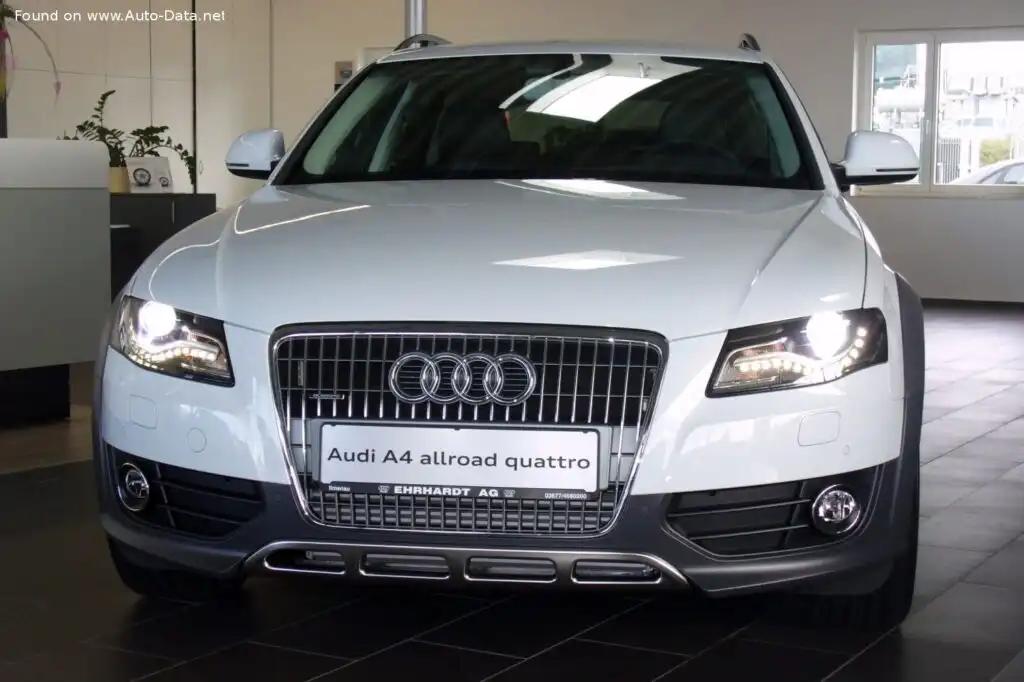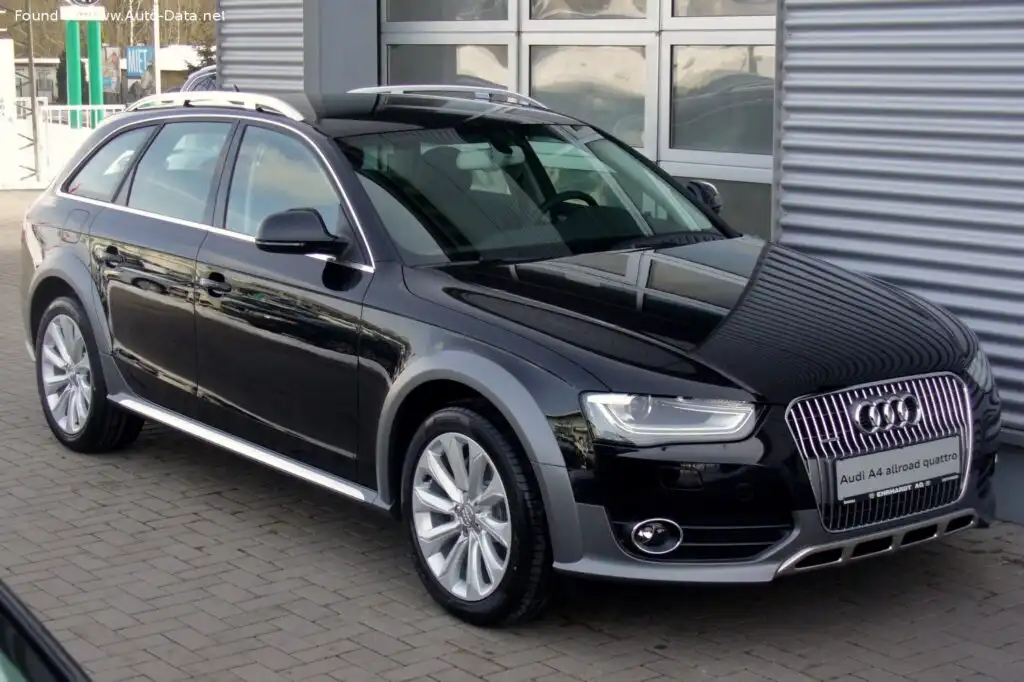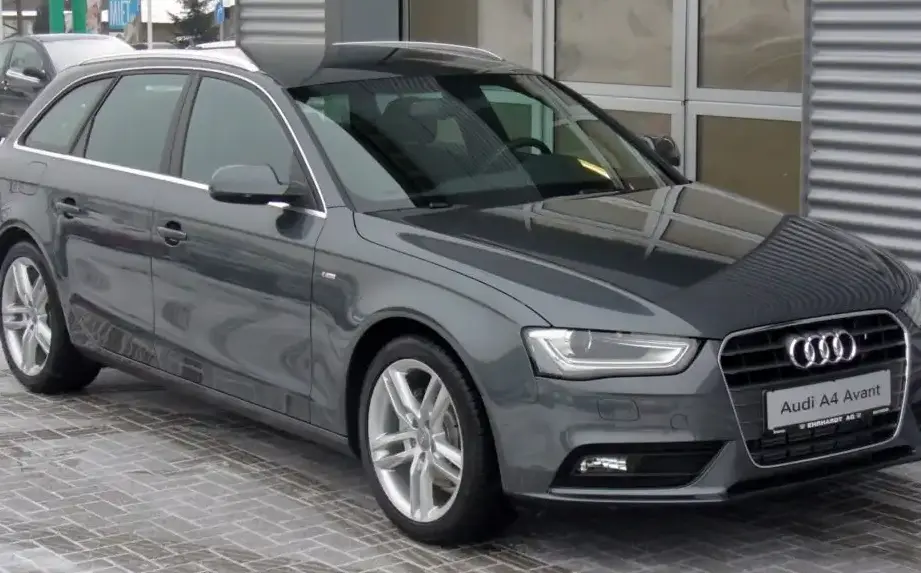
The Audi A4 Avant (B8 8K) facelift, produced from 2011 to 2015, represented a significant refinement of Audi’s popular compact executive wagon. The 2.0 TFSI quattro variant, boasting 225 horsepower, occupied a strong position within the lineup, offering a blend of performance, practicality, and all-weather capability. Introduced in April 2013, this model catered to buyers seeking a more engaging driving experience than the lower-powered engine options, while remaining more accessible than the performance-focused S4 Avant. It was a key offering in the European market, where wagons maintain substantial popularity, and gained traction in North America as Audi continued to expand its presence.
Technical Specifications
| Brand | Audi |
| Model | A4 |
| Generation | A4 Avant (B8 8K, facelift 2011) |
| Type (Engine) | 2.0 TFSI (225 Hp) quattro |
| Start of production | April, 2013 |
| End of production | 2015 |
| Powertrain Architecture | Internal Combustion engine |
| Body type | Station wagon (estate) |
| Seats | 5 |
| Doors | 5 |
| Fuel consumption (urban) | 8.8 l/100 km (26.7 US mpg, 32.1 UK mpg, 11.4 km/l) |
| Fuel consumption (extra urban) | 5.5 l/100 km (42.8 US mpg, 51.4 UK mpg, 18.2 km/l) |
| Fuel consumption (combined) | 6.7 l/100 km (35.1 US mpg, 42.2 UK mpg, 14.9 km/l) |
| CO2 emissions | 154 g/km |
| Fuel Type | Petrol (Gasoline) |
| Acceleration 0 – 100 km/h | 6.5 sec |
| Acceleration 0 – 62 mph | 6.5 sec |
| Acceleration 0 – 60 mph | 6.2 sec |
| Maximum speed | 240 km/h (149.13 mph) |
| Emission standard | Euro 6 |
| Weight-to-power ratio | 7 kg/Hp, 142.9 Hp/tonne |
| Weight-to-torque ratio | 4.5 kg/Nm, 222.2 Nm/tonne |
| Power | 225 Hp @ 4500-6250 rpm |
| Power per litre | 113.4 Hp/l |
| Torque | 350 Nm @ 1500-4500 rpm (258.15 lb.-ft. @ 1500-4500 rpm) |
| Engine layout | Front, Longitudinal |
| Engine Model/Code | EA888 / CNCD |
| Engine displacement | 1984 cm3 (121.07 cu. in.) |
| Number of cylinders | 4 |
| Engine configuration | Inline |
| Cylinder Bore | 82.5 mm (3.25 in.) |
| Piston Stroke | 92.8 mm (3.65 in.) |
| Compression ratio | 9.6:1 |
| Number of valves per cylinder | 4 |
| Fuel injection system | Direct injection and Multi-port manifold injection |
| Engine aspiration | Turbocharger, Intercooler |
| Valvetrain | DOHC |
| Engine oil capacity | 4.6 l (4.86 US qt | 4.05 UK qt) |
| Kerb Weight | 1575 kg (3472.28 lbs.) |
| Max. weight | 2145 kg (4728.92 lbs.) |
| Max load | 570 kg (1256.63 lbs.) |
| Trunk (boot) space – minimum | 490 l (17.3 cu. ft.) |
| Trunk (boot) space – maximum | 1430 l (50.5 cu. ft.) |
| Fuel tank capacity | 61 l (16.11 US gal | 13.42 UK gal) |
| Max. roof load | 90 kg (198.42 lbs.) |
| Permitted trailer load with brakes (8%) | 1900 kg (4188.78 lbs.) |
| Permitted trailer load with brakes (12%) | 1700 kg (3747.86 lbs.) |
| Permitted trailer load without brakes | 750 kg (1653.47 lbs.) |
| Permitted towbar download | 80 kg (176.37 lbs.) |
| Length | 4699 mm (185 in.) |
| Width | 1826 mm (71.89 in.) |
| Width including mirrors | 2040 mm (80.31 in.) |
| Height | 1436 mm (56.54 in.) |
| Wheelbase | 2808 mm (110.55 in.) |
| Front track | 1564 mm (61.57 in.) |
| Rear (Back) track | 1551 mm (61.06 in.) |
| Front overhang | 862 mm (33.94 in.) |
| Rear overhang | 1029 mm (40.51 in.) |
| Drag coefficient (Cd) | 0.32 |
| Minimum turning circle (turning diameter) | 11.5 m (37.73 ft.) |
| Drivetrain Architecture | The Internal combustion engine (ICE) drives permanently the four wheels of the vehicle. |
| Drive wheel | All wheel drive (4×4) |
| Number of gears and type of gearbox | 6 gears, manual transmission |
| Front suspension | Independent multi-link suspension, Transverse stabilizer |
| Rear suspension | Independent on trapezoidal lever, Transverse stabilizer |
| Front brakes | Ventilated discs |
| Rear brakes | Disc |
| Assisting systems | ABS (Anti-lock braking system) |
| Steering type | Steering rack and pinion |
| Power steering | Electric Steering |
| Tires size | 225/55 R16 |
| Wheel rims size | 7.5J x 16 |
Powertrain & Engine Architecture
The heart of the A4 Avant 2.0 TFSI quattro is the EA888 engine, specifically the CNCD variant. This 1984cc, turbocharged inline-four engine utilizes direct fuel injection combined with multi-point injection, optimizing both power delivery and fuel efficiency. The engine features a cast iron block with an aluminum cylinder head, incorporating a dual overhead camshaft (DOHC) valvetrain with four valves per cylinder. The turbocharger, coupled with an intercooler, provides significant boost, contributing to the engine’s 225 horsepower output at 4500-6250 rpm and 350 Nm (258 lb-ft) of torque available from a low 1500 rpm to 4500 rpm. The six-speed manual transmission was standard, providing precise gear changes and a direct connection to the engine. The quattro all-wheel-drive system employs a Torsen center differential, distributing torque between the front and rear axles based on traction conditions, enhancing stability and grip.
Driving Characteristics
The 2.0 TFSI quattro Avant offered a noticeably more spirited driving experience compared to the base 1.8 TFSI models. The increased power and torque, combined with the quattro system, resulted in confident acceleration and handling. The 0-60 mph sprint was dispatched in approximately 6.2 seconds, making it a competitive performer in its class. The manual transmission’s gear ratios were well-matched to the engine’s powerband, providing ample torque for everyday driving and responsive acceleration for overtaking maneuvers. While not as overtly sporty as the S4 Avant, the 2.0 TFSI quattro provided a balanced and engaging driving experience, suitable for both commuting and longer journeys.
Equipment & Trim Levels
The 2.0 TFSI quattro Avant typically came well-equipped as standard. Features included Audi’s Multi Media Interface (MMI) infotainment system, leather upholstery, three-zone automatic climate control, and front fog lights. Optional extras included a panoramic sunroof, navigation system, advanced parking assist, and a premium sound system. Trim levels varied slightly depending on the market, but generally offered options to upgrade interior materials, add driver assistance features, and customize exterior styling.
Chassis & Braking
The B8 A4 Avant featured a sophisticated chassis design, utilizing independent multi-link suspension at all four corners. This setup provided a comfortable ride while maintaining precise handling characteristics. The front suspension incorporated a transverse stabilizer bar to reduce body roll, while the rear suspension utilized a trapezoidal lever design. Braking duties were handled by ventilated discs at the front and solid discs at the rear, providing ample stopping power. The ABS (Anti-lock Braking System) and Electronic Stability Control (ESC) systems further enhanced safety and control.
Market Reception & Comparison
The Audi A4 Avant 2.0 TFSI quattro was generally well-received by automotive critics. It was praised for its refined engine, capable handling, and practical wagon body style. Compared to its rivals, such as the BMW 3 Series Touring and Mercedes-Benz C-Class Estate, the A4 Avant offered a compelling combination of performance, luxury, and technology. Fuel economy was respectable for its class, averaging around 35.1 US mpg in combined driving. Reliability was generally good, although some owners reported minor issues with the turbocharger and fuel injection system.
Legacy
The Audi A4 Avant (B8 8K) 2.0 TFSI quattro has proven to be a durable and reliable vehicle in the used car market. The EA888 engine, while requiring regular maintenance, is generally considered robust. The quattro all-wheel-drive system continues to be a desirable feature, particularly in regions with inclement weather. Today, these Avants represent a good value proposition for buyers seeking a practical, well-equipped, and enjoyable-to-drive wagon. Properly maintained examples continue to command reasonable prices, reflecting their enduring appeal and reputation for quality.