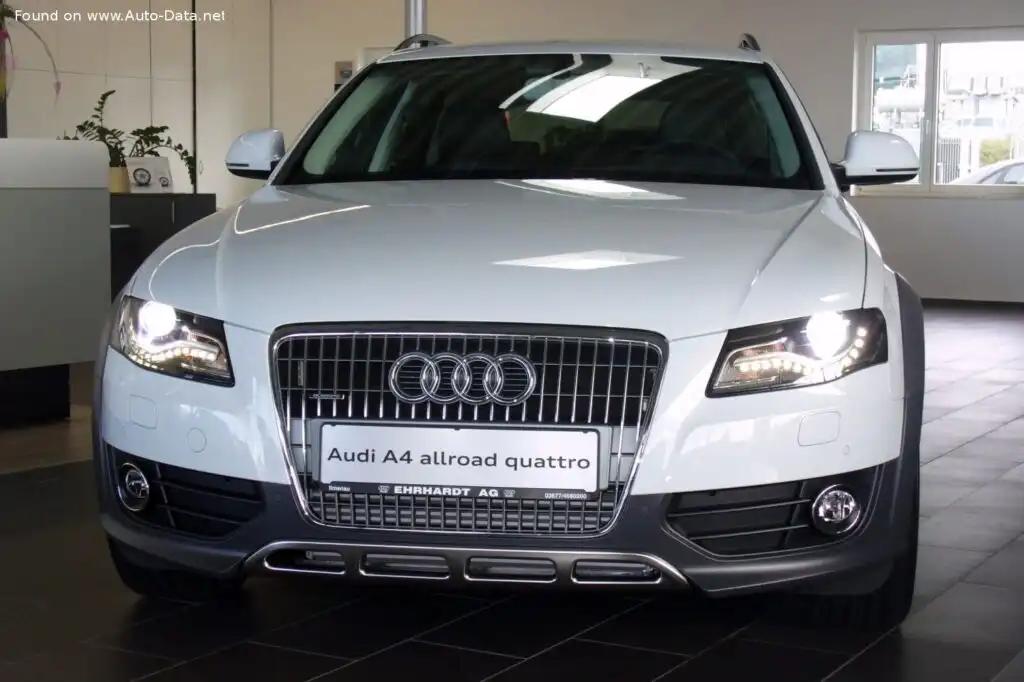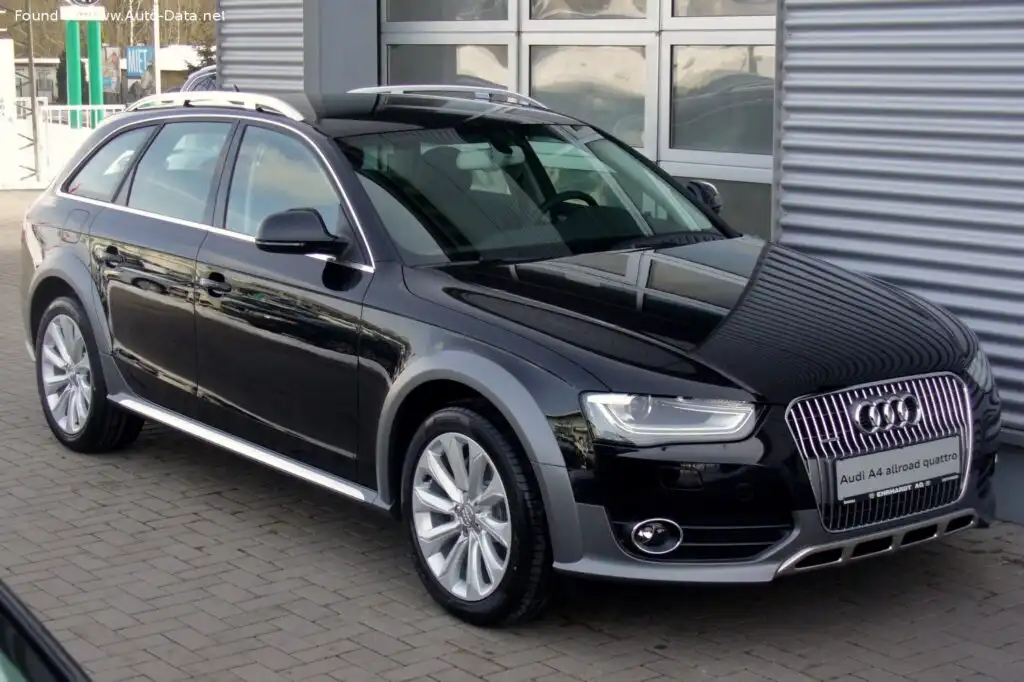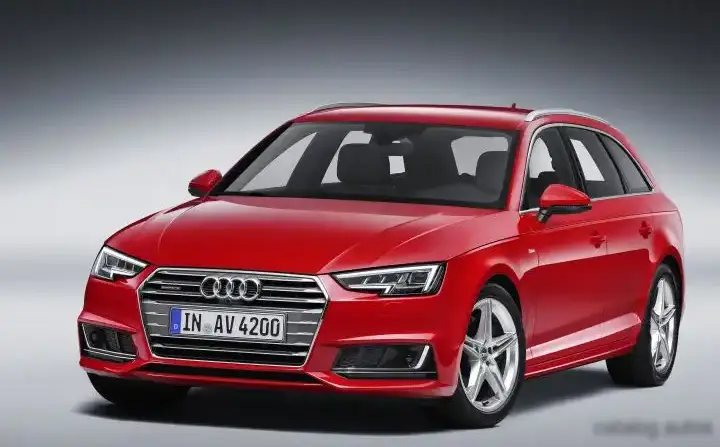
The Audi A4 Avant (B9 8W) 2.0 TDI ultra, produced from 2015 to 2018, represents a key variant within the fifth generation of Audi’s popular A4 series. Positioned as a fuel-efficient option within the Avant (estate) body style, this model aimed to balance practicality with reasonable performance and lower running costs. It was primarily marketed in Europe, where demand for diesel-powered wagons remained strong, and offered a compelling alternative to petrol-powered A4 Avants and competitors like the BMW 3 Series Touring and Mercedes-Benz C-Class Estate. This specific configuration – the 2.0 TDI ultra with the S tronic dual-clutch transmission – occupied a mid-range position in the A4 Avant lineup, offering a step up in efficiency from the base models while remaining more accessible than the higher-performance variants.
Technical Specifications
| Brand | Audi |
| Model | A4 |
| Generation | A4 Avant (B9 8W) |
| Type (Engine) | 2.0 TDI ultra (150 Hp) S tronic |
| Start of production | 2015 year |
| End of production | 2018 year |
| Powertrain Architecture | Internal Combustion engine |
| Body type | Station wagon (estate) |
| Seats | 5 |
| Doors | 5 |
| Fuel consumption (economy) – urban | 4.7-5.0 l/100 km (50 – 47 US mpg, 60.1 – 56.5 UK mpg, 21.3 – 20 km/l) |
| Fuel consumption (economy) – extra urban | 3.5-3.8 l/100 km (67.2 – 61.9 US mpg, 80.7 – 74.3 UK mpg, 28.6 – 26.3 km/l) |
| Fuel consumption (economy) – combined | 3.9-4.2 l/100 km (60.3 – 56 US mpg, 72.4 – 67.3 UK mpg, 25.6 – 23.8 km/l) |
| CO2 emissions | 102-110 g/km |
| Fuel Type | Diesel |
| Acceleration 0 – 100 km/h | 9 sec |
| Acceleration 0 – 62 mph | 9 sec |
| Acceleration 0 – 60 mph | 8.6 sec |
| Maximum speed | 210 km/h (130.49 mph) |
| Emission standard | Euro 6 |
| Weight-to-power ratio | 10.2 kg/Hp, 98.4 Hp/tonne |
| Weight-to-torque ratio | 4.8 kg/Nm, 209.8 Nm/tonne |
| Power | 150 Hp @ 3250-4200 rpm |
| Power per litre | 76.2 Hp/l |
| Torque | 320 Nm @ 1500-3250 rpm (236.02 lb.-ft. @ 1500-3250 rpm) |
| Engine layout | Front, Longitudinal |
| Engine Model/Code | DEUA |
| Engine displacement | 1968 cm3 (120.09 cu. in.) |
| Number of cylinders | 4 |
| Engine configuration | Inline |
| Cylinder Bore | 81 mm (3.19 in.) |
| Piston Stroke | 95.5 mm (3.76 in.) |
| Compression ratio | 16.2:1 |
| Number of valves per cylinder | 4 |
| Fuel injection system | Diesel Commonrail |
| Engine aspiration | Turbocharger, Intercooler |
| Valvetrain | DOHC |
| Engine oil capacity | 4.7 l (4.97 US qt | 4.14 UK qt) |
| Kerb Weight | 1525 kg (3362.05 lbs.) |
| Max. weight | 2145 kg (4728.92 lbs.) |
| Max load | 620 kg (1366.87 lbs.) |
| Trunk (boot) space – minimum | 505 l (17.83 cu. ft.) |
| Trunk (boot) space – maximum | 1510 l (53.33 cu. ft.) |
| Fuel tank capacity | 40 l (10.57 US gal | 8.8 UK gal) |
| Max. roof load | 90 kg (198.42 lbs.) |
| Permitted trailer load with brakes (8%) | 1600 kg (3527.4 lbs.) |
| Permitted trailer load with brakes (12%) | 1400 kg (3086.47 lbs.) |
| Permitted trailer load without brakes | 750 kg (1653.47 lbs.) |
| Permitted towbar download | 80 kg (176.37 lbs.) |
| Length | 4725 mm (186.02 in.) |
| Width | 1842 mm (72.52 in.) |
| Width including mirrors | 2022 mm (79.61 in.) |
| Height | 1434 mm (56.46 in.) |
| Wheelbase | 2820 mm (111.02 in.) |
| Front track | 1572 mm (61.89 in.) |
| Rear (Back) track | 1555 mm (61.22 in.) |
| Front overhang | 880 mm (34.65 in.) |
| Rear overhang | 1025 mm (40.35 in.) |
| Drag coefficient (Cd) | 0.26 |
| Minimum turning circle (turning diameter) | 11.6 m (38.06 ft.) |
| Drivetrain Architecture | The Internal combustion engine (ICE) drives the front wheels of the vehicle. |
| Drive wheel | Front wheel drive |
| Number of gears and type of gearbox | 7 gears, automatic transmission S-tronic |
| Front suspension | Independent multi-link suspension |
| Rear suspension | Independent multi-link suspension |
| Front brakes | Ventilated discs |
| Rear brakes | Disc |
| Assisting systems | ABS (Anti-lock braking system) |
| Steering type | Steering rack and pinion |
| Power steering | Electric Steering |
| Tires size | 205/60 R16; 225/50 R17; 245/40 R18 |
| Wheel rims size | 7J x 16; 17; 18 |
Powertrain & Engine Architecture
The heart of the A4 Avant 2.0 TDI ultra is the DEUA engine, a 2.0-liter inline-four cylinder diesel engine. This engine is part of Volkswagen Group’s modular engine family, known for its efficiency and scalability. The DEUA utilizes a common rail direct injection system, injecting fuel directly into the combustion chamber at extremely high pressure for optimized combustion. A single turbocharger with an intercooler provides forced induction, boosting power and torque. The engine also features a Dual Overhead Camshaft (DOHC) valvetrain with four valves per cylinder, enhancing breathing and overall performance. The high compression ratio of 16.2:1 is typical for diesel engines, contributing to their thermal efficiency. The S tronic 7-speed dual-clutch transmission is a key component, offering quick and smooth gear changes. This transmission allows for both fully automatic operation and manual gear selection via steering wheel-mounted paddles or the gear selector.
Driving Characteristics
The 150 horsepower and 320 Nm (236 lb-ft) of torque delivered by the 2.0 TDI ultra engine provide adequate, though not exhilarating, performance. Acceleration from 0-60 mph takes approximately 8.6 seconds, and the car reaches a top speed of 130.49 mph. The S tronic transmission is well-matched to the engine, providing responsive shifts and helping to keep the engine in its optimal power band. Compared to the more powerful 2.0 TDI variants (typically producing 190 hp), this version feels less urgent in acceleration, particularly during overtaking maneuvers. However, the focus is on fuel economy and relaxed cruising. The gear ratios are tuned for efficiency, with taller gearing in higher gears to reduce engine speed at highway speeds. The front-wheel-drive configuration provides good traction in most conditions, but can exhibit some torque steer under hard acceleration.
Equipment & Trim Levels
The A4 Avant 2.0 TDI ultra typically came equipped with a respectable level of standard features. These included Audi’s Multi Media Interface (MMI) infotainment system with a central display screen, automatic climate control, power windows and mirrors, and alloy wheels. Interior upholstery was typically cloth, with leather options available as an upgrade. Common optional extras included a sunroof, navigation system, parking sensors, and advanced driver-assistance systems like adaptive cruise control and lane departure warning. Trim levels varied slightly depending on the market, but generally offered packages that bundled together popular options.
Chassis & Braking
The A4 Avant (B9) utilizes a sophisticated chassis design featuring independent multi-link suspension at both the front and rear. This setup provides a comfortable ride quality while maintaining good handling characteristics. The front suspension geometry is optimized for steering precision, while the rear suspension focuses on stability and minimizing body roll. Braking duties are handled by ventilated discs at the front and solid discs at the rear. Anti-lock Braking System (ABS) is standard, along with Electronic Stability Control (ESC) to enhance safety. The steering system is an electric power-assisted rack and pinion, providing a responsive and precise steering feel.
Market Reception & Comparison
The Audi A4 Avant 2.0 TDI ultra was generally well-received by automotive critics for its fuel efficiency and practicality. It was praised for its comfortable ride, refined interior, and user-friendly technology. However, some reviewers noted that the 150 hp engine could feel underpowered, particularly when fully loaded or tackling steep hills. Compared to the higher-output TDI variants, this version offered significantly better fuel economy – around 3.9-4.2 l/100km – but at the expense of performance. Against competitors like the BMW 3 Series Touring and Mercedes-Benz C-Class Estate, the A4 Avant 2.0 TDI ultra offered a compelling blend of features, efficiency, and build quality.
Legacy
The 2.0 TDI ultra engine, in general, has proven to be a relatively reliable powertrain, although, like all modern diesel engines, it is not immune to issues. Potential long-term concerns include diesel particulate filter (DPF) clogging, particularly with frequent short trips, and potential issues with the turbocharger. The S tronic transmission is generally robust, but requires regular servicing to ensure smooth operation. In the used car market, the A4 Avant 2.0 TDI ultra represents a sensible choice for buyers seeking a practical, fuel-efficient, and well-equipped estate car. Its reputation for reliability and relatively low running costs make it an attractive option, although prospective buyers should ensure that the car has been properly maintained and that the DPF has been regularly regenerated.