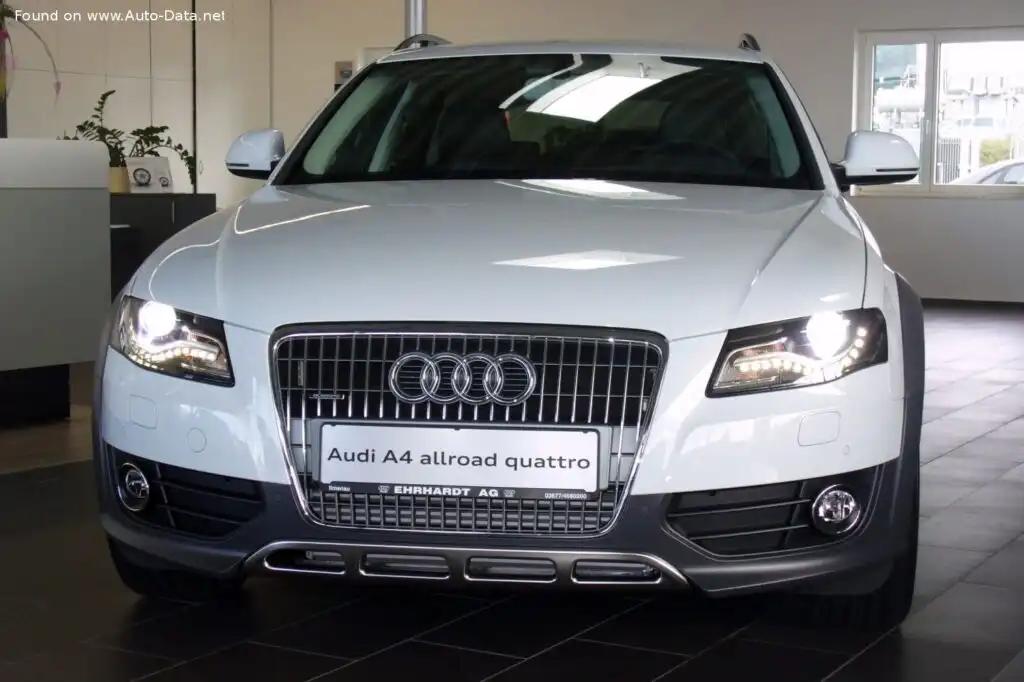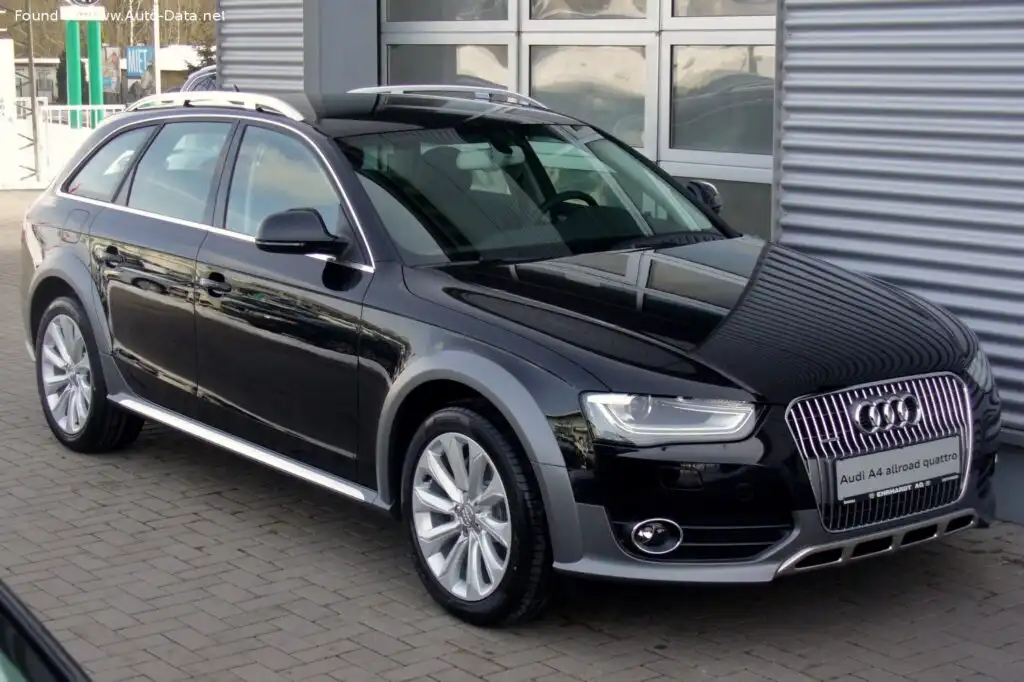
The Audi A4 Avant 35 TFSI Mild Hybrid, produced from 2020 to 2024, represents a key iteration of the B9 (8W) generation A4 Avant facelift. Positioned as an entry-to-mid-range offering within the A4 lineup, this variant combined a 2.0-liter turbocharged four-cylinder engine with a 48-volt mild hybrid system. It aimed to balance fuel efficiency with acceptable performance, appealing to buyers seeking a practical and technologically advanced premium wagon. This model was primarily marketed in Europe and other regions where wagons remain popular, offering a compelling alternative to similarly sized SUVs.
Technical Specifications
| Brand | Audi |
| Model | A4 |
| Generation | A4 Avant (B9 8W, facelift 2019) |
| Type (Engine) | 35 TFSI (150 Hp) Mild Hybrid |
| Start of production | July, 2020 |
| End of production | 2024 |
| Powertrain Architecture | MHEV (Mild Hybrid Electric Vehicle) |
| Body type | Station wagon (estate) |
| Seats | 5 |
| Doors | 5 |
| Combined fuel consumption (WLTP) | 6.1-7.1 l/100 km (38.6 – 33.1 US mpg) |
| CO2 emissions (WLTP) | 139-161 g/km |
| Fuel consumption (urban) | 7.7-8.0 l/100 km (30.5 – 29.4 US mpg) |
| Fuel consumption (extra urban) | 4.7-5.1 l/100 km (50 – 46.1 US mpg) |
| Fuel consumption (combined) | 5.8-6.2 l/100 km (40.6 – 37.9 US mpg) |
| CO2 emissions (NEDC) | 132-141 g/km |
| Fuel Type | Petrol (Gasoline) |
| Acceleration 0 – 100 km/h | 8.6 sec |
| Acceleration 0 – 62 mph | 8.6 sec |
| Acceleration 0 – 60 mph | 8.2 sec |
| Maximum speed | 210 km/h (130.49 mph) |
| Emission standard | Euro 6d-ISC-FCM |
| Weight-to-power ratio | 9.9 kg/Hp |
| Weight-to-torque ratio | 5.5 kg/Nm |
| Power | 150 Hp @ 4000-6000 rpm |
| Torque | 270 Nm @ 1300-3850 rpm (199.14 lb.-ft.) |
| Engine layout | Front, Longitudinal |
| Engine Model/Code | DMSB |
| Engine displacement | 1984 cm3 (121.07 cu. in.) |
| Number of cylinders | 4 |
| Engine configuration | Inline |
| Cylinder Bore | 82.5 mm (3.25 in.) |
| Piston Stroke | 92.8 mm (3.65 in.) |
| Compression ratio | 12.2:1 |
| Number of valves per cylinder | 4 |
| Fuel injection system | Direct injection |
| Engine aspiration | Turbocharger, Intercooler |
| Engine oil capacity | 5.2 l (5.49 US qt | 4.58 UK qt) |
| Coolant capacity | 10 l (10.57 US qt | 8.8 UK qt) |
| Kerb Weight | 1485 kg (3273.86 lbs.) |
| Max. weight | 2085 kg (4596.64 lbs.) |
| Max load | 600 kg (1322.77 lbs.) |
| Trunk (boot) space – minimum | 495 l (17.48 cu. ft.) |
| Trunk (boot) space – maximum | 1495 l (52.8 cu. ft.) |
| Fuel tank capacity | 54 l (14.27 US gal | 11.88 UK gal) |
| Max. roof load | 90 kg (198.42 lbs.) |
| Permitted trailer load (8%) | 1600 kg (3527.4 lbs.) |
| Permitted trailer load (12%) | 1400 kg (3086.47 lbs.) |
| Permitted trailer load (unbraked) | 750 kg (1653.47 lbs.) |
| Permitted towbar download | 80 kg (176.37 lbs.) |
| Length | 4762 mm (187.48 in.) |
| Width | 1847 mm (72.72 in.) |
| Width including mirrors | 2022 mm (79.61 in.) |
| Height | 1460 mm (57.48 in.) |
| Wheelbase | 2820 mm (111.02 in.) |
| Front track | 1572 mm (61.89 in.) |
| Rear track | 1555 mm (61.22 in.) |
| Front overhang | 899 mm (35.39 in.) |
| Rear overhang | 1043 mm (41.06 in.) |
| Drag coefficient (Cd) | 0.28 |
| Minimum turning circle | 11.6 m (38.06 ft.) |
| Drivetrain | Front wheel drive, MHEV |
| Number of gears | 6 |
| Gearbox type | Manual |
| Front suspension | Independent multi-link |
| Rear suspension | Independent multi-link |
| Front brakes | Ventilated discs |
| Rear brakes | Disc |
INTRODUCTION
The Audi A4 Avant 35 TFSI Mild Hybrid, launched in 2020 as part of the B9 generation’s facelift, offered a compelling blend of practicality, efficiency, and technology. The B9 A4, introduced in 2015, received a significant refresh in late 2019, bringing updated styling, enhanced technology, and a revised engine lineup. This 35 TFSI variant, utilizing a 2.0-liter turbocharged engine paired with a 48-volt mild hybrid system, was designed to appeal to buyers seeking a more economical option without sacrificing the A4’s core qualities. It slotted into the A4 Avant range below the more powerful 40 TFSI and 45 TFSI models, offering a more accessible entry point into the premium wagon segment.
Powertrain & Engine Architecture
At the heart of the A4 Avant 35 TFSI lies the EA888 2.0-liter inline-four cylinder engine, specifically the DMSB engine code. This engine features direct fuel injection, a single turbocharger with an intercooler, and variable valve timing on both the intake and exhaust sides. The engine produces 150 horsepower at 4000-6000 rpm and 270 Nm (199 lb-ft) of torque between 1300-3850 rpm. The key differentiating factor is the integration of a 48V mild hybrid system. This system comprises a belt-driven starter-generator (BSG) and a small lithium-ion battery. The BSG allows for extended start-stop functionality, regenerative braking (recapturing energy during deceleration), and a limited amount of electric assistance during acceleration. The 6-speed manual transmission was standard, offering precise shifts and a relatively engaging driving experience. The engine’s architecture is longitudinally mounted, driving the front wheels.
Driving Characteristics
The A4 Avant 35 TFSI with the manual transmission delivers a respectable, if not exhilarating, driving experience. Acceleration from 0-100 km/h (0-62 mph) takes approximately 8.6 seconds. The engine provides adequate power for everyday driving, with the turbocharger providing a noticeable boost in torque at lower engine speeds. The mild hybrid system contributes to smoother start-stop transitions and a slight improvement in fuel economy. Compared to the higher-output 40 TFSI and 45 TFSI variants, the 35 TFSI feels less urgent in its acceleration. The manual gearbox, while engaging, requires more driver involvement than the optional S tronic dual-clutch transmission available on other A4 models. The gear ratios are tuned for a balance between fuel efficiency and performance, prioritizing comfortable cruising over outright speed.
Equipment & Trim Levels
The A4 Avant 35 TFSI typically came well-equipped, even in base trim. Standard features generally included Audi’s MMI infotainment system with a 7-inch touchscreen display (larger screens were optional), automatic climate control, power windows and locks, and a leather-wrapped steering wheel. Safety features such as ABS, electronic stability control, and multiple airbags were also standard. Higher trim levels added features like Audi Virtual Cockpit (a fully digital instrument cluster), navigation, premium audio systems, and leather upholstery. Optional extras included a panoramic sunroof, adaptive cruise control, and various driver-assistance systems. Interior upholstery was typically cloth in the base model, with leather options available as upgrades. The dashboard layout was consistent across the B9 A4 range, featuring a clean and modern design.
Chassis & Braking
The A4 Avant 35 TFSI utilizes a sophisticated chassis design featuring independent multi-link suspension at both the front and rear. This setup provides a comfortable ride quality while maintaining good handling characteristics. The front suspension incorporates anti-roll bars to reduce body roll during cornering. Braking duties are handled by ventilated discs at the front and solid discs at the rear. ABS (Anti-lock Braking System) and electronic stability control are standard features, enhancing safety and control. The suspension tuning is geared towards comfort, making it well-suited for long-distance driving. The steering is a rack-and-pinion system with electric power assistance, providing precise and responsive steering feel.
Market Reception & Comparison
The A4 Avant 35 TFSI Mild Hybrid was generally well-received by automotive critics. It was praised for its fuel efficiency, comfortable ride, and well-appointed interior. However, some reviewers noted that the engine lacked the punch of the more powerful A4 variants. Compared to the 40 TFSI, the 35 TFSI offered a lower price point but sacrificed some performance. The 35 TFSI’s fuel economy, ranging from 6.1 to 7.1 l/100 km (38.6-33.1 US mpg), was a key selling point, making it an attractive option for buyers prioritizing efficiency. Reliability reports suggest that the EA888 engine is generally robust, although regular maintenance is crucial.
Legacy
The Audi A4 Avant 35 TFSI Mild Hybrid represents an important step in Audi’s transition towards greater electrification. The integration of the 48V mild hybrid system demonstrated Audi’s commitment to improving fuel efficiency and reducing emissions. On the used car market, these models are generally sought after for their blend of practicality, comfort, and technology. The EA888 engine has a proven track record of reliability, but potential buyers should ensure that the vehicle has been properly maintained. The A4 Avant 35 TFSI remains a compelling option for those seeking a premium wagon that offers a balance of performance, efficiency, and refinement.