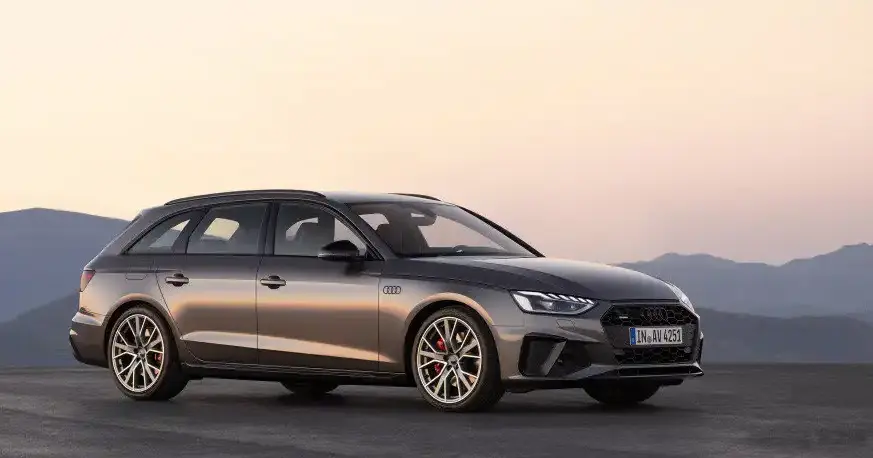
The Audi A4 Avant 40 g-tron, produced from 2020 to 2024, represents a unique offering within the B9 8W A4 Avant (facelifted in 2019) model range. This variant distinguished itself by utilizing a bi-fuel powertrain – capable of running on both gasoline and Compressed Natural Gas (CNG) – aimed at providing a more environmentally conscious alternative without sacrificing the practicality of a premium wagon. Positioned as a mid-range option, the 40 g-tron appealed to buyers seeking lower running costs and reduced emissions, particularly in European markets where CNG infrastructure is more developed. It occupied a niche between the standard gasoline-powered A4 Avants and the more performance-oriented S4 models.
Technical Specifications
| Brand | Audi |
| Model | A4 |
| Generation | A4 Avant (B9 8W, facelift 2019) |
| Type (Engine) | 40 g-tron (170 Hp) S tronic |
| Start of production | 2020 |
| End of production | 2024 |
| Powertrain Architecture | Internal Combustion engine |
| Body type | Station wagon (estate) |
| Seats | 5 |
| Doors | 5 |
| Fuel consumption at Low speed (WLTP) (CNG) | 6.4 kg/100 km |
| Fuel consumption at Medium speed (WLTP) (CNG) | 4.4 kg/100 km |
| Fuel consumption at high speed (WLTP) (CNG) | 3.8 kg/100 km |
| Fuel consumption at very high speed (WLTP) (CNG) | 4.2 kg/100 km |
| Combined fuel consumption (WLTP) (CNG) | 4.4 kg/100 km |
| CO2 emissions (WLTP) | 121 g/km |
| Fuel consumption (economy) – urban (CNG) (NEDC) | 5.2 kg/100 km |
| Fuel consumption (economy) – extra urban (CNG) (NEDC) | 3.2 kg/100 km |
| Fuel consumption (economy) – combined (CNG) (NEDC) | 3.9 kg/100 km |
| CO2 emissions (NEDC) | 105 g/km |
| Fuel Type | Petrol / CNG |
| Acceleration 0 – 100 km/h | 8.4 sec |
| Acceleration 0 – 62 mph | 8.4 sec |
| Acceleration 0 – 60 mph | 8 sec |
| Maximum speed | 210 km/h (130.49 mph) |
| Emission standard | Euro 6d-ISC-FCM |
| Weight-to-power ratio | 9.8 kg/Hp |
| Weight-to-torque ratio | 6.2 kg/Nm |
| Power | 170 Hp @ 4450-6000 rpm |
| Torque | 270 Nm @ 1650-4400 rpm (199.14 lb.-ft. @ 1650-4400 rpm) |
| Engine layout | Front, Longitudinal |
| Engine displacement | 1984 cm3 (121.07 cu. in.) |
| Number of cylinders | 4 |
| Engine configuration | Inline |
| Fuel injection system | Direct injection |
| Engine aspiration | Turbocharger, Intercooler |
| Kerb Weight | 1665 kg (3670.7 lbs.) |
| Max. weight | 2140 kg (4717.89 lbs.) |
| Max load | 475 kg (1047.2 lbs.) |
| Trunk (boot) space – minimum | 415 l (14.66 cu. ft.) |
| Trunk (boot) space – maximum | 1415 l (49.97 cu. ft.) |
| Fuel tank capacity | 7 l (1.85 US gal | 1.54 UK gal) |
| CNG cylinder capacity | 17.3 kg |
| Max. roof load | 90 kg (198.42 lbs.) |
| Permitted trailer load with brakes (8%) | 1700 kg (3747.86 lbs.) |
| Permitted trailer load with brakes (12%) | 1500 kg (3306.93 lbs.) |
| Permitted trailer load without brakes | 750 kg (1653.47 lbs.) |
| Permitted towbar download | 80 kg (176.37 lbs.) |
| Drag coefficient (Cd) | 0.29 |
| Minimum turning circle (turning diameter) | 11.6 m (38.06 ft.) |
| Drivetrain Architecture | The Internal combustion engine (ICE) drives the front wheels of the vehicle. |
| Drive wheel | Front wheel drive |
| Number of gears and type of gearbox | 7 gears, automatic transmission S tronic |
| Front suspension | Independent multi-link suspension, Transverse stabilizer |
| Rear suspension | Independent multi-link spring suspension with stabilizer |
| Front brakes | Ventilated discs |
| Rear brakes | Disc |
| Assisting systems | ABS (Anti-lock braking system) |
| Steering type | Steering rack and pinion |
| Power steering | Electric Steering |
| Tires size | 205/60 R16 |
| Wheel rims size | 7J x 16 |
INTRODUCTION
The Audi A4 Avant 40 g-tron, launched in 2020, was a key component of Audi’s strategy to offer alternative fuel vehicles within its popular A4 lineup. Built on the B9 8W platform – which received a facelift in 2019 – the 40 g-tron distinguished itself through its bi-fuel capability, allowing it to run on either gasoline or Compressed Natural Gas (CNG). This offered drivers the flexibility of utilizing CNG where available for reduced emissions and running costs, while seamlessly switching to gasoline when CNG refueling wasn’t possible. The Avant body style, a station wagon, provided the practicality expected of an A4, making it a compelling option for families and those requiring ample cargo space.
Powertrain & Engine Architecture
At the heart of the A4 Avant 40 g-tron lies a 1.4-liter turbocharged, four-cylinder gasoline engine, designated as the CZC engine code. This engine is specifically modified to accommodate CNG operation. The engine utilizes direct fuel injection for both gasoline and CNG, optimizing combustion efficiency. The turbocharger, coupled with an intercooler, helps to deliver a respectable 170 horsepower at 4450-6000 rpm and 270 Nm (199 lb-ft) of torque between 1650 and 4400 rpm. The engine’s design incorporates strengthened pistons and valves to withstand the higher combustion pressures associated with CNG. The S tronic 7-speed dual-clutch transmission is standard, providing quick and smooth gear changes. This transmission is known for its efficiency and responsiveness, contributing to the overall driving experience. The bi-fuel system includes separate fuel tanks – one for gasoline (7 liters) and a larger tank for CNG (17.3 kg). The vehicle automatically switches between fuels based on CNG availability and driver demand.
Driving Characteristics
The A4 Avant 40 g-tron delivers a refined and comfortable driving experience. While not as overtly sporty as some of its gasoline-powered siblings, the 170 hp output and the S tronic transmission provide adequate performance for everyday driving. Acceleration from 0 to 100 km/h (0-62 mph) takes approximately 8.4 seconds. In CNG mode, the engine offers slightly less power and torque compared to gasoline operation, but the difference is generally not noticeable during normal driving. The S tronic transmission’s quick shifts help to maintain momentum, and the engine’s broad torque curve ensures responsive acceleration. The gear ratios are tuned for a balance between fuel efficiency and performance. The suspension setup, typical of the A4 Avant, provides a comfortable ride quality, absorbing bumps and imperfections in the road effectively. Steering is precise and well-weighted, offering a confident feel behind the wheel.
Equipment & Trim Levels
The A4 Avant 40 g-tron typically came well-equipped, reflecting Audi’s premium positioning. Standard features included Audi’s MMI infotainment system with a touchscreen display, automatic climate control, and a suite of driver-assistance systems such as lane departure warning and automatic emergency braking. Interior upholstery was typically cloth or a combination of cloth and leatherette, depending on the specific trim level. Optional extras included leather seats, a panoramic sunroof, a premium sound system, and adaptive cruise control. The dashboard layout was consistent with other B9 A4 Avants, featuring a clean and modern design. Trim levels varied by market, but generally offered increasing levels of luxury and technology.
Chassis & Braking
The A4 Avant 40 g-tron utilizes a front-wheel-drive layout. The front suspension consists of an independent multi-link setup with a transverse stabilizer bar, providing excellent handling and ride comfort. The rear suspension also employs an independent multi-link design with a stabilizer bar. Braking duties are handled by ventilated discs at the front and solid discs at the rear, providing ample stopping power. The anti-lock braking system (ABS) is standard, enhancing safety and control during emergency braking situations. The chassis is designed to balance rigidity and weight, contributing to the car’s overall stability and handling characteristics.
Market Reception & Comparison
The A4 Avant 40 g-tron was generally well-received by critics, who praised its fuel efficiency and reduced emissions. However, its higher purchase price compared to conventional gasoline-powered A4 Avants was a drawback for some buyers. Compared to the 1.4 TFSI and 2.0 TFSI gasoline variants, the 40 g-tron offered lower running costs when utilizing CNG, but slightly less overall performance. Against the diesel-powered A4 Avants, the 40 g-tron provided a cleaner alternative, albeit with a potentially higher fuel cost when running on gasoline. The availability of CNG refueling stations was a significant factor influencing the appeal of this variant, with its popularity being higher in countries with well-developed CNG infrastructure.
Legacy
The Audi A4 Avant 40 g-tron represents an important step in Audi’s commitment to alternative fuel vehicles. While CNG adoption remains limited in some markets, the 40 g-tron demonstrated the feasibility of combining CNG technology with a premium wagon platform. On the used car market, these models are often sought after by environmentally conscious buyers and those looking to reduce their fuel expenses. The CZC engine, when properly maintained, has proven to be relatively reliable. However, potential buyers should be aware of the specific maintenance requirements associated with the CNG system, including periodic inspections of the CNG tanks and fuel lines. The A4 Avant 40 g-tron remains a unique and interesting offering within the A4 lineage, showcasing Audi’s innovative approach to sustainable mobility.