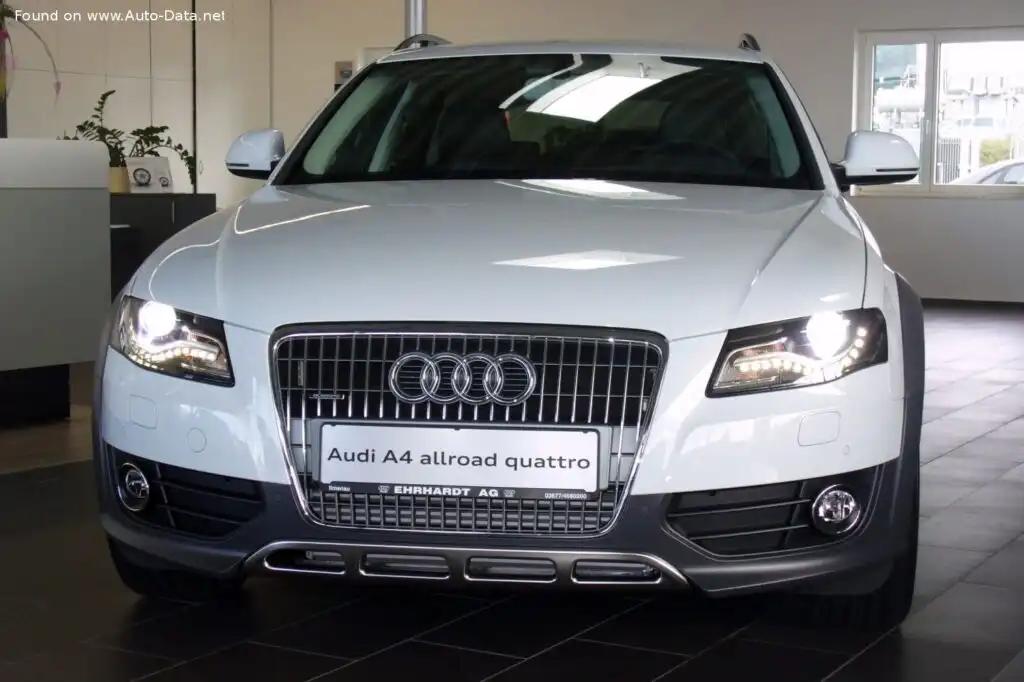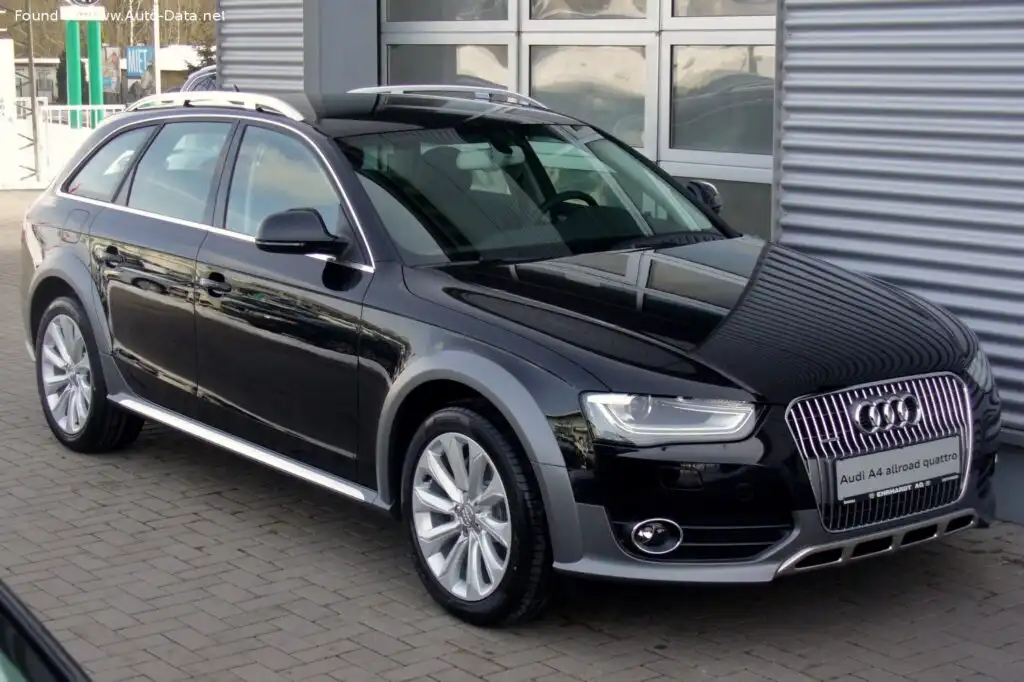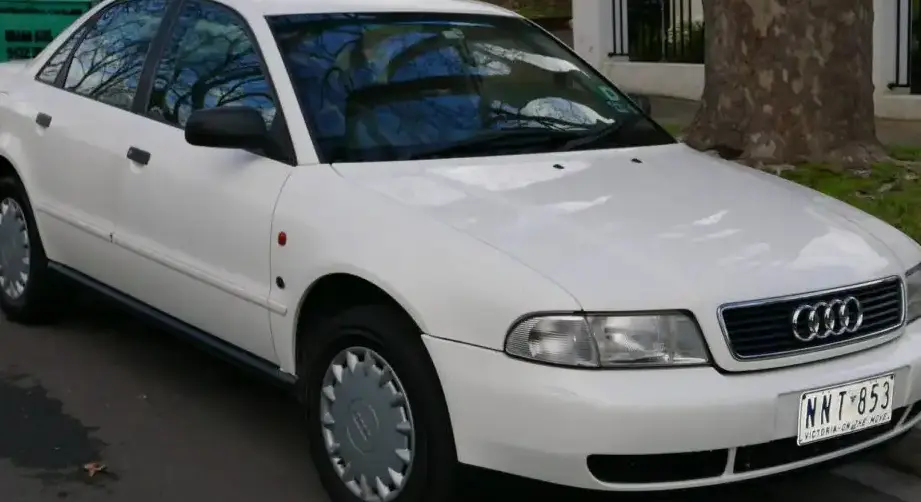
The Audi A4 (B5), produced from November 1994 to 1999, represented a significant step forward for Audi, establishing a new benchmark in the compact executive car segment. The 1.6i variant, powered by a 1.6-liter inline-four engine producing 101 horsepower, served as the entry point into the A4 range. Built on the Volkswagen Group’s B5 platform (Typ 8D), it offered a blend of practicality, comfort, and Audi’s signature build quality. This model was primarily aimed at the European market, where fuel efficiency and affordability were key considerations for buyers in this class. The 1.6i was positioned as the most economical A4, appealing to drivers prioritizing cost-effectiveness over outright performance.
Technical Specifications
| Brand | Audi |
| Model | A4 |
| Generation | A4 (B5, Typ 8D) |
| Type (Engine) | 1.6i (101 Hp) |
| Start of production | November, 1994 |
| End of production | 1999 |
| Powertrain Architecture | Internal Combustion engine |
| Body type | Sedan |
| Seats | 5 |
| Doors | 4 |
| Fuel consumption (urban) | 11.3 l/100 km (20.8 US mpg, 25 UK mpg, 8.8 km/l) |
| Fuel consumption (extra urban) | 6 l/100 km (39.2 US mpg, 47.1 UK mpg, 16.7 km/l) |
| Fuel consumption (combined) | 7.5 l/100 km (31.4 US mpg, 37.7 UK mpg, 13.3 km/l) |
| Fuel Type | Petrol (Gasoline) |
| Acceleration 0 – 100 km/h | 11.9 sec |
| Acceleration 0 – 62 mph | 11.9 sec |
| Acceleration 0 – 60 mph | 11.3 sec |
| Maximum speed | 191 km/h (118.68 mph) |
| Emission standard | Euro 2 |
| Weight-to-power ratio | 11.6 kg/Hp, 86.3 Hp/tonne |
| Weight-to-torque ratio | 8.4 kg/Nm, 119.7 Nm/tonne |
| Power | 101 Hp @ 5600 rpm |
| Power per litre | 63.3 Hp/l |
| Torque | 140 Nm @ 3800 rpm (103.26 lb.-ft. @ 3800 rpm) |
| Engine layout | Front, Longitudinal |
| Engine Model/Code | ADP, AHL, ANA, ARM |
| Engine displacement | 1595 cm3 (97.33 cu. in.) |
| Number of cylinders | 4 |
| Engine configuration | Inline |
| Cylinder Bore | 81 mm (3.19 in.) |
| Piston Stroke | 77.4 mm (3.05 in.) |
| Compression ratio | 10.3:1 |
| Number of valves per cylinder | 2 |
| Fuel injection system | Multi-port manifold injection |
| Engine aspiration | Naturally aspirated engine |
| Valvetrain | SOHC |
| Engine oil capacity | 3.5 l (3.7 US qt | 3.08 UK qt) |
| Coolant | 7.5 l (7.93 US qt | 6.6 UK qt) |
| Kerb Weight | 1170 kg (2579.41 lbs.) |
| Max. weight | 1720 kg (3791.95 lbs.) |
| Max load | 550 kg (1212.54 lbs.) |
| Trunk (boot) space – minimum | 440 l (15.54 cu. ft.) |
| Fuel tank capacity | 62 l (16.38 US gal | 13.64 UK gal) |
| Length | 4479 mm (176.34 in.) |
| Width | 1733 mm (68.23 in.) |
| Height | 1415 mm (55.71 in.) |
| Wheelbase | 2617 mm (103.03 in.) |
| Front track | 1498 mm (58.98 in.) |
| Rear (Back) track | 1479 mm (58.23 in.) |
| Drag coefficient (Cd) | 0.31 |
| Minimum turning circle | 11.1 m (36.42 ft.) |
| Drivetrain Architecture | The Internal combustion engine (ICE) drives the front wheels of the vehicle. |
| Drive wheel | Front wheel drive |
| Number of gears and type of gearbox | 5 gears, manual transmission |
| Front suspension | Independent multi-link suspension |
| Rear suspension | Suspension with traction connecting levers |
| Front brakes | Ventilated discs |
| Rear brakes | Disc |
| Assisting systems | ABS (Anti-lock braking system) |
| Steering type | Steering rack and pinion |
| Power steering | Hydraulic Steering |
| Tires size | 195/65 R15 |
| Wheel rims size | 15 |
Powertrain & Engine Architecture
The heart of the A4 1.6i was the ADP, AHL, ANA, or ARM engine code, a 1.6-liter (1595 cc) inline-four cylinder gasoline engine. This engine featured a single overhead camshaft (SOHC) valvetrain with two valves per cylinder. Fuel delivery was handled by a multi-port fuel injection system, providing a balance between efficiency and performance. The engine produced 101 horsepower at 5600 rpm and 140 Nm (103 lb-ft) of torque at 3800 rpm. The engine’s longitudinal mounting allowed for front-wheel drive via a five-speed manual transmission. While an automatic transmission was available, it was a four-speed unit and impacted performance and fuel economy. The engine’s design prioritized reliability and low-end torque, making it suitable for everyday driving conditions.
Driving Characteristics
The A4 1.6i with the five-speed manual transmission offered adequate, though not exhilarating, performance. Acceleration from 0 to 60 mph took around 11.3 seconds, and the top speed was approximately 118.68 mph. The engine felt somewhat strained at higher speeds, and overtaking required careful planning. The automatic transmission further diminished performance, adding approximately a second to the 0-60 mph time. The gear ratios were tuned for fuel efficiency rather than outright acceleration. Compared to the more powerful 1.8 and 2.6-liter versions, the 1.6i felt noticeably slower, but it provided a smoother and more relaxed driving experience, particularly in urban environments.
Equipment & Trim Levels
The 1.6i A4 typically came with a relatively basic level of equipment, reflecting its position as the entry-level model. Standard features included power steering, central locking, electric front windows, and an anti-lock braking system (ABS). Interior upholstery was typically cloth, and the dashboard featured a straightforward design. Optional extras included air conditioning, alloy wheels, a sunroof, and a radio/cassette player. Higher trim levels, such as the SE, added features like upgraded upholstery, wood trim, and more sophisticated audio systems. The 1.6i was often chosen by buyers who prioritized value for money and were willing to forego some of the more luxurious features offered on higher-spec models.
Chassis & Braking
The A4 B5 featured an independent multi-link front suspension and a semi-independent rear suspension with traction connecting levers. This setup provided a good balance between ride comfort and handling. The 1.6i models typically used ventilated disc brakes at the front and solid disc brakes at the rear. The ABS system helped to maintain stability during braking, particularly on slippery surfaces. The suspension was tuned for comfort, resulting in a relatively soft ride, but it still offered decent body control in corners. Stabilizer bars were fitted to both the front and rear axles to reduce body roll.
Market Reception & Comparison
The A4 1.6i received mixed reviews from automotive critics. While it was praised for its build quality, comfortable ride, and fuel efficiency, it was often criticized for its lack of power. Compared to the 1.8-liter and 2.6-liter versions, the 1.6i felt underpowered, especially when fully loaded or driving uphill. However, its lower purchase price and running costs made it an attractive option for budget-conscious buyers. Fuel economy was a strong point, with combined fuel consumption averaging around 31.4 US mpg. The 1.6i was generally considered more reliable than the more complex and powerful engines in the A4 range, due to its simpler design.
Legacy
The Audi A4 B5 1.6i has proven to be a relatively reliable and durable car. The engine, while not particularly powerful, is known for its longevity and relatively low maintenance costs. Today, these cars are often found as affordable used vehicles, appealing to those seeking a comfortable and well-built sedan. Parts availability is generally good, and the relatively simple mechanical design makes it accessible to amateur mechanics. While not a performance icon, the A4 1.6i played an important role in establishing the B5 A4 as a popular and respected compact executive car, and remains a viable option for those seeking a dependable and economical vehicle.