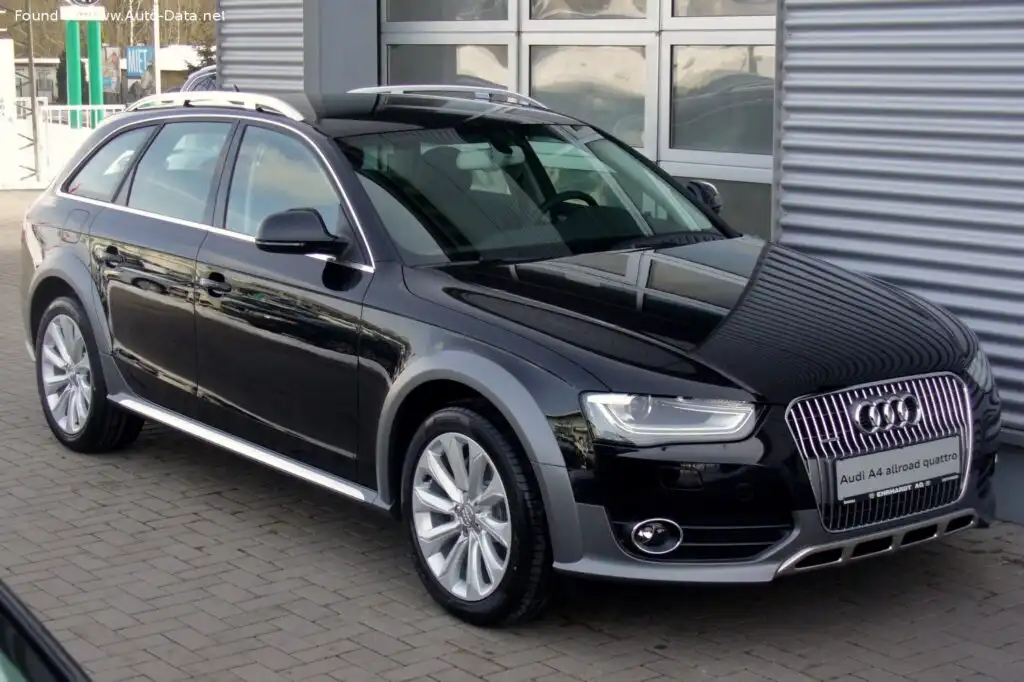
The Audi A4 (B5), produced between 1994 and 2001, marked a pivotal moment for the German manufacturer, setting a new standard within the competitive compact executive car segment. The 2.5 TDI V6 variant, introduced in November 1997 and continuing through 1999, offered a compelling combination of performance and fuel economy. This model occupied a mid-to-upper position within the B5 A4 lineup, appealing to buyers who desired a refined driving experience coupled with the benefits of diesel efficiency. It was a particularly significant offering in European markets, where diesel engines enjoyed – and continue to enjoy – widespread popularity.
Technical Specifications
| Brand | Audi |
| Model | A4 |
| Generation | A4 (B5, Typ 8D) |
| Type (Engine) | 2.5 TDI V6 (150 Hp) |
| Start of production | November, 1997 |
| End of production | 1999 |
| Powertrain Architecture | Internal Combustion engine |
| Body type | Sedan |
| Seats | 5 |
| Doors | 4 |
| Fuel consumption (urban) | 9.7 l/100 km (24.2 US mpg, 29.1 UK mpg, 10.3 km/l) |
| Fuel consumption (extra urban) | 5.2 l/100 km (45.2 US mpg, 54.3 UK mpg, 19.2 km/l) |
| Fuel consumption (combined) | 6.8 l/100 km (34.6 US mpg, 41.5 UK mpg, 14.7 km/l) |
| Fuel Type | Diesel |
| Acceleration 0 – 100 km/h | 9 sec |
| Acceleration 0 – 62 mph | 9 sec |
| Acceleration 0 – 60 mph | 8.6 sec |
| Maximum speed | 222 km/h (137.94 mph) |
| Weight-to-power ratio | 9 kg/Hp, 110.7 Hp/tonne |
| Weight-to-torque ratio | 4.4 kg/Nm, 228.8 Nm/tonne |
| Power | 150 Hp @ 4000 rpm |
| Power per litre | 60.1 Hp/l |
| Torque | 310 Nm @ 1500 rpm (228.64 lb.-ft. @ 1500 rpm) |
| Engine layout | Front, Longitudinal |
| Engine Model/Code | AFB, AKN |
| Engine displacement | 2496 cm3 (152.32 cu. in.) |
| Number of cylinders | 6 |
| Engine configuration | V-engine |
| Cylinder Bore | 78.3 mm (3.08 in.) |
| Piston Stroke | 86.4 mm (3.4 in.) |
| Compression ratio | 19.5:1 |
| Number of valves per cylinder | 4 |
| Fuel injection system | Direct injection |
| Engine aspiration | Turbocharger, Intercooler |
| Valvetrain | DOHC |
| Engine oil capacity | 5.5 l (5.81 US qt | 4.84 UK qt) |
| Coolant | 8 l (8.45 US qt | 7.04 UK qt) |
| Kerb Weight | 1355 kg (2987.26 lbs.) |
| Max. weight | 1905 kg (4199.81 lbs.) |
| Max load | 550 kg (1212.54 lbs.) |
| Trunk (boot) space – minimum | 440 l (15.54 cu. ft.) |
| Fuel tank capacity | 62 l (16.38 US gal | 13.64 UK gal) |
| Length | 4479 mm (176.34 in.) |
| Width | 1733 mm (68.23 in.) |
| Height | 1415 mm (55.71 in.) |
| Wheelbase | 2617 mm (103.03 in.) |
| Front track | 1498 mm (58.98 in.) |
| Rear (Back) track | 1479 mm (58.23 in.) |
| Drag coefficient (Cd) | 0.31 |
| Minimum turning circle | 11.1 m (36.42 ft.) |
| Drivetrain Architecture | The Internal combustion engine (ICE) drives the front wheels of the vehicle. |
| Drive wheel | Front wheel drive |
| Number of gears | 6 gears, manual transmission |
| Front suspension | Wishbone |
| Rear suspension | Suspension with traction connecting levers |
| Front brakes | Ventilated discs |
| Rear brakes | Disc |
| Assisting systems | ABS (Anti-lock braking system) |
| Steering type | Steering rack and pinion |
| Power steering | Hydraulic Steering |
| Tires size | 195/65 R15 |
| Wheel rims size | 15 |
Powertrain & Engine Architecture
The core of the 2.5 TDI V6 was the engine designated with the code AFB or AKN – a 2.5-liter, 24-valve V6 diesel. This engine employed a direct injection system, delivering fuel directly into the combustion chamber at exceptionally high pressure. This technology, combined with a turbocharger and intercooler, significantly boosted power and torque output compared to naturally aspirated diesel engines. The engine featured a double overhead camshaft (DOHC) valvetrain, optimizing airflow for enhanced performance. A six-speed manual transmission provided precise gear changes and maximized the engine’s efficiency. The longitudinal engine layout was a hallmark of Audi’s quattro models, although this specific variant was front-wheel drive.
Driving Characteristics
The 2.5 TDI V6, paired with the six-speed manual gearbox, delivered a driving experience distinct from the lower-powered 1.8L gasoline versions or even the later 1.9 TDI models. The substantial 310 Nm (228.64 lb-ft) of torque, readily available from just 1500 rpm, provided strong acceleration in everyday driving scenarios. While not as overtly sporty as the gasoline-powered A4s, the TDI V6 offered a relaxed and confident cruising ability. The six-speed gearbox allowed for optimal engine speed selection, contributing to both fuel efficiency and responsive performance. The gear ratios were well-matched to the engine’s torque curve, making overtaking maneuvers relatively effortless. Compared to the 1.9 TDI, the 2.5 TDI offered a smoother, more refined experience, though with slightly higher fuel consumption.
Equipment & Trim Levels
The 2.5 TDI V6 typically came standard with a comprehensive array of features. These included power windows, central locking, power steering, and an ABS anti-lock braking system. Interior upholstery was generally cloth, with leather options available. The dashboard configuration was consistent across the B5 A4 range, offering a functional and ergonomically designed layout. Optional extras included a sunroof, alloy wheels, upgraded audio systems, and climate control. The specific trim level varied depending on the market, but generally, the 2.5 TDI V6 was positioned as a well-equipped, comfortable, and capable vehicle.
Chassis & Braking
The B5 A4 featured a fully independent suspension system, utilizing wishbones at the front and a multi-link setup at the rear. This configuration provided a comfortable ride and good handling characteristics. The 2.5 TDI V6 models typically featured ventilated disc brakes at the front and solid discs at the rear. The braking system was effective and provided ample stopping power for the vehicle’s weight and performance. Stabilizer bars were fitted front and rear to minimize body roll during cornering. The chassis was engineered to strike a balance between comfort and handling, making the A4 a pleasant car to drive on a variety of road surfaces.
Market Reception & Comparison
The Audi A4 2.5 TDI V6 was generally well-received by automotive critics. It was lauded for its refined engine, comfortable ride, and spacious interior. Fuel economy was considered excellent for a vehicle of its size and performance. Compared to the gasoline-powered A4s, the TDI V6 offered significantly better fuel efficiency and a broader torque curve. However, critics also noted that the diesel engine was somewhat noisier and produced more vibrations than its gasoline counterparts. Reliability was generally good, although diesel injection systems can be susceptible to issues with age and inadequate maintenance.
Legacy
The 2.5 TDI V6 engine, particularly the AFB and AKN codes, has proven to be a durable and reliable powertrain when properly maintained. Today, these engines are still found in many used A4s, and with regular servicing, they can continue to provide years of dependable service. However, prospective buyers should be aware of potential issues with the fuel injection pump and turbocharger. The B5 A4 2.5 TDI V6 remains a popular choice for those seeking a comfortable, economical, and capable compact executive car. Its blend of performance, fuel efficiency, and build quality has ensured its enduring appeal in the used car market.