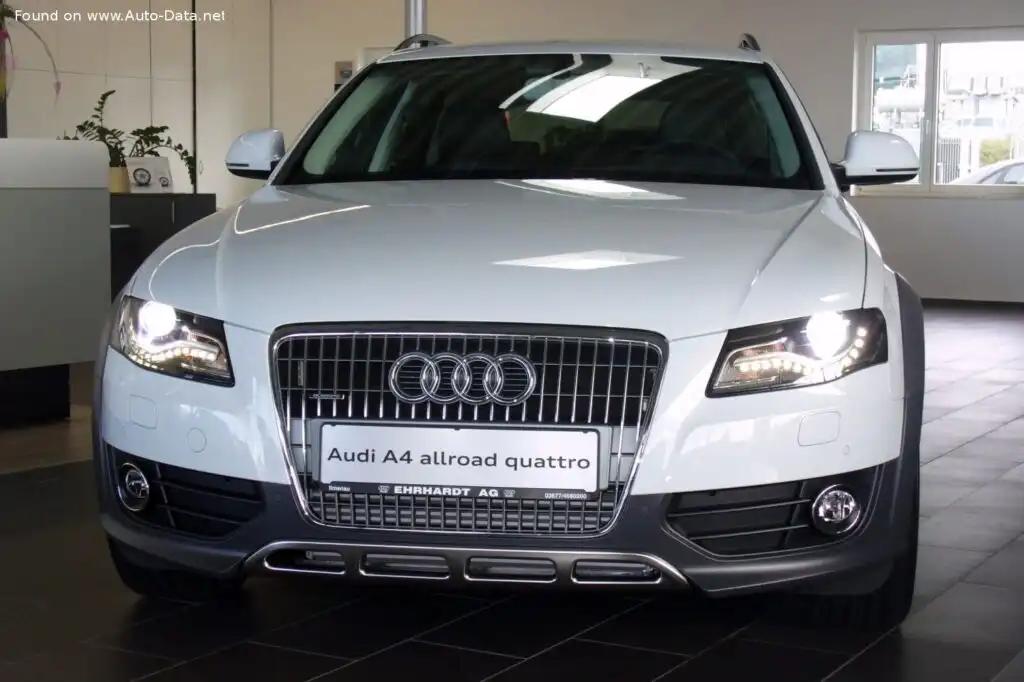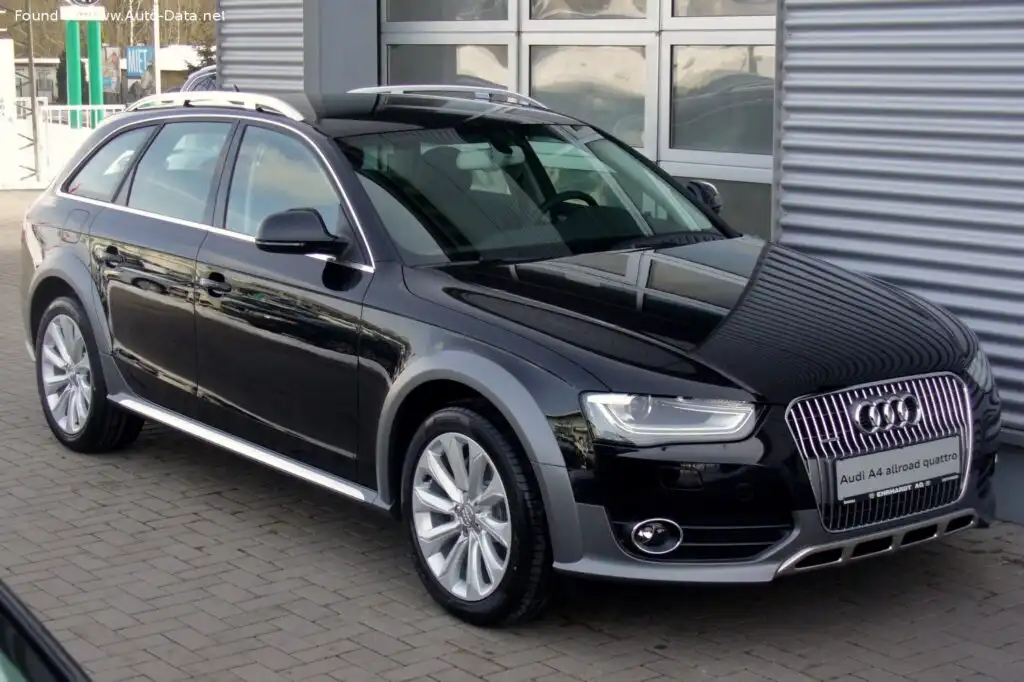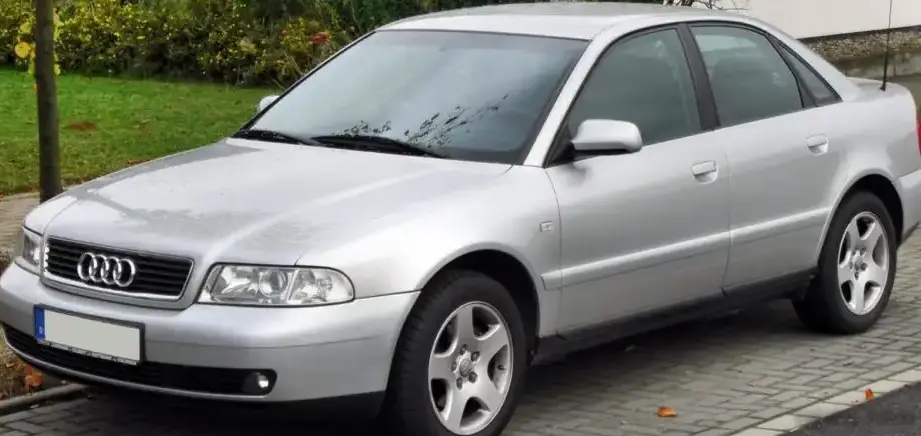
The Audi A4 (B5) 1.8 20V, produced from 1999 to 2000, represents a key iteration of Audi’s popular compact executive car. This facelifted version of the B5 A4, internally designated Typ 8D, offered a balance of performance, refinement, and practicality within the Audi lineup. Positioned as a mid-range offering, it slotted between the base 1.6-liter models and the more potent 2.8-liter V6 variants. The 1.8 20V was a significant engine for Audi, representing a move towards more sophisticated engine technology and offering a compelling alternative to competitors like the BMW 3 Series and Mercedes-Benz C-Class.
Technical Specifications
| Brand | Audi |
| Model | A4 |
| Generation | A4 (B5, Typ 8D, facelift 1999) |
| Type (Engine) | 1.8 20V (125 Hp) |
| Start of production | 1999 |
| End of production | 2000 |
| Powertrain Architecture | Internal Combustion engine |
| Body type | Sedan |
| Seats | 5 |
| Doors | 4 |
| Fuel consumption (urban) | 10.2 l/100 km (23.1 US mpg, 27.7 UK mpg, 9.8 km/l) |
| Fuel consumption (extra urban) | 6.5 l/100 km (36.2 US mpg, 43.5 UK mpg, 15.4 km/l) |
| Fuel consumption (combined) | 7.8 l/100 km (30.2 US mpg, 36.2 UK mpg, 12.8 km/l) |
| Fuel Type | Petrol (Gasoline) |
| Acceleration 0 – 100 km/h | 10.6 sec |
| Acceleration 0 – 62 mph | 10.6 sec |
| Acceleration 0 – 60 mph | 10.1 sec |
| Maximum speed | 205 km/h (127.38 mph) |
| Weight-to-power ratio | 9.9 kg/Hp, 101.2 Hp/tonne |
| Weight-to-torque ratio | 7.4 kg/Nm, 136 Nm/tonne |
| Power | 125 Hp @ 5800 rpm |
| Power per litre | 70.2 Hp/l |
| Torque | 168 Nm @ 3500 rpm (123.91 lb.-ft. @ 3500 rpm) |
| Engine layout | Front, Longitudinal |
| Engine Model/Code | ADR, APT, ARG, AVV |
| Engine displacement | 1781 cm3 (108.68 cu. in.) |
| Number of cylinders | 4 |
| Engine configuration | Inline |
| Cylinder Bore | 81 mm (3.19 in.) |
| Piston Stroke | 86.4 mm (3.4 in.) |
| Compression ratio | 10.3:1 |
| Number of valves per cylinder | 5 |
| Fuel injection system | Multi-port manifold injection |
| Engine aspiration | Naturally aspirated engine |
| Valvetrain | DOHC |
| Engine oil capacity | 3.5 l (3.7 US qt | 3.08 UK qt) |
| Coolant | 6.5 l (6.87 US qt | 5.72 UK qt) |
| Kerb Weight | 1235 kg (2722.71 lbs.) |
| Max. weight | 1785 kg (3935.25 lbs.) |
| Max load | 550 kg (1212.54 lbs.) |
| Trunk (boot) space – minimum | 440 l (15.54 cu. ft.) |
| Fuel tank capacity | 62 l (16.38 US gal | 13.64 UK gal) |
| Length | 4479 mm (176.34 in.) |
| Width | 1733 mm (68.23 in.) |
| Height | 1415 mm (55.71 in.) |
| Wheelbase | 2617 mm (103.03 in.) |
| Front track | 1498 mm (58.98 in.) |
| Rear (Back) track | 1479 mm (58.23 in.) |
| Drag coefficient (Cd) | 0.31 |
| Minimum turning circle | 11.1 m (36.42 ft.) |
| Drivetrain Architecture | The Internal combustion engine (ICE) drives the front wheels of the vehicle. |
| Drive wheel | Front wheel drive |
| Number of gears and type of gearbox | 5 gears, manual transmission |
| Front suspension | Wishbone |
| Rear suspension | Suspension with traction connecting levers |
| Front brakes | Disc |
| Rear brakes | Disc |
| Assisting systems | ABS (Anti-lock braking system) |
| Steering type | Steering rack and pinion |
| Power steering | Hydraulic Steering |
| Tires size | 195/65 R15 |
| Wheel rims size | 15 |
Powertrain & Engine Architecture
The heart of this A4 variant is the 1.8-liter, 20-valve inline-four cylinder engine. Engine codes commonly found in this model year include ADR, APT, ARG, and AVV, with minor variations in calibration and emissions control equipment. This engine utilizes a naturally aspirated configuration with multi-port fuel injection, delivering a responsive and relatively smooth power delivery. The 20-valve cylinder head, featuring dual overhead camshafts (DOHC), contributes to improved breathing and higher engine speeds. The engine’s 81mm bore and 86.4mm stroke result in a displacement of 1781cc. The engine was known for its relatively robust design, though early versions of the 1.8T (turbocharged) engine had some issues with oil consumption, this was less common in the naturally aspirated 1.8 20V. The standard transmission for this model was a 5-speed manual, providing direct control over the engine’s power. A 4-speed automatic transmission was also available, though it impacted acceleration and fuel economy.
Driving Characteristics
The 1.8 20V with the 5-speed manual transmission offered a reasonably engaging driving experience. While not a sports car, it provided adequate acceleration for everyday driving, with 0-60 mph times around 10.1 seconds. The engine felt lively above 3000 rpm, making it suitable for highway cruising and overtaking. The automatic transmission, while offering convenience, noticeably dulled the car’s performance. Gear changes were not particularly quick, and the transmission tended to hunt for gears under hard acceleration. The front-wheel-drive layout provided predictable handling, although it lacked the all-weather capability of Audi’s quattro all-wheel-drive system. The suspension, tuned for comfort, absorbed bumps well but didn’t offer the same level of control as the sport suspension options available on other A4 models.
Equipment & Trim Levels
The 1.8 20V A4 typically came equipped with a respectable level of standard features. These included power windows, power locks, air conditioning, and an AM/FM radio. Higher trim levels added features such as alloy wheels, a sunroof, upgraded audio systems, and leather upholstery. Interior upholstery was typically cloth, though leather was an optional upgrade. The dashboard layout was functional and well-designed, with clear instrumentation. Optional extras included heated front seats, automatic climate control, and a CD changer. Safety features included dual front airbags and ABS anti-lock brakes.
Chassis & Braking
The B5 A4 utilized a MacPherson strut front suspension and a semi-independent rear suspension with trailing arms. This setup provided a good balance of ride comfort and handling. The front brakes were ventilated discs, while the rear brakes were solid discs. ABS was standard, providing enhanced braking performance in emergency situations. The steering was a rack-and-pinion system with hydraulic power assistance, offering precise and responsive steering feel. The standard tire size was 195/65 R15, providing adequate grip in most conditions.
Market Reception & Comparison
The Audi A4 1.8 20V was generally well-received by automotive critics. It was praised for its refined interior, comfortable ride, and responsive engine. However, some critics noted that the automatic transmission detracted from the driving experience. Compared to the 1.6-liter A4, the 1.8 20V offered a significant performance upgrade. Compared to the 2.8-liter V6, it was less powerful but more fuel-efficient and more affordable. Fuel economy was respectable for its class, averaging around 30 mpg on the highway. Reliability was generally good, although some owners reported issues with the cooling system and electrical components.
Legacy
The Audi A4 B5 1.8 20V remains a popular choice among used car buyers. Its combination of affordability, reliability, and driving enjoyment has ensured its continued presence on the roads. The 1.8-liter engine, while not the most powerful in the A4 lineup, is known for its durability and relatively low maintenance costs. Parts availability is generally good, making it a relatively easy car to maintain. Today, well-maintained examples of the B5 A4 1.8 20V can be found for reasonable prices, offering a comfortable and reliable driving experience for those seeking a classic European sedan.