Technical Specifications
| Brand | Audi |
| Model | A4 |
| Generation | A4 (B5, Typ 8D, facelift 1999) |
| Type (Engine) | 1.9 TDI (110 Hp) quattro |
| Start of production | 1999 |
| End of production | 2000 |
| Powertrain Architecture | Internal Combustion engine |
| Body type | Sedan |
| Seats | 5 |
| Doors | 4 |
| Fuel consumption (urban) | 7.8 l/100 km (30.2 US mpg, 36.2 UK mpg, 12.8 km/l) |
| Fuel consumption (extra urban) | 4.8 l/100 km (49 US mpg, 58.9 UK mpg, 20.8 km/l) |
| Fuel consumption (combined) | 5.9 l/100 km (39.9 US mpg, 47.9 UK mpg, 16.9 km/l) |
| Fuel Type | Diesel |
| Acceleration 0 – 100 km/h | 12 sec |
| Acceleration 0 – 62 mph | 12 sec |
| Acceleration 0 – 60 mph | 11.4 sec |
| Maximum speed | 192 km/h (119.3 mph) |
| Weight-to-power ratio | 12.7 kg/Hp, 78.9 Hp/tonne |
| Weight-to-torque ratio | 5.9 kg/Nm, 168.5 Nm/tonne |
| Power | 110 Hp @ 4150 rpm |
| Power per litre | 58 Hp/l |
| Torque | 235 Nm @ 1900 rpm (173.33 lb.-ft. @ 1900 rpm) |
| Engine layout | Front, Longitudinal |
| Engine Model/Code | AVG |
| Engine displacement | 1896 cm3 (115.7 cu. in.) |
| Number of cylinders | 4 |
| Engine configuration | Inline |
| Cylinder Bore | 79.5 mm (3.13 in.) |
| Piston Stroke | 95.5 mm (3.76 in.) |
| Compression ratio | 19.5:1 |
| Number of valves per cylinder | 2 |
| Fuel injection system | Direct injection |
| Engine aspiration | Turbocharger |
| Valvetrain | OHC |
| Engine oil capacity | 3.8 l (4.02 US qt | 3.34 UK qt) |
| Coolant | 6.5 l (6.87 US qt | 5.72 UK qt) |
| Kerb Weight | 1395 kg (3075.45 lbs.) |
| Max. weight | 1945 kg (4287.99 lbs.) |
| Max load | 550 kg (1212.54 lbs.) |
| Trunk (boot) space – minimum | 440 l (15.54 cu. ft.) |
| Fuel tank capacity | 60 l (15.85 US gal | 13.2 UK gal) |
| Length | 4479 mm (176.34 in.) |
| Width | 1733 mm (68.23 in.) |
| Height | 1415 mm (55.71 in.) |
| Wheelbase | 2607 mm (102.64 in.) |
| Front track | 1498 mm (58.98 in.) |
| Rear (Back) track | 1479 mm (58.23 in.) |
| Drag coefficient (Cd) | 0.31 |
| Minimum turning circle | 11.1 m (36.42 ft.) |
| Drive wheel | All wheel drive (4×4) |
| Number of gears | 5 |
| Gearbox type | Manual transmission |
| Front suspension | Wishbone |
| Rear suspension | Suspension with traction connecting levers |
| Front brakes | Disc |
| Rear brakes | Disc |
| Assisting systems | ABS (Anti-lock braking system) |
| Steering type | Steering rack and pinion |
| Power steering | Hydraulic Steering |
| Tires size | 195/65 R15 |
| Wheel rims size | 15 |
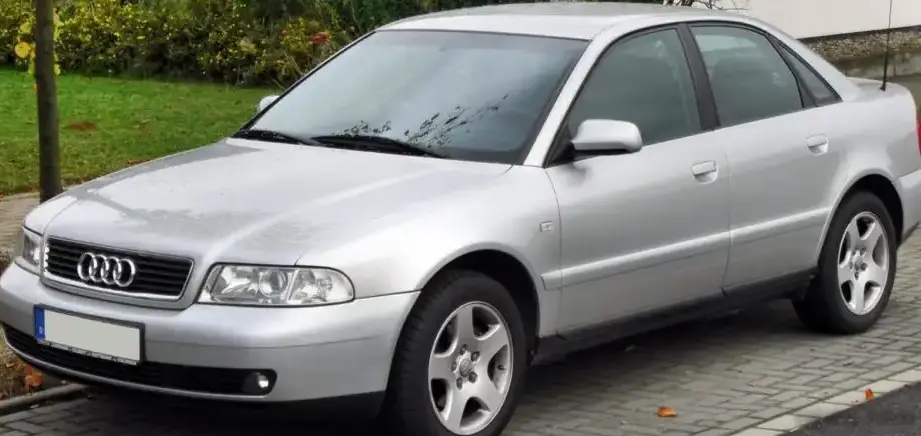
The Audi A4 (B5) facelift, produced from 1999 to 2000, represented a significant mid-cycle refresh of Audi’s popular compact executive car. Among the various engine and drivetrain configurations offered, the 1.9 TDI with 110 horsepower and quattro all-wheel drive held a unique position. This variant was particularly prominent in European markets, offering a blend of fuel efficiency, respectable performance, and all-weather capability. It sat within the B5 A4 range, positioned as a sensible, practical choice for drivers prioritizing economy and security over outright speed, appealing to both private buyers and company car fleets.
Powertrain & Engine Architecture
The heart of this A4 variant was the 1.9-liter inline-four cylinder diesel engine, specifically the AVG engine code. This engine was a cornerstone of Volkswagen Group’s diesel offerings during the late 1990s and early 2000s. It featured direct injection, a technology that significantly improved fuel efficiency and reduced emissions compared to older indirect injection systems. The AVG engine utilized a Bosch VE pump for fuel delivery, a robust and reliable system. The engine employed an overhead camshaft (OHC) valvetrain with two valves per cylinder. A turbocharger, typically a Garrett unit, was integrated to boost power output. The five-speed manual transmission was the standard offering, providing a balance between fuel economy and driver control. The transmission was known for its durability, though shift quality could be considered somewhat notchy by modern standards.
Driving Characteristics
The 110 hp 1.9 TDI quattro offered a practical and efficient driving experience. Acceleration was adequate for everyday driving, with the 0-60 mph sprint taking around 11.4 seconds. While not a sports car, the turbocharger provided a useful surge of torque from around 1900 rpm, making overtaking maneuvers relatively effortless. The quattro all-wheel-drive system provided excellent traction in adverse weather conditions, a significant advantage in many European climates. Compared to the more powerful 1.8T petrol variants, the TDI offered significantly better fuel economy, but lacked the responsiveness and overall performance. The manual transmission’s gear ratios were geared towards fuel efficiency, meaning the engine often needed to be revved to access its full potential.
Equipment & Trim Levels
The 1.9 TDI quattro typically came with a reasonable level of standard equipment. This included central locking, electric front windows, power steering, and an ABS anti-lock braking system. Interior upholstery was usually cloth, with a relatively simple dashboard layout. Optional extras included alloy wheels, a sunroof, climate control, and a CD stereo system. The trim level often dictated the quality of the cloth upholstery and the availability of certain convenience features. This variant was often chosen by buyers who prioritized practicality and value over luxury.
Chassis & Braking
The B5 A4 featured a well-engineered chassis with independent suspension all around. The front suspension utilized wishbones, while the rear employed a multi-link setup with traction connecting levers. This configuration provided a comfortable ride and good handling characteristics. The 1.9 TDI quattro typically came equipped with disc brakes on all four wheels, providing adequate stopping power. The ABS system helped to maintain steering control during hard braking. Stabilizer bars were fitted front and rear to reduce body roll during cornering.
Market Reception & Comparison
The 1.9 TDI quattro was well-received in the European market as a sensible and economical choice. Critics praised its fuel efficiency, all-weather capability, and robust build quality. Compared to the 1.8T petrol variants, the TDI offered significantly better fuel economy, but lacked the same level of performance. The 1.8T was often favored by drivers who prioritized driving enjoyment, while the TDI appealed to those seeking practicality and low running costs. The TDI also offered a compelling alternative to the more expensive V6 models.
Legacy
The 1.9 TDI engine, particularly the AVG code, has proven to be remarkably durable and reliable. Many examples are still on the road today, often with high mileage. The B5 A4, in general, has gained a reputation as a solid and well-built car. The 1.9 TDI quattro remains a popular choice in the used car market, particularly for those seeking a reliable and economical vehicle. However, potential buyers should be aware of the age-related issues common to older cars, such as corrosion and wear and tear on suspension components. Regular maintenance and preventative repairs are essential to ensure the longevity of these vehicles.