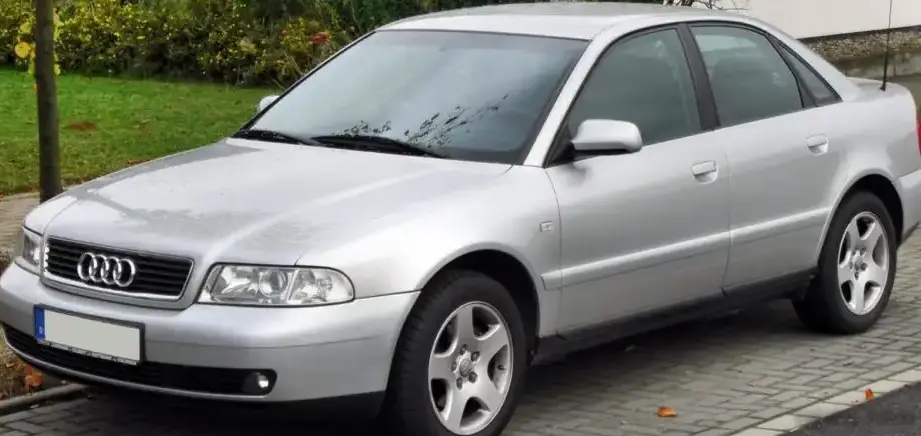
The Audi A4 (B5) facelift, produced from 1999 to 2000, marked a significant mid-cycle refresh of Audi’s popular compact executive car. Among the engine options available, the 1.9 TDI with 90 horsepower offered a fuel-efficient and practical choice, particularly in European markets. This variant occupied the entry-level position in the A4 lineup, appealing to buyers prioritizing economy and reliability over outright performance. It was built on the Volkswagen Group’s B5 platform (Typ 8D), shared with models like the Volkswagen Passat and Škoda Octavia, and the facelift brought revised styling, improved interior materials, and updated engine technology. This specific configuration, combining the 1.9 TDI engine with an automatic transmission, aimed to provide convenience alongside the inherent benefits of diesel fuel economy.
Technical Specifications
| Brand | Audi |
| Model | A4 |
| Generation | A4 (B5, Typ 8D, facelift 1999) |
| Type (Engine) | 1.9 TDI (90 Hp) |
| Start of production | 1999 |
| End of production | 2000 |
| Powertrain Architecture | Internal Combustion engine |
| Body type | Sedan |
| Seats | 5 |
| Doors | 4 |
| Fuel consumption (urban) | 7 l/100 km (33.6 US mpg, 40.4 UK mpg, 14.3 km/l) |
| Fuel consumption (extra urban) | 4.4 l/100 km (53.5 US mpg, 64.2 UK mpg, 22.7 km/l) |
| Fuel consumption (combined) | 5.4 l/100 km (43.6 US mpg, 52.3 UK mpg, 18.5 km/l) |
| Fuel Type | Diesel |
| Acceleration 0 – 100 km/h | 13.5 sec |
| Acceleration 0 – 62 mph | 13.5 sec |
| Acceleration 0 – 60 mph | 12.8 sec |
| Maximum speed | 182 km/h (113.09 mph) |
| Weight-to-power ratio | 14.1 kg/Hp, 71.1 Hp/tonne |
| Weight-to-torque ratio | 6 kg/Nm, 166 Nm/tonne |
| Power | 90 Hp @ 4000 rpm |
| Power per litre | 47.5 Hp/l |
| Torque | 210 Nm @ 1900 rpm (154.89 lb.-ft. @ 1900 rpm) |
| Engine layout | Front, Longitudinal |
| Engine Model/Code | AHH |
| Engine displacement | 1896 cm3 (115.7 cu. in.) |
| Number of cylinders | 4 |
| Engine configuration | Inline |
| Cylinder Bore | 79.5 mm (3.13 in.) |
| Piston Stroke | 95.5 mm (3.76 in.) |
| Compression ratio | 19.5:1 |
| Number of valves per cylinder | 2 |
| Fuel injection system | Direct injection |
| Engine aspiration | Turbocharger, Intercooler |
| Engine oil capacity | 3.5 l (3.7 US qt | 3.08 UK qt) |
| Coolant | 6.5 l (6.87 US qt | 5.72 UK qt) |
| Kerb Weight | 1265 kg (2788.85 lbs.) |
| Max. weight | 1815 kg (4001.39 lbs.) |
| Max load | 550 kg (1212.54 lbs.) |
| Trunk (boot) space – minimum | 440 l (15.54 cu. ft.) |
| Fuel tank capacity | 62 l (16.38 US gal | 13.64 UK gal) |
| Length | 4479 mm (176.34 in.) |
| Width | 1733 mm (68.23 in.) |
| Height | 1415 mm (55.71 in.) |
| Wheelbase | 2617 mm (103.03 in.) |
| Front track | 1498 mm (58.98 in.) |
| Rear (Back) track | 1479 mm (58.23 in.) |
| Drag coefficient (Cd) | 0.31 |
| Minimum turning circle | 11.1 m (36.42 ft.) |
| Drivetrain Architecture | The Internal combustion engine (ICE) drives the front wheels of the vehicle. |
| Drive wheel | Front wheel drive |
| Number of gears and type of gearbox | 5 gears, manual transmission |
| Tires size | 195/65 R15 |
| Wheel rims size | 15 |
Powertrain & Engine Architecture
The heart of this A4 variant was the 1.9-liter inline-four cylinder diesel engine, specifically the AHH engine code. This engine was a mainstay of the Volkswagen Group’s diesel offerings during the late 1990s and early 2000s. It featured direct injection, a technology that improved fuel efficiency and reduced emissions compared to older indirect injection systems. The AHH engine utilized a Bosch VE distributor-type fuel injection pump, delivering fuel directly into the cylinders at extremely high pressure. A turbocharger with an intercooler was employed to boost power output, providing 90 horsepower and 155 lb-ft of torque. The engine’s valvetrain consisted of two valves per cylinder (SOHC). While a 5-speed manual transmission was the standard offering, this variant was often equipped with a 4-speed automatic transmission. This automatic, while providing convenience, was known for its relatively slow shift times and tendency to ‘hunt’ for the correct gear, especially under load. It wasn’t a particularly sophisticated unit, but it was durable and relatively inexpensive to repair.
Driving Characteristics
The 1.9 TDI 90 hp A4 with the automatic transmission offered a practical and economical driving experience, albeit one that prioritized fuel efficiency over spirited performance. Acceleration was modest, taking around 13.5 seconds to reach 60 mph. The automatic transmission further dulled the performance compared to the manual version, as it absorbed some of the engine’s power. However, the engine’s strong low-end torque made it reasonably capable in everyday driving situations, providing adequate power for merging onto highways and passing slower vehicles. The automatic transmission, while not particularly responsive, offered convenience in stop-and-go traffic. Compared to the more powerful 1.8T gasoline engine or the later 130 hp TDI variants, the 90 hp TDI prioritized fuel economy and ease of use. The suspension provided a comfortable ride, but handling was not as sharp as some of its competitors.
Equipment & Trim Levels
The 1.9 TDI 90 hp A4 typically came with a relatively basic level of equipment. Standard features included power windows, central locking, and an AM/FM radio. Air conditioning was often an optional extra, as were alloy wheels and a sunroof. Interior upholstery was typically cloth, with a straightforward dashboard layout. Higher trim levels offered upgrades such as leather seats, wood trim, and a more sophisticated audio system. This trim level was positioned as the entry point into the A4 range, focusing on providing essential features at an affordable price. The automatic transmission was often bundled with a few additional comfort features, such as cruise control, as an incentive for buyers.
Chassis & Braking
The B5 A4 featured a MacPherson strut front suspension and a semi-independent torsion beam rear suspension. This setup provided a good balance between ride comfort and handling. The front brakes were typically ventilated discs, while the rear brakes were often drum brakes, particularly on the base models. Anti-lock brakes (ABS) were standard equipment. Stabilizer bars were fitted to both the front and rear axles to reduce body roll during cornering. The chassis was designed to provide a stable and predictable driving experience, prioritizing safety and comfort over sporty handling. The weight distribution was fairly balanced, contributing to predictable handling characteristics.
Market Reception & Comparison
The 1.9 TDI 90 hp A4 was well-received in Europe as a practical and economical choice. Critics praised its fuel efficiency and reliability, but noted its lack of outright performance, especially when paired with the automatic transmission. Compared to the 1.8T gasoline engine, the TDI offered significantly better fuel economy but less power and a less engaging driving experience. The later 130 hp TDI variant provided a noticeable performance upgrade, but at a higher price point. In terms of reliability, the AHH engine proved to be generally robust, although regular maintenance was essential to prevent issues with the fuel injection pump and turbocharger. The automatic transmission, while durable, was often criticized for its lack of refinement.
Legacy
The 1.9 TDI A4 (B5) remains a popular choice among used car buyers, particularly those seeking a reliable and fuel-efficient vehicle. The AHH engine, while aging, is known for its durability when properly maintained. Parts availability is generally good, and the car’s relatively simple mechanical design makes it relatively easy to repair. However, potential buyers should be aware of the potential for issues with the fuel injection pump and turbocharger, and should ensure that the car has been regularly serviced. The automatic transmission, while less desirable than the manual, can provide years of reliable service with proper fluid changes. The 1.9 TDI 90 hp A4 represents a solid and dependable example of a late-1990s compact executive car, offering a blend of practicality, economy, and reliability, making it a sensible choice for budget-conscious buyers.