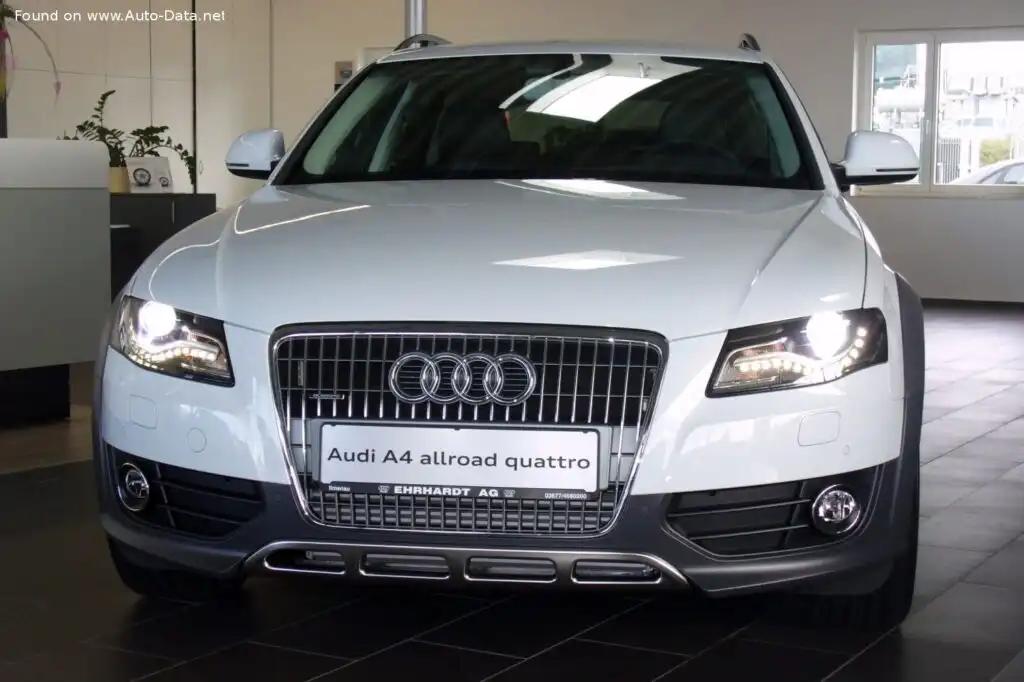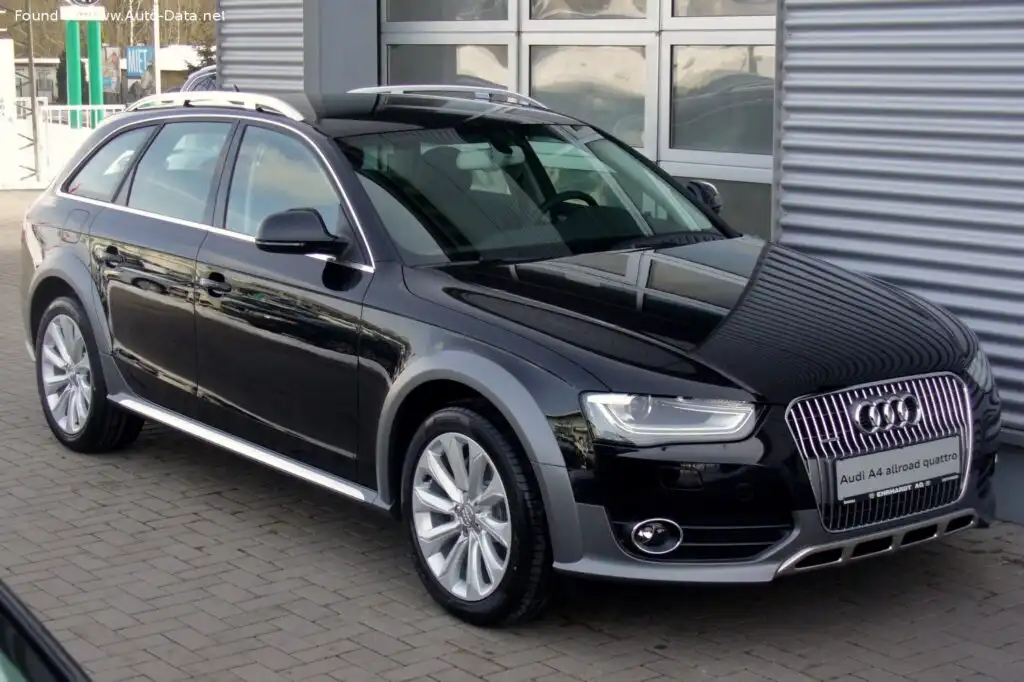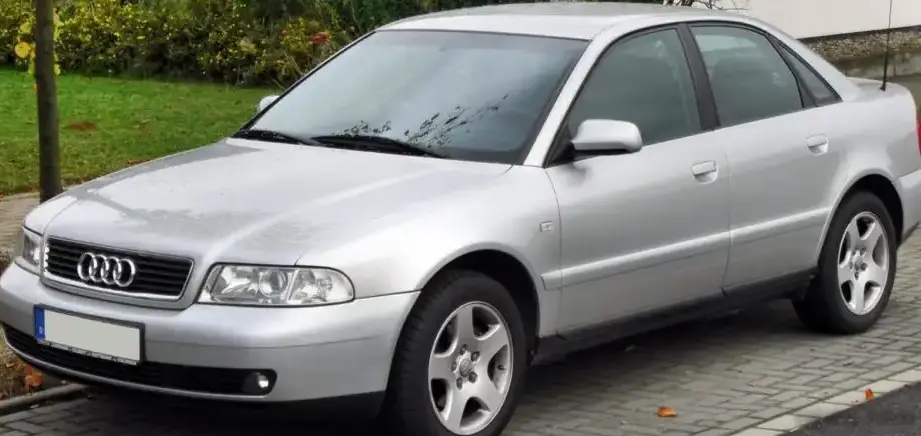
The Audi A4 (B5) facelift, produced from 1999 to 2000, represented a significant mid-cycle refresh of Audi’s popular compact executive car. This iteration, designated Typ 8D, brought revised styling, improved interior materials, and updated engine options. Among these, the 2.4-liter V6 30V (165 horsepower) quattro model occupied a premium position in the lineup, offering a blend of performance and all-weather capability. It was positioned as a step up from the base 1.8T engine, appealing to buyers seeking a more refined and powerful driving experience without the expense of the higher-output V6 options.
Technical Specifications
| Brand | Audi |
| Model | A4 |
| Generation | A4 (B5, Typ 8D, facelift 1999) |
| Type (Engine) | 2.4 V6 30V (165 Hp) quattro |
| Start of production | 1999 |
| End of production | 2000 |
| Powertrain Architecture | Internal Combustion engine |
| Body type | Sedan |
| Seats | 5 |
| Doors | 4 |
| Fuel consumption (urban) | 14.6 l/100 km (16.1 US mpg, 19.3 UK mpg, 6.8 km/l) |
| Fuel consumption (extra urban) | 7.8 l/100 km (30.2 US mpg, 36.2 UK mpg, 12.8 km/l) |
| Fuel consumption (combined) | 10.3 l/100 km (22.8 US mpg, 27.4 UK mpg, 9.7 km/l) |
| Fuel Type | Petrol (Gasoline) |
| Acceleration 0 – 100 km/h | 8.4 sec |
| Acceleration 0 – 62 mph | 8.4 sec |
| Acceleration 0 – 60 mph | 8 sec |
| Maximum speed | 224 km/h (139.19 mph) |
| Weight-to-power ratio | 8.7 kg/Hp, 115.4 Hp/tonne |
| Weight-to-torque ratio | 6.2 kg/Nm, 160.8 Nm/tonne |
| Power | 165 Hp @ 6000 rpm |
| Power per litre | 69 Hp/l |
| Torque | 230 Nm @ 3200 rpm (169.64 lb.-ft. @ 3200 rpm) |
| Engine layout | Front, Longitudinal |
| Engine Model/Code | AML, APS, ARJ |
| Engine displacement | 2393 cm3 (146.03 cu. in.) |
| Number of cylinders | 6 |
| Engine configuration | V-engine |
| Cylinder Bore | 81 mm (3.19 in.) |
| Piston Stroke | 77.4 mm (3.05 in.) |
| Compression ratio | 10.5:1 |
| Number of valves per cylinder | 5 |
| Fuel injection system | Multi-port manifold injection |
| Engine aspiration | Naturally aspirated engine |
| Valvetrain | DOHC |
| Engine oil capacity | 5.7 l (6.02 US qt | 5.02 UK qt) |
| Coolant | 8 l (8.45 US qt | 7.04 UK qt) |
| Kerb Weight | 1430 kg (3152.61 lbs.) |
| Max. weight | 1980 kg (4365.15 lbs.) |
| Max load | 550 kg (1212.54 lbs.) |
| Trunk (boot) space – minimum | 440 l (15.54 cu. ft.) |
| Fuel tank capacity | 60 l (15.85 US gal | 13.2 UK gal) |
| Length | 4479 mm (176.34 in.) |
| Width | 1733 mm (68.23 in.) |
| Height | 1415 mm (55.71 in.) |
| Wheelbase | 2607 mm (102.64 in.) |
| Front track | 1498 mm (58.98 in.) |
| Rear (Back) track | 1477 mm (58.15 in.) |
| Drag coefficient (Cd) | 0.31 |
| Minimum turning circle | 11.1 m (36.42 ft.) |
| Drive wheel | All wheel drive (4×4) |
| Number of gears | 5 |
| Gearbox type | Manual transmission |
| Front suspension | Wishbone |
| Rear suspension | Double wishbone |
| Front brakes | Ventilated discs |
| Rear brakes | Disc |
| Assisting systems | ABS (Anti-lock braking system) |
| Steering type | Steering rack and pinion |
| Power steering | Hydraulic Steering |
| Tires size | 195/65 R15 |
| Wheel rims size | 15 |
Powertrain & Engine Architecture
The heart of this A4 variant is the 2.4-liter V6 engine, specifically the AML, APS, or ARJ engine code depending on the exact production date and market. This engine is a naturally aspirated, 30-valve (5 valves per cylinder) V6, utilizing a dual overhead camshaft (DOHC) design. The engine employs multi-port fuel injection, delivering fuel directly into the intake ports. This system, while not as advanced as direct injection, provided reliable and predictable performance. The engine’s 60-degree V-angle contributes to a relatively compact engine bay layout. The 5-speed manual transmission was standard, providing a direct connection between the engine and the quattro all-wheel-drive system. The quattro system itself is a Torsen-based system, proactively distributing torque between the front and rear axles for optimal traction.
Driving Characteristics
The 2.4 V6 with the 5-speed manual transmission offered a noticeably more spirited driving experience than the base 1.8T models. While not a sports car, the 165 horsepower and 169.64 lb-ft of torque provided ample power for everyday driving and confident highway passing. The manual gearbox allowed for precise control, and the quattro all-wheel-drive system instilled confidence in various weather conditions. The gear ratios were tuned for a balance of acceleration and fuel economy, with a relatively short first gear for quick starts and a taller fifth gear for relaxed cruising. Compared to the automatic transmission option available on other A4 models, the manual provided a more engaging and responsive driving experience. The 0-60 mph time of around 8 seconds was respectable for the era.
Equipment & Trim Levels
The 2.4 V6 quattro typically came well-equipped, though options were plentiful. Standard features generally included power windows, power locks, a sunroof, and air conditioning. Interior upholstery was typically cloth, though leather was available as an option. The dashboard layout was typical of the B5 A4, with a straightforward design and easy-to-read gauges. Optional extras included a premium sound system, heated front seats, and automatic climate control. The specific trim level (often denoted by package codes) determined the inclusion of certain features.
Chassis & Braking
The A4 B5 chassis utilized a four-wheel independent suspension system, with wishbone suspension at the front and a double wishbone setup at the rear. This configuration provided a comfortable ride and good handling characteristics. The 2.4 V6 models typically featured slightly stiffer springs and dampers compared to the base models to better manage the increased power. Braking duties were handled by ventilated discs at the front and solid discs at the rear, with ABS (Anti-lock Braking System) standard. The hydraulic power steering provided a responsive and well-weighted feel.
Market Reception & Comparison
The 2.4 V6 quattro was generally well-received by automotive critics. It was praised for its smooth engine, capable handling, and all-weather traction. However, some reviewers noted that the fuel economy was not particularly impressive, especially compared to the more fuel-efficient 1.8T models. Compared to the 1.8T, the 2.4 V6 offered a more refined and powerful driving experience, but at a higher price point. The 2.4 V6 also required slightly more frequent maintenance due to its more complex engine design. Against competitors like the BMW 3 Series and Mercedes-Benz C-Class, the A4 2.4 V6 quattro offered a compelling combination of performance, luxury, and value.
Legacy
The Audi A4 B5 2.4 V6 quattro has developed a reputation for being a reliable and durable vehicle, provided it has been properly maintained. The 2.4 V6 engine is generally considered to be robust, though timing belt replacement is a critical maintenance item. The quattro all-wheel-drive system is also known for its longevity. In the used car market, these models are sought after by enthusiasts who appreciate their classic Audi styling, engaging driving dynamics, and all-weather capability. While not as common as the 1.8T models, the 2.4 V6 quattro represents a desirable and well-rounded option for those seeking a premium compact executive car from the late 1990s.