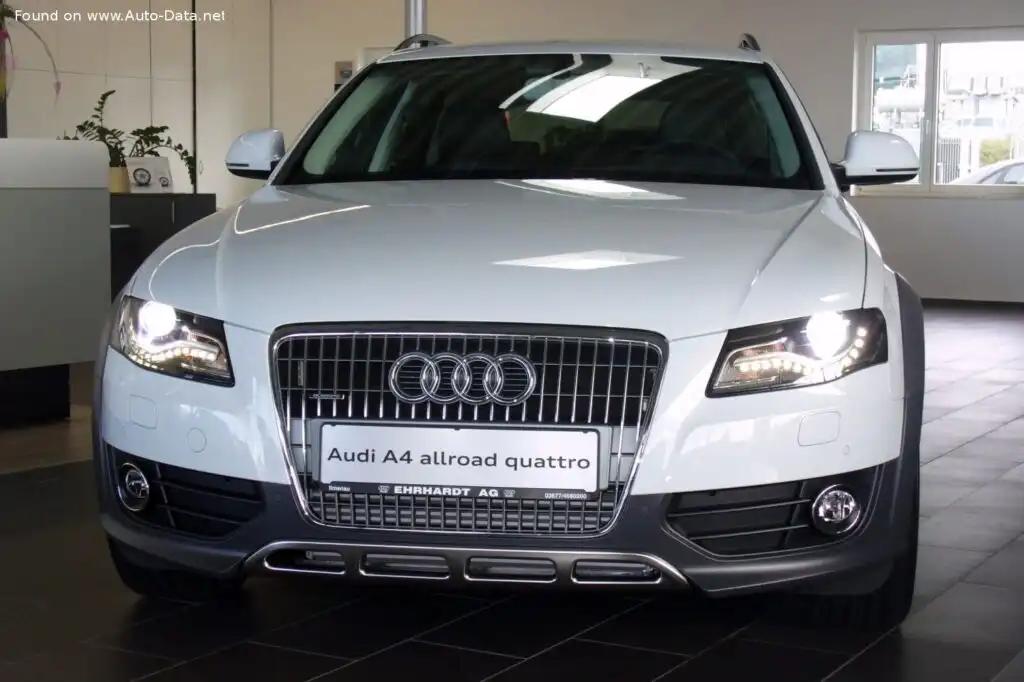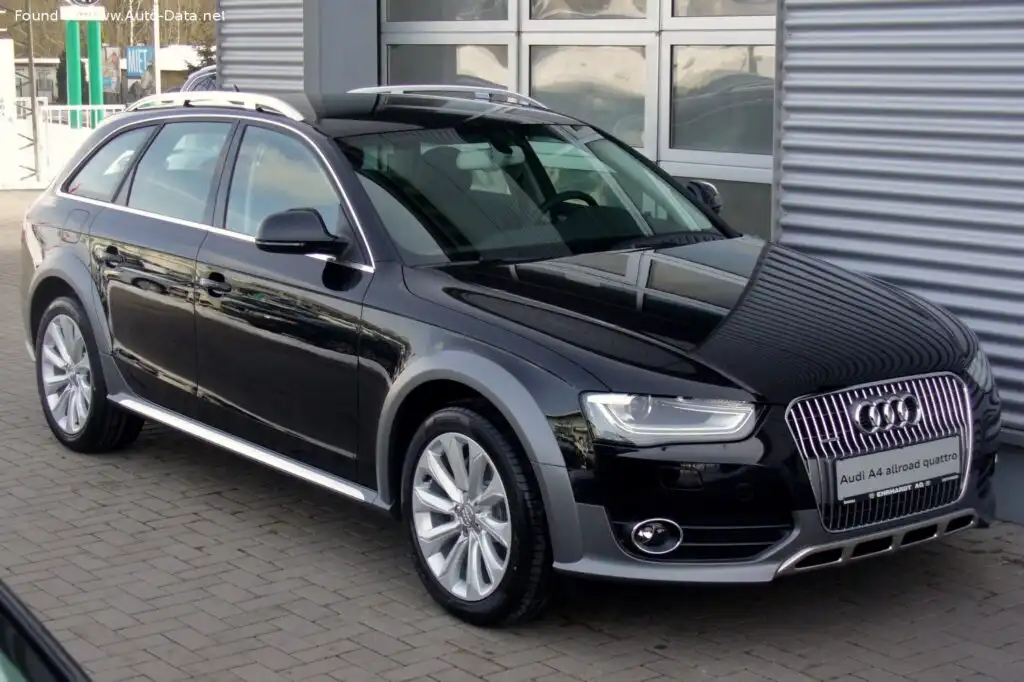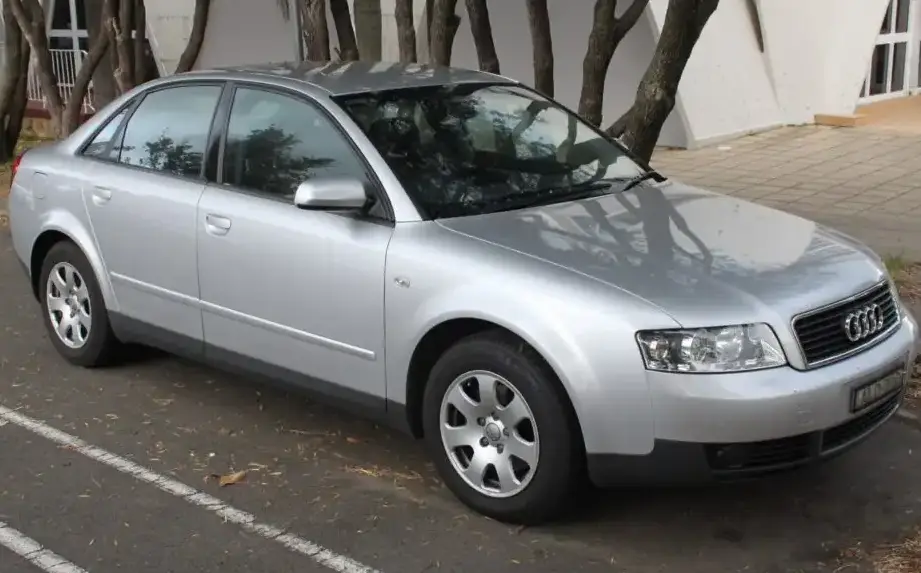
The Audi A4 (B6), produced from 2000 to 2005, represented a significant step forward for Audi’s popular compact executive car. The 1.8T variant, specifically those manufactured between September 2000 and June 2002, occupied a crucial middle ground in the B6 A4 lineup. Positioned above the base 1.8 non-turbo models and below the more potent 3.0 V6, the 1.8T offered a compelling blend of performance, fuel efficiency, and available features. It was a key model for Audi in Europe and began to gain traction in the North American market as a more accessible entry point into the Audi brand. This version utilized the 1HX0/A3 platform, shared with other Volkswagen Group vehicles like the VW Golf and Bora.
Technical Specifications
| Brand | Audi |
| Model | A4 |
| Generation | A4 (B6 8E) |
| Type (Engine) | 1.8 T (150 Hp) |
| Start of production | September, 2000 |
| End of production | June, 2002 |
| Powertrain Architecture | Internal Combustion engine |
| Body type | Sedan |
| Seats | 5 |
| Doors | 4 |
| Fuel consumption (urban) | 11.3 l/100 km (20.8 US mpg, 25 UK mpg, 8.8 km/l) |
| Fuel consumption (extra urban) | 6.4 l/100 km (36.8 US mpg, 44.1 UK mpg, 15.6 km/l) |
| Fuel consumption (combined) | 8.2 l/100 km (28.7 US mpg, 34.4 UK mpg, 12.2 km/l) |
| Fuel Type | Petrol (Gasoline) |
| Acceleration 0 – 100 km/h | 8.3 sec |
| Acceleration 0 – 62 mph | 8.3 sec |
| Acceleration 0 – 60 mph | 7.9 sec |
| Maximum speed | 235 km/h (146.02 mph) |
| Weight-to-power ratio | 9.2 kg/Hp, 109.1 Hp/tonne |
| Weight-to-torque ratio | 6.5 kg/Nm, 152.7 Nm/tonne |
| Power | 150 Hp @ 5700 rpm |
| Power per litre | 84.2 Hp/l |
| Torque | 210 Nm @ 1750-4600 rpm (154.89 lb.-ft. @ 1750-4600 rpm) |
| Engine layout | Front, Longitudinal |
| Engine Model/Code | AVJ |
| Engine displacement | 1781 cm3 (108.68 cu. in.) |
| Number of cylinders | 4 |
| Engine configuration | Inline |
| Cylinder Bore | 81 mm (3.19 in.) |
| Piston Stroke | 86.4 mm (3.4 in.) |
| Compression ratio | 9.5:1 |
| Number of valves per cylinder | 5 |
| Fuel injection system | Multi-port manifold injection |
| Engine aspiration | Turbocharger |
| Valvetrain | DOHC |
| Engine oil capacity | 3.5 l (3.7 US qt | 3.08 UK qt) |
| Coolant | 6.5 l (6.87 US qt | 5.72 UK qt) |
| Kerb Weight | 1375 kg (3031.36 lbs.) |
| Max. weight | 1925 kg (4243.9 lbs.) |
| Max load | 550 kg (1212.54 lbs.) |
| Trunk (boot) space – minimum | 445 l (15.72 cu. ft.) |
| Trunk (boot) space – maximum | 720 l (25.43 cu. ft.) |
| Fuel tank capacity | 62 l (16.38 US gal | 13.64 UK gal) |
| Length | 4548 mm (179.06 in.) |
| Width | 1772 mm (69.76 in.) |
| Height | 1428 mm (56.22 in.) |
| Wheelbase | 2650 mm (104.33 in.) |
| Front track | 1528 mm (60.16 in.) |
| Rear (Back) track | 1526 mm (60.08 in.) |
| Drag coefficient (Cd) | 0.30 |
| Minimum turning circle | 11.1 m (36.42 ft.) |
| Drivetrain Architecture | The Internal combustion engine (ICE) drives the front wheels of the vehicle. |
| Drive wheel | Front wheel drive |
| Number of gears | 5 gears, manual transmission |
| Front suspension | Independent multi-link suspension |
| Rear suspension | Independent multi-link suspension |
| Front brakes | Ventilated discs |
| Rear brakes | Disc |
| Assisting systems | ABS (Anti-lock braking system) |
| Steering type | Steering rack and pinion |
| Power steering | Hydraulic Steering |
| Tires size | 195/65 R15 |
| Wheel rims size | 15 |
Powertrain & Engine Architecture
The heart of the 1.8T A4 was the AVJ engine code, a 1.8-liter inline-four cylinder engine featuring a single turbocharger and multi-point fuel injection. This engine was a member of Audi’s EA888 family, known for its robust construction and tuning potential. The turbocharger, a Garrett GT28 unit, provided a significant boost in power compared to naturally aspirated engines of similar displacement. The engine utilized a dual overhead camshaft (DOHC) valvetrain with five valves per cylinder (three intake, two exhaust), optimizing airflow for improved performance. The AVJ engine produced 150 horsepower at 5700 rpm and 210 Nm (155 lb-ft) of torque between 1750 and 4600 rpm. This torque curve provided good low-end and mid-range responsiveness, making it suitable for everyday driving. The engine was longitudinally mounted, driving the front wheels through a five-speed manual transmission.
Driving Characteristics
The 1.8T A4 offered a balanced driving experience. While not as overtly sporty as the V6 models, the turbocharger provided a noticeable surge of power when accelerating. The five-speed manual transmission was well-matched to the engine’s characteristics, offering precise shifts and allowing drivers to keep the engine in its optimal power band. Compared to the non-turbo 1.8L, the 1.8T felt significantly more responsive, especially during overtaking maneuvers. The 0-60 mph time of around 7.9 seconds was respectable for its time. The front-wheel-drive configuration provided good traction in most conditions, although torque steer could be felt under hard acceleration. The suspension, tuned for comfort, provided a relatively smooth ride, but also allowed for confident handling in corners.
Equipment & Trim Levels
The 1.8T A4 typically came standard with features such as power windows, power locks, air conditioning, and an AM/FM stereo. Higher trim levels, often denoted by packages like “Premium” or “Sport,” added features like leather upholstery, sunroof, alloy wheels, and upgraded audio systems. Optional extras included automatic climate control, heated seats, and a navigation system. Interior upholstery was typically cloth, with leather available as an upgrade. The dashboard layout was functional and well-designed, with clear instrumentation and intuitive controls.
Chassis & Braking
The B6 A4 featured an independent multi-link suspension system at both the front and rear, providing a comfortable ride and good handling characteristics. The front suspension utilized coil springs and shock absorbers, while the rear suspension incorporated a separate spring and damper arrangement. Braking duties were handled by ventilated disc brakes at the front and solid disc brakes at the rear. Anti-lock braking system (ABS) was standard. The chassis was designed to provide a good balance between rigidity and weight, contributing to the car’s overall handling performance.
Market Reception & Comparison
The 1.8T A4 was generally well-received by automotive critics. It was praised for its blend of performance, fuel efficiency, and refinement. Compared to the base 1.8L model, the 1.8T offered a significant performance upgrade without the higher price tag of the V6. Fuel economy was respectable, averaging around 28.7 US mpg in combined driving. Reliability was generally good, although some owners reported issues with the turbocharger and the electronic throttle control system. Compared to competitors like the BMW 3 Series and Mercedes-Benz C-Class, the A4 1.8T offered a compelling value proposition.
Legacy
The Audi A4 B6 1.8T remains a popular choice among enthusiasts and used car buyers. The AVJ engine, while capable of higher power outputs with modifications, is generally considered reliable when properly maintained. Common maintenance items include regular oil changes, timing belt replacement (typically every 80,000-100,000 miles), and inspection of the turbocharger. The B6 A4’s relatively simple design and readily available parts make it a relatively easy car to maintain and repair. Today, well-maintained examples of the 1.8T A4 can be found for reasonable prices, offering a comfortable and enjoyable driving experience.