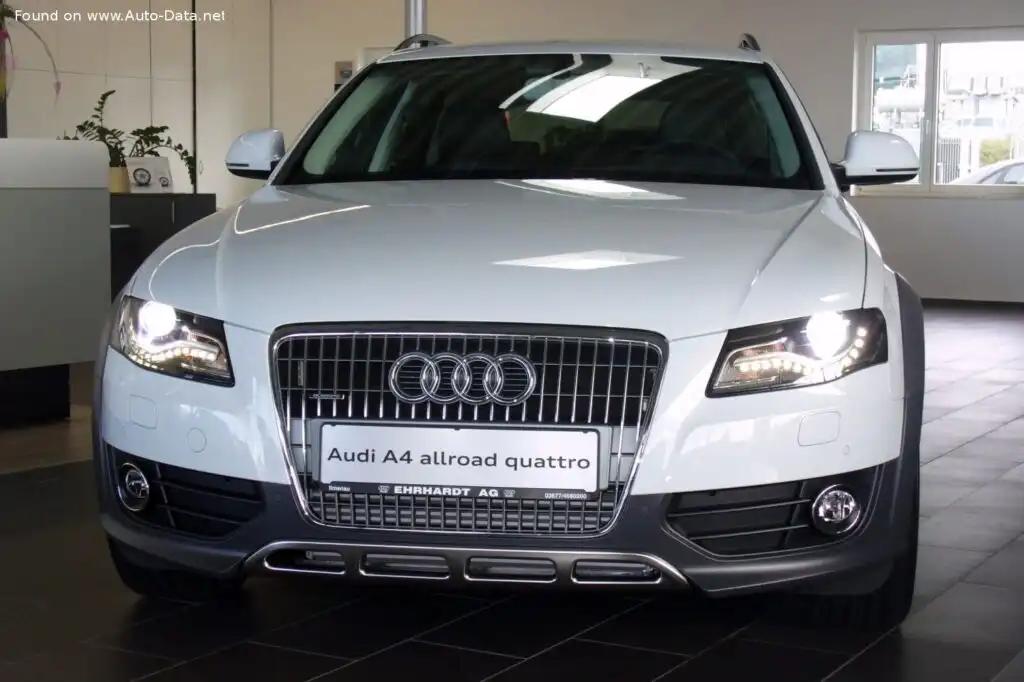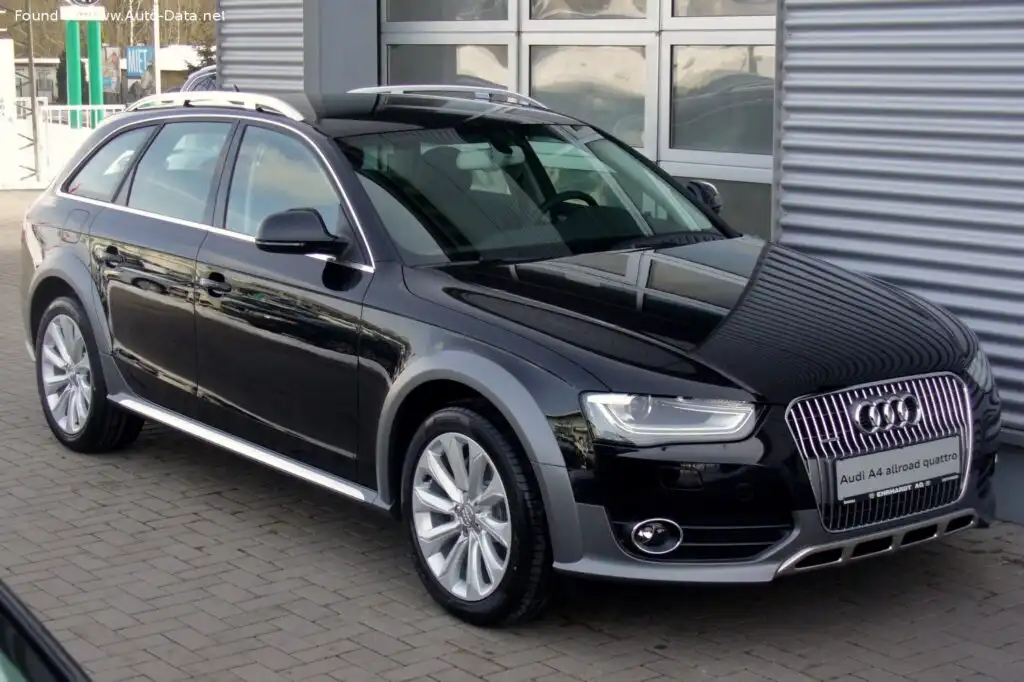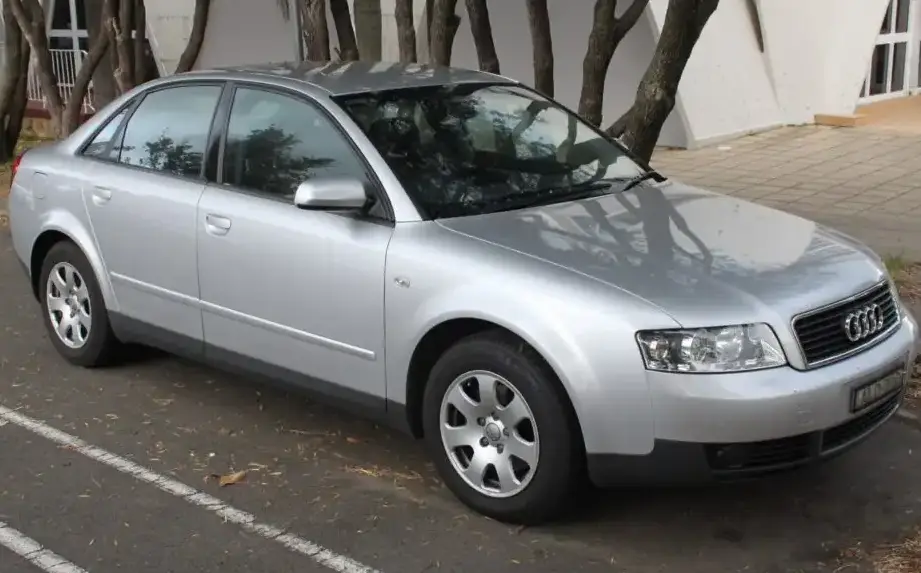
The Audi A4 (B6), produced from 2000 to 2005, represented a significant step forward for Audi’s popular compact executive car. The 1.8T quattro model, specifically those built between September 2000 and June 2002, occupied a key position in the lineup, offering a blend of performance and all-weather capability. This variant was positioned as a mid-range offering, bridging the gap between the base 1.8T front-wheel-drive models and the more potent 3.0L V6 versions. It was a popular choice in European markets, where quattro all-wheel drive was highly valued, and began to gain traction in North America as Audi’s reputation for build quality and technology grew.
Technical Specifications
| Brand | Audi |
| Model | A4 |
| Generation | A4 (B6 8E) |
| Type (Engine) | 1.8 T (150 Hp) quattro |
| Start of production | September, 2000 |
| End of production | June, 2002 |
| Powertrain Architecture | Internal Combustion engine |
| Body type | Sedan |
| Seats | 5 |
| Doors | 4 |
| Fuel consumption (urban) | 11.8 l/100 km (19.9 US mpg, 23.9 UK mpg, 8.5 km/l) |
| Fuel consumption (extra urban) | 7.2 l/100 km (32.7 US mpg, 39.2 UK mpg, 13.9 km/l) |
| Fuel consumption (combined) | 9.2 l/100 km (25.6 US mpg, 30.7 UK mpg, 10.9 km/l) |
| Fuel Type | Petrol (Gasoline) |
| Acceleration 0 – 100 km/h | 8.9 sec |
| Acceleration 0 – 62 mph | 8.9 sec |
| Acceleration 0 – 60 mph | 8.5 sec |
| Maximum speed | 220 km/h (136.7 mph) |
| Weight-to-power ratio | 9.7 kg/Hp, 103.1 Hp/tonne |
| Weight-to-torque ratio | 6.9 kg/Nm, 144.3 Nm/tonne |
| Power | 150 Hp @ 5700 rpm |
| Power per litre | 84.2 Hp/l |
| Torque | 210 Nm @ 1750-4600 rpm (154.89 lb.-ft. @ 1750-4600 rpm) |
| Engine layout | Front, Longitudinal |
| Engine Model/Code | AVJ |
| Engine displacement | 1781 cm3 (108.68 cu. in.) |
| Number of cylinders | 4 |
| Engine configuration | Inline |
| Cylinder Bore | 81 mm (3.19 in.) |
| Piston Stroke | 86.4 mm (3.4 in.) |
| Compression ratio | 9.3:1 |
| Number of valves per cylinder | 5 |
| Fuel injection system | Multi-port manifold injection |
| Engine aspiration | Turbocharger |
| Valvetrain | DOHC |
| Engine oil capacity | 3.5 l (3.7 US qt | 3.08 UK qt) |
| Coolant | 6.5 l (6.87 US qt | 5.72 UK qt) |
| Kerb Weight | 1455 kg (3207.73 lbs.) |
| Max. weight | 2005 kg (4420.27 lbs.) |
| Max load | 550 kg (1212.54 lbs.) |
| Trunk (boot) space – minimum | 445 l (15.72 cu. ft.) |
| Trunk (boot) space – maximum | 720 l (25.43 cu. ft.) |
| Fuel tank capacity | 60 l (15.85 US gal | 13.2 UK gal) |
| Length | 4548 mm (179.06 in.) |
| Width | 1772 mm (69.76 in.) |
| Height | 1428 mm (56.22 in.) |
| Wheelbase | 2650 mm (104.33 in.) |
| Front track | 1528 mm (60.16 in.) |
| Rear (Back) track | 1526 mm (60.08 in.) |
| Drag coefficient (Cd) | 0.31 |
| Minimum turning circle | 11.1 m (36.42 ft.) |
| Drive wheel | All wheel drive (4×4) |
| Number of gears and type of gearbox | 5 gears, manual transmission |
| Front suspension | Independent multi-link suspension |
| Rear suspension | Independent multi-link suspension |
| Front brakes | Ventilated discs |
| Rear brakes | Disc |
| Assisting systems | ABS (Anti-lock braking system) |
| Steering type | Steering rack and pinion |
| Power steering | Hydraulic Steering |
| Tires size | 195/65 R15 |
| Wheel rims size | 6.5J x 15 |
Powertrain & Engine Architecture
The heart of the 1.8T quattro is the Audi-developed 1.8-liter, inline-four cylinder engine, internally designated as the AVJ code. This engine is a turbocharged, multi-point fuel-injected powerplant. The turbocharger, a K03 unit, provides a significant boost in power compared to naturally aspirated engines of similar displacement. The engine features a dual overhead camshaft (DOHC) valvetrain with five valves per cylinder (three intake, two exhaust), contributing to its efficient breathing and broad torque curve. The AVJ engine is known for its relatively robust construction, though early versions were susceptible to issues with the diverter valve, which could lead to boost leaks. The five-speed manual transmission was standard, offering precise shifts and a direct connection to the engine. The quattro all-wheel-drive system utilizes a Torsen center differential, providing a variable distribution of torque between the front and rear axles, enhancing traction in all conditions.
Driving Characteristics
The 1.8T quattro offered a balanced driving experience. While not as overtly sporty as the V6 models, the turbocharged four-cylinder delivered ample power for everyday driving and spirited backroad excursions. The 210 Nm (154.89 lb-ft) of torque, available from 1750-4600 rpm, provided strong acceleration in most situations. The five-speed manual transmission was well-matched to the engine’s characteristics, allowing drivers to keep the engine in its sweet spot. The quattro all-wheel-drive system instilled confidence in slippery conditions, providing enhanced grip and stability. Compared to the front-wheel-drive 1.8T, the quattro version offered noticeably improved handling and traction, particularly during cornering and acceleration. However, the added weight of the all-wheel-drive system did slightly impact fuel economy and responsiveness.
Equipment & Trim Levels
The 1.8T quattro typically came standard with features such as power windows, power locks, air conditioning, and an upgraded audio system. Interior upholstery was typically cloth, though leather options were available. Standard dashboard configuration included analog gauges for speed, tachometer, fuel level, and coolant temperature. Optional extras included sunroof, heated front seats, automatic climate control, and a premium audio system. The quattro models often featured unique badging and trim details to distinguish them from the front-wheel-drive variants.
Chassis & Braking
The B6 A4 featured an independent multi-link suspension at all four corners, providing a comfortable ride and precise handling. The front suspension utilized coil springs and shock absorbers, while the rear suspension incorporated a more complex multi-link design. The 1.8T quattro models were equipped with ventilated disc brakes at the front and solid disc brakes at the rear. Anti-lock braking system (ABS) was standard, enhancing braking performance and stability. Stabilizer bars were fitted to both the front and rear axles to reduce body roll during cornering.
Market Reception & Comparison
The Audi A4 (B6) 1.8T quattro was generally well-received by automotive critics. It was praised for its refined interior, comfortable ride, and capable all-wheel-drive system. The turbocharged engine was considered a good compromise between performance and fuel economy. Compared to the base 1.8T, the quattro version was seen as a more desirable option for drivers who lived in areas with inclement weather or who simply appreciated the added security of all-wheel drive. However, some critics noted that the 1.8T quattro lacked the outright performance of the V6 models. Fuel economy was respectable, averaging around 25.6 US mpg in combined driving, but slightly lower than the front-wheel-drive version.
Legacy
The 1.8T engine, in its various iterations, proved to be remarkably durable and reliable. The AVJ code engine, while having some known weaknesses (diverter valve, coil packs), generally holds up well with proper maintenance. Today, the B6 A4 1.8T quattro remains a popular choice in the used car market, offering a blend of German engineering, all-weather capability, and relative affordability. Parts availability is generally good, and the car’s relatively simple mechanical design makes it accessible to DIY mechanics. However, potential buyers should be aware of the common issues associated with the 1.8T engine and the quattro system, and should thoroughly inspect any vehicle before purchase.