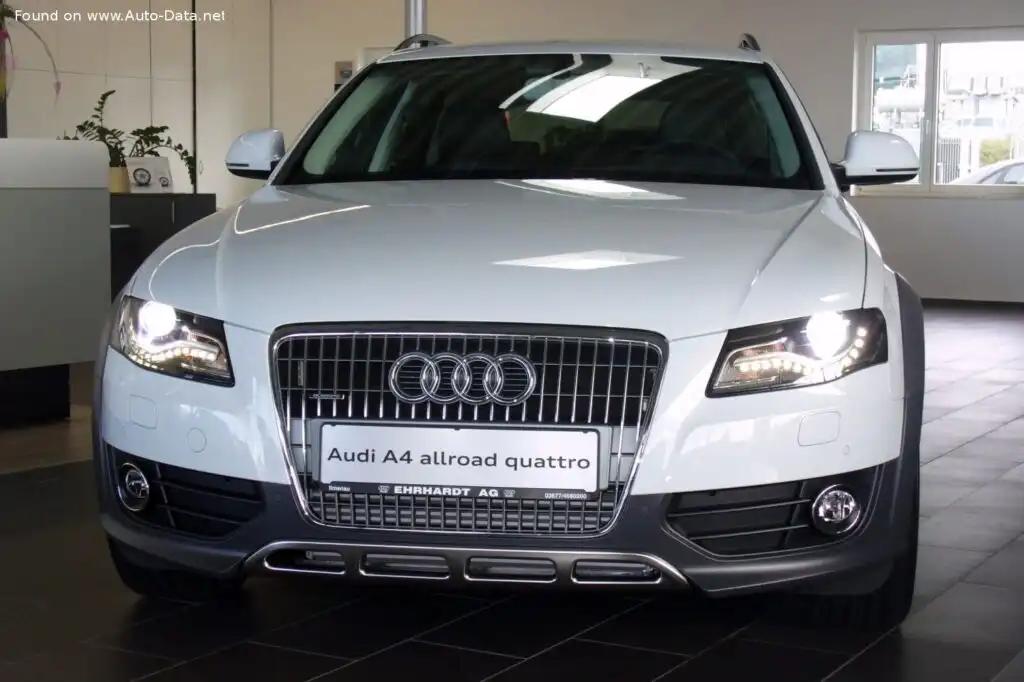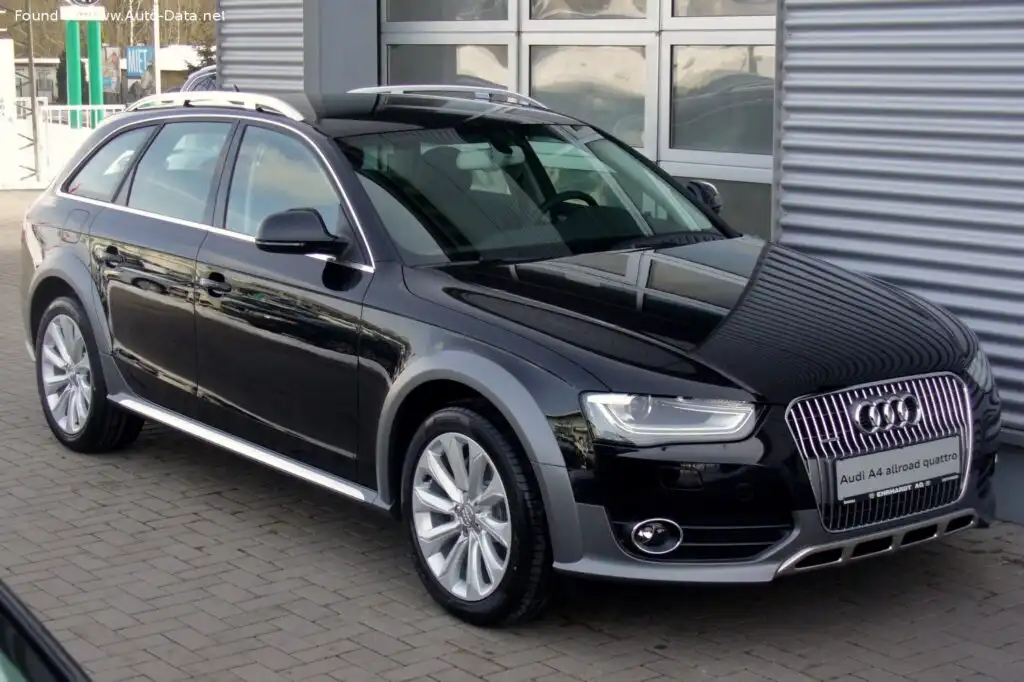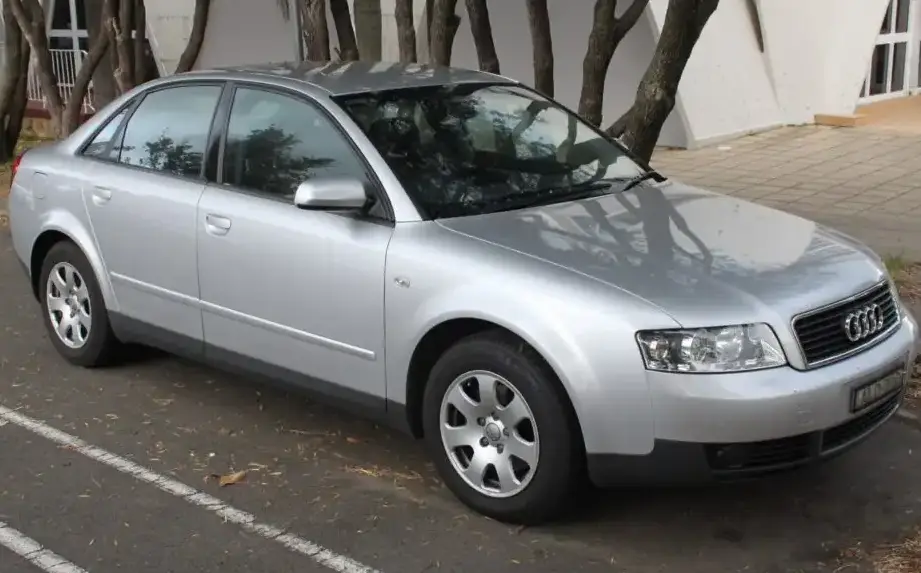
The Audi A4 (B6), produced between 2001 and 2005, represented a significant step forward for Audi’s popular executive car. The 1.8T variant, specifically the 170 horsepower version, was a mainstay of the B6 A4 lineup, particularly in European and North American markets. Positioned as a mid-range offering, it bridged the gap between the entry-level 1.6L models and the more potent 2.0T and 3.0 V6 options. This model utilized the Volkswagen Group’s PL45 (also known as the B6) platform, shared with the Volkswagen Passat, Škoda Superb, and SEAT Exeo. The B6 generation aimed to improve upon its predecessor (the B5) with enhanced refinement, improved handling, and a more modern interior.
Technical Specifications
| Brand | Audi |
| Model | A4 |
| Generation | A4 (B6 8E) |
| Type (Engine) | 1.8 T (170 Hp) |
| Start of production | July, 2001 |
| End of production | December, 2004 |
| Powertrain Architecture | Internal Combustion engine |
| Body type | Sedan |
| Seats | 5 |
| Doors | 4 |
| Fuel consumption (combined) | 8.9 l/100 km |
| Fuel consumption (US mpg) | 26.4 US mpg |
| Fuel consumption (UK mpg) | 31.7 UK mpg |
| Fuel consumption (km/l) | 11.2 km/l |
| Fuel Type | Petrol (Gasoline) |
| Acceleration 0 – 100 km/h | 8.1 sec |
| Acceleration 0 – 62 mph | 8.1 sec |
| Acceleration 0 – 60 mph | 7.7 sec |
| Maximum speed | 209 km/h (129.87 mph) |
| Weight-to-power ratio | 8.7 kg/Hp, 115.3 Hp/tonne |
| Weight-to-torque ratio | 6.6 kg/Nm, 152.5 Nm/tonne |
| Power | 170 Hp @ 5900 rpm |
| Power per litre | 95.5 Hp/l |
| Torque | 225 Nm @ 1950-5000 rpm (165.95 lb.-ft. @ 1950-5000 rpm) |
| Engine layout | Front, Longitudinal |
| Engine Model/Code | AMB |
| Engine displacement | 1781 cm3 (108.68 cu. in.) |
| Number of cylinders | 4 |
| Engine configuration | Inline |
| Cylinder Bore | 81 mm (3.19 in.) |
| Piston Stroke | 86.4 mm (3.4 in.) |
| Compression ratio | 9.3:1 |
| Number of valves per cylinder | 5 |
| Fuel injection system | Multi-port manifold injection |
| Engine aspiration | Turbocharger, Intercooler |
| Valvetrain | DOHC |
| Engine oil capacity | 3.9 l (4.12 US qt | 3.43 UK qt) |
| Coolant capacity | 6.5 l (6.87 US qt | 5.72 UK qt) |
| Kerb Weight | 1475 kg (3251.82 lbs.) |
| Trunk (boot) space – minimum | 445 l (15.72 cu. ft.) |
| Trunk (boot) space – maximum | 720 l (25.43 cu. ft.) |
| Fuel tank capacity | 70 l (18.49 US gal | 15.4 UK gal) |
| Length | 4548 mm (179.06 in.) |
| Width | 1772 mm (69.76 in.) |
| Height | 1428 mm (56.22 in.) |
| Wheelbase | 2650 mm (104.33 in.) |
| Front track | 1528 mm (60.16 in.) |
| Rear track | 1526 mm (60.08 in.) |
| Drag coefficient (Cd) | 0.30 |
| Minimum turning circle | 11.1 m (36.42 ft.) |
| Drivetrain Architecture | The Internal combustion engine (ICE) drives the front wheels of the vehicle. |
| Drive wheel | Front wheel drive |
| Number of gears | 5 gears, manual transmission |
| Front suspension | Independent multi-link suspension |
| Rear suspension | Independent multi-link suspension |
| Front brakes | Ventilated discs |
| Rear brakes | Disc |
| Assisting systems | ABS (Anti-lock braking system) |
| Steering type | Steering rack and pinion |
| Tires size | 205/55 R16 |
| Wheel rims size | 7J x 16 |
Powertrain & Engine Architecture
The heart of the A4 1.8T was the 1781cc, inline-four cylinder engine, designated the AMB engine code. This engine was a member of the EA888 family, known for its robust construction and tuning potential. It featured a cast iron block and an aluminum cylinder head, incorporating five valves per cylinder (three intake, two exhaust) for improved breathing. The engine utilized a single turbocharger with an intercooler to boost power and torque. Fuel delivery was managed by a Bosch Motronic multi-port fuel injection system. The 1.8T engine was known for its relatively flat torque curve, providing usable power across a wide RPM range. The five-speed manual transmission was the standard offering, providing direct engagement and a sporty feel. A four-speed automatic transmission was also available, though it often resulted in slightly reduced fuel economy and acceleration.
Driving Characteristics
The 170 hp 1.8T A4 offered a balanced driving experience. While not as overtly sporty as the higher-output versions, it provided sufficient power for everyday driving and comfortable highway cruising. Acceleration from 0-60 mph took around 7.7 to 8.1 seconds, depending on transmission and testing conditions. The manual transmission allowed for precise gear changes and a more engaging driving experience, while the automatic offered convenience, particularly in urban environments. The automatic’s gear ratios were tuned for fuel efficiency rather than outright performance. The engine’s turbocharger provided a noticeable boost in power during acceleration, but turbo lag was present, especially at lower RPMs. Compared to the 2.0T, the 1.8T felt less responsive, but it was also lighter, which helped to mitigate some of the performance difference.
Equipment & Trim Levels
The 1.8T A4 typically came standard with features such as power windows, power locks, air conditioning, and an AM/FM stereo. Higher trim levels, such as the Attraction and Ambition packages, added features like alloy wheels, a sunroof, upgraded upholstery, and a multi-function steering wheel. Optional extras included leather seats, a premium sound system, and a navigation system. Interior upholstery was typically cloth, but leather was available as an upgrade. The dashboard layout was clean and functional, with a focus on ergonomics. The instrument cluster featured clear, easy-to-read gauges.
Chassis & Braking
The B6 A4 featured fully independent suspension, with multi-link setups at both the front and rear. This provided a comfortable ride and good handling characteristics. The front suspension utilized coil springs and shock absorbers, while the rear suspension incorporated separate springs and dampers. Brakes were ventilated discs at the front and solid discs at the rear. Anti-lock braking system (ABS) was standard. Stabilizer bars were fitted to both the front and rear axles to reduce body roll during cornering. The chassis was designed to provide a balance between comfort and handling, making it suitable for a wide range of driving conditions.
Market Reception & Comparison
The A4 1.8T was generally well-received by automotive critics. It was praised for its refined interior, comfortable ride, and balanced handling. However, some critics noted that the engine lacked the outright performance of the 2.0T and 3.0 V6 models. Fuel economy was considered good for its class, averaging around 26.4 US mpg in combined driving. Compared to the 1.6L A4, the 1.8T offered a significant performance upgrade, making it a more appealing option for drivers who wanted more power. Compared to the 2.0T, the 1.8T was more affordable and slightly more fuel-efficient, but it lacked the same level of performance. The 1.9 TDI diesel variant was also a popular choice in Europe, offering excellent fuel economy and strong torque.
Legacy
The Audi A4 B6 1.8T has proven to be a relatively reliable vehicle, although age and mileage can lead to common issues such as oil leaks, turbocharger failure, and cooling system problems. The engine itself is generally durable, but regular maintenance is essential to prevent issues. The B6 A4 remains a popular choice in the used car market, offering a good balance of comfort, performance, and affordability. Parts availability is generally good, and the engine is relatively easy to work on for experienced mechanics. The 1.8T engine’s tuning potential has also made it a favorite among enthusiasts, with many owners modifying their vehicles for increased performance.