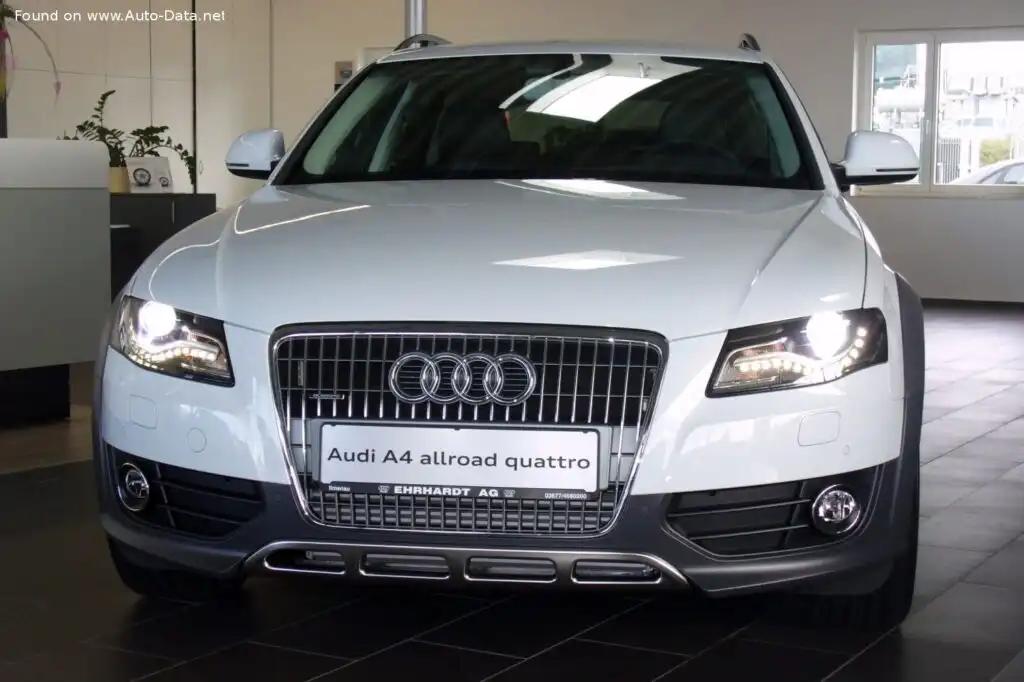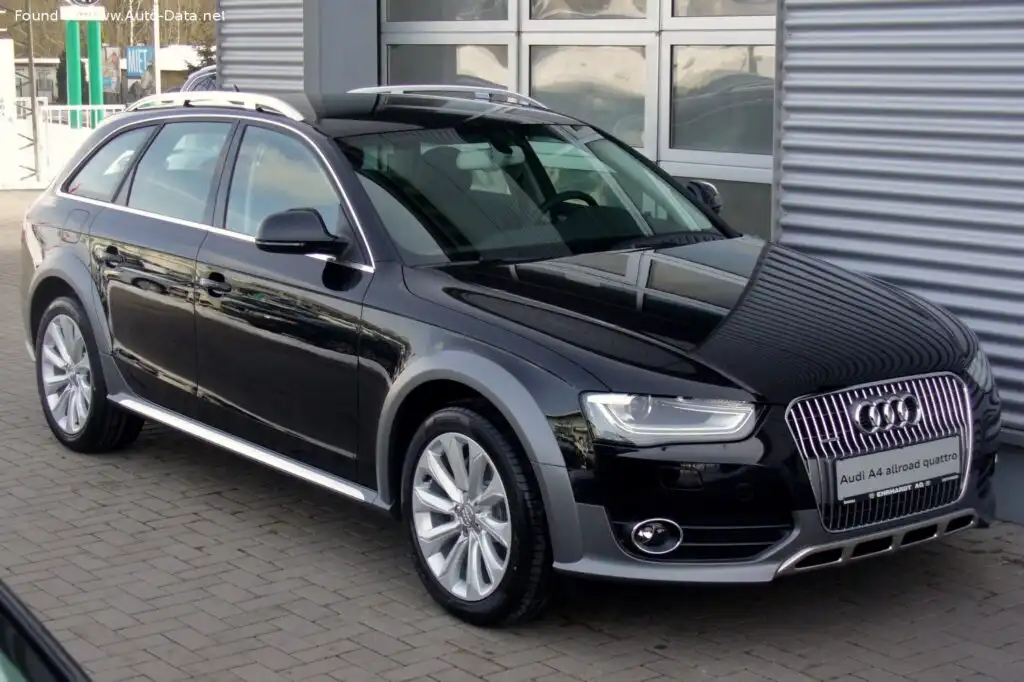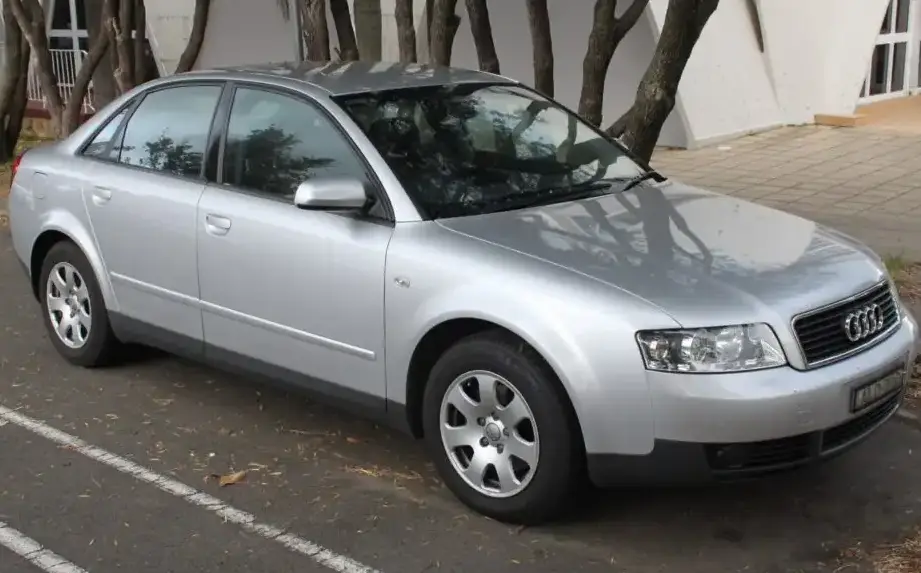
The Audi A4 (B6), produced from 2002 to 2005, represented a significant evolution for Audi’s compact executive car. The 1.8T quattro model, specifically those built between November 2002 and December 2004, occupied a sweet spot in the lineup, offering a blend of performance and all-weather capability. Positioned as a mid-range offering, it bridged the gap between the base 1.8T front-wheel-drive models and the more potent 3.0L V6 variants. This version was primarily sold in Europe and other international markets, with limited availability in the United States where the 1.8T was offered but typically in front-wheel drive configuration.
Technical Specifications
| Brand | Audi |
| Model | A4 |
| Generation | A4 (B6 8E) |
| Type (Engine) | 1.8 T (190 Hp) quattro |
| Start of production | November, 2002 |
| End of production | December, 2004 |
| Powertrain Architecture | Internal Combustion engine |
| Body type | Sedan |
| Seats | 5 |
| Doors | 4 |
| Fuel consumption (urban) | 12.9 l/100 km (18.2 US mpg, 21.9 UK mpg, 7.8 km/l) |
| Fuel consumption (extra urban) | 7.3 l/100 km (32.2 US mpg, 38.7 UK mpg, 13.7 km/l) |
| Fuel consumption (combined) | 9.4 l/100 km (25 US mpg, 30.1 UK mpg, 10.6 km/l) |
| Fuel Type | Petrol (Gasoline) |
| Acceleration 0 – 100 km/h | 8.3 sec |
| Acceleration 0 – 62 mph | 8.3 sec |
| Acceleration 0 – 60 mph | 7.9 sec |
| Maximum speed | 234 km/h (145.4 mph) |
| Weight-to-power ratio | 7.8 kg/Hp, 128.8 Hp/tonne |
| Weight-to-torque ratio | 6.1 kg/Nm, 162.7 Nm/tonne |
| Power | 190 Hp @ 5700 rpm |
| Power per litre | 106.7 Hp/l |
| Torque | 240 Nm @ 1950-5500 rpm (177.01 lb.-ft. @ 1950-5500 rpm) |
| Engine layout | Front, Longitudinal |
| Engine Model/Code | BEX |
| Engine displacement | 1781 cm3 (108.68 cu. in.) |
| Number of cylinders | 4 |
| Engine configuration | Inline |
| Cylinder Bore | 81 mm (3.19 in.) |
| Piston Stroke | 86.4 mm (3.4 in.) |
| Compression ratio | 9.3:1 |
| Number of valves per cylinder | 5 |
| Fuel injection system | Multi-port manifold injection |
| Engine aspiration | Turbocharger, Intercooler |
| Valvetrain | DOHC |
| Engine oil capacity | 4.1 l (4.33 US qt | 3.61 UK qt) |
| Coolant | 8 l (8.45 US qt | 7.04 UK qt) |
| Kerb Weight | 1475 kg (3251.82 lbs.) |
| Max. weight | 2025 kg (4464.36 lbs.) |
| Max load | 550 kg (1212.54 lbs.) |
| Trunk (boot) space – minimum | 445 l (15.72 cu. ft.) |
| Trunk (boot) space – maximum | 720 l (25.43 cu. ft.) |
| Fuel tank capacity | 66 l (17.44 US gal | 14.52 UK gal) |
| Length | 4548 mm (179.06 in.) |
| Width | 1772 mm (69.76 in.) |
| Height | 1428 mm (56.22 in.) |
| Wheelbase | 2650 mm (104.33 in.) |
| Front track | 1528 mm (60.16 in.) |
| Rear (Back) track | 1526 mm (60.08 in.) |
| Drag coefficient (Cd) | 0.31 |
| Minimum turning circle | 11.1 m (36.42 ft.) |
| Drive wheel | All wheel drive (4×4) |
| Number of gears | 6 gears, manual transmission |
| Front suspension | Independent multi-link suspension |
| Rear suspension | Independent multi-link suspension |
| Front brakes | Ventilated discs |
| Rear brakes | Disc |
| Assisting systems | ABS (Anti-lock braking system) |
| Steering type | Steering rack and pinion |
| Power steering | Hydraulic Steering |
| Tires size | 205/55 R16 |
| Wheel rims size | 7J x 16 |
Powertrain & Engine Architecture
The heart of the 1.8T quattro is the BEX engine code, a 1.8-liter inline-four cylinder gasoline engine. This engine is a member of the EA888 family, known for its robust construction and tuning potential. The BEX featured a cast iron block and an aluminum cylinder head, incorporating five valves per cylinder (three intake, two exhaust) operated by a dual overhead camshaft (DOHC) design. Fuel delivery was handled by a multi-port fuel injection system, and the engine was equipped with a K03 turbocharger and an intercooler to boost power output. The turbocharger provided significant improvements in torque and horsepower compared to naturally aspirated engines. The 6-speed manual transmission was standard, offering precise gear changes and contributing to the car’s engaging driving experience. The quattro all-wheel-drive system utilized a Torsen center differential, providing a variable torque split between the front and rear axles for optimal traction in various conditions.
Driving Characteristics
The 1.8T quattro offered a balanced driving experience. With 190 horsepower and 240 Nm (177 lb-ft) of torque, acceleration from 0 to 60 mph took around 7.9 seconds, making it reasonably quick for its time. The turbocharger provided a noticeable surge of power in the mid-range, making overtaking maneuvers effortless. The quattro system instilled confidence in slippery conditions, providing excellent grip and stability. Compared to the base 1.8T models, the quattro version offered significantly improved traction and handling. While not as powerful as the 3.0L V6, the 1.8T quattro provided a more fuel-efficient and affordable alternative. The 6-speed manual transmission allowed for precise control over the engine’s power band, while the gear ratios were well-suited for both city driving and highway cruising.
Equipment & Trim Levels
The 1.8T quattro typically came well-equipped, though specific features varied depending on the market and optional packages selected. Standard equipment generally included automatic climate control, power windows and locks, a CD stereo system, and alloy wheels. Higher trim levels offered options such as leather upholstery, sunroof, heated front seats, and a premium sound system. Safety features included ABS brakes, front and side airbags, and traction control. The interior design was typically understated and functional, with a focus on ergonomics and build quality. The dashboard layout was clean and intuitive, with easy-to-read gauges and controls.
Chassis & Braking
The B6 A4 featured a fully independent suspension system, with multi-link setups at both the front and rear. This provided a comfortable ride while maintaining good handling characteristics. The front suspension utilized coil springs and shock absorbers, while the rear suspension incorporated a separate spring and damper arrangement. The 1.8T quattro models were typically equipped with ventilated disc brakes at the front and solid disc brakes at the rear. The ABS anti-lock braking system helped to prevent wheel lockup during hard braking, enhancing safety and control. The steering system was a rack-and-pinion setup with hydraulic power assistance, providing precise and responsive steering feel.
Market Reception & Comparison
The Audi A4 (B6) 1.8T quattro was generally well-received by automotive critics. It was praised for its refined driving experience, comfortable interior, and all-weather capability. Compared to its rivals, such as the BMW 3 Series and Mercedes-Benz C-Class, the A4 offered a compelling combination of performance, luxury, and value. Fuel economy was respectable for its class, averaging around 25 mpg in combined driving. Reliability was generally good, although some owners reported issues with the turbocharger and the electronic systems. The 1.8T quattro offered a more practical and affordable alternative to the more expensive V6 models, making it a popular choice for buyers seeking a well-rounded compact executive car.
Legacy
The B6 A4 1.8T quattro remains a popular choice among enthusiasts and used car buyers. The engine is known for its durability and tuning potential, and the quattro all-wheel-drive system provides excellent traction in all conditions. While some maintenance may be required due to the car’s age, parts are readily available and relatively affordable. The B6 A4 1.8T quattro has earned a reputation as a reliable and enjoyable car that offers a good balance of performance, comfort, and practicality. It continues to be a sought-after model in the used car market, particularly among those who appreciate its classic Audi styling and engaging driving dynamics.