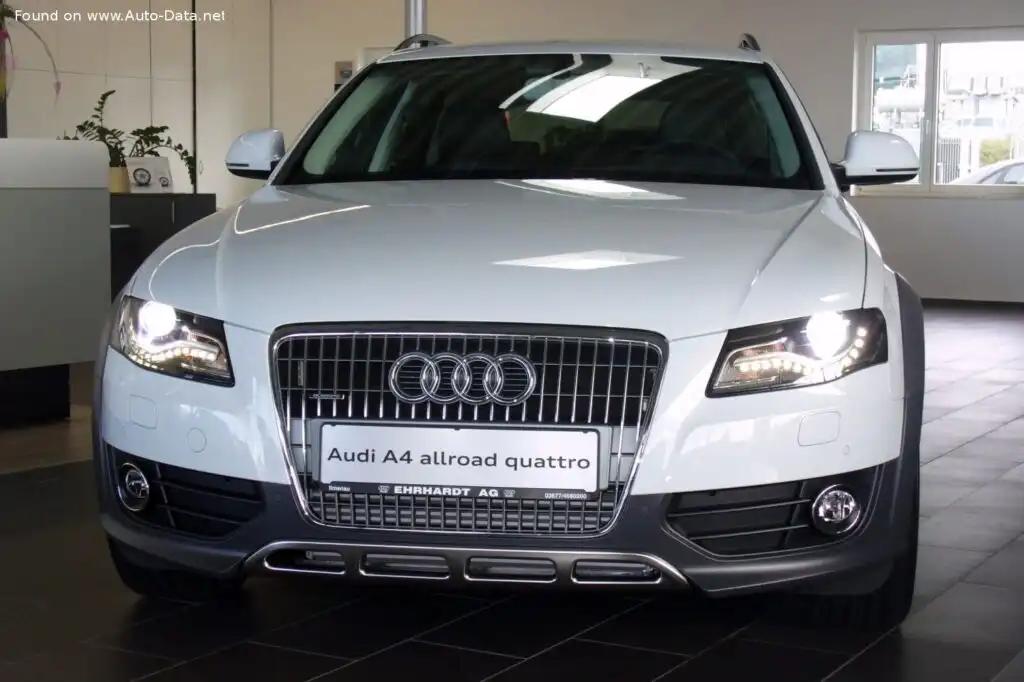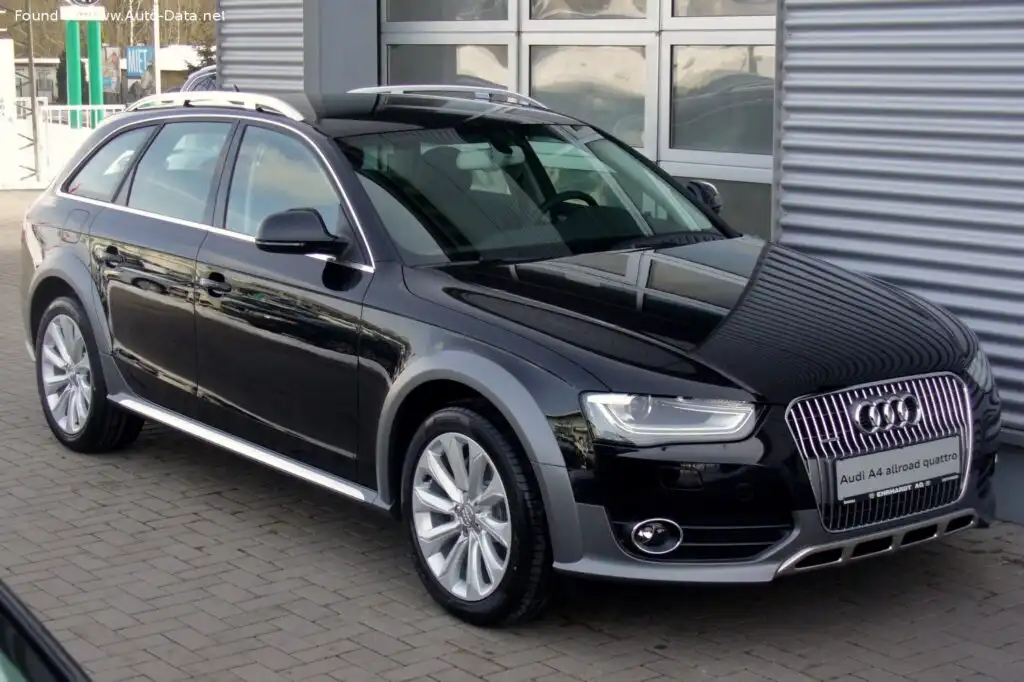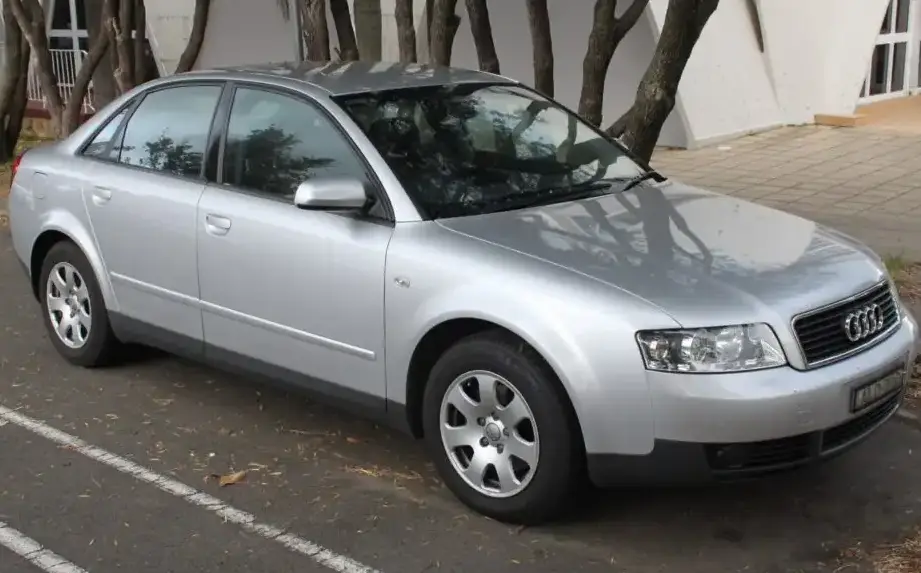
The Audi A4 (B6), produced from 2002 to 2005, represented a significant step forward for Audi’s popular compact executive car. The 1.9 TDI variant, specifically the 115 horsepower version available from June 2004 to December 2004, occupied an important position in the European market as an efficient and practical choice. This model, built on the Volkswagen Group’s B6 platform (internally designated 8E), aimed to balance fuel economy with acceptable performance for everyday driving. It was positioned as a more affordable entry point into the A4 range, appealing to buyers prioritizing running costs over outright speed. While not officially sold in the US market during this generation, the B6 A4 gained a following among enthusiasts through grey market imports.
Technical Specifications
| Brand | Audi |
| Model | A4 |
| Generation | A4 (B6 8E) |
| Type (Engine) | 1.9 TDI (115 Hp) |
| Start of production | June, 2004 |
| End of production | December, 2004 |
| Powertrain Architecture | Internal Combustion engine |
| Body type | Sedan |
| Seats | 5 |
| Doors | 4 |
| Fuel consumption (urban) | 7.5 l/100 km (31.4 US mpg) |
| Fuel consumption (extra urban) | 4.5 l/100 km (52.3 US mpg) |
| Fuel consumption (combined) | 5.6 l/100 km (42 US mpg) |
| Fuel Type | Diesel |
| Acceleration 0 – 100 km/h | 11.2 sec |
| Acceleration 0 – 62 mph | 11.2 sec |
| Acceleration 0 – 60 mph | 10.6 sec |
| Maximum speed | 201 km/h (124.9 mph) |
| Weight-to-power ratio | 12.1 kg/Hp |
| Weight-to-torque ratio | 4.9 kg/Nm |
| Power | 115 Hp @ 4000 rpm |
| Torque | 285 Nm @ 1900 rpm (210.21 lb.-ft. @ 1900 rpm) |
| Engine layout | Front, Longitudinal |
| Engine Model/Code | BKE |
| Engine displacement | 1896 cm3 (115.7 cu. in.) |
| Number of cylinders | 4 |
| Engine configuration | Inline |
| Cylinder Bore | 79.5 mm (3.13 in.) |
| Piston Stroke | 95.5 mm (3.76 in.) |
| Compression ratio | 19:1 |
| Number of valves per cylinder | 2 |
| Fuel injection system | Pump-nozzle (Unit Injector) |
| Engine aspiration | Turbocharger, Intercooler |
| Valvetrain | OHC |
| Engine oil capacity | 3.8 l (4.02 US qt | 3.34 UK qt) |
| Coolant | 8 l (8.45 US qt | 7.04 UK qt) |
| Kerb Weight | 1390 kg (3064.43 lbs.) |
| Max. weight | 1940 kg (4276.97 lbs.) |
| Max load | 550 kg (1212.54 lbs.) |
| Trunk (boot) space – minimum | 445 l (15.72 cu. ft.) |
| Trunk (boot) space – maximum | 720 l (25.43 cu. ft.) |
| Fuel tank capacity | 70 l (18.49 US gal | 15.4 UK gal) |
| Length | 4548 mm (179.06 in.) |
| Width | 1772 mm (69.76 in.) |
| Height | 1428 mm (56.22 in.) |
| Wheelbase | 2650 mm (104.33 in.) |
| Front track | 1528 mm (60.16 in.) |
| Rear (Back) track | 1526 mm (60.08 in.) |
| Drag coefficient (Cd) | 0.29 |
| Minimum turning circle | 11.1 m (36.42 ft.) |
| Drivetrain Architecture | Front wheel drive |
| Number of gears | 5 |
| Gearbox type | Manual transmission |
| Front suspension | Independent multi-link suspension |
| Rear suspension | Independent multi-link suspension |
| Front brakes | Ventilated discs |
| Rear brakes | Disc |
| Assisting systems | ABS (Anti-lock braking system) |
| Steering type | Steering rack and pinion |
| Power steering | Hydraulic Steering |
| Tires size | 205/55 R16 |
| Wheel rims size | 16 |
INTRODUCTION
The Audi A4 B6 1.9 TDI (115 hp) was a mainstay of the European automotive landscape during its production run. Introduced as part of the B6 generation A4, which debuted in 2002, this variant offered a compelling blend of practicality, efficiency, and the Audi brand’s reputation for build quality. The 1.9 TDI engine, a Volkswagen Group staple, was known for its durability and fuel economy. This particular iteration, producing 115 horsepower, was designed to appeal to drivers seeking a comfortable and economical daily driver, rather than outright performance. It sat below the more powerful 1.9 TDI 130 hp and the range-topping 2.0 TDI and 3.0 V6 models in the A4 lineup.
Powertrain & Engine Architecture
The heart of this A4 variant is the 1.9-liter inline-four cylinder diesel engine, specifically the BKE engine code. This engine utilizes a pump-nozzle (unit injector) fuel injection system, a technology known for its precision and efficiency in diesel applications. The BKE engine features a single overhead camshaft (OHC) operating two valves per cylinder. A turbocharger with an intercooler is employed to boost power and torque, providing a noticeable improvement over naturally aspirated diesel engines. The 1896cc engine delivers 115 hp at 4000 rpm and a substantial 285 Nm (210 lb-ft) of torque at a low 1900 rpm. This torque output is a key characteristic of the engine, providing strong pulling power from low engine speeds. The engine is longitudinally mounted, driving the front wheels through a five-speed manual transmission. While an automatic transmission was available, the 115 hp version was more commonly paired with the manual gearbox.
Driving Characteristics
The 1.9 TDI 115 hp A4 offered a comfortable and refined driving experience, prioritizing fuel efficiency and ease of use over sporty handling. Acceleration from 0-60 mph took around 10.6 seconds, which was adequate for everyday driving but not particularly quick. The engine’s strong low-end torque made it well-suited for overtaking maneuvers and navigating city traffic. The five-speed manual transmission provided precise gear changes, and the gear ratios were optimized for fuel economy. Compared to the 130 hp version of the same engine, the 115 hp variant felt noticeably less powerful, particularly at higher speeds. However, the difference in fuel economy was minimal. The suspension provided a comfortable ride, absorbing bumps and imperfections in the road effectively. Steering was precise and well-weighted, providing a confident feel behind the wheel.
Equipment & Trim Levels
The 1.9 TDI 115 hp A4 typically came with a reasonable level of standard equipment. This included power windows, central locking, air conditioning, and an integrated stereo system. Interior upholstery was typically cloth, although leather options were available at an extra cost. Trim levels varied depending on the market, but generally included options for alloy wheels, upgraded audio systems, and parking sensors. Safety features such as ABS (Anti-lock Braking System) and airbags were standard. Optional extras included sunroofs, navigation systems, and heated seats. The interior design was typical of Audi at the time, with a clean and functional layout.
Chassis & Braking
The A4 B6 utilized a fully independent multi-link suspension system at both the front and rear, providing a comfortable ride and good handling characteristics. The front suspension featured coil springs and shock absorbers, while the rear suspension employed a more complex multi-link design. Braking duties were handled by ventilated discs at the front and solid discs at the rear. ABS was standard, providing enhanced braking performance in slippery conditions. The chassis was designed to provide a balance between comfort and handling, and the suspension tuning was optimized for everyday driving. Stabilizer bars were fitted to both the front and rear axles to reduce body roll during cornering.
Market Reception & Comparison
The Audi A4 1.9 TDI 115 hp was well-received in the European market as a practical and economical choice. Critics praised its fuel efficiency, comfortable ride, and build quality. However, some reviewers noted that the engine lacked the outright performance of its more powerful siblings. Compared to the 1.9 TDI 130 hp variant, the 115 hp version offered slightly better fuel economy but significantly less power. The 130 hp version was generally considered to be a more versatile option, offering a better balance between performance and economy. The A4 1.9 TDI also competed with other compact executive cars such as the BMW 3 Series and Mercedes-Benz C-Class, offering a compelling alternative with its diesel engine and reputation for reliability.
Legacy
The 1.9 TDI engine, in its various iterations, proved to be remarkably durable and reliable. The BKE engine code found in this A4 variant is generally considered to be a robust unit, capable of high mileage with proper maintenance. Today, these cars can be found on the used car market at relatively affordable prices. While age and mileage are factors to consider, a well-maintained example can still provide years of reliable service. The A4 B6 1.9 TDI 115 hp remains a popular choice for those seeking an economical and practical compact executive car, and its reputation for durability continues to attract buyers.