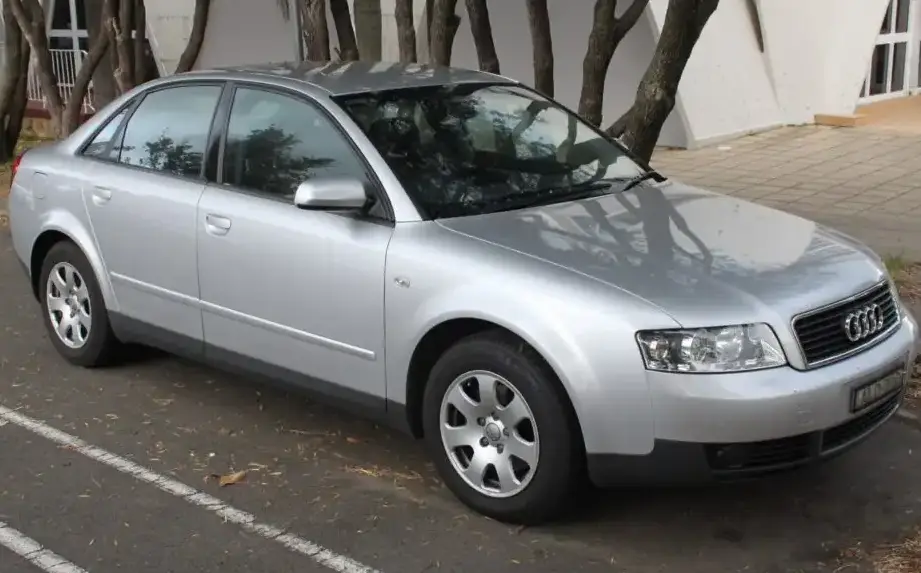
The Audi A4 (B6), produced between 2000 and 2004, represented a significant step forward for Audi’s popular executive car. The 1.9 TDI variant, equipped with a 130 horsepower engine, was a mainstay in European markets, offering a compelling blend of fuel efficiency and respectable performance. This model occupied a crucial mid-range position within the B6 A4 lineup, appealing to buyers seeking a balance between cost-effectiveness and the premium Audi experience. It was positioned below the more powerful 2.0 TDI and 3.0 V6 models, and above the entry-level 1.6-liter gasoline engine. The B6 A4 was built on the Volkswagen Group’s PL45 platform (internally designated 8E), shared with the Volkswagen Passat B5.5.
Technical Specifications
| Brand | Audi |
| Model | A4 |
| Generation | A4 (B6 8E) |
| Type (Engine) | 1.9 TDI (130 Hp) |
| Start of production | September, 2000 |
| End of production | December, 2004 |
| Powertrain Architecture | Internal Combustion engine |
| Body type | Sedan |
| Seats | 5 |
| Doors | 4 |
| Fuel consumption (urban) | 7.4 l/100 km (31.8 US mpg) |
| Fuel consumption (extra urban) | 4.4 l/100 km (53.5 US mpg) |
| Fuel consumption (combined) | 5.5 l/100 km (42.8 US mpg) |
| Fuel Type | Diesel |
| Acceleration 0 – 100 km/h | 9.9 sec |
| Acceleration 0 – 62 mph | 9.9 sec |
| Acceleration 0 – 60 mph | 9.4 sec |
| Maximum speed | 210 km/h (130.49 mph) |
| Emission standard | Euro 3 |
| Weight-to-power ratio | 10.8 kg/Hp |
| Weight-to-torque ratio | 4.5 kg/Nm |
| Power | 130 Hp @ 4000 rpm |
| Torque | 310 Nm @ 1900 rpm (228.64 lb.-ft. @ 1900 rpm) |
| Engine layout | Front, Longitudinal |
| Engine Model/Code | AVF, AWX |
| Engine displacement | 1896 cm3 (115.7 cu. in.) |
| Number of cylinders | 4 |
| Engine configuration | Inline |
| Cylinder Bore | 79.5 mm (3.13 in.) |
| Piston Stroke | 95.5 mm (3.76 in.) |
| Compression ratio | 19.5:1 |
| Number of valves per cylinder | 2 |
| Fuel injection system | Pump-nozzle (Unit Injector) |
| Engine aspiration | Turbocharger |
| Valvetrain | SOHC |
| Engine oil capacity | 3.7 l (3.91 US qt | 3.26 UK qt) |
| Coolant | 6 l (6.34 US qt | 5.28 UK qt) |
| Kerb Weight | 1405 kg (3097.49 lbs.) |
| Max. weight | 1955 kg (4310.04 lbs.) |
| Max load | 550 kg (1212.54 lbs.) |
| Trunk (boot) space – minimum | 445 l (15.72 cu. ft.) |
| Trunk (boot) space – maximum | 720 l (25.43 cu. ft.) |
| Fuel tank capacity | 70 l (18.49 US gal | 15.4 UK gal) |
| Length | 4548 mm (179.06 in.) |
| Width | 1772 mm (69.76 in.) |
| Height | 1428 mm (56.22 in.) |
| Wheelbase | 2650 mm (104.33 in.) |
| Front track | 1528 mm (60.16 in.) |
| Rear (Back) track | 1526 mm (60.08 in.) |
| Drag coefficient (Cd) | 0.29 |
| Minimum turning circle | 11.1 m (36.42 ft.) |
| Drivetrain Architecture | Front wheel drive |
| Number of gears | 6 gears, manual transmission |
| Front suspension | Independent multi-link suspension |
| Rear suspension | Independent multi-link suspension |
| Front brakes | Ventilated discs |
| Rear brakes | Disc |
| Assisting systems | ABS (Anti-lock braking system) |
| Steering type | Steering rack and pinion |
| Power steering | Hydraulic Steering |
| Tires size | 195/65 R15 |
| Wheel rims size | 7J x 15 |
Powertrain & Engine Architecture
The heart of the A4 1.9 TDI was the Volkswagen Group’s 1.9-liter inline-four diesel engine, available in two primary iterations: the AVF and AWX. Both engines shared the same fundamental architecture, but differed slightly in calibration and power output. This engine was a workhorse, known for its durability and fuel efficiency. It featured a cast iron block and an aluminum cylinder head with two valves per cylinder operated by a single overhead camshaft (SOHC). The engine utilized a sophisticated pump-nozzle (unit injector) fuel injection system, delivering highly pressurized fuel directly into the combustion chamber. This system, developed by Bosch, contributed to the engine’s strong torque output and relatively low emissions for its time. A turbocharger with a variable geometry turbine (VGT) further enhanced performance, providing increased boost across a wider RPM range. The 1.9 TDI produced 130 horsepower at 4000 rpm and a substantial 310 Nm (228.64 lb-ft) of torque at just 1900 rpm. The engine was mounted longitudinally in the chassis, driving the front wheels through a six-speed manual transmission.
Driving Characteristics
The A4 1.9 TDI with the six-speed manual transmission offered a surprisingly engaging driving experience. While not overtly sporty, the engine’s strong low-end torque made it feel responsive in everyday driving situations. The six-speed gearbox allowed for efficient highway cruising, keeping engine speeds low and contributing to excellent fuel economy. Acceleration to 60 mph took approximately 9.4 seconds, and top speed was around 130 mph. Compared to the more powerful gasoline engines in the A4 range, the 1.9 TDI prioritized fuel efficiency and usability over outright performance. The manual transmission provided more driver involvement than the optional automatic, offering precise gear changes and better control. However, the automatic transmission, while less engaging, provided added convenience for urban driving.
Equipment & Trim Levels
The A4 1.9 TDI typically came equipped with a respectable level of standard features. This included power windows, central locking, air conditioning, and an integrated stereo system. Interior upholstery was typically cloth, although leather options were available. Trim levels varied depending on the market, but generally included ‘SE’ and ‘Sport’ variants. The ‘SE’ trim focused on comfort and refinement, while the ‘Sport’ trim added features like sport suspension, alloy wheels, and upgraded interior trim. Optional extras included sunroofs, navigation systems, and premium audio systems. Safety features such as ABS and front airbags were standard.
Chassis & Braking
The B6 A4 featured a fully independent suspension system, with multi-link setups at both the front and rear. This provided a comfortable ride and good handling characteristics. The 1.9 TDI models typically used smaller diameter wheels and tires than the higher-performance variants, contributing to a more compliant ride. Brakes consisted of ventilated discs at the front and solid discs at the rear. ABS (Anti-lock Braking System) was standard. The suspension was tuned to provide a balance between comfort and handling, making the A4 1.9 TDI a capable and predictable vehicle to drive.
Market Reception & Comparison
The Audi A4 1.9 TDI was widely praised by automotive critics for its fuel efficiency, strong torque, and comfortable ride. It was considered a practical and sensible choice for buyers seeking a premium executive car that didn’t break the bank. Compared to the more powerful A4 variants, the 1.9 TDI offered significantly better fuel economy, making it a popular choice for high-mileage drivers. However, some critics noted that the engine could be somewhat noisy and lacked the refinement of the larger gasoline engines. Against competitors like the BMW 3 Series and Mercedes-Benz C-Class, the A4 1.9 TDI offered a compelling combination of value, practicality, and build quality.
Legacy
The 1.9 TDI engine proved to be remarkably durable, and many examples are still on the road today. However, like all diesel engines, they are susceptible to issues related to the fuel injection system and turbocharger. Regular maintenance, including oil changes and fuel filter replacements, is crucial for ensuring long-term reliability. In the used car market, the A4 1.9 TDI remains a popular choice for buyers seeking an affordable and fuel-efficient executive car. Its reputation for reliability and low running costs continues to make it a desirable option, despite its age. The engine’s robust design and readily available parts contribute to its continued viability.