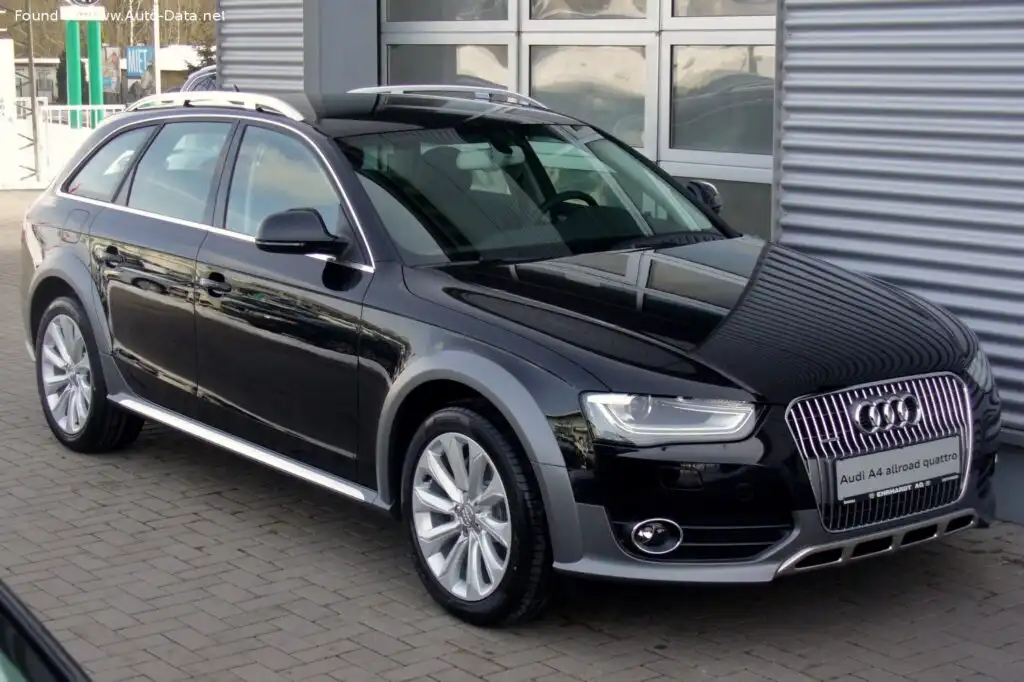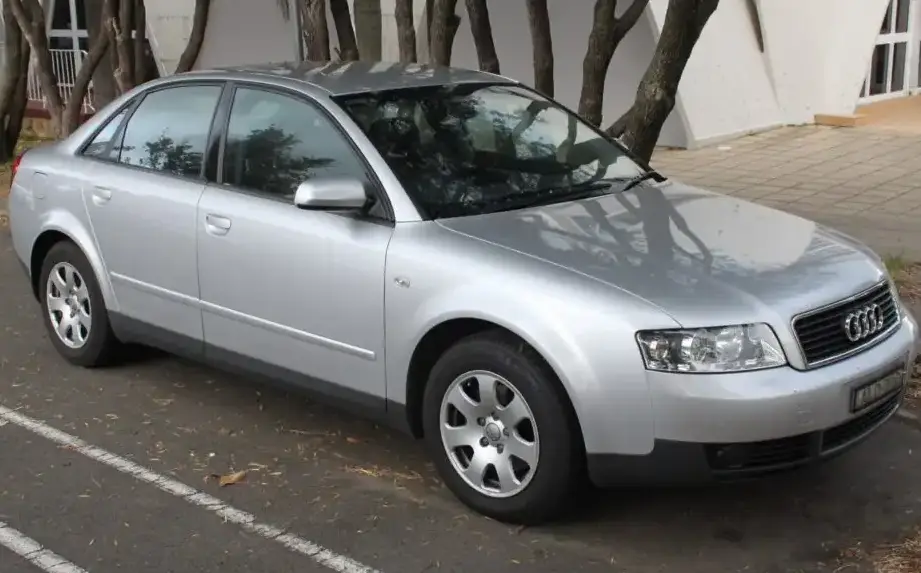
The Audi A4 (B6), produced from 2002 to 2005, represented a significant step forward for Audi’s popular compact executive car. Within the B6 generation (chassis code 8E), the 2.5 TDI V6 with 163 horsepower emerged as a popular choice, particularly in European markets. This variant, available primarily as a sedan and wagon (Avant), offered a blend of performance and fuel efficiency, appealing to drivers seeking a refined and capable daily driver. Production of this specific engine and configuration ran from July 2002 through 2004.
Technical Specifications
| Brand | Audi |
| Model | A4 |
| Generation | A4 (B6 8E) |
| Type (Engine) | 2.5 TDI V6 (163 Hp) |
| Start of production | July, 2002 |
| End of production | 2004 |
| Powertrain Architecture | Internal Combustion engine |
| Body type | Sedan |
| Seats | 5 |
| Doors | 4 |
| Fuel consumption (urban) | 9.6 l/100 km (24.5 US mpg) |
| Fuel consumption (extra urban) | 5.3 l/100 km (44.4 US mpg) |
| Fuel consumption (combined) | 6.8 l/100 km (34.6 US mpg) |
| Fuel Type | Diesel |
| Acceleration 0 – 100 km/h | 8.8 sec |
| Acceleration 0 – 62 mph | 8.8 sec |
| Acceleration 0 – 60 mph | 8.4 sec |
| Maximum speed | 227 km/h (141.05 mph) |
| Weight-to-power ratio | 9.2 kg/Hp |
| Weight-to-torque ratio | 4.9 kg/Nm |
| Power | 163 Hp @ 4000 rpm |
| Torque | 310 Nm @ 1400-3600 rpm (228.64 lb.-ft.) |
| Engine layout | Front, Longitudinal |
| Engine Model/Code | BDG, BFC |
| Engine displacement | 2496 cm3 (152.32 cu. in.) |
| Number of cylinders | 6 |
| Engine configuration | V-engine |
| Cylinder Bore | 78.3 mm (3.08 in.) |
| Piston Stroke | 86.4 mm (3.4 in.) |
| Compression ratio | 18.5:1 |
| Number of valves per cylinder | 4 |
| Fuel injection system | Direct injection |
| Engine aspiration | Turbocharger, Intercooler |
| Valvetrain | DOHC |
| Engine oil capacity | 5.5 l (5.81 US qt | 4.84 UK qt) |
| Coolant capacity | 12 l (12.68 US qt | 10.56 UK qt) |
| Kerb Weight | 1505 kg (3317.96 lbs.) |
| Max. weight | 2055 kg (4530.5 lbs.) |
| Max load | 550 kg (1212.54 lbs.) |
| Trunk (boot) space – minimum | 445 l (15.72 cu. ft.) |
| Trunk (boot) space – maximum | 720 l (25.43 cu. ft.) |
| Fuel tank capacity | 70 l (18.49 US gal | 15.4 UK gal) |
| Length | 4548 mm (179.06 in.) |
| Width | 1772 mm (69.76 in.) |
| Height | 1428 mm (56.22 in.) |
| Wheelbase | 2650 mm (104.33 in.) |
| Front track | 1528 mm (60.16 in.) |
| Rear track | 1526 mm (60.08 in.) |
| Drag coefficient (Cd) | 0.31 |
| Minimum turning circle | 11.1 m (36.42 ft.) |
| Drivetrain | Front wheel drive |
| Number of gears | 6 |
| Gearbox type | Manual transmission |
| Front suspension | Independent multi-link suspension |
| Rear suspension | Independent multi-link suspension |
| Front brakes | Ventilated discs |
| Rear brakes | Disc |
| Assisting systems | ABS (Anti-lock braking system) |
| Steering type | Steering rack and pinion |
| Power steering | Hydraulic Steering |
| Tires size | 205/55 R16 |
| Wheel rims size | 7J x 16 |
Powertrain & Engine Architecture
The heart of this A4 variant is the 2.5-liter V6 TDI engine, identified by engine codes BDG and BFC. This engine is a robust, all-aluminum alloy V6 featuring direct injection technology. The direct injection system, utilizing common rail technology, allowed for precise fuel delivery and optimized combustion, contributing to both power and fuel efficiency. The engine employed a single turbocharger with an intercooler to manage intake air temperature, boosting power output. The double overhead camshaft (DOHC) valvetrain, with four valves per cylinder, further enhanced breathing and performance. The engine’s longitudinal mounting within the chassis facilitated a front-wheel-drive configuration, a common layout for European-market Audis. The 6-speed manual transmission was the standard offering, providing drivers with precise control over the engine’s power band.
Driving Characteristics
The 2.5 TDI V6, producing 163 horsepower and 310 Nm (228.64 lb-ft) of torque, delivered a noticeably more relaxed and refined driving experience compared to the lower-powered 1.8L petrol variants. The readily available torque, peaking from 1400-3600 rpm, provided strong acceleration in everyday driving situations. While not a sports car, the 0-60 mph time of around 8.4 seconds was respectable for the era. The 6-speed manual transmission allowed for efficient cruising on the highway, while the gear ratios were well-suited for both city and country roads. Compared to the higher-output 2.5 TDI variants (often exceeding 180 hp), this version prioritized fuel economy and a more linear power delivery, making it a comfortable and practical choice for long-distance travel.
Equipment & Trim Levels
The 2.5 TDI V6 typically occupied a mid-range position within the B6 A4 lineup. Standard equipment generally included features like alloy wheels, air conditioning, power windows, and a basic audio system. Higher trim levels, such as the SE or Sport, added features like leather upholstery, upgraded audio systems, sunroofs, and automatic climate control. Optional extras included parking sensors, heated seats, and xenon headlights. Interior upholstery was typically cloth, though leather was available as an upgrade. The dashboard layout was typical of Audi at the time, characterized by a clean and functional design with a focus on ergonomics.
Chassis & Braking
The B6 A4 featured fully independent multi-link suspension at both the front and rear, providing a comfortable ride and good handling characteristics. The 2.5 TDI models, due to their increased weight, often featured slightly stiffer suspension components compared to the lighter petrol variants. Braking duties were handled by ventilated discs at the front and solid discs at the rear, equipped with ABS (Anti-lock Braking System) as standard. The hydraulic power steering provided a responsive and precise steering feel.
Market Reception & Comparison
The 2.5 TDI V6 A4 was well-received by automotive critics in Europe, praised for its refined engine, comfortable ride, and practical interior. Fuel economy was a significant selling point, particularly compared to the petrol-powered alternatives. Compared to the 1.8T petrol engine, the TDI offered superior torque and fuel efficiency, but at the cost of some refinement and a slightly higher purchase price. The higher-output TDI variants offered more performance, but were also more expensive and potentially less reliable. The 2.5 TDI V6 struck a good balance between performance, economy, and practicality, making it a popular choice for discerning buyers.
Legacy
The 2.5 TDI V6 engine, while generally reliable, is not without its potential issues. Common concerns include turbocharger failure, injector problems, and issues with the timing belt. However, with regular maintenance and preventative servicing, these engines can provide many years of reliable service. Today, the B6 A4 2.5 TDI V6 represents a relatively affordable entry point into Audi ownership. Its robust engine, comfortable ride, and practical interior continue to appeal to enthusiasts and everyday drivers alike. The availability of aftermarket parts and a strong online community ensures that these cars can be kept on the road for years to come.