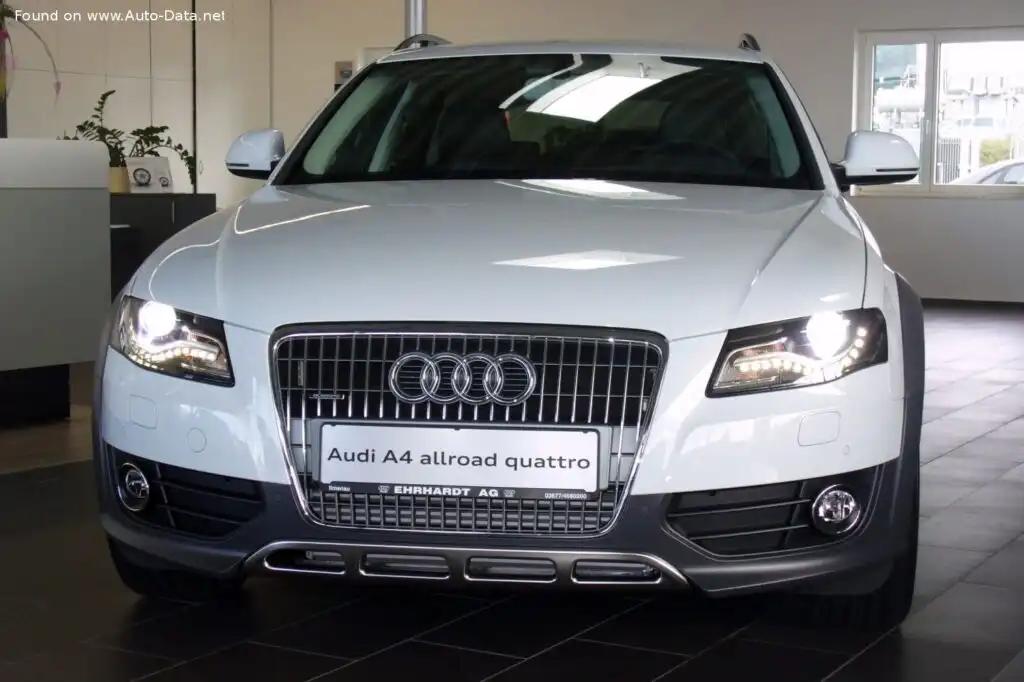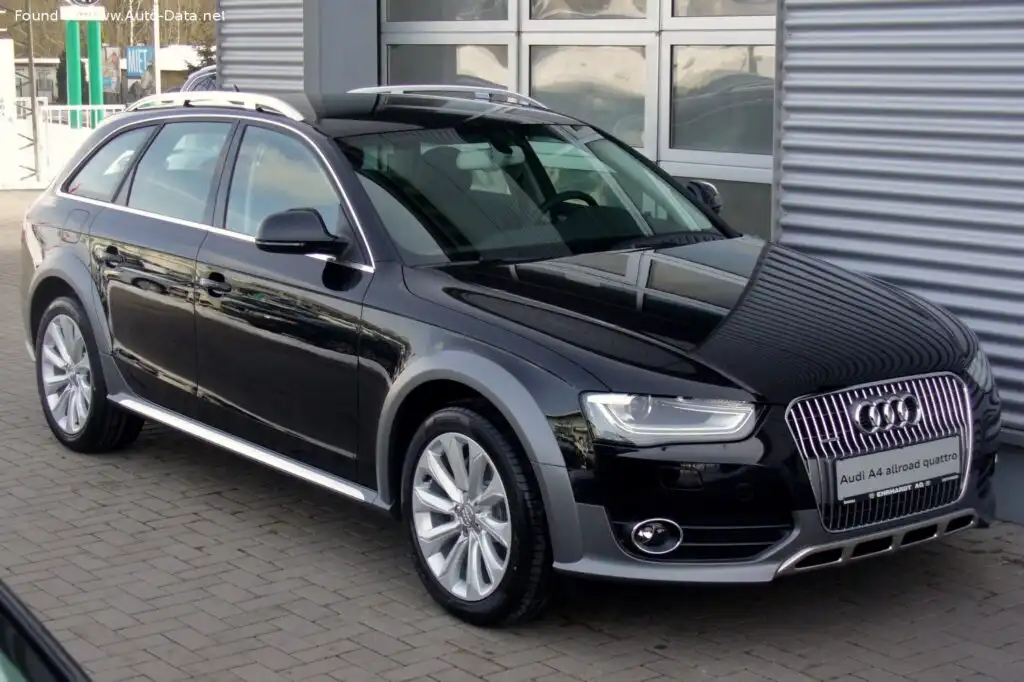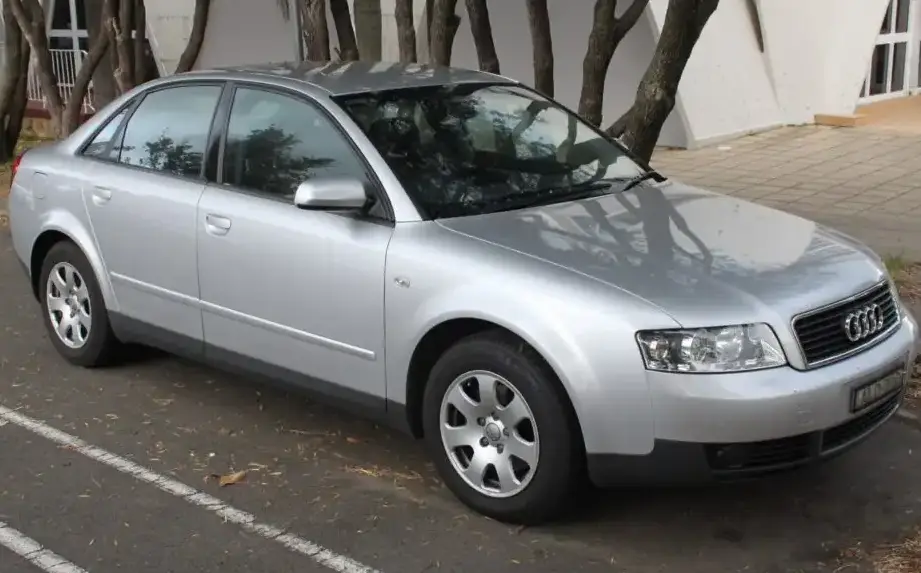
The Audi A4 (B6) 3.0 V6 quattro Tiptronic, produced from September 2000 to 2004, represented a significant step up in performance and refinement for Audi’s popular compact executive car. Positioned as a near-premium offering within the B6 A4 range (internally designated 8E), it slotted above the 1.8T models and below the performance-focused S4. This variant combined a naturally aspirated 3.0-liter V6 engine with Audi’s quattro all-wheel-drive system and a five-speed Tiptronic automatic transmission, aiming to deliver a blend of power, all-weather capability, and convenience. It was primarily marketed in Europe and North America, appealing to buyers seeking a more sophisticated and powerful alternative to the four-cylinder options.
Technical Specifications
| Brand | Audi |
| Model | A4 |
| Generation | A4 (B6 8E) |
| Type (Engine) | 3.0 V6 (220 Hp) quattro Tiptronic |
| Start of production | September, 2000 |
| End of production | 2004 |
| Powertrain Architecture | Internal Combustion engine |
| Body type | Sedan |
| Seats | 5 |
| Doors | 4 |
| Fuel consumption (urban) | 16 l/100 km (14.7 US mpg, 17.7 UK mpg, 6.3 km/l) |
| Fuel consumption (extra urban) | 7.8 l/100 km (30.2 US mpg, 36.2 UK mpg, 12.8 km/l) |
| Fuel consumption (combined) | 10.8 l/100 km (21.8 US mpg, 26.2 UK mpg, 9.3 km/l) |
| Fuel Type | Petrol (Gasoline) |
| Acceleration 0 – 100 km/h | 8.7 sec |
| Acceleration 0 – 62 mph | 8.7 sec |
| Acceleration 0 – 60 mph | 8.3 sec |
| Maximum speed | 238 km/h (147.89 mph) |
| Weight-to-power ratio | 7.1 kg/Hp, 141.5 Hp/tonne |
| Weight-to-torque ratio | 5.2 kg/Nm, 192.9 Nm/tonne |
| Power | 220 Hp @ 6300 rpm |
| Power per litre | 73.9 Hp/l |
| Torque | 300 Nm @ 3200 rpm (221.27 lb.-ft. @ 3200 rpm) |
| Engine layout | Front, Longitudinal |
| Engine Model/Code | ASN, AVK |
| Engine displacement | 2976 cm3 (181.61 cu. in.) |
| Number of cylinders | 6 |
| Engine configuration | V-engine |
| Cylinder Bore | 82.5 mm (3.25 in.) |
| Piston Stroke | 92.8 mm (3.65 in.) |
| Compression ratio | 10.5:1 |
| Number of valves per cylinder | 5 |
| Fuel injection system | Multi-port manifold injection |
| Engine aspiration | Naturally aspirated engine |
| Valvetrain | DOHC |
| Engine oil capacity | 6.3 l (6.66 US qt | 5.54 UK qt) |
| Coolant | 9 l (9.51 US qt | 7.92 UK qt) |
| Kerb Weight | 1555 kg (3428.19 lbs.) |
| Max. weight | 2105 kg (4640.73 lbs.) |
| Max load | 550 kg (1212.54 lbs.) |
| Trunk (boot) space – minimum | 445 l (15.72 cu. ft.) |
| Trunk (boot) space – maximum | 720 l (25.43 cu. ft.) |
| Fuel tank capacity | 66 l (17.44 US gal | 14.52 UK gal) |
| Length | 4548 mm (179.06 in.) |
| Width | 1772 mm (69.76 in.) |
| Height | 1428 mm (56.22 in.) |
| Wheelbase | 2650 mm (104.33 in.) |
| Front track | 1528 mm (60.16 in.) |
| Rear (Back) track | 1526 mm (60.08 in.) |
| Drag coefficient (Cd) | 0.31 |
| Minimum turning circle | 11.1 m (36.42 ft.) |
| Drive wheel | All wheel drive (4×4) |
| Number of gears | 5 |
| Gearbox type | automatic transmission Tiptronic |
| Front suspension | Independent multi-link suspension |
| Rear suspension | Independent multi-link suspension |
| Front brakes | Ventilated discs |
| Rear brakes | Disc |
| Assisting systems | ABS (Anti-lock braking system) |
| Steering type | Steering rack and pinion |
| Power steering | Hydraulic Steering |
| Tires size | 215/55 R16 |
| Wheel rims size | 7J x 16 |
Powertrain & Engine Architecture
The heart of the A4 3.0 V6 quattro Tiptronic is the ASN or AVK engine code, a 2.976-liter (181.6 cu in) naturally aspirated V6. This engine featured a 60-degree V-angle, contributing to a relatively compact engine bay footprint. It employed multi-port fuel injection and a double overhead camshaft (DOHC) valvetrain with five valves per cylinder (three intake, two exhaust). The engine’s design prioritized smooth power delivery over outright peak horsepower, with a focus on usable torque throughout the rev range. The Tiptronic transmission, a five-speed automatic with a torque converter, offered both fully automatic operation and a manual shift mode, allowing drivers to exert more control over gear selection. The quattro all-wheel-drive system utilized a Torsen center differential, distributing power between the front and rear axles based on traction conditions.
Driving Characteristics
The 3.0 V6 Tiptronic offered a noticeably more relaxed and refined driving experience compared to the 1.8T models. While not as overtly sporty as the manual transmission versions, the automatic provided smooth and seamless gear changes. Acceleration from 0-60 mph took approximately 8.3 seconds, making it competitive with other six-cylinder sedans of the era. The Tiptronic transmission’s gear ratios were tuned for comfortable cruising, but the manual shift mode allowed for more spirited driving when desired. The quattro system provided excellent grip in all weather conditions, enhancing stability and confidence. However, the added weight of the V6 engine and automatic transmission, combined with the all-wheel-drive system, resulted in slightly higher fuel consumption compared to the lighter, front-wheel-drive A4 variants.
Equipment & Trim Levels
The A4 3.0 V6 quattro Tiptronic typically came well-equipped, reflecting its position as a premium offering. Standard features often included leather upholstery, automatic climate control, a premium audio system, power-adjustable front seats, and alloy wheels. Optional extras included a sunroof, navigation system, heated seats, and upgraded interior trim materials. Trim levels varied slightly by market, but generally, the 3.0 V6 was offered with a higher level of standard equipment than the 1.8T models. The interior design was typical of early 2000s Audis, characterized by a clean, functional layout and high-quality materials.
Chassis & Braking
The B6 A4 featured an independent multi-link suspension at all four corners, providing a comfortable ride and good handling characteristics. The 3.0 V6 models often received slightly stiffer suspension components to manage the increased weight. Braking duties were handled by ventilated discs at the front and solid discs at the rear, with ABS (Anti-lock Braking System) standard. The steering was a rack-and-pinion system with hydraulic power assistance, offering precise and responsive steering feel.
Market Reception & Comparison
The A4 3.0 V6 quattro Tiptronic was generally well-received by automotive critics. It was praised for its smooth engine, comfortable ride, and all-weather capability. However, some reviewers noted that the Tiptronic transmission could feel slightly sluggish compared to a manual gearbox, and the fuel economy was not as competitive as some of its rivals. Compared to the 1.8T models, the 3.0 V6 offered significantly more power and refinement, but at a higher price point. Against competitors like the BMW 330i and Mercedes-Benz C320, the A4 3.0 V6 offered a compelling blend of performance, luxury, and value.
Legacy
The ASN and AVK V6 engines, when properly maintained, have proven to be relatively reliable. Common issues include oil leaks from the valve cover gaskets and occasional problems with the mass airflow sensor. The Tiptronic transmission, while generally durable, can be susceptible to wear and tear over time, particularly if not serviced regularly. Today, the A4 3.0 V6 quattro Tiptronic represents a desirable entry point into the Audi enthusiast world. Its combination of performance, comfort, and all-wheel-drive capability makes it a popular choice among used car buyers seeking a refined and capable compact executive sedan. Values have remained relatively stable, reflecting the car’s enduring appeal and the engine’s reputation for longevity.