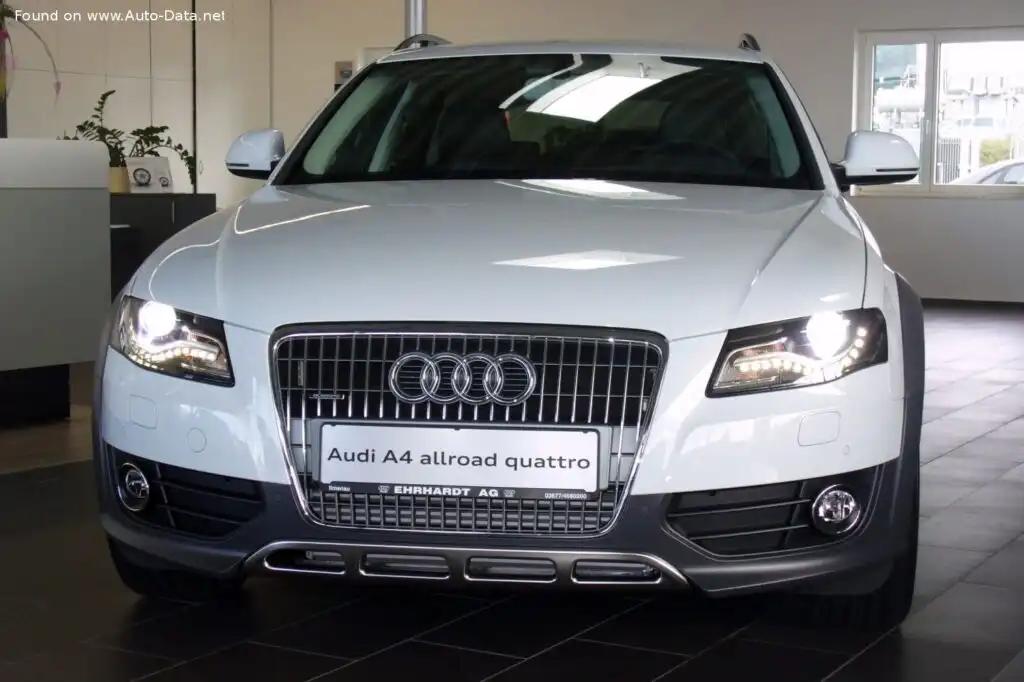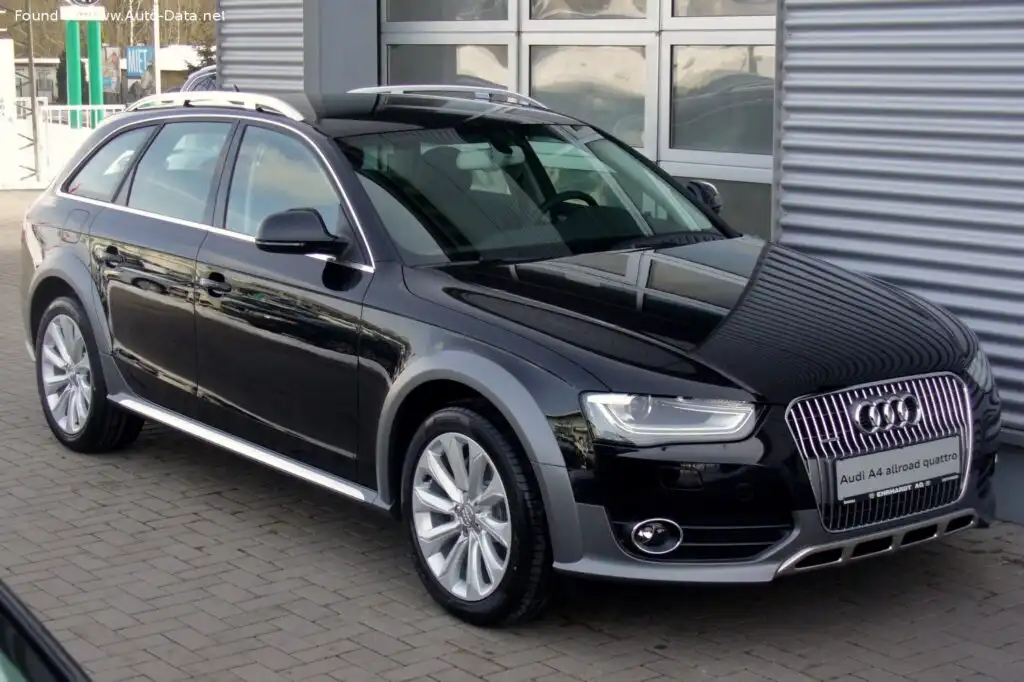
The Audi A4 (B7) 2.0 TDI, producing 140 horsepower, was a significant variant within the B7 generation of Audi’s popular compact executive car. Produced from 2004 to 2008, it represented a key offering in European markets, balancing fuel efficiency with acceptable performance. This model sat within the A4 lineup as a diesel-powered alternative to the gasoline engines, targeting buyers seeking lower running costs and improved torque. It was positioned as a step up from the base 1.9 TDI models, offering increased power and refinement, but remained below the more potent 2.7 TDI and 3.0 TDI options.
Technical Specifications
| Brand | Audi |
| Model | A4 |
| Generation | A4 (B7 8E) |
| Type (Engine) | 2.0 TDI (140 Hp) |
| Start of production | 2004 |
| End of production | 2008 |
| Powertrain Architecture | Internal Combustion engine |
| Body type | Sedan |
| Seats | 5 |
| Doors | 4 |
| Fuel consumption (urban) | 7.8 l/100 km (30.2 US mpg, 36.2 UK mpg, 12.8 km/l) |
| Fuel consumption (extra urban) | 4.5 l/100 km (52.3 US mpg, 62.8 UK mpg, 22.2 km/l) |
| Fuel consumption (combined) | 5.7 l/100 km (41.3 US mpg, 49.6 UK mpg, 17.5 km/l) |
| CO2 emissions | 153 g/km |
| Fuel Type | Diesel |
| Acceleration 0 – 100 km/h | 9.7 sec |
| Acceleration 0 – 62 mph | 9.7 sec |
| Acceleration 0 – 60 mph | 9.2 sec |
| Maximum speed | 212 km/h (131.73 mph) |
| Emission standard | Euro 4 |
| Weight-to-power ratio | 10.2 kg/Hp, 97.9 Hp/tonne |
| Weight-to-torque ratio | 4.5 kg/Nm, 223.8 Nm/tonne |
| Power | 140 Hp @ 4000 rpm |
| Power per litre | 71.1 Hp/l |
| Torque | 320 Nm @ 1750-2500 rpm (236.02 lb.-ft. @ 1750-2500 rpm) |
| Engine layout | Front, Longitudinal |
| Engine Model/Code | EA188 / BLB |
| Engine displacement | 1968 cm3 (120.09 cu. in.) |
| Number of cylinders | 4 |
| Engine configuration | Inline |
| Cylinder Bore | 81 mm (3.19 in.) |
| Piston Stroke | 95.5 mm (3.76 in.) |
| Compression ratio | 18:1 |
| Number of valves per cylinder | 2 |
| Fuel injection system | Pump-nozzle (Unit Injector) |
| Engine aspiration | Turbocharger, Intercooler |
| Valvetrain | OHC |
| Engine oil capacity | 3.8 l (4.02 US qt | 3.34 UK qt) |
| Coolant | 8 l (8.45 US qt | 7.04 UK qt) |
| Kerb Weight | 1430 kg (3152.61 lbs.) |
| Max. weight | 1980 kg (4365.15 lbs.) |
| Max load | 550 kg (1212.54 lbs.) |
| Trunk (boot) space – minimum | 460 l (16.24 cu. ft.) |
| Trunk (boot) space – maximum | 720 l (25.43 cu. ft.) |
| Fuel tank capacity | 70 l (18.49 US gal | 15.4 UK gal) |
| Max. roof load | 75 kg (165.35 lbs.) |
| Permitted trailer load with brakes (8%) | 1800 kg (3968.32 lbs.) |
| Permitted trailer load with brakes (12%) | 1600 kg (3527.4 lbs.) |
| Permitted trailer load without brakes | 750 kg (1653.47 lbs.) |
| Permitted towbar download | 80 kg (176.37 lbs.) |
| Length | 4586 mm (180.55 in.) |
| Width | 1772 mm (69.76 in.) |
| Width including mirrors | 1937 mm (76.26 in.) |
| Height | 1427 mm (56.18 in.) |
| Wheelbase | 2648 mm (104.25 in.) |
| Front track | 1522 mm (59.92 in.) |
| Rear (Back) track | 1522 mm (59.92 in.) |
| Drag coefficient (Cd) | 0.29 |
| Minimum turning circle (turning diameter) | 11.1 m (36.42 ft.) |
| Drivetrain Architecture | The Internal combustion engine (ICE) drives the front wheels of the vehicle. |
| Drive wheel | Front wheel drive |
| Number of gears and type of gearbox | 6 gears, manual transmission |
| Front suspension | Independent multi-link suspension |
| Rear suspension | Independent multi-link suspension |
| Front brakes | Ventilated discs |
| Rear brakes | Disc |
| Assisting systems | ABS (Anti-lock braking system) |
| Steering type | Steering rack and pinion |
| Power steering | Hydraulic Steering |
| Tires size | 205/65 R16 |
| Wheel rims size | 7J x 16 |
INTRODUCTION
The Audi A4 (B7) 2.0 TDI, launched in 2004 and continuing through 2008, was a crucial model in Audi’s expansion of diesel offerings within the European market. Built on the Volkswagen Group’s B7 platform (shared with the VW Passat, Skoda Octavia, and SEAT Leon), the A4 aimed to provide a premium experience with improved fuel economy. The 2.0 TDI variant, powered by the EA188 engine family, specifically the BLB engine code, offered a balance between performance and efficiency, making it a popular choice for drivers covering long distances. It represented a move towards more sophisticated diesel technology, offering a quieter and more refined driving experience than earlier TDI models.
Powertrain & Engine Architecture
At the heart of the A4 2.0 TDI lies the EA188 series 1968cc inline-four cylinder diesel engine, specifically the BLB variant. This engine utilizes a common rail direct injection system, delivering fuel directly into the combustion chamber at extremely high pressure. The BLB engine employs pump-nozzle (unit injector) technology, a precursor to the more modern common rail systems. A turbocharger with an intercooler is employed to boost power output, providing 140 horsepower at 4000 rpm and a substantial 320 Nm (236 lb-ft) of torque between 1750 and 2500 rpm. The engine features an overhead camshaft (OHC) valvetrain with two valves per cylinder. The engine is longitudinally mounted in the front of the vehicle, driving the front wheels. The 6-speed manual transmission was standard, offering precise gear changes and contributing to the car’s overall efficiency.
Driving Characteristics
The A4 2.0 TDI offered a composed and comfortable driving experience. While not overtly sporty, the 140 hp engine provided adequate power for everyday driving and overtaking maneuvers. The readily available 320 Nm of torque meant strong acceleration from low engine speeds, making it particularly well-suited for highway cruising. Compared to the more powerful 2.7 and 3.0 TDI variants, the 2.0 TDI felt less urgent, but its lighter weight and efficient engine contributed to better fuel economy. The 6-speed manual transmission allowed drivers to effectively manage the engine’s powerband, while the front-wheel-drive configuration provided predictable handling. The gear ratios were tuned for a balance of acceleration and fuel efficiency, with a relatively tall sixth gear for relaxed cruising.
Equipment & Trim Levels
The A4 2.0 TDI typically came equipped with a respectable level of standard features. These included power windows, central locking, air conditioning, and an audio system. Interior upholstery was typically cloth, although leather options were available. Trim levels varied depending on the market, but generally included options for alloy wheels, upgraded audio systems, and parking sensors. Optional extras could include a sunroof, navigation system, and heated seats. The dashboard layout was typical of Audi at the time, with a clean and functional design. Safety features included ABS, front airbags, and side airbags.
Chassis & Braking
The A4 B7 utilized a fully independent suspension system, with multi-link suspension at both the front and rear. This setup provided a comfortable ride and good handling characteristics. The front suspension featured stabilizer bars to reduce body roll during cornering. Braking duties were handled by ventilated discs at the front and solid discs at the rear, providing adequate stopping power. The ABS (Anti-lock Braking System) was standard, enhancing safety in emergency braking situations. The hydraulic power steering provided a responsive and precise steering feel.
Market Reception & Comparison
The Audi A4 2.0 TDI was generally well-received by automotive critics. It was praised for its fuel efficiency, comfortable ride, and refined engine. However, some critics noted that the engine lacked the outright performance of the larger TDI variants. Compared to the 1.9 TDI, the 2.0 TDI offered a noticeable improvement in power and refinement. Against competitors like the BMW 320d and Mercedes-Benz C200 CDI, the A4 2.0 TDI held its own, offering a compelling combination of features, performance, and fuel economy. Its fuel economy figures of around 5.7 l/100km (41.3 US mpg) were particularly attractive to buyers.
Legacy
The Audi A4 (B7) 2.0 TDI, particularly the BLB engine variant, has proven to be a relatively reliable powertrain. While not immune to age-related issues, the engine is generally robust and capable of high mileage with proper maintenance. Common issues include turbocharger wear, injector problems, and potential issues with the dual-mass flywheel. In the used car market today, the A4 B7 2.0 TDI represents a relatively affordable entry point into Audi ownership. Its fuel efficiency and comfortable ride continue to make it a popular choice for drivers seeking a practical and reliable compact executive car. However, potential buyers should be aware of the potential maintenance costs associated with a diesel engine of this age.