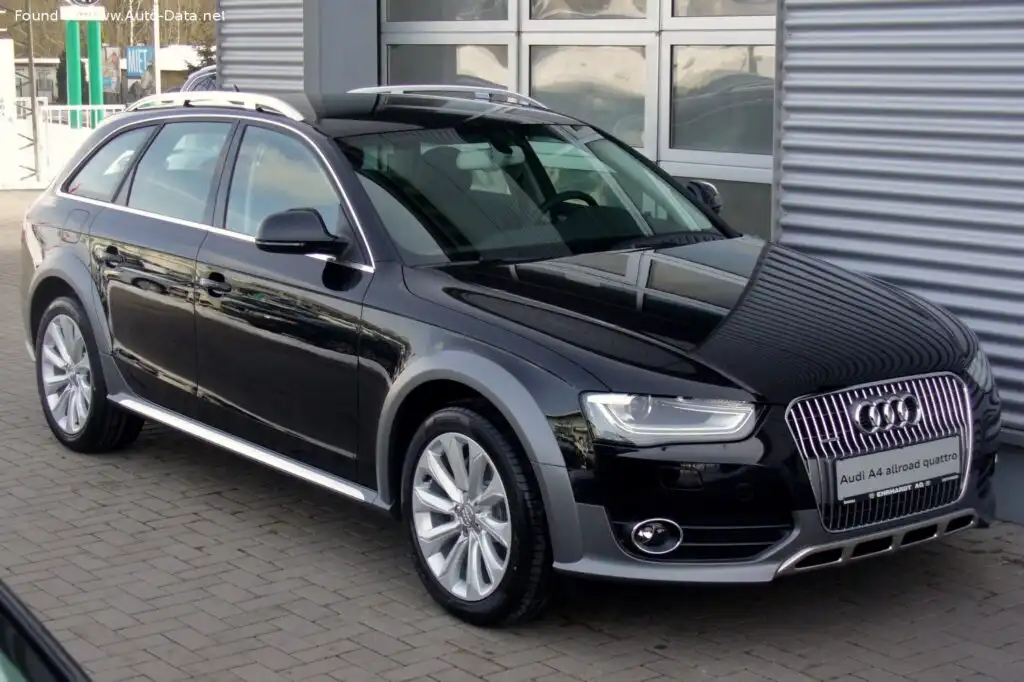
The Audi A4 (B7) 2.0 TFSI DTM, produced from June 2005 to June 2008, represents a performance-oriented variant within the B7 generation of Audi’s popular A4 sedan. Positioned as a step up from the standard 2.0 TFSI models, the DTM edition was inspired by Audi’s successful Deutsche Tourenwagen Masters (DTM) racing program. It aimed to deliver a more engaging driving experience with increased power and a focus on sporty handling. This model occupied a niche between the more economical base A4 trims and the higher-performance S4, appealing to enthusiasts seeking a balance of everyday usability and spirited performance. The B7 A4 itself was a significant evolution of the A4 platform (8E), introducing revised styling, improved interior materials, and updated technology compared to its predecessor.
Technical Specifications
| Brand | Audi |
| Model | A4 |
| Generation | A4 (B7 8E) |
| Type (Engine) | 2.0 TFSI DTM (220 Hp) |
| Start of production | June, 2005 |
| End of production | June, 2008 |
| Powertrain Architecture | Internal Combustion engine |
| Body type | Sedan |
| Seats | 5 |
| Doors | 4 |
| Fuel consumption (urban) | 11.3 l/100 km (20.8 US mpg, 25 UK mpg, 8.8 km/l) |
| Fuel consumption (extra urban) | 6.2 l/100 km (37.9 US mpg, 45.6 UK mpg, 16.1 km/l) |
| Fuel consumption (combined) | 8.1 l/100 km (29 US mpg, 34.9 UK mpg, 12.3 km/l) |
| CO2 emissions | 194 g/km |
| Fuel Type | Petrol (Gasoline) |
| Acceleration 0 – 100 km/h | 7.1 sec |
| Acceleration 0 – 62 mph | 7.1 sec |
| Acceleration 0 – 60 mph | 6.7 sec |
| Maximum speed | 247 km/h (153.48 mph) |
| Emission standard | Euro 4 |
| Weight-to-power ratio | 6.6 kg/Hp, 151.2 Hp/tonne |
| Weight-to-torque ratio | 4.9 kg/Nm, 206.2 Nm/tonne |
| Power | 220 Hp @ 5900-6100 rpm |
| Power per litre | 110.9 Hp/l |
| Torque | 300 Nm @ 2200-4000 rpm (221.27 lb.-ft. @ 2200-4000 rpm) |
| Engine layout | Front, Longitudinal |
| Engine Model/Code | BUL |
| Engine displacement | 1984 cm3 (121.07 cu. in.) |
| Number of cylinders | 4 |
| Engine configuration | Inline |
| Cylinder Bore | 82.5 mm (3.25 in.) |
| Piston Stroke | 92.8 mm (3.65 in.) |
| Compression ratio | 10.5:1 |
| Number of valves per cylinder | 4 |
| Fuel injection system | Direct injection |
| Engine aspiration | Turbocharger, Intercooler |
| Valvetrain | DOHC |
| Engine oil capacity | 4.5 l (4.76 US qt | 3.96 UK qt) |
| Coolant | 8 l (8.45 US qt | 7.04 UK qt) |
| Kerb Weight | 1455 kg (3207.73 lbs.) |
| Max. weight | 1975 kg (4354.13 lbs.) |
| Max load | 520 kg (1146.4 lbs.) |
| Trunk (boot) space – minimum | 460 l (16.24 cu. ft.) |
| Trunk (boot) space – maximum | 833 l (29.42 cu. ft.) |
| Fuel tank capacity | 70 l (18.49 US gal | 15.4 UK gal) |
| Max. roof load | 75 kg (165.35 lbs.) |
| Length | 4601 mm (181.14 in.) |
| Width | 1772 mm (69.76 in.) |
| Height | 1397 mm (55 in.) |
| Wheelbase | 2655 mm (104.53 in.) |
| Front track | 1521 mm (59.88 in.) |
| Rear (Back) track | 1526 mm (60.08 in.) |
| Drag coefficient (Cd) | 0.30 |
| Minimum turning circle | 11.1 m (36.42 ft.) |
| Drivetrain Architecture | The Internal combustion engine (ICE) drives the front wheels of the vehicle. |
| Drive wheel | Front wheel drive |
| Number of gears | 6 gears, manual transmission |
| Front suspension | Independent multi-link suspension |
| Rear suspension | Independent multi-link suspension |
| Front brakes | Ventilated discs |
| Rear brakes | Disc |
| Assisting systems | ABS (Anti-lock braking system) |
| Steering type | Steering rack and pinion |
| Power steering | Hydraulic Steering |
| Tires size | 235/40 R18 |
| Wheel rims size | 8J x 18 |
Powertrain & Engine Architecture
The heart of the A4 2.0 TFSI DTM is the BUL engine code, a 1.984-liter (121.07 cubic inches) inline-four cylinder gasoline engine. This engine utilizes direct fuel injection (FSI) and a turbocharger with an intercooler to achieve its 220 horsepower output at 5900-6100 rpm and 300 Nm (221.27 lb-ft) of torque between 2200 and 4000 rpm. The direct injection system allows for precise fuel delivery, improving efficiency and reducing emissions. The turbocharger provides a significant boost in power, enhancing acceleration and overall performance. The engine features a dual overhead camshaft (DOHC) valvetrain with four valves per cylinder, optimizing airflow for increased power. The 6-speed manual transmission was standard, providing drivers with full control over the engine’s power delivery.
Driving Characteristics
The 2.0 TFSI DTM offered a noticeable improvement in performance compared to the standard 2.0 TFSI A4 models. The increased horsepower and torque, combined with the close-ratio 6-speed manual gearbox, resulted in quicker acceleration and a more responsive driving experience. While not as brutally fast as the V6-powered S4, the DTM variant provided a satisfying balance of power and handling. The turbocharger did exhibit some lag at lower engine speeds, but once spooled up, it delivered a strong surge of power. The front-wheel-drive configuration, while competent, could experience some torque steer under hard acceleration. The suspension tuning was firmer than the standard A4, providing better body control and a more engaging driving experience, though at the expense of some ride comfort.
Equipment & Trim Levels
The A4 2.0 TFSI DTM typically came well-equipped, reflecting its position as a performance-oriented trim. Standard features often included sport seats, a leather-wrapped steering wheel and shift knob, alloy wheels (typically 18-inch), and a sport suspension. Interior trim was generally upgraded with aluminum or carbon fiber accents. Optional extras could include a sunroof, navigation system, premium audio system, and parking sensors. The DTM package often included unique exterior styling cues, such as a rear spoiler and specific badging, to differentiate it from other A4 models.
Chassis & Braking
The A4 B7 utilized an independent multi-link suspension system at both the front and rear axles, providing a good balance of ride comfort and handling precision. The DTM variant often featured a slightly lowered ride height and stiffer spring rates compared to standard A4 models. Braking duties were handled by ventilated discs at the front and solid discs at the rear, equipped with ABS (Anti-lock Braking System). The braking system was generally adequate for the car’s performance, but some enthusiasts opted for upgraded brake pads and rotors for improved stopping power.
Market Reception & Comparison
The Audi A4 2.0 TFSI DTM was generally well-received by automotive critics. It was praised for its strong performance, engaging handling, and well-equipped interior. However, some reviewers noted the turbo lag and the potential for torque steer. Compared to the standard 2.0 TFSI A4, the DTM offered a significant performance upgrade. Against the S4, it offered a more affordable entry point to Audi performance, albeit with less overall power. Fuel economy was reasonable for a performance sedan, averaging around 29 US mpg in combined driving. Reliability was generally good, although like any turbocharged engine, it required regular maintenance and careful driving habits.
Legacy
The Audi A4 (B7) 2.0 TFSI DTM remains a popular choice among Audi enthusiasts today. The BUL engine, while requiring regular maintenance, is generally considered reliable when properly cared for. The car’s sporty handling and distinctive styling have helped it maintain a loyal following in the used car market. Finding a well-maintained example can be challenging, as many have been driven hard, but a clean DTM represents a compelling option for those seeking a fun-to-drive and relatively affordable performance sedan. Its influence can be seen in subsequent generations of the A4, which continued to offer performance-oriented trims inspired by Audi’s motorsport heritage.