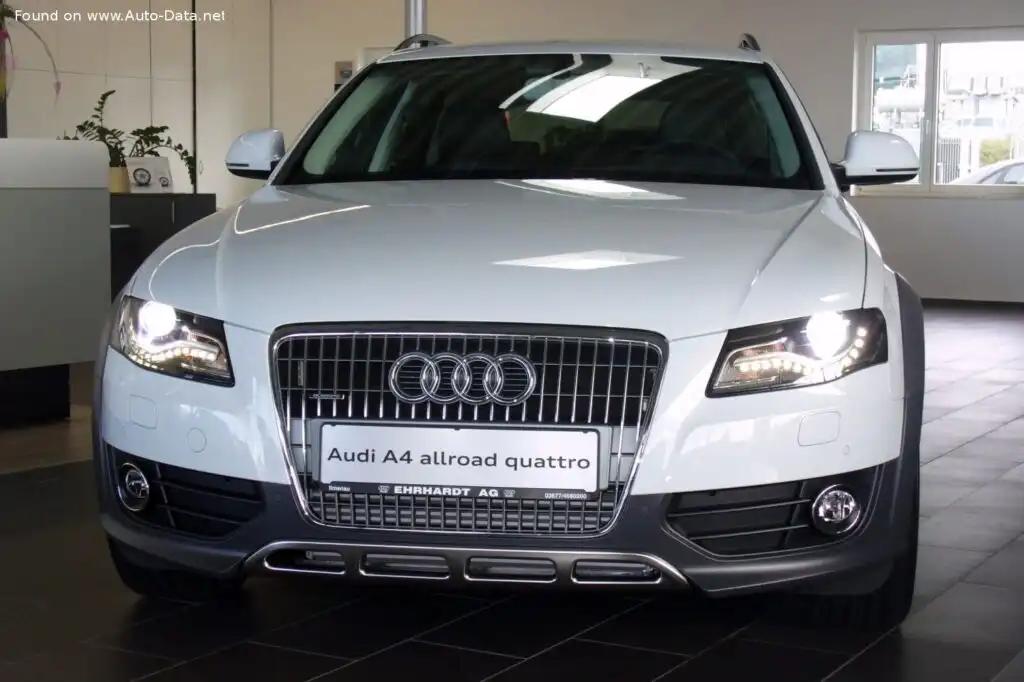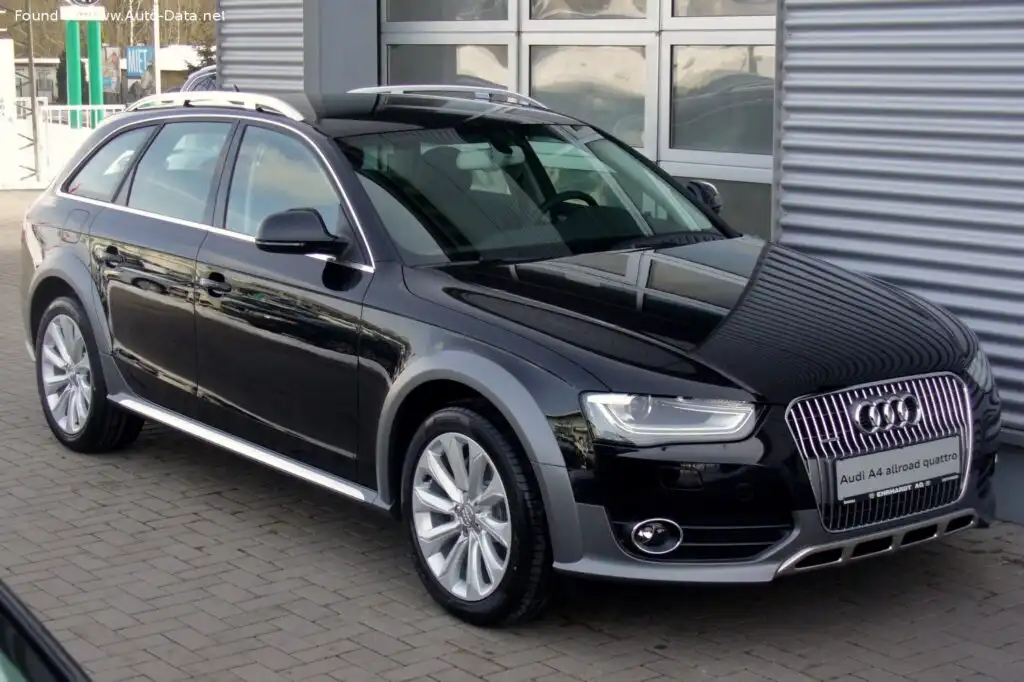
The Audi A4 (B7) 2.0 TFSI quattro, produced from June 2005 to June 2008, represents a significant evolution of Audi’s popular compact executive car. Positioned as a performance-oriented variant within the B7 A4 range (internally designated 8E), this model combined Audi’s renowned quattro all-wheel drive system with a turbocharged 2.0-liter four-cylinder engine. It aimed to deliver a compelling blend of sporty handling, respectable power, and everyday usability. This variant occupied a middle ground in the A4 lineup, offering a step up in performance from the base 1.8T models while remaining more accessible than the flagship S4.
Technical Specifications
| Brand | Audi |
| Model | A4 |
| Generation | A4 (B7 8E) |
| Type (Engine) | 2.0 TFSI quattro |
| Start of production | June, 2005 |
| End of production | June, 2008 |
| Powertrain Architecture | Internal Combustion engine |
| Body type | Sedan |
| Seats | 5 |
| Doors | 4 |
| Fuel consumption (urban) | 12.7 l/100 km (18.5 US mpg, 22.2 UK mpg, 7.9 km/l) |
| Fuel consumption (extra urban) | 6.9 l/100 km (34.1 US mpg, 40.9 UK mpg, 14.5 km/l) |
| Fuel consumption (combined) | 9 l/100 km (26.1 US mpg, 31.4 UK mpg, 11.1 km/l) |
| CO2 emissions | 216 g/km |
| Fuel Type | Petrol (Gasoline) |
| Acceleration 0 – 100 km/h | 6.9 sec |
| Acceleration 0 – 62 mph | 6.9 sec |
| Acceleration 0 – 60 mph | 6.6 sec |
| Maximum speed | 244 km/h (151.61 mph) |
| Emission standard | Euro 4 |
| Weight-to-power ratio | 6.9 kg/Hp, 144.7 Hp/tonne |
| Weight-to-torque ratio | 5.1 kg/Nm, 197.4 Nm/tonne |
| Power | 220 Hp @ 5900 rpm |
| Power per litre | 110.9 Hp/l |
| Torque | 300 Nm @ 2200-4000 rpm (221.27 lb.-ft. @ 2200-4000 rpm) |
| Engine layout | Front, Longitudinal |
| Engine Model/Code | BUL |
| Engine displacement | 1984 cm3 (121.07 cu. in.) |
| Number of cylinders | 4 |
| Engine configuration | Inline |
| Cylinder Bore | 82.5 mm (3.25 in.) |
| Piston Stroke | 92.8 mm (3.65 in.) |
| Compression ratio | 10.5:1 |
| Number of valves per cylinder | 4 |
| Fuel injection system | Direct injection |
| Engine aspiration | Turbocharger, Intercooler |
| Valvetrain | DOHC |
| Engine oil capacity | 4.5 l (4.76 US qt | 3.96 UK qt) |
| Coolant | 8 l (8.45 US qt | 7.04 UK qt) |
| Kerb Weight | 1520 kg (3351.03 lbs.) |
| Max. weight | 2040 kg (4497.43 lbs.) |
| Max load | 520 kg (1146.4 lbs.) |
| Trunk (boot) space – minimum | 460 l (16.24 cu. ft.) |
| Trunk (boot) space – maximum | 833 l (29.42 cu. ft.) |
| Fuel tank capacity | 63 l (16.64 US gal | 13.86 UK gal) |
| Max. roof load | 75 kg (165.35 lbs.) |
| Length | 4601 mm (181.14 in.) |
| Width | 1772 mm (69.76 in.) |
| Height | 1397 mm (55 in.) |
| Wheelbase | 2655 mm (104.53 in.) |
| Front track | 1521 mm (59.88 in.) |
| Rear (Back) track | 1526 mm (60.08 in.) |
| Drag coefficient (Cd) | 0.30 |
| Minimum turning circle | 11.1 m (36.42 ft.) |
| Drivetrain Architecture | ICE drives all four wheels permanently |
| Drive wheel | All wheel drive (4×4) |
| Number of gears | 6 |
| Type of gearbox | Manual transmission |
| Front suspension | Independent multi-link suspension |
| Rear suspension | Independent multi-link suspension |
| Front brakes | Ventilated discs |
| Rear brakes | Disc |
| Assisting systems | ABS (Anti-lock braking system) |
| Steering type | Steering rack and pinion |
| Power steering | Hydraulic Steering |
| Tires size | 235/40 R18 |
| Wheel rims size | 8J x 18 |
Powertrain & Engine Architecture
At the heart of the A4 2.0 TFSI quattro lies the BUL engine code, a 1984cc inline-four cylinder powerplant. This engine utilizes direct fuel injection (FSI) and a single turbocharger with an intercooler to achieve its 220 horsepower output at 5900 rpm and 300 Nm (221 lb-ft) of torque available from 2200 to 4000 rpm. The direct injection system allows for precise fuel delivery, enhancing both power and efficiency. The engine features a dual overhead camshaft (DOHC) valvetrain with four valves per cylinder, optimizing gas flow for improved performance. The six-speed manual transmission was standard, providing drivers with full control over the engine’s powerband. The quattro all-wheel drive system employs a Torsen center differential, distributing torque between the front and rear axles as needed, enhancing traction and stability.
Driving Characteristics
The 2.0 TFSI quattro offered a noticeable step up in performance compared to the base 1.8T A4 models. The turbocharger provides a surge of power in the mid-range, making overtaking maneuvers and highway cruising effortless. While not as brutally fast as the S4, the 2.0 TFSI quattro delivered a responsive and engaging driving experience. The six-speed manual transmission allowed for precise gear selection, maximizing the engine’s power output. The quattro all-wheel drive system provided excellent grip in all weather conditions, inspiring confidence on both dry and wet roads. The gear ratios were tuned to balance acceleration and fuel economy, with a relatively short final drive contributing to brisk acceleration.
Equipment & Trim Levels
The A4 2.0 TFSI quattro typically came well-equipped, reflecting its position as a mid-range offering. Standard features included automatic climate control, power windows and locks, a multi-function steering wheel, and a premium audio system. Interior upholstery was typically a combination of cloth and leatherette, with optional full leather available. Common optional extras included sunroof, navigation system, heated front seats, and parking sensors. The dashboard layout was typical of Audi’s B7 generation, characterized by a clean and functional design with high-quality materials.
Chassis & Braking
The A4 B7 chassis featured an independent multi-link suspension at both the front and rear, providing a comfortable ride and precise handling. The front suspension utilized coil springs and shock absorbers, while the rear suspension incorporated a more complex multi-link design to optimize wheel control. Brakes consisted of ventilated discs at the front and solid discs at the rear, providing adequate stopping power for the vehicle’s weight and performance. Anti-lock braking system (ABS) was standard, enhancing safety and stability during emergency braking situations. Stabilizer bars were fitted to both the front and rear axles to reduce body roll during cornering.
Market Reception & Comparison
The Audi A4 2.0 TFSI quattro was generally well-received by automotive critics. It was praised for its blend of performance, handling, and practicality. Compared to the 1.8T A4, the 2.0 TFSI offered a significant power boost and a more engaging driving experience. However, it was also noted that the 2.0 TFSI was not as fuel-efficient as the 1.8T. Compared to the higher-performance S4, the 2.0 TFSI offered a more affordable entry point into the Audi performance lineup, albeit with less outright power. Reliability was generally good, although some owners reported issues with the turbocharger and fuel injectors.
Legacy
The Audi A4 (B7) 2.0 TFSI quattro has become a popular choice among enthusiasts in the used car market. The BUL engine, while capable, requires regular maintenance to ensure longevity. Common issues include carbon buildup on the intake valves (a characteristic of direct injection engines) and potential turbocharger failure. However, with proper care, the powertrain can remain reliable for many years. The B7 A4’s reputation for build quality and its engaging driving dynamics continue to make it a desirable option for those seeking a sporty and practical compact executive car.