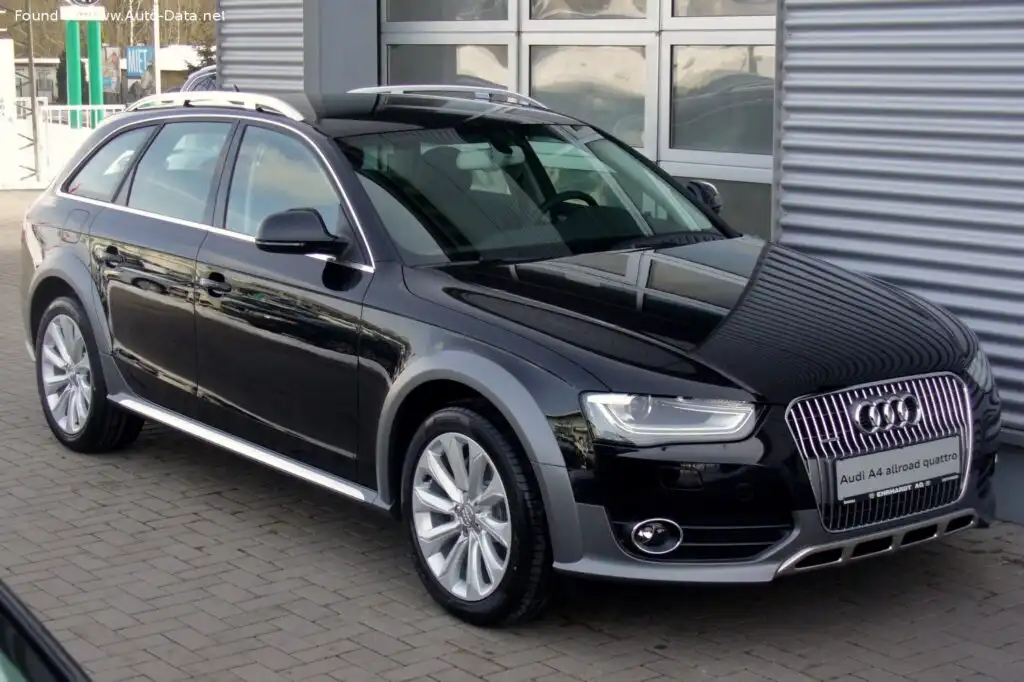
The Audi A4 (B7) 2.5 TDI V6 with the Multitronic transmission, produced from August 2004 to May 2006, represented a sophisticated offering within the broader B7 A4 range (chassis code 8E). This variant aimed to blend the refinement of a V6 diesel engine with the convenience of a continuously variable transmission (CVT), marketed as Multitronic by Audi. Positioned as a mid-to-upper trim level, it catered to buyers seeking a balance between performance, fuel efficiency, and comfort, particularly in European markets where diesel engines were – and continue to be – highly popular. The B7 generation A4 itself was a significant evolution of the previous B6 model, featuring revised styling, improved interior quality, and advancements in chassis technology.
Technical Specifications
| Brand | Audi |
| Model | A4 |
| Generation | A4 (B7 8E) |
| Type (Engine) | 2.5 TDI V6 (163 Hp) Multitronic |
| Start of production | August, 2004 |
| End of production | May, 2006 |
| Powertrain Architecture | Internal Combustion engine |
| Body type | Sedan |
| Seats | 5 |
| Doors | 4 |
| Fuel consumption (urban) | 9.1 l/100 km (25.8 US mpg, 31 UK mpg, 11 km/l) |
| Fuel consumption (extra urban) | 5.5 l/100 km (42.8 US mpg, 51.4 UK mpg, 18.2 km/l) |
| Fuel consumption (combined) | 6.8 l/100 km (34.6 US mpg, 41.5 UK mpg, 14.7 km/l) |
| CO2 emissions | 184 g/km |
| Fuel Type | Diesel |
| Acceleration 0 – 100 km/h | 8.9 sec |
| Acceleration 0 – 62 mph | 8.9 sec |
| Acceleration 0 – 60 mph | 8.5 sec |
| Maximum speed | 219 km/h (136.08 mph) |
| Emission standard | Euro 4 |
| Weight-to-power ratio | 9.4 kg/Hp, 106.5 Hp/tonne |
| Weight-to-torque ratio | 4.4 kg/Nm, 228.8 Nm/tonne |
| Power | 163 Hp @ 4000 rpm |
| Power per litre | 65.3 Hp/l |
| Torque | 350 Nm @ 1500-3000 rpm (258.15 lb.-ft. @ 1500-3000 rpm) |
| Engine layout | Front, Longitudinal |
| Engine Model/Code | BDG |
| Engine displacement | 2496 cm3 (152.32 cu. in.) |
| Number of cylinders | 6 |
| Engine configuration | V-engine |
| Cylinder Bore | 78.3 mm (3.08 in.) |
| Piston Stroke | 86.4 mm (3.4 in.) |
| Compression ratio | 18:1 |
| Number of valves per cylinder | 4 |
| Fuel injection system | Direct injection |
| Engine aspiration | Turbocharger, Intercooler |
| Valvetrain | DOHC |
| Engine oil capacity | 5.5 l (5.81 US qt | 4.84 UK qt) |
| Coolant | 12 l (12.68 US qt | 10.56 UK qt) |
| Kerb Weight | 1530 kg (3373.07 lbs.) |
| Max. weight | 2080 kg (4585.62 lbs.) |
| Max load | 550 kg (1212.54 lbs.) |
| Trunk (boot) space – minimum | 460 l (16.24 cu. ft.) |
| Trunk (boot) space – maximum | 720 l (25.43 cu. ft.) |
| Fuel tank capacity | 70 l (18.49 US gal | 15.4 UK gal) |
| Max. roof load | 75 kg (165.35 lbs.) |
| Permitted trailer load with brakes (8%) | 1800 kg (3968.32 lbs.) |
| Permitted trailer load with brakes (12%) | 1600 kg (3527.4 lbs.) |
| Permitted trailer load without brakes | 750 kg (1653.47 lbs.) |
| Permitted towbar download | 80 kg (176.37 lbs.) |
| Length | 4586 mm (180.55 in.) |
| Width | 1772 mm (69.76 in.) |
| Width including mirrors | 1937 mm (76.26 in.) |
| Height | 1427 mm (56.18 in.) |
| Wheelbase | 2648 mm (104.25 in.) |
| Front track | 1522 mm (59.92 in.) |
| Rear (Back) track | 1522 mm (59.92 in.) |
| Drag coefficient (Cd) | 0.31 |
| Minimum turning circle (turning diameter) | 11.1 m (36.42 ft.) |
| Drivetrain Architecture | The Internal combustion engine (ICE) drives the front wheels of the vehicle. |
| Drive wheel | Front wheel drive |
| Number of gears and type of gearbox | automatic transmission Multitronic |
| Front suspension | Independent multi-link suspension |
| Rear suspension | Independent multi-link suspension |
| Front brakes | Ventilated discs |
| Rear brakes | Disc |
| Assisting systems | ABS (Anti-lock braking system) |
| Steering type | Steering rack and pinion |
| Power steering | Hydraulic Steering |
| Tires size | 205/55 R16 |
| Wheel rims size | 7J x 16 |
Powertrain & Engine Architecture
The heart of this A4 variant is the 2.5-liter V6 TDI engine, identified by the engine code BDG. This engine is a turbocharged diesel, employing direct injection technology and a sophisticated common rail system to deliver fuel directly into the combustion chambers at extremely high pressure. The BDG engine features a double overhead camshaft (DOHC) valvetrain operating four valves per cylinder, optimizing gas flow for improved performance and efficiency. The turbocharger, coupled with an intercooler, forces more air into the engine, boosting power output. The Multitronic transmission is a continuously variable transmission (CVT) that uses a chain and pulley system to provide a seamless and stepless gear ratio. Unlike traditional automatic transmissions with fixed gears, Multitronic allows the engine to operate at its most efficient RPM range at all times, contributing to improved fuel economy and smoother acceleration.
Driving Characteristics
The 2.5 TDI V6 with Multitronic offered a distinctly different driving experience compared to the manual transmission or lower-powered A4 variants. While not as overtly sporty as the 3.0-liter V6 or the turbocharged 1.8T models, the 2.5 TDI provided ample torque – 350 Nm (258 lb-ft) – available from a low 1500 rpm. This made it a relaxed and effortless cruiser, particularly well-suited for highway driving and overtaking. The Multitronic transmission, while smooth, could sometimes feel less engaging than a traditional manual gearbox. The CVT’s tendency to hold the engine at a constant RPM during acceleration could also be perceived as slightly artificial by some drivers. Acceleration from 0-60 mph took around 8.5 seconds, respectable for a diesel-powered sedan of this era.
Equipment & Trim Levels
The 2.5 TDI V6 Multitronic typically came equipped with a generous level of standard features. These included automatic climate control, power windows and mirrors, a multi-function steering wheel, and a premium audio system. Interior upholstery was usually a high-quality cloth or leather combination. Optional extras included sunroof, navigation system, heated seats, and parking sensors. The B7 A4 offered a range of customization options, allowing buyers to tailor the car to their specific preferences.
Chassis & Braking
The A4 B7 featured a fully independent suspension system, with multi-link setups at both the front and rear. This provided a comfortable ride and good handling characteristics. The 2.5 TDI V6 models typically came equipped with ventilated front disc brakes and solid rear disc brakes. Anti-lock Braking System (ABS) was standard, enhancing safety and control during emergency braking situations. The suspension was tuned to balance comfort and handling, providing a stable and predictable driving experience.
Market Reception & Comparison
The Audi A4 2.5 TDI V6 Multitronic was generally well-received by automotive critics. It was praised for its refined engine, smooth transmission, and comfortable ride. However, some reviewers noted that the Multitronic transmission lacked the engagement of a traditional manual gearbox. Compared to the 1.8T models, the 2.5 TDI offered more torque and better fuel economy, but less outright horsepower. The 3.0-liter V6 provided more power but at the expense of fuel efficiency. The 2.5 TDI represented a sweet spot for many buyers, offering a good balance of performance, economy, and refinement.
Legacy
The BDG 2.5 TDI V6 engine, when properly maintained, proved to be a durable and reliable powerplant. However, the Multitronic transmission has a reputation for being more complex and potentially more expensive to repair than traditional automatic transmissions. Regular fluid changes are crucial for maintaining the longevity of the Multitronic gearbox. Today, well-maintained examples of the A4 B7 2.5 TDI V6 Multitronic are sought after by enthusiasts who appreciate their blend of performance, efficiency, and refinement. The car represents a high point in Audi’s diesel technology and continues to offer a comfortable and capable driving experience.