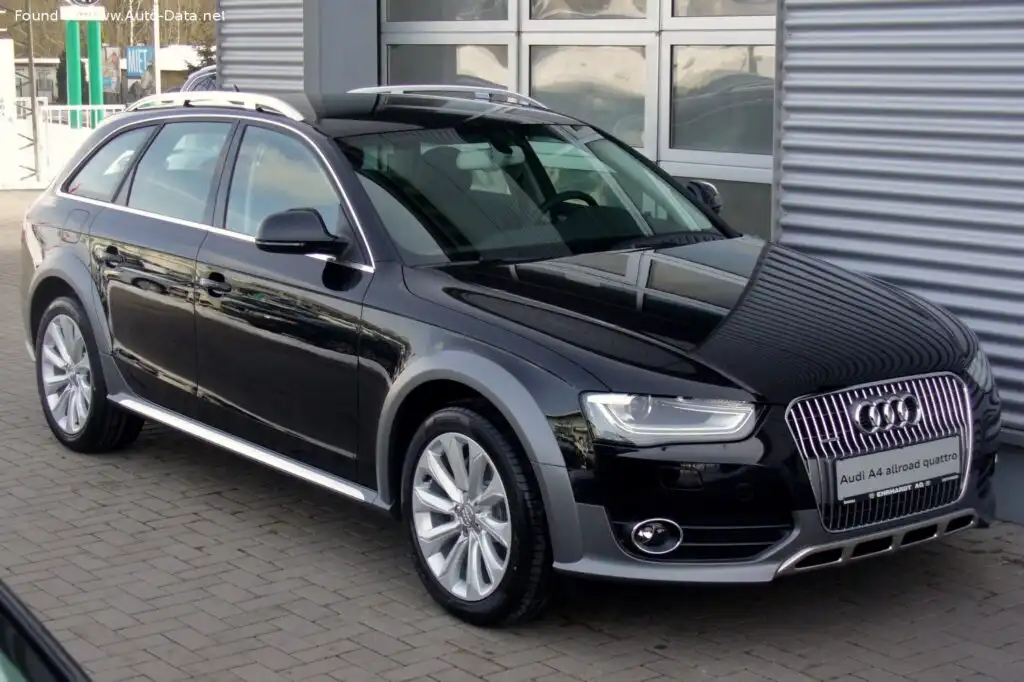
The Audi A4 (B7) 3.2 FSI quattro, produced from 2004 to 2007, represented a high-performance variant within the B7 generation of Audi’s popular compact executive car. Positioned as a premium offering, it slotted above the 1.8T and 2.0T models, providing a significant power upgrade and standard all-wheel drive. This model was primarily aimed at the North American and European markets, where buyers desired a blend of luxury, performance, and all-weather capability. The B7 generation itself was a significant refresh of the B6 platform, featuring revised styling, improved interior materials, and updated technology.
Technical Specifications
| Brand | Audi |
| Model | A4 |
| Generation | A4 (B7 8E) |
| Type (Engine) | 3.2 FSI V6 (256 Hp) quattro |
| Start of production | 2004 |
| End of production | 2007 |
| Powertrain Architecture | Internal Combustion engine |
| Body type | Sedan |
| Seats | 5 |
| Doors | 4 |
| Fuel consumption (urban) | 15.4 l/100 km (15.3 US mpg, 18.3 UK mpg, 6.5 km/l) |
| Fuel consumption (extra urban) | 7.8 l/100 km (30.2 US mpg, 36.2 UK mpg, 12.8 km/l) |
| Fuel consumption (combined) | 10.9 l/100 km (21.6 US mpg, 25.9 UK mpg, 9.2 km/l) |
| CO2 emissions | 259 g/km |
| Fuel Type | Petrol (Gasoline) |
| Acceleration 0 – 100 km/h | 6.4 sec |
| Acceleration 0 – 62 mph | 6.4 sec |
| Acceleration 0 – 60 mph | 6.1 sec |
| Maximum speed | 250 km/h (155.34 mph) |
| Emission standard | Euro 4 |
| Weight-to-power ratio | 6 kg/Hp, 166.2 Hp/tonne |
| Weight-to-torque ratio | 4.7 kg/Nm, 214.3 Nm/tonne |
| Power | 256 Hp @ 6500 rpm |
| Power per litre | 82 Hp/l |
| Torque | 330 Nm @ 3250 rpm (243.4 lb.-ft. @ 3250 rpm) |
| Engine layout | Front, Longitudinal |
| Engine Model/Code | AUK, BKH |
| Engine displacement | 3123 cm3 (190.58 cu. in.) |
| Number of cylinders | 6 |
| Engine configuration | V-engine |
| Cylinder Bore | 84.5 mm (3.33 in.) |
| Piston Stroke | 92.8 mm (3.65 in.) |
| Compression ratio | 12.5:1 |
| Number of valves per cylinder | 4 |
| Fuel injection system | Direct injection |
| Engine aspiration | Naturally aspirated engine |
| Valvetrain | DOHC |
| Engine oil capacity | 6.2 l (6.55 US qt | 5.46 UK qt) |
| Coolant | 12 l (12.68 US qt | 10.56 UK qt) |
| Kerb Weight | 1540 kg (3395.12 lbs.) |
| Max. weight | 2090 kg (4607.66 lbs.) |
| Max load | 550 kg (1212.54 lbs.) |
| Trunk (boot) space – minimum | 460 l (16.24 cu. ft.) |
| Trunk (boot) space – maximum | 720 l (25.43 cu. ft.) |
| Fuel tank capacity | 63 l (16.64 US gal | 13.86 UK gal) |
| Max. roof load | 75 kg (165.35 lbs.) |
| Permitted trailer load with brakes (8%) | 2000 kg (4409.25 lbs.) |
| Permitted trailer load with brakes (12%) | 1800 kg (3968.32 lbs.) |
| Permitted trailer load without brakes | 750 kg (1653.47 lbs.) |
| Permitted towbar download | 80 kg (176.37 lbs.) |
| Length | 4586 mm (180.55 in.) |
| Width | 1772 mm (69.76 in.) |
| Width including mirrors | 1937 mm (76.26 in.) |
| Height | 1427 mm (56.18 in.) |
| Wheelbase | 2648 mm (104.25 in.) |
| Front track | 1522 mm (59.92 in.) |
| Rear (Back) track | 1522 mm (59.92 in.) |
| Drag coefficient (Cd) | 0.31 |
| Minimum turning circle (turning diameter) | 11.1 m (36.42 ft.) |
| Drivetrain Architecture | The Internal combustion engine (ICE) drives permanently the four wheels of the vehicle. |
| Drive wheel | All wheel drive (4×4) |
| Number of gears and type of gearbox | 6 gears, manual transmission |
| Front suspension | Independent multi-link suspension |
| Rear suspension | Independent multi-link suspension |
| Front brakes | Ventilated discs |
| Rear brakes | Disc |
| Assisting systems | ABS (Anti-lock braking system) |
| Steering type | Steering rack and pinion |
| Power steering | Hydraulic Steering |
| Tires size | 215/55 R16 |
| Wheel rims size | 7J x 16 |
Powertrain & Engine Architecture
The heart of the A4 3.2 FSI quattro is the AUK or BKH engine code, a 3.2-liter naturally aspirated V6. This engine utilizes Audi’s FSI (Fuel Stratified Injection) direct injection technology, which allows for precise fuel delivery and improved combustion efficiency. The engine boasts a high compression ratio of 12.5:1 and a dual overhead camshaft (DOHC) valvetrain with four valves per cylinder. This configuration contributes to its high specific output and responsive power delivery. The engine’s longitudinal mounting and the quattro all-wheel-drive system necessitate a more complex drivetrain layout compared to front-wheel-drive A4 variants. The standard transmission for this model in North America was a six-speed manual, while a six-speed Tiptronic automatic transmission was also available, offering both convenience and a degree of driver control.
Driving Characteristics
The 3.2 FSI quattro offered a noticeably more engaging driving experience than the lower-displacement A4 models. The 256 horsepower and 243 lb-ft of torque provided brisk acceleration, with 0-60 mph times consistently in the low 6-second range. The quattro all-wheel-drive system delivered excellent traction in all weather conditions, enhancing stability and confidence. The automatic transmission, while smooth, could feel slightly less responsive than the manual, particularly during quick downshifts. The engine’s powerband was relatively broad, but the peak torque arrived at 3250 rpm, meaning drivers needed to keep the engine revved to fully exploit its performance potential. Compared to the 1.8T, the 3.2 FSI offered a more linear power delivery and a more refined engine note.
Equipment & Trim Levels
The 3.2 FSI quattro typically came well-equipped, reflecting its position as a premium trim level. Standard features included leather upholstery, power-adjustable front seats, a sunroof, automatic climate control, and a premium audio system. Optional extras included navigation, heated seats, and a sport package with upgraded suspension and wheels. The interior design was characterized by Audi’s typically understated elegance, with high-quality materials and a focus on ergonomics. The dashboard layout was clean and functional, with intuitive controls.
Chassis & Braking
The A4 B7 chassis was well-regarded for its balance and handling. The 3.2 FSI quattro benefited from a sport-tuned suspension, which provided a firmer ride and reduced body roll. All four wheels featured ventilated disc brakes, providing ample stopping power. The ABS (Anti-lock Braking System) was standard, enhancing safety and control during emergency braking. The quattro all-wheel-drive system distributed power between the front and rear axles as needed, optimizing traction and stability.
Market Reception & Comparison
The A4 3.2 FSI quattro was generally well-received by automotive critics, who praised its performance, handling, and luxurious interior. However, its relatively high price and fuel consumption were noted as potential drawbacks. Compared to the 1.8T and 2.0T models, the 3.2 FSI offered a significant performance advantage but came at a higher cost. The 3.2 FSI also offered a more refined driving experience than the diesel-powered TDI variants, but the TDI models provided superior fuel economy.
Legacy
The A4 (B7) 3.2 FSI quattro remains a desirable used car today, particularly among enthusiasts who appreciate its performance and all-wheel-drive capability. The 3.2 FSI engine is generally considered reliable, although preventative maintenance, such as regular oil changes and timing chain inspection, is crucial. The direct injection system can be prone to carbon buildup over time, which can affect performance. Overall, the A4 3.2 FSI quattro represents a compelling blend of luxury, performance, and practicality, and it continues to hold its own against more modern competitors.