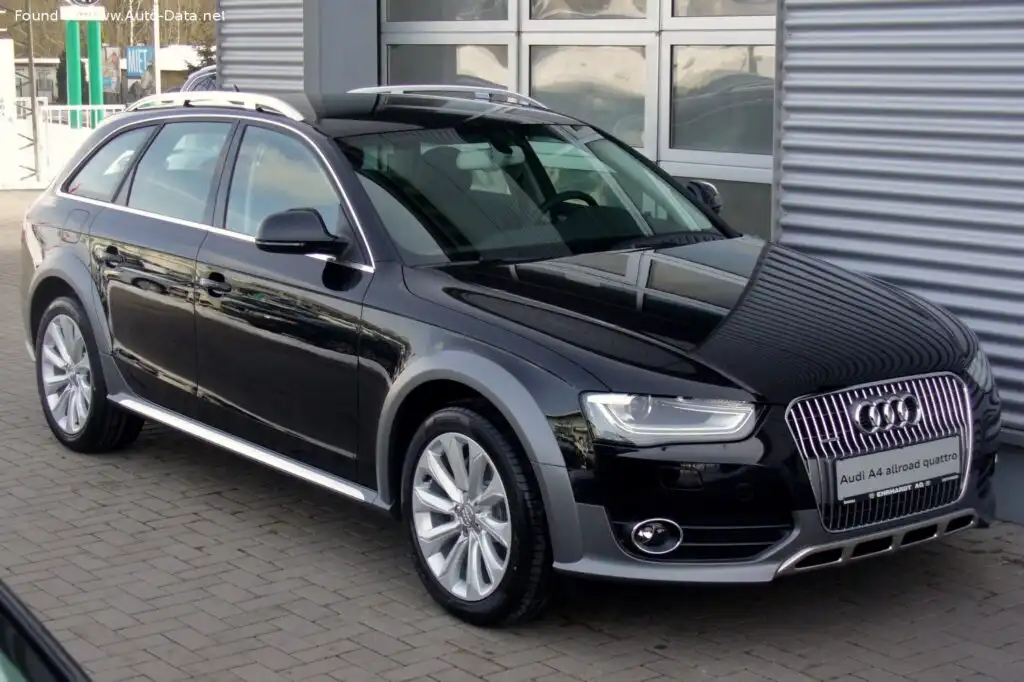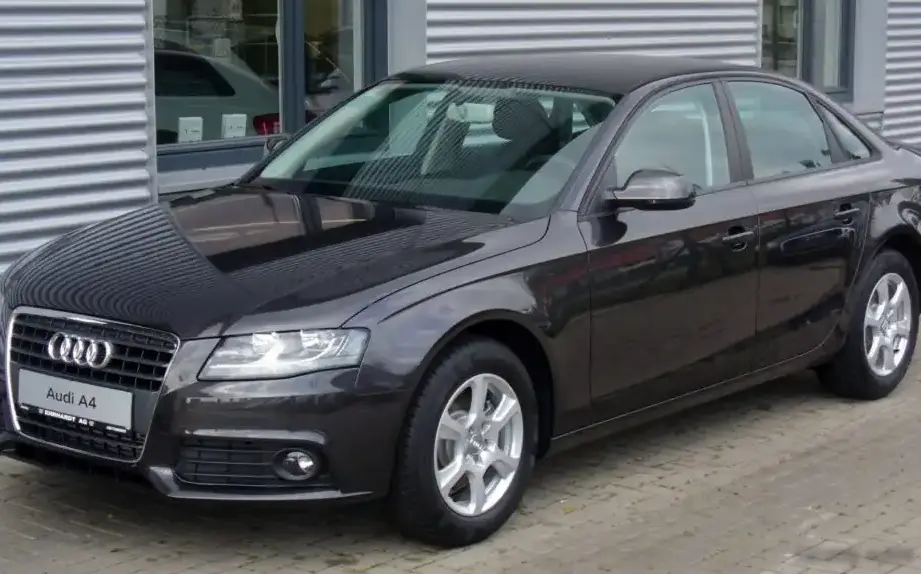
The Audi A4 (B8 8K) 1.8 TFSI, producing 120 horsepower, was a key variant in Audi’s popular executive car lineup from January 2008 to 2011. Positioned as an entry-level offering within the B8 generation (internally designated 8K), it aimed to provide a balance of Audi’s premium feel, respectable fuel economy, and accessible pricing. This model served as a gateway into the A4 range for many buyers, particularly in European markets where smaller displacement engines were favored due to taxation and fuel costs. It represented a shift towards forced induction for the A4, replacing naturally aspirated engines in many regions.
Technical Specifications
| Brand | Audi |
| Model | A4 |
| Generation | A4 (B8 8K) |
| Type (Engine) | 1.8 TFSI (120 Hp) |
| Start of production | January, 2008 |
| End of production | 2011 |
| Powertrain Architecture | Internal Combustion engine |
| Body type | Sedan |
| Seats | 5 |
| Doors | 4 |
| Fuel consumption (urban) | 9.9 l/100 km (23.8 US mpg, 28.5 UK mpg, 10.1 km/l) |
| Fuel consumption (extra urban) | 5.5 l/100 km (42.8 US mpg, 51.4 UK mpg, 18.2 km/l) |
| Fuel consumption (combined) | 7.1 l/100 km (33.1 US mpg, 39.8 UK mpg, 14.1 km/l) |
| CO2 emissions | 169 g/km |
| Fuel Type | Petrol (Gasoline) |
| Acceleration 0 – 100 km/h | 10.5 sec |
| Acceleration 0 – 62 mph | 10.5 sec |
| Acceleration 0 – 60 mph | 10 sec |
| Maximum speed | 208 km/h (129.25 mph) |
| Emission standard | Euro 4 |
| Weight-to-power ratio | 11.8 kg/Hp, 85.1 Hp/tonne |
| Weight-to-torque ratio | 6.1 kg/Nm, 163.1 Nm/tonne |
| Power | 120 Hp @ 3650-6200 rpm |
| Power per litre | 66.7 Hp/l |
| Torque | 230 Nm @ 1500-3650 rpm (169.64 lb.-ft. @ 1500-3650 rpm) |
| Engine layout | Front, Longitudinal |
| Engine Model/Code | EA888 / CDHA |
| Engine displacement | 1798 cm3 (109.72 cu. in.) |
| Number of cylinders | 4 |
| Engine configuration | Inline |
| Cylinder Bore | 82.5 mm (3.25 in.) |
| Piston Stroke | 84.1 mm (3.31 in.) |
| Compression ratio | 9.6:1 |
| Number of valves per cylinder | 4 |
| Fuel injection system | Direct injection |
| Engine aspiration | Turbocharger, Intercooler |
| Valvetrain | DOHC |
| Engine oil capacity | 4.6 l (4.86 US qt | 4.05 UK qt) |
| Coolant | 7 l (7.4 US qt | 6.16 UK qt) |
| Kerb Weight | 1410 kg (3108.52 lbs.) |
| Max. weight | 1960 kg (4321.06 lbs.) |
| Max load | 550 kg (1212.54 lbs.) |
| Trunk (boot) space – minimum | 480 l (16.95 cu. ft.) |
| Trunk (boot) space – maximum | 962 l (33.97 cu. ft.) |
| Fuel tank capacity | 65 l (17.17 US gal | 14.3 UK gal) |
| Max. roof load | 90 kg (198.42 lbs.) |
| Permitted trailer load with brakes (8%) | 1500 kg (3306.93 lbs.) |
| Permitted trailer load with brakes (12%) | 1300 kg (2866.01 lbs.) |
| Permitted trailer load without brakes | 740 kg (1631.42 lbs.) |
| Permitted towbar download | 80 kg (176.37 lbs.) |
| Length | 4703 mm (185.16 in.) |
| Width | 1826 mm (71.89 in.) |
| Height | 1427 mm (56.18 in.) |
| Wheelbase | 2808 mm (110.55 in.) |
| Front track | 1564 mm (61.57 in.) |
| Rear (Back) track | 1551 mm (61.06 in.) |
| Drag coefficient (Cd) | 0.27 |
| Minimum turning circle (turning diameter) | 11.4 m (37.4 ft.) |
| Drivetrain Architecture | The Internal combustion engine (ICE) drives the front wheels of the vehicle. |
| Drive wheel | Front wheel drive |
| Number of gears and type of gearbox | 6 gears, manual transmission |
| Front suspension | Independent multi-link suspension |
| Rear suspension | Independent multi-link spring suspension with stabilizer |
| Front brakes | Ventilated discs |
| Rear brakes | Disc |
| Assisting systems | ABS (Anti-lock braking system) |
| Steering type | Steering rack and pinion |
| Power steering | Electric Steering |
| Tires size | 225/55 R16; 225/50 R17 |
| Wheel rims size | 7.5J x 16; 7.5J x 17 |
Powertrain & Engine Architecture
The heart of the A4 1.8 TFSI was the EA888 engine, specifically the CDHA code variant. This 1.8-liter inline-four engine featured direct fuel injection and a single turbocharger with an intercooler. Direct injection allowed for precise fuel delivery, improving efficiency and reducing emissions. The turbocharger boosted power output, compensating for the relatively small displacement. The engine utilized a dual overhead camshaft (DOHC) valvetrain with four valves per cylinder, optimizing airflow for enhanced performance. The engine’s control unit managed the fuel injection, ignition timing, and turbocharger boost pressure to deliver a balance of power and efficiency. This engine was paired with a six-speed manual transmission as standard, although a continuously variable transmission (CVT) – marketed as ‘Multitronic’ by Audi – was also available as an option. The Multitronic offered smoother gear changes and improved fuel economy, but was sometimes criticized for a less engaging driving experience.
Driving Characteristics
The 120 hp 1.8 TFSI A4 offered adequate performance for everyday driving. Acceleration from 0-60 mph took around 10 seconds, and top speed was approximately 129 mph. While not particularly sporty, the turbocharger provided a noticeable boost in power during acceleration, making overtaking maneuvers manageable. Compared to the more powerful 2.0 TFSI variants, the 1.8 TFSI felt less responsive, particularly at higher speeds. The manual transmission offered precise shifts, while the optional Multitronic provided a seamless driving experience. The gear ratios were tuned for fuel efficiency, resulting in a slightly less exciting driving experience compared to the sportier A4 models. The engine’s torque curve was relatively flat, providing good pulling power across a wide range of engine speeds.
Equipment & Trim Levels
The 1.8 TFSI A4 typically came equipped with a respectable level of standard features. These included air conditioning, power windows, power mirrors, a basic audio system, and alloy wheels. Higher trim levels, such as ‘SE’ and ‘S-line’, added features like leather upholstery, upgraded audio systems, parking sensors, and sport suspension. Optional extras included a sunroof, navigation system, and advanced driver-assistance systems. Interior upholstery was typically cloth on the base models, with leather options available on higher trims. The dashboard layout was typical of Audi’s design language at the time, featuring a clean and functional design with high-quality materials.
Chassis & Braking
The A4 B8 featured a fully independent suspension system, with multi-link setups at both the front and rear. This provided a comfortable ride and good handling characteristics. The front suspension utilized coil springs and shock absorbers, while the rear suspension also included a stabilizer bar to reduce body roll. Brakes were ventilated discs at the front and solid discs at the rear, providing adequate stopping power for the vehicle’s weight and performance. Anti-lock braking system (ABS) was standard, enhancing safety during emergency braking situations. The steering was a rack-and-pinion system with electric power assistance, offering precise steering feel and reduced driver effort.
Market Reception & Comparison
The Audi A4 1.8 TFSI was generally well-received by automotive critics. It was praised for its refined interior, comfortable ride, and respectable fuel economy. However, some critics noted that the engine lacked the punch of the more powerful 2.0 TFSI variants. Compared to the 2.0 TFSI, the 1.8 TFSI offered better fuel economy but less performance. The 1.8 TFSI was also a more affordable option, making it an attractive choice for budget-conscious buyers. Compared to diesel variants, such as the 2.0 TDI, the 1.8 TFSI offered a smoother and quieter driving experience, but typically had higher fuel consumption.
Legacy
The EA888 1.8 TFSI engine proved to be a relatively reliable powertrain, although some owners have reported issues with carbon buildup on the intake valves over time. Regular maintenance, including oil changes and the use of quality fuel, is crucial for ensuring long-term reliability. In the used car market, the A4 1.8 TFSI remains a popular choice due to its affordability and reputation for reliability. It represents a good value proposition for buyers seeking a premium sedan with reasonable running costs. The B8 A4, in general, is considered a well-built and durable vehicle, and the 1.8 TFSI variant continues to be a viable option for those looking for a comfortable and efficient daily driver.