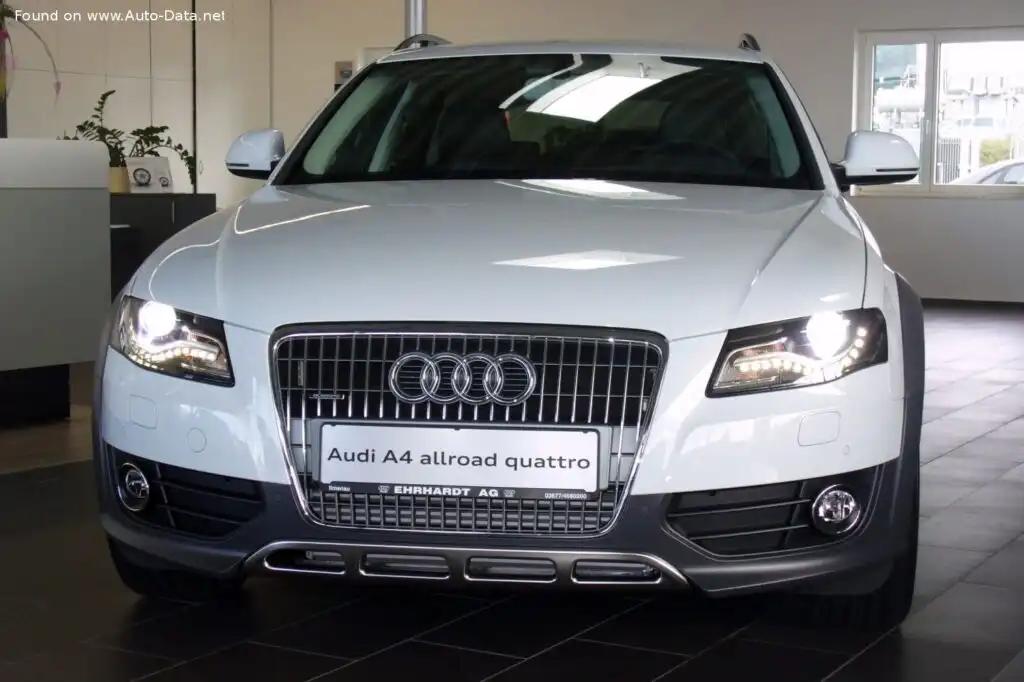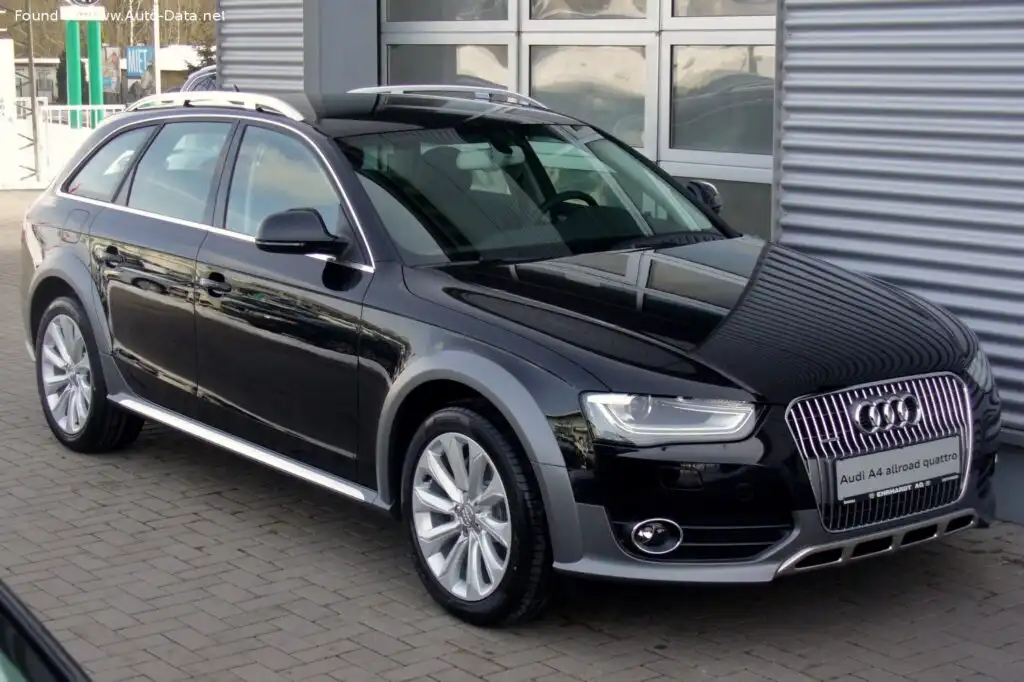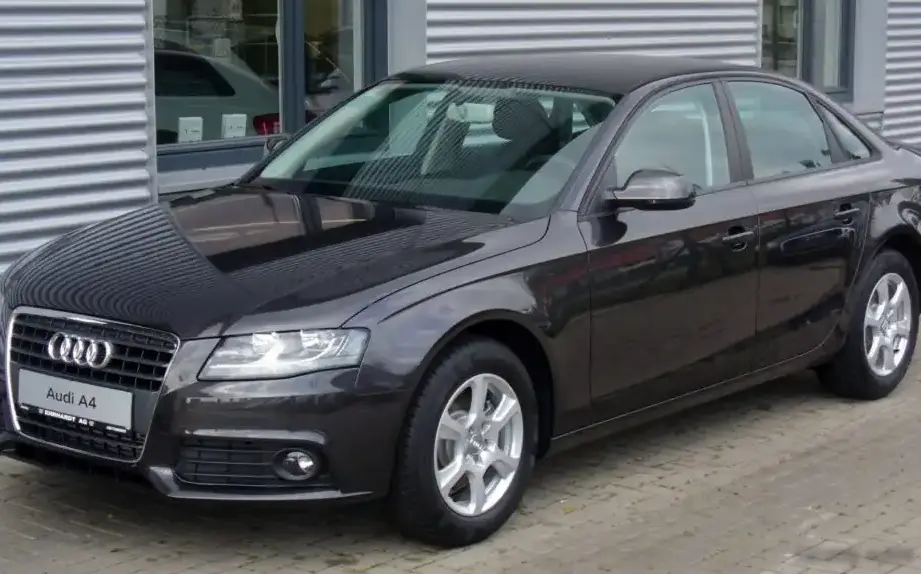
The Audi A4 (B8 8K) 2.0 TDI 120 hp variant, produced from June 2008 to 2011, represented an entry-level diesel offering within the broader B8 A4 lineup. Positioned as a fuel-efficient and practical option, it catered to European drivers seeking a balance between performance and economy in a compact executive sedan. This model played a significant role in Audi’s strategy to offer a diverse range of A4 configurations, appealing to a wider customer base. It was part of the A4’s fifth generation, built on the Volkswagen Group’s B8 (8K) platform, shared with models like the Volkswagen Passat and Škoda Superb.
Technical Specifications
| Brand | Audi |
| Model | A4 |
| Generation | A4 (B8 8K) |
| Type (Engine) | 2.0 TDI (120 Hp) |
| Start of production | June, 2008 |
| End of production | 2011 |
| Powertrain Architecture | Internal Combustion engine |
| Body type | Sedan |
| Seats | 5 |
| Doors | 4 |
| Fuel consumption (urban) | 6.8 l/100 km (34.6 US mpg, 41.5 UK mpg, 14.7 km/l) |
| Fuel consumption (extra urban) | 4.5 l/100 km (52.3 US mpg, 62.8 UK mpg, 22.2 km/l) |
| Fuel consumption (combined) | 5.3 l/100 km (44.4 US mpg, 53.3 UK mpg, 18.9 km/l) |
| Fuel Type | Diesel |
| Acceleration 0 – 100 km/h | 11.2 sec |
| Acceleration 0 – 62 mph | 11.2 sec |
| Acceleration 0 – 60 mph | 10.6 sec |
| Maximum speed | 197 km/h (122.41 mph) |
| Emission standard | Euro 4 |
| Weight-to-power ratio | 12.5 kg/Hp, 80 Hp/tonne |
| Weight-to-torque ratio | 5.2 kg/Nm, 193.3 Nm/tonne |
| Power | 120 Hp @ 4200 rpm |
| Power per litre | 61 Hp/l |
| Torque | 290 Nm @ 1750-2500 rpm (213.89 lb.-ft. @ 1750-2500 rpm) |
| Engine layout | Front, Longitudinal |
| Engine Model/Code | EA189 / CAGC |
| Engine displacement | 1968 cm3 (120.09 cu. in.) |
| Number of cylinders | 4 |
| Engine configuration | Inline |
| Cylinder Bore | 81 mm (3.19 in.) |
| Piston Stroke | 95.5 mm (3.76 in.) |
| Compression ratio | 16.5:1 |
| Number of valves per cylinder | 4 |
| Fuel injection system | Diesel Commonrail |
| Engine aspiration | Turbocharger, Intercooler |
| Valvetrain | DOHC |
| Engine oil capacity | 5 l (5.28 US qt | 4.4 UK qt) |
| Kerb Weight | 1500 kg (3306.93 lbs.) |
| Max. weight | 2010 kg (4431.29 lbs.) |
| Max load | 510 kg (1124.36 lbs.) |
| Trunk (boot) space – minimum | 480 l (16.95 cu. ft.) |
| Trunk (boot) space – maximum | 962 l (33.97 cu. ft.) |
| Fuel tank capacity | 65 l (17.17 US gal | 14.3 UK gal) |
| Length | 4703 mm (185.16 in.) |
| Width | 1826 mm (71.89 in.) |
| Height | 1427 mm (56.18 in.) |
| Wheelbase | 2808 mm (110.55 in.) |
| Front track | 1564 mm (61.57 in.) |
| Rear (Back) track | 1551 mm (61.06 in.) |
| Drag coefficient (Cd) | 0.28 |
| Minimum turning circle | 11.4 m (37.4 ft.) |
| Drivetrain Architecture | ICE, Front wheel drive |
| Drive wheel | Front wheel drive |
| Number of gears | 6 gears, manual transmission |
| Front suspension | Independent multi-link suspension |
| Rear suspension | Independent multi-link spring suspension with stabilizer |
| Front brakes | Disc |
| Rear brakes | Ventilated discs |
| Assisting systems | ABS (Anti-lock braking system) |
| Steering type | Steering rack and pinion |
| Power steering | Electric Steering |
| Tires size | 225/55 R16; 225/50 R17 |
| Wheel rims size | 7.5J x 16; 7.5J x 17 |
INTRODUCTION
The Audi A4 (B8) 2.0 TDI 120 hp, launched in 2008, was a key component of Audi’s strategy to offer a compelling diesel option in the competitive compact executive segment. This variant utilized the EA189 engine family, specifically the CAGC code, and was primarily aimed at the European market where diesel fuel was prevalent and fuel economy was a high priority for consumers. It served as an accessible entry point into the A4 range, offering a balance of practicality, comfort, and efficiency. The B8 generation A4 represented a significant step forward in Audi’s design language and interior quality, and the 2.0 TDI 120 hp model benefited from these improvements.
Powertrain & Engine Architecture
At the heart of the A4 2.0 TDI 120 hp lies the EA189 series 2.0-liter inline-four diesel engine, designated CAGC. This engine featured common rail direct injection, delivering fuel at extremely high pressures for optimized combustion. The engine employed a turbocharger with an intercooler to boost power output and improve efficiency. The valvetrain consisted of a dual overhead camshaft (DOHC) design with four valves per cylinder, enhancing breathing and overall performance. The 120 hp output was achieved through careful calibration of the engine management system. This specific version was paired with a six-speed manual transmission, prioritizing fuel efficiency over outright performance. The engine’s longitudinal mounting allowed for front-wheel drive configuration, common in European A4 models.
Driving Characteristics
The 2.0 TDI 120 hp A4 offered a comfortable and refined driving experience, albeit not a particularly sporty one. The engine produced a respectable 290 Nm (213.89 lb-ft) of torque, available from 1750-2500 rpm, providing adequate pulling power for everyday driving and highway cruising. Acceleration from 0-60 mph took around 10.6 seconds, and top speed was limited to 197 km/h (122.41 mph). Compared to higher-output TDI variants (like the 170 hp version) or the petrol-powered A4s, the 120 hp model felt noticeably less responsive. The six-speed manual transmission was well-matched to the engine’s characteristics, offering smooth gear changes and helping to keep the engine within its optimal torque band. The gear ratios were tuned for fuel economy, resulting in a slightly less engaging driving experience than the sportier A4 trims.
Equipment & Trim Levels
The A4 2.0 TDI 120 hp typically came with a reasonable level of standard equipment, reflecting its position as an entry-level model. Standard features generally included air conditioning, power windows, central locking, an audio system, and alloy wheels. Interior upholstery was typically cloth, although leather options were available as upgrades. Trim levels varied depending on the specific market, but common options included upgraded audio systems, parking sensors, automatic climate control, and a sunroof. The dashboard layout was typical of the B8 A4, characterized by a clean and modern design with intuitive controls. Safety features such as ABS, electronic stability control, and multiple airbags were standard across the range.
Chassis & Braking
The A4 2.0 TDI 120 hp utilized a fully independent suspension system, with multi-link setups at both the front and rear. This provided a comfortable ride quality and good handling characteristics. The front suspension featured stabilizer bars to reduce body roll during cornering. Braking duties were handled by disc brakes on all four wheels, with ventilated discs at the front for improved heat dissipation. The ABS (Anti-lock Braking System) was standard, enhancing braking performance and stability in emergency situations. The chassis was tuned to prioritize comfort and stability over outright sportiness, making it well-suited for long-distance driving.
Market Reception & Comparison
The Audi A4 2.0 TDI 120 hp was generally well-received by automotive critics as a practical and fuel-efficient option. It was praised for its comfortable ride, refined interior, and strong fuel economy figures (around 44.4 US mpg combined). However, some critics noted that the engine lacked the punch of higher-output TDI variants or petrol engines. Compared to the 2.0 TDI 170 hp model, the 120 hp version offered significantly lower running costs but at the expense of performance. Against competitors like the BMW 320d and Mercedes-Benz C220 CDI, the A4 2.0 TDI 120 hp held its own in terms of refinement and fuel economy, but often lagged slightly in terms of driving dynamics.
Legacy
The EA189 engine family, including the CAGC code used in the A4 2.0 TDI 120 hp, later faced scrutiny due to emissions concerns and the “Dieselgate” scandal. While the engine itself proved to be relatively reliable mechanically, the emissions issues led to software updates and recalls. Today, used examples of the A4 2.0 TDI 120 hp can be found at affordable prices. They remain a popular choice for drivers seeking a fuel-efficient and comfortable compact executive car. However, potential buyers should be aware of the potential for lingering emissions-related issues and ensure that any necessary software updates have been performed. The 2.0 TDI 120 hp A4 represents a significant chapter in Audi’s diesel history, showcasing the brand’s commitment to efficiency and refinement.