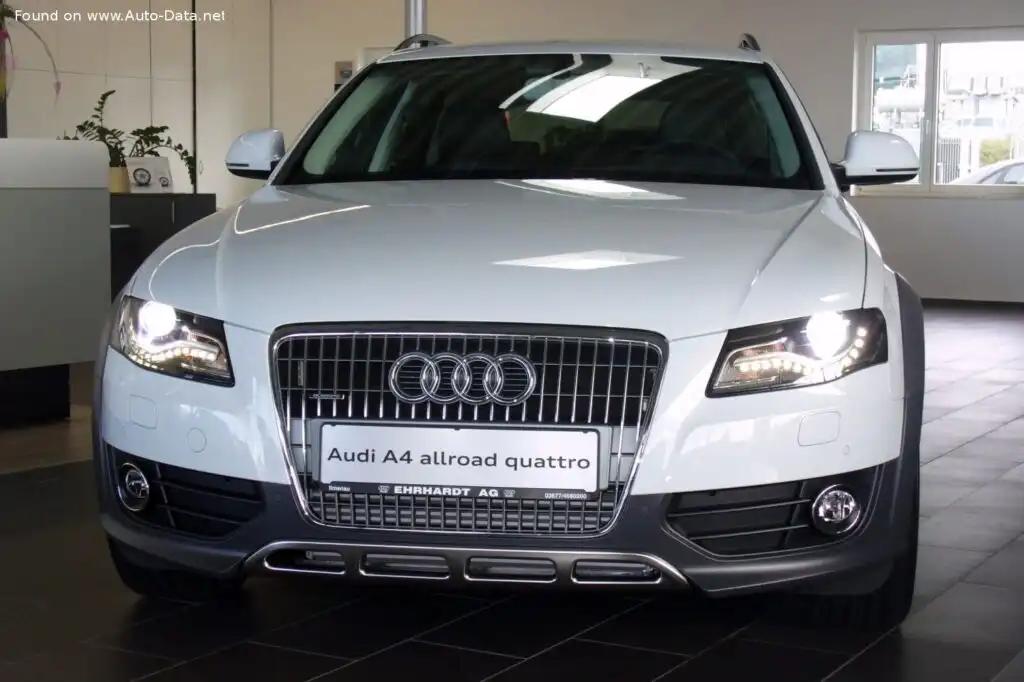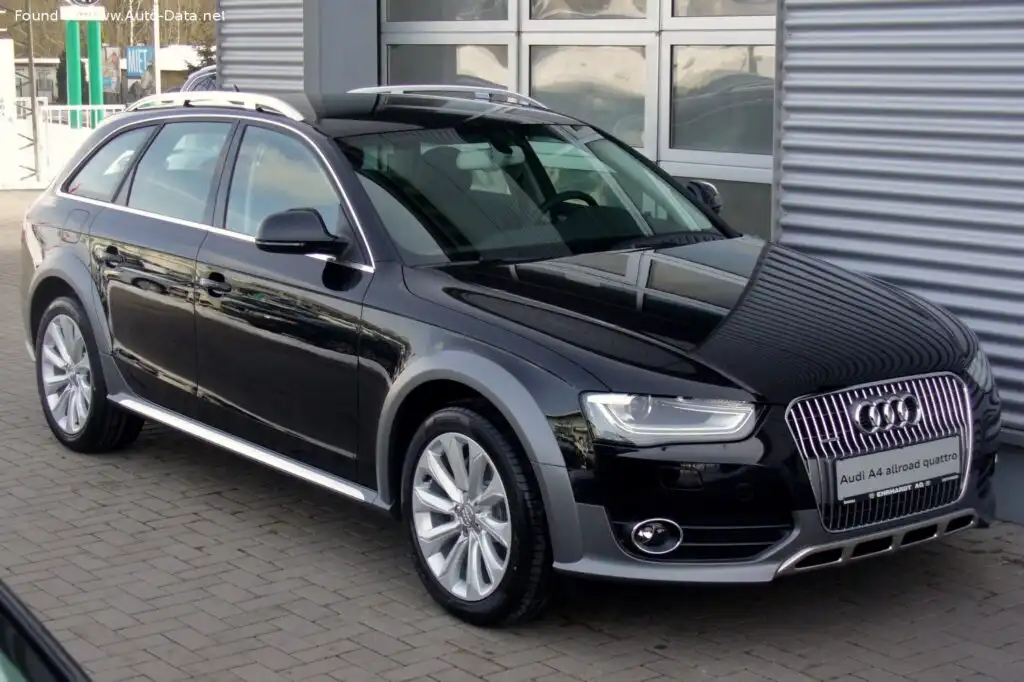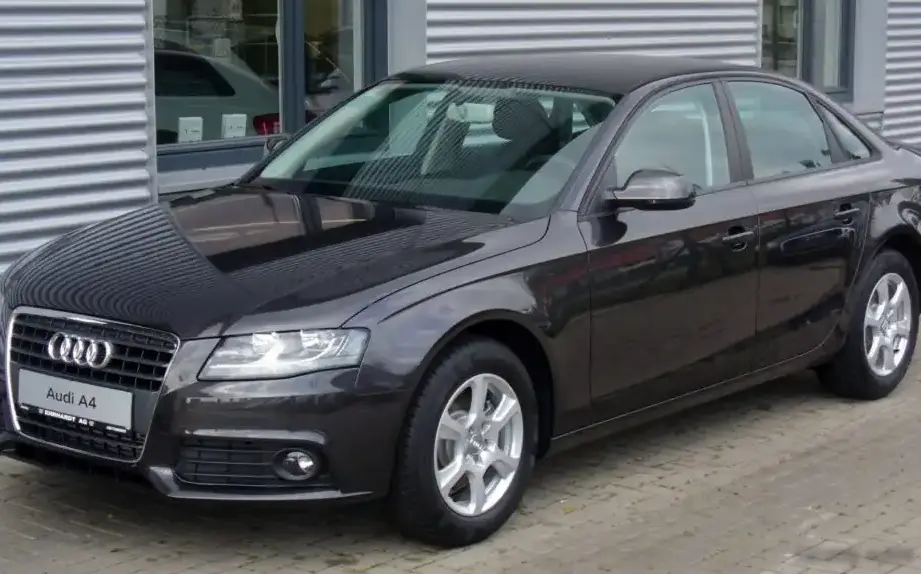
The Audi A4 (B8 8K) 2.0 TDI producing 143 horsepower was a mainstay of the Audi lineup from its introduction in May 2007 through 2011. Positioned as a mid-range offering within the B8 generation A4, this variant aimed to balance fuel efficiency with acceptable performance for everyday driving. It served as a popular choice in European markets, where diesel engines held a significant market share, and was also available in other regions. The B8 A4 represented a significant step forward for Audi, incorporating a new design language and a more sophisticated chassis compared to its predecessor.
Technical Specifications
| Brand | Audi |
| Model | A4 |
| Generation | A4 (B8 8K) |
| Type (Engine) | 2.0 TDI (143 Hp) |
| Start of production | May, 2007 |
| End of production | 2011 |
| Powertrain Architecture | Internal Combustion engine |
| Body type | Sedan |
| Seats | 5 |
| Doors | 4 |
| Fuel consumption (urban) | 7.5 l/100 km (31.4 US mpg, 37.7 UK mpg, 13.3 km/l) |
| Fuel consumption (extra urban) | 4.3 l/100 km (54.7 US mpg, 65.7 UK mpg, 23.3 km/l) |
| Fuel consumption (combined) | 5.5 l/100 km (42.8 US mpg, 51.4 UK mpg, 18.2 km/l) |
| CO2 emissions | 144 g/km |
| Fuel Type | Diesel |
| Acceleration 0 – 100 km/h | 9.4 sec |
| Acceleration 0 – 62 mph | 9.4 sec |
| Acceleration 0 – 60 mph | 8.9 sec |
| Maximum speed | 215 km/h (133.59 mph) |
| Emission standard | Euro 4 |
| Weight-to-power ratio | 10.2 kg/Hp, 97.9 Hp/tonne |
| Weight-to-torque ratio | 4.6 kg/Nm, 219.2 Nm/tonne |
| Power | 143 Hp @ 4200 rpm |
| Power per litre | 72.7 Hp/l |
| Torque | 320 Nm @ 1750-2500 rpm (236.02 lb.-ft. @ 1750-2500 rpm) |
| Engine layout | Front, Longitudinal |
| Engine Model/Code | EA189 / CAGA |
| Engine displacement | 1968 cm3 (120.09 cu. in.) |
| Number of cylinders | 4 |
| Engine configuration | Inline |
| Cylinder Bore | 81 mm (3.19 in.) |
| Piston Stroke | 95.5 mm (3.76 in.) |
| Compression ratio | 16.5:1 |
| Number of valves per cylinder | 4 |
| Fuel injection system | Diesel Commonrail |
| Engine aspiration | Turbocharger, Intercooler |
| Valvetrain | DOHC |
| Engine oil capacity | 5 l (5.28 US qt | 4.4 UK qt) |
| Coolant | 7.5 l (7.93 US qt | 6.6 UK qt) |
| Kerb Weight | 1460 kg (3218.75 lbs.) |
| Max. weight | 2010 kg (4431.29 lbs.) |
| Max load | 550 kg (1212.54 lbs.) |
| Trunk (boot) space – minimum | 480 l (16.95 cu. ft.) |
| Trunk (boot) space – maximum | 962 l (33.97 cu. ft.) |
| Fuel tank capacity | 70 l (18.49 US gal | 15.4 UK gal) |
| Max. roof load | 75 kg (165.35 lbs.) |
| Permitted trailer load with brakes (8%) | 1900 kg (4188.78 lbs.) |
| Permitted trailer load with brakes (12%) | 1700 kg (3747.86 lbs.) |
| Permitted trailer load without brakes | 750 kg (1653.47 lbs.) |
| Permitted towbar download | 80 kg (176.37 lbs.) |
| Length | 4703 mm (185.16 in.) |
| Width | 1826 mm (71.89 in.) |
| Height | 1427 mm (56.18 in.) |
| Wheelbase | 2808 mm (110.55 in.) |
| Front track | 1564 mm (61.57 in.) |
| Rear (Back) track | 1551 mm (61.06 in.) |
| Drag coefficient (Cd) | 0.27 |
| Minimum turning circle (turning diameter) | 11.4 m (37.4 ft.) |
| Drivetrain Architecture | The Internal combustion engine (ICE) drives the front wheels of the vehicle. |
| Drive wheel | Front wheel drive |
| Number of gears and type of gearbox | 6 gears, manual transmission |
| Front suspension | Independent multi-link suspension |
| Rear suspension | Independent multi-link spring suspension with stabilizer |
| Front brakes | Ventilated discs |
| Rear brakes | Disc |
| Assisting systems | ABS (Anti-lock braking system) |
| Steering type | Steering rack and pinion |
| Power steering | Electric Steering |
| Tires size | 225/55 R16; 225/50 R17 |
| Wheel rims size | 7.5J x 16; 7.5J x 17 |
INTRODUCTION
The Audi A4 (B8 8K) 2.0 TDI 143 hp, produced from 2007 to 2011, was a crucial variant within the broader B8 A4 range. Built on the Volkswagen Group’s 1HX0/A3 platform, it represented a move towards more refined styling and improved driving dynamics. This particular engine and transmission combination was designed to appeal to buyers seeking a balance between fuel economy and usability, making it a popular choice for daily commuting and long-distance travel, particularly in Europe where diesel fuel was more readily available and often incentivized.
Powertrain & Engine Architecture
At the heart of this A4 variant lies the EA189 series 2.0-liter inline-four diesel engine, specifically the CAGA engine code. This engine utilizes a common rail direct injection system, delivering fuel at extremely high pressures for optimized combustion. The engine features a turbocharger with an intercooler, boosting power output and improving torque delivery. The valvetrain employs a dual overhead camshaft (DOHC) design with four valves per cylinder, enhancing breathing and overall efficiency. The 6-speed manual transmission was standard, providing a good balance between fuel economy and driver control. The engine’s longitudinal mounting allowed for front-wheel drive configuration, common for European market A4s.
Driving Characteristics
The 143 horsepower and 320 Nm (236 lb-ft) of torque offered by the 2.0 TDI provided adequate performance for everyday driving. Acceleration from 0-60 mph took approximately 8.9 seconds, and the car could reach a top speed of 133.59 mph. While not a sports car, the engine delivered a usable powerband, with peak torque available from 1750-2500 rpm. This made overtaking and merging onto highways relatively effortless. Compared to the more powerful 170 hp TDI or the petrol-powered variants, this version felt less urgent, but it offered significantly better fuel economy. The manual transmission, while engaging, had relatively long throws compared to some competitors.
Equipment & Trim Levels
The 2.0 TDI 143 hp A4 typically came equipped with a respectable level of standard features. These included air conditioning, power windows, power mirrors, and a basic audio system. Interior upholstery was typically cloth, although leather options were available as upgrades. Trim levels varied by market, but generally, this variant occupied a mid-range position. Optional extras included a sunroof, upgraded audio systems, navigation, and parking sensors. The dashboard layout was functional and well-designed, typical of Audi’s interior aesthetic at the time.
Chassis & Braking
The B8 A4 featured a fully independent suspension system, with a multi-link setup at both the front and rear. This provided a comfortable ride and good handling characteristics. The front suspension utilized ventilated disc brakes, while the rear brakes were typically solid discs. Anti-lock Braking System (ABS) was standard. The chassis was designed to provide a good balance between comfort and handling, and the suspension tuning was geared towards providing a stable and predictable driving experience. Stabilizer bars were included to reduce body roll during cornering.
Market Reception & Comparison
The Audi A4 2.0 TDI 143 hp was generally well-received by automotive critics. It was praised for its fuel efficiency, comfortable ride, and refined interior. However, some critics noted that the engine lacked the outright performance of its more powerful siblings. Compared to the 170 hp TDI, the 143 hp version offered lower running costs but sacrificed some performance. Against petrol-powered A4s, the TDI provided significantly better fuel economy, making it a more practical choice for high-mileage drivers. Reliability was generally good, although the EA189 engine later became subject to scrutiny regarding emissions compliance.
Legacy
The 2.0 TDI 143 hp engine, while eventually superseded by newer, more efficient designs, proved to be a durable and reliable powertrain. On the used car market, these A4s remain relatively popular due to their combination of practicality, fuel economy, and Audi’s reputation for build quality. However, potential buyers should be aware of the potential for diesel particulate filter (DPF) issues, particularly on vehicles that have primarily been used for short journeys. Regular maintenance and the use of quality diesel fuel are crucial for ensuring the long-term health of this engine. The B8 A4 2.0 TDI 143 hp represents a solid and dependable choice for those seeking a comfortable and economical European sedan.