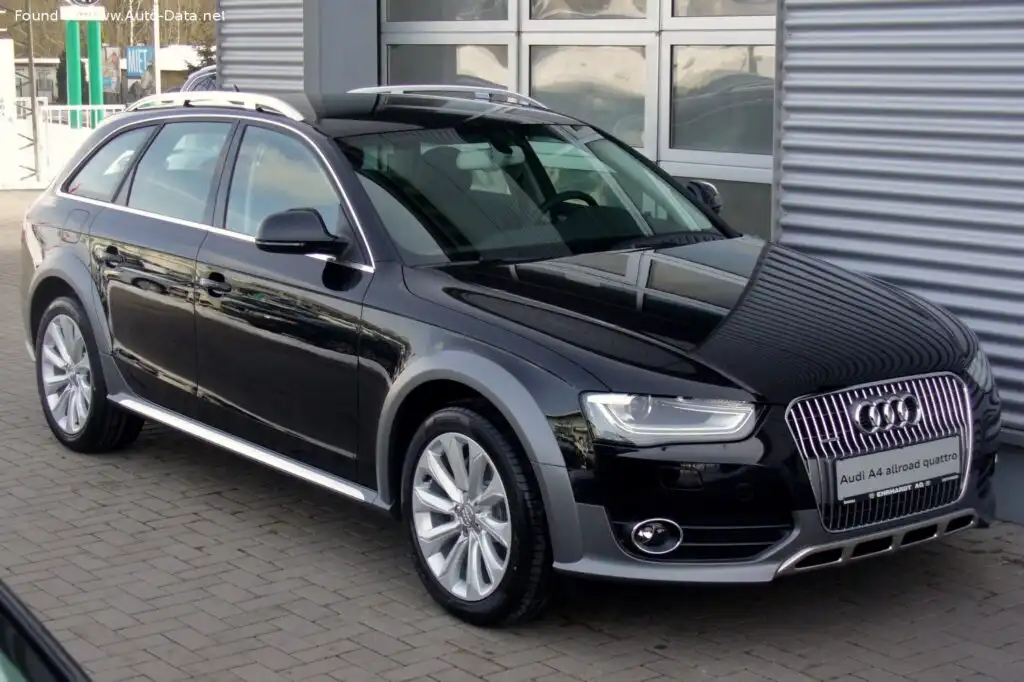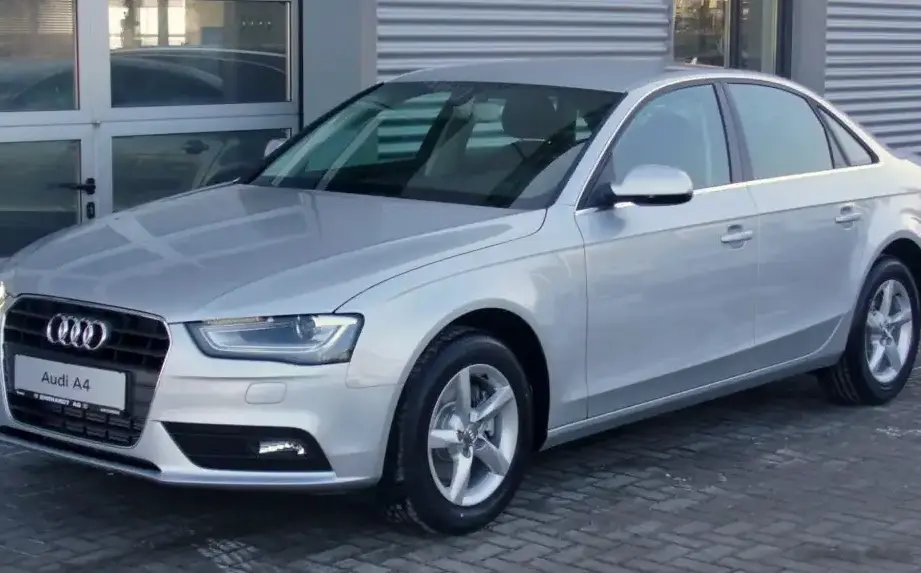
The Audi A4 (B8 8K) facelift, produced from 2011 to 2015, represented a significant mid-cycle refresh of Audi’s popular compact executive car. Within the B8 generation, the 1.8 TFSI model, producing 120 horsepower, served as a key entry point into the A4 range, particularly in European markets. This variant aimed to balance fuel efficiency with acceptable performance, appealing to buyers prioritizing practicality and running costs over outright speed. It occupied a position below the more powerful 2.0 TFSI and diesel TDI models, offering a more affordable option without sacrificing the A4’s core qualities of refinement and build quality.
Technical Specifications
| Brand | Audi |
| Model | A4 |
| Generation | A4 (B8 8K, facelift 2011) |
| Type (Engine) | 1.8 TFSI (120 Hp) |
| Start of production | 2011 |
| End of production | 2015 |
| Powertrain Architecture | Internal Combustion engine |
| Body type | Sedan |
| Seats | 5 |
| Doors | 4 |
| Fuel consumption (urban) | 8.6 l/100 km (27.4 US mpg, 32.8 UK mpg, 11.6 km/l) |
| Fuel consumption (extra urban) | 6.3 l/100 km (37.3 US mpg, 44.8 UK mpg, 15.9 km/l) |
| Fuel consumption (combined) | 6.5 l/100 km (36.2 US mpg, 43.5 UK mpg, 15.4 km/l) |
| CO2 emissions | 151 g/km |
| Fuel Type | Petrol (Gasoline) |
| Acceleration 0 – 100 km/h | 10.5 sec |
| Acceleration 0 – 62 mph | 10.5 sec |
| Acceleration 0 – 60 mph | 10 sec |
| Maximum speed | 208 km/h (129.25 mph) |
| Emission standard | Euro 5 |
| Weight-to-power ratio | 11.9 kg/Hp, 83.9 Hp/tonne |
| Weight-to-torque ratio | 6.2 kg/Nm, 160.8 Nm/tonne |
| Power | 120 Hp @ 3650-6200 rpm |
| Power per litre | 66.7 Hp/l |
| Torque | 230 Nm @ 1500-3650 rpm (169.64 lb.-ft. @ 1500-3650 rpm) |
| Engine layout | Front, Longitudinal |
| Engine Model/Code | CDHA |
| Engine displacement | 1798 cm3 (109.72 cu. in.) |
| Number of cylinders | 4 |
| Engine configuration | Inline |
| Cylinder Bore | 82.5 mm (3.25 in.) |
| Piston Stroke | 84.1 mm (3.31 in.) |
| Compression ratio | 9.6:1 |
| Number of valves per cylinder | 4 |
| Fuel injection system | Direct injection |
| Engine aspiration | Turbocharger, Intercooler |
| Valvetrain | DOHC |
| Engine oil capacity | 4.6 l (4.86 US qt | 4.05 UK qt) |
| Kerb Weight | 1430 kg (3152.61 lbs.) |
| Max. weight | 1980 kg (4365.15 lbs.) |
| Max load | 550 kg (1212.54 lbs.) |
| Trunk (boot) space – minimum | 480 l (16.95 cu. ft.) |
| Trunk (boot) space – maximum | 962 l (33.97 cu. ft.) |
| Fuel tank capacity | 63 l (16.64 US gal | 13.86 UK gal) |
| Max. roof load | 90 kg (198.42 lbs.) |
| Permitted trailer load with brakes (8%) | 1500 kg (3306.93 lbs.) |
| Permitted trailer load with brakes (12%) | 1300 kg (2866.01 lbs.) |
| Permitted trailer load without brakes | 750 kg (1653.47 lbs.) |
| Permitted towbar download | 80 kg (176.37 lbs.) |
| Length | 4701 mm (185.08 in.) |
| Width | 1826 mm (71.89 in.) |
| Width including mirrors | 2040 mm (80.31 in.) |
| Height | 1427 mm (56.18 in.) |
| Wheelbase | 2808 mm (110.55 in.) |
| Front track | 1564 mm (61.57 in.) |
| Rear (Back) track | 1551 mm (61.06 in.) |
| Front overhang | 862 mm (33.94 in.) |
| Rear overhang | 1031 mm (40.59 in.) |
| Drag coefficient (Cd) | 0.27 |
| Minimum turning circle (turning diameter) | 11.5 m (37.73 ft.) |
| Drivetrain Architecture | The Internal combustion engine (ICE) drives the front wheels of the vehicle. |
| Drive wheel | Front wheel drive |
| Number of gears and type of gearbox | 6 gears, manual transmission |
| Front suspension | Independent multi-link suspension |
| Rear suspension | Independent on trapezoidal lever |
| Assisting systems | ABS (Anti-lock braking system) |
| Steering type | Steering rack and pinion |
| Power steering | Electric Steering |
| Tires size | 205/60 R16 |
| Wheel rims size | 7J x 16 |
Powertrain & Engine Architecture
The 1.8 TFSI engine, designated CDHA, is a 1.8-liter (1798 cc) inline-four cylinder engine featuring direct fuel injection and a single turbocharger with an intercooler. This engine is part of Audi’s EA888 family, known for its robust design and tunability. The direct injection system, coupled with turbocharging, allows for a good balance of power and efficiency. The engine utilizes a dual overhead camshaft (DOHC) valvetrain with four valves per cylinder, optimizing airflow for improved performance. The 120 horsepower output is achieved at 3650-6200 rpm, while peak torque of 230 Nm (169.64 lb-ft) is available from 1500-3650 rpm. The engine’s longitudinal mounting was typical for Audi’s front-wheel-drive platforms, contributing to balanced weight distribution. The 6-speed manual transmission was standard, providing precise gear changes and a direct connection to the engine.
Driving Characteristics
The 1.8 TFSI with a manual transmission offered a reasonably engaging driving experience, though it wasn’t designed for outright performance. Acceleration from 0-100 km/h (0-62 mph) took around 10.5 seconds. The turbocharger provided a noticeable boost in power during mid-range acceleration, making overtaking maneuvers manageable. However, compared to the 2.0 TFSI variants, the 1.8 TFSI felt less responsive and required more downshifting to maintain momentum. The gear ratios were tuned for fuel efficiency, meaning the engine could feel strained at higher speeds. The front-wheel-drive configuration provided good traction in most conditions, but could exhibit some torque steer under hard acceleration.
Equipment & Trim Levels
The 1.8 TFSI A4 typically came with a respectable level of standard equipment. This included features like air conditioning, a basic audio system with CD player, power windows, and central locking. Safety features such as ABS, electronic stability control, and multiple airbags were also standard. Interior upholstery was typically cloth, with options for leather upgrades. Higher trim levels, such as SE or S-Line, added features like alloy wheels, upgraded audio systems, parking sensors, and sport suspension. Optional extras included a sunroof, navigation system, and heated seats.
Chassis & Braking
The B8 A4 featured a fully independent suspension system, with a multi-link setup at the front and a trapezoidal link setup at the rear. This provided a comfortable ride and good handling characteristics. The 1.8 TFSI models typically used smaller brake discs compared to the higher-performance variants, with rear drum brakes being common on base models. The steering was a rack-and-pinion system with electric power assistance, offering precise control and a reasonable level of feedback. Stabilizer bars were fitted front and rear to reduce body roll during cornering.
Market Reception & Comparison
The 1.8 TFSI A4 was generally well-received by critics as a sensible and practical choice. It offered a good balance of fuel economy and performance, making it an attractive option for buyers who didn’t need the extra power of the 2.0 TFSI models. Fuel economy figures of around 6.5 l/100 km (36.2 US mpg) were competitive for its class. However, some reviewers noted that the engine could feel underpowered, especially when fully loaded or driving uphill. Compared to the diesel TDI models, the 1.8 TFSI offered a smoother and quieter driving experience, but lacked the TDI’s superior fuel economy and low-end torque.
Legacy
The 1.8 TFSI engine, particularly the CDHA variant, has proven to be relatively reliable over the long term. Common issues include carbon buildup on the intake valves, which can reduce performance, and occasional oil leaks. However, with regular maintenance, these engines can easily exceed 150,000 miles. In the used car market, the 1.8 TFSI A4 represents a good value proposition, offering a comfortable and well-equipped car at an affordable price. Its fuel efficiency and relatively low maintenance costs make it a practical choice for everyday driving. The B8 A4, in general, has maintained a good reputation for build quality and reliability, contributing to its continued popularity in the used car market.