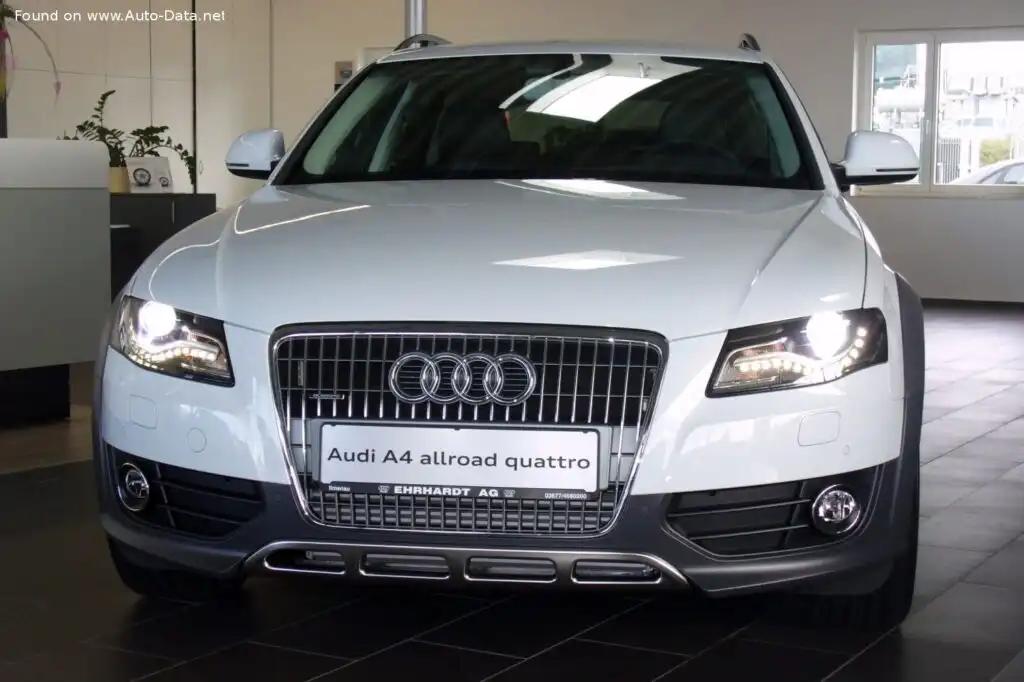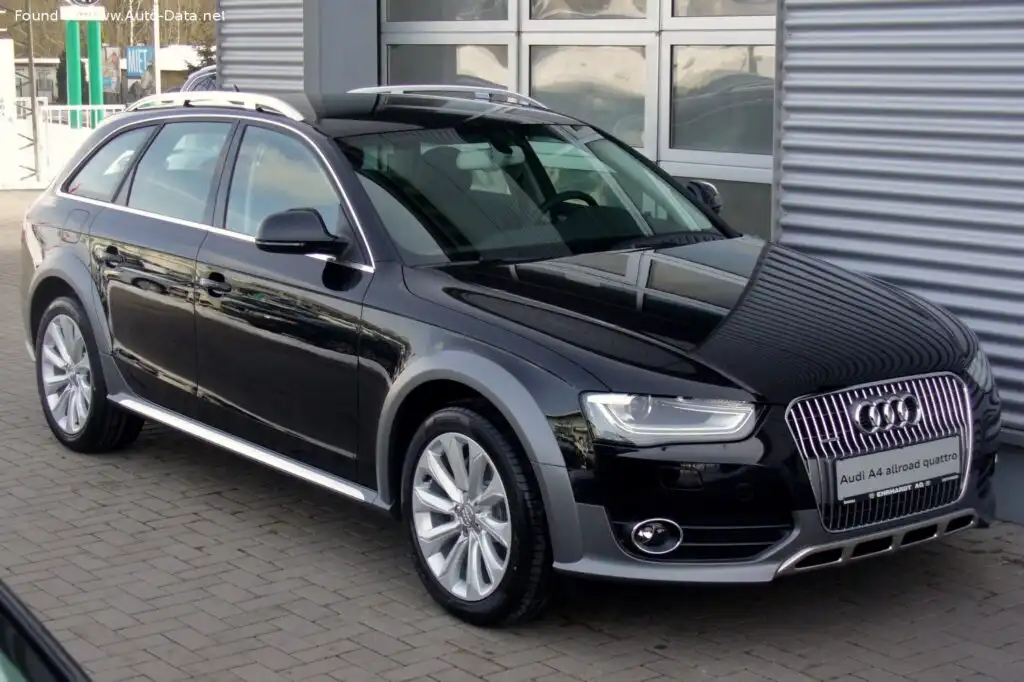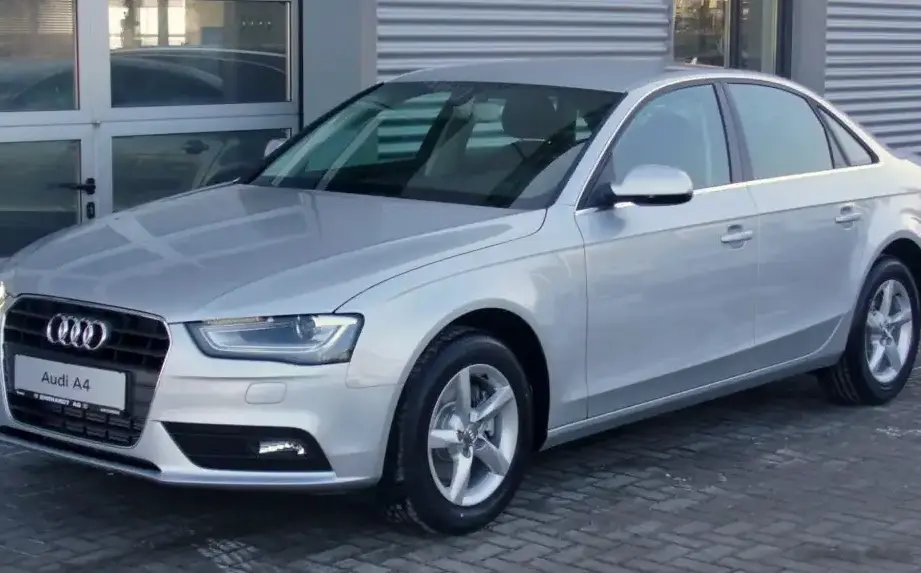
The Audi A4 (B8 8K) facelift, produced from 2012 to 2013, represented a significant mid-cycle refresh of Audi’s popular compact executive car. Among the various engine and transmission options available, the 2.0 T (214 hp) paired with the Multitronic continuously variable transmission (CVT) occupied a prominent position in the lineup, offering a blend of performance and efficiency. This variant was primarily marketed in Europe and other global markets, serving as a step up from the base engine options while remaining more accessible than the high-performance S4 model. It aimed to appeal to buyers seeking a refined driving experience with a balance of power and fuel economy.
Technical Specifications
| Brand | Audi |
| Model | A4 |
| Generation | A4 (B8 8K, facelift 2011) |
| Type (Engine) | 2.0 T (214 Hp) Multitronic |
| Start of production | 2012 |
| End of production | 2013 |
| Powertrain Architecture | Internal Combustion engine |
| Body type | Sedan |
| Seats | 5 |
| Doors | 4 |
| Fuel consumption (urban) | 9.8 l/100 km (24 US mpg, 28.8 UK mpg, 10.2 km/l) |
| Fuel consumption (extra urban) | 7.6 l/100 km (30.9 US mpg, 37.2 UK mpg, 13.2 km/l) |
| Fuel consumption (combined) | 9 l/100 km (26.1 US mpg, 31.4 UK mpg, 11.1 km/l) |
| Fuel Type | Petrol (Gasoline) |
| Acceleration 0 – 100 km/h | 7 sec |
| Acceleration 0 – 62 mph | 7 sec |
| Acceleration 0 – 60 mph | 6.7 sec |
| Maximum speed | 209 km/h (129.87 mph) |
| Weight-to-power ratio | 7.4 kg/Hp, 134.6 Hp/tonne |
| Weight-to-torque ratio | 4.5 kg/Nm, 220.1 Nm/tonne |
| Power | 214 Hp @ 4300-6000 rpm |
| Power per litre | 107.9 Hp/l |
| Torque | 350 Nm @ 1500-4500 rpm (258.15 lb.-ft. @ 1500-4500 rpm) |
| Engine layout | Front, Longitudinal |
| Engine Model/Code | CAEB, CPMA |
| Engine displacement | 1984 cm3 (121.07 cu. in.) |
| Number of cylinders | 4 |
| Engine configuration | Inline |
| Cylinder Bore | 82.5 mm (3.25 in.) |
| Piston Stroke | 92.8 mm (3.65 in.) |
| Compression ratio | 9.6:1 |
| Number of valves per cylinder | 4 |
| Fuel injection system | Direct injection |
| Engine aspiration | Turbocharger, Intercooler |
| Valvetrain | DOHC |
| Engine oil capacity | 4.6 l (4.86 US qt | 4.05 UK qt) |
| Coolant | 7 l (7.4 US qt | 6.16 UK qt) |
| Kerb Weight | 1590 kg (3505.35 lbs.) |
| Trunk (boot) space – minimum | 480 l (16.95 cu. ft.) |
| Trunk (boot) space – maximum | 962 l (33.97 cu. ft.) |
| Fuel tank capacity | 63 l (16.64 US gal | 13.86 UK gal) |
| Length | 4701 mm (185.08 in.) |
| Width | 1826 mm (71.89 in.) |
| Width including mirrors | 2040 mm (80.31 in.) |
| Height | 1427 mm (56.18 in.) |
| Wheelbase | 2808 mm (110.55 in.) |
| Front track | 1564 mm (61.57 in.) |
| Rear (Back) track | 1551 mm (61.06 in.) |
| Front overhang | 862 mm (33.94 in.) |
| Rear overhang | 1031 mm (40.59 in.) |
| Drag coefficient (Cd) | 0.31 |
| Minimum turning circle | 11.5 m (37.73 ft.) |
| Drivetrain Architecture | The Internal combustion engine (ICE) drives the front wheels of the vehicle. |
| Drive wheel | Front wheel drive |
| Number of gears and type of gearbox | automatic transmission Multitronic |
| Front suspension | Independent multi-link suspension |
| Rear suspension | Independent on trapezoidal lever |
| Front brakes | Ventilated discs |
| Rear brakes | Disc |
| Assisting systems | ABS (Anti-lock braking system) |
| Steering type | Steering rack and pinion |
| Power steering | Electric Steering |
| Tires size | 245/45 R17 |
| Wheel rims size | 17 |
INTRODUCTION
The Audi A4 B8.5, as the facelifted model is often referred to, built upon the success of the B8 generation, introducing revised styling, updated technology, and refined engine options. The 2.0 TFSI engine, in its 214 horsepower guise, was a key component of this update. This particular configuration, coupled with Audi’s Multitronic transmission, was available from 2012 through 2013. It slotted into the A4 range as a mid-level offering, providing a noticeable performance upgrade over the base 1.8 TFSI while remaining more affordable and fuel-efficient than the higher-output 3.0 TFSI or the performance-oriented S4.
Powertrain & Engine Architecture
The heart of this A4 variant is the 1.984-liter (121.07 cubic inches) inline-four cylinder engine, designated as the CAEB or CPMA engine code depending on the specific market and production date. This engine utilizes direct fuel injection (FSI) and is turbocharged, with an intercooler to manage intake air temperature. The direct injection system allows for precise fuel delivery, enhancing both power and efficiency. The engine features a dual overhead camshaft (DOHC) valvetrain with four valves per cylinder, optimizing airflow for improved performance. The Multitronic transmission is a continuously variable transmission (CVT) that offers seamless gear changes and contributes to fuel efficiency. Unlike traditional automatic transmissions with fixed gear ratios, the Multitronic uses a chain-driven system to provide an infinite number of gear ratios within its operating range. This allows the engine to operate at its most efficient point at all times.
Driving Characteristics
The 214 hp and 350 Nm (258.15 lb-ft) of torque delivered by the 2.0 TFSI engine, combined with the Multitronic transmission, resulted in a smooth and responsive driving experience. Acceleration from 0 to 60 mph took approximately 6.7 seconds, and 0-100 km/h in 7 seconds, making it a competitive performer in its class. The Multitronic transmission, while providing smooth shifts, lacked the direct feel of a traditional automatic or dual-clutch transmission. The gear ratios were optimized for both acceleration and fuel economy, with the CVT effectively keeping the engine within its peak power band. Compared to the manual transmission versions of the same engine, the Multitronic offered greater convenience, particularly in urban driving, but some enthusiasts found it less engaging. Compared to the higher-output 3.0 TFSI, this variant offered a more balanced driving experience, prioritizing efficiency and refinement over outright performance.
Equipment & Trim Levels
The 2.0 T Multitronic A4 typically came standard with a generous array of features, including automatic climate control, power windows and locks, a multi-function steering wheel, and an Audi Concert audio system. Interior upholstery was typically cloth, with leather options available as an upgrade. Common optional extras included a sunroof, navigation system, parking sensors, and upgraded alloy wheels. Trim levels varied by market, but generally, this engine/transmission combination was offered in mid-range trims, offering a good balance of features and price. The dashboard layout was typical of the B8 A4, characterized by a clean and functional design with a focus on ergonomics.
Chassis & Braking
The A4 B8.5 featured an independent multi-link suspension at the front and an independent trapezoidal link suspension at the rear, providing a comfortable and controlled ride. The suspension was tuned to balance handling and comfort, making it suitable for both daily commuting and spirited driving. Brakes consisted of ventilated discs at the front and solid discs at the rear, providing adequate stopping power. Anti-lock braking system (ABS) was standard. The chassis was designed to minimize weight while maximizing rigidity, contributing to improved handling and safety.
Market Reception & Comparison
The 2.0 T Multitronic A4 was generally well-received by automotive critics. It was praised for its refined engine, smooth transmission, and comfortable ride. However, some reviewers noted that the Multitronic transmission lacked the sporty feel of a traditional automatic or dual-clutch gearbox. Fuel economy was considered to be good for its class, with combined fuel consumption figures around 9 l/100 km (26.1 US mpg). Compared to the 1.8 TFSI, the 2.0 T offered a significant performance boost, while the 3.0 TFSI provided even more power but at a higher price and with lower fuel economy. Reliability was generally good, although the Multitronic transmission required regular maintenance to ensure optimal performance.
Legacy
The 2.0 TFSI engine, in various iterations, became a mainstay of the Audi lineup for many years. The B8.5 A4, and specifically this 2.0 T Multitronic variant, remains a popular choice in the used car market. The engine is known for its durability and relatively straightforward maintenance, although the Multitronic transmission can be a potential source of expense if not properly maintained. Regular fluid changes are crucial for the longevity of the transmission. Today, these A4s offer a compelling combination of German engineering, refined driving dynamics, and relative affordability, making them a desirable option for buyers seeking a well-rounded compact executive car.