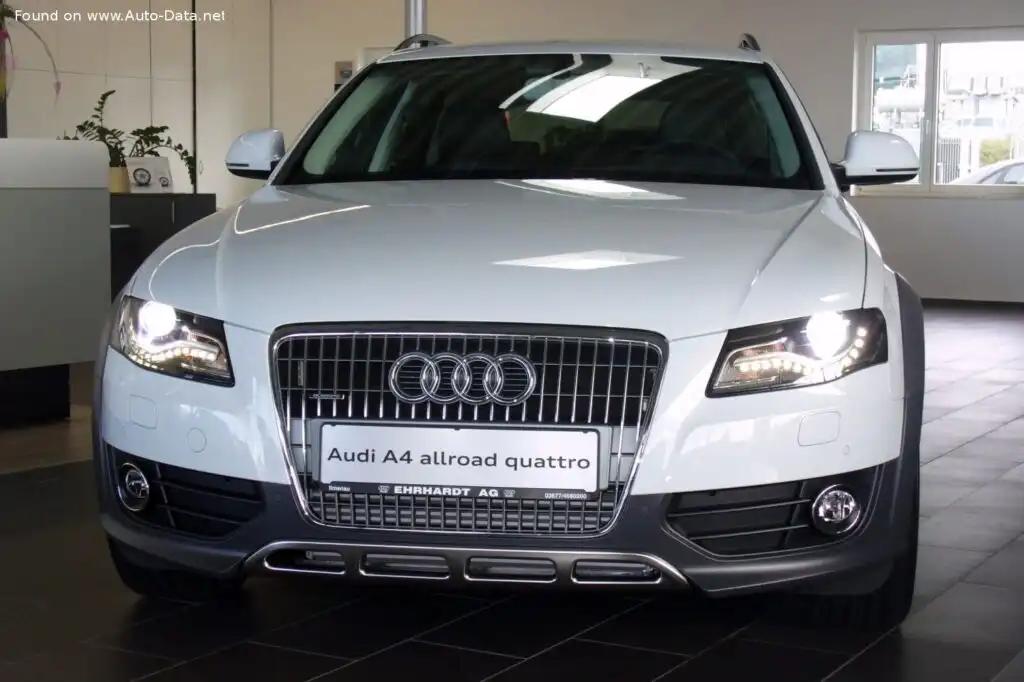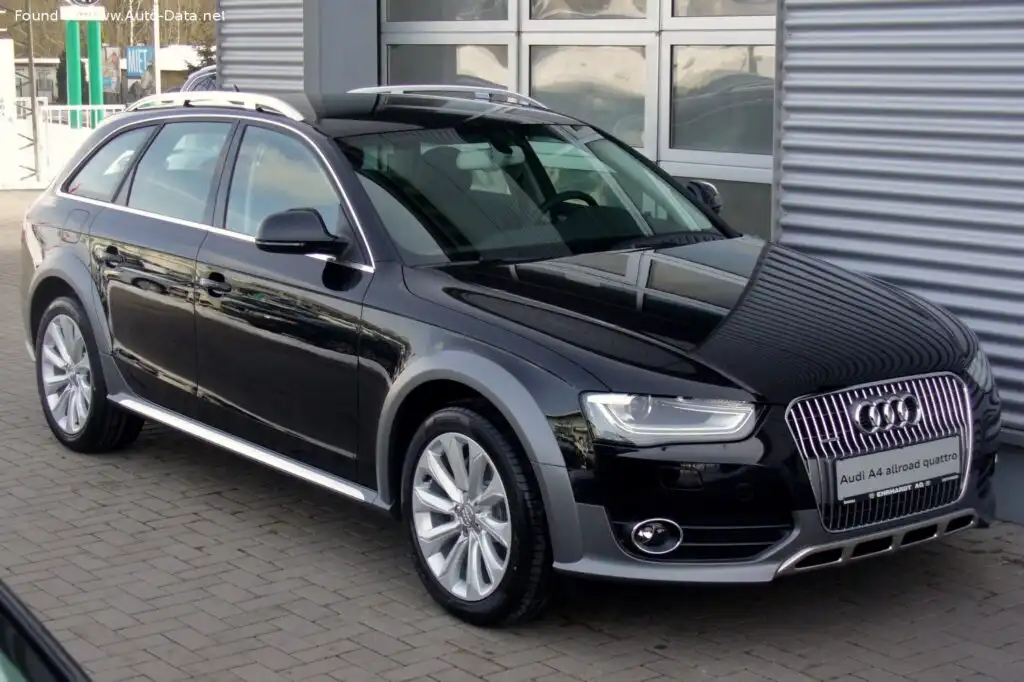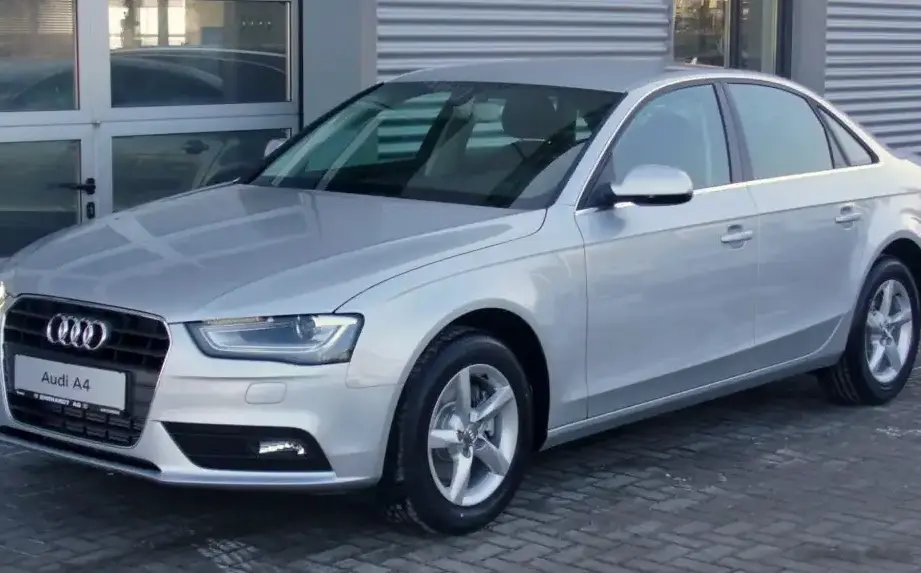
The Audi A4 (B8 8K) facelift, produced from late 2011 through 2013, represented a significant mid-cycle refresh of Audi’s popular compact executive car. Among the engine options available, the 2.0 TDI variant producing 143 horsepower paired with Audi’s Multitronic continuously variable transmission (CVT) occupied a crucial position in the European market, offering a balance of fuel efficiency, refinement, and acceptable performance. This configuration aimed to appeal to buyers prioritizing economy and comfort over outright sportiness. The B8.5 facelift brought styling updates, revised interior trim, and improvements to the engine range, including enhancements to the 2.0 TDI engine itself.
Technical Specifications
| Brand | Audi |
| Model | A4 |
| Generation | A4 (B8 8K, facelift 2011) |
| Type (Engine) | 2.0 TDI (143 Hp) Multitronic |
| Start of production | November, 2011 |
| End of production | 2013 |
| Powertrain Architecture | Internal Combustion engine |
| Body type | Sedan |
| Seats | 5 |
| Doors | 4 |
| Fuel consumption (urban) | 5.7 l/100 km (41.3 US mpg, 49.6 UK mpg, 17.5 km/l) |
| Fuel consumption (extra urban) | 4.4 l/100 km (53.5 US mpg, 64.2 UK mpg, 22.7 km/l) |
| Fuel consumption (combined) | 4.8 l/100 km (49 US mpg, 58.9 UK mpg, 20.8 km/l) |
| CO2 emissions | 127 g/km |
| Fuel Type | Diesel |
| Acceleration 0 – 100 km/h | 9.1 sec |
| Acceleration 0 – 62 mph | 9.1 sec |
| Acceleration 0 – 60 mph | 8.6 sec |
| Maximum speed | 209 km/h (129.87 mph) |
| Emission standard | Euro 5 |
| Weight-to-power ratio | 10.6 kg/Hp, 94.4 Hp/tonne |
| Weight-to-torque ratio | 4.7 kg/Nm, 211.2 Nm/tonne |
| Power | 143 Hp @ 4200 rpm |
| Power per litre | 72.7 Hp/l |
| Torque | 320 Nm @ 1750-2500 rpm (236.02 lb.-ft. @ 1750-2500 rpm) |
| Engine layout | Front, Longitudinal |
| Engine Model/Code | CJCA, CMFA |
| Engine displacement | 1968 cm3 (120.09 cu. in.) |
| Number of cylinders | 4 |
| Engine configuration | Inline |
| Cylinder Bore | 81 mm (3.19 in.) |
| Piston Stroke | 95.5 mm (3.76 in.) |
| Compression ratio | 16.5:1 |
| Number of valves per cylinder | 4 |
| Fuel injection system | Diesel Commonrail |
| Engine aspiration | Turbocharger, Intercooler |
| Valvetrain | DOHC |
| Engine oil capacity | 5 l (5.28 US qt | 4.4 UK qt) |
| Kerb Weight | 1515 kg (3340 lbs.) |
| Max. weight | 2065 kg (4552.55 lbs.) |
| Max load | 550 kg (1212.54 lbs.) |
| Trunk (boot) space – minimum | 480 l (16.95 cu. ft.) |
| Trunk (boot) space – maximum | 962 l (33.97 cu. ft.) |
| Fuel tank capacity | 63 l (16.64 US gal | 13.86 UK gal) |
| Max. roof load | 90 kg (198.42 lbs.) |
| Permitted trailer load with brakes (8%) | 1900 kg (4188.78 lbs.) |
| Permitted trailer load with brakes (12%) | 1700 kg (3747.86 lbs.) |
| Permitted trailer load without brakes | 750 kg (1653.47 lbs.) |
| Permitted towbar download | 80 kg (176.37 lbs.) |
| Length | 4701 mm (185.08 in.) |
| Width | 1826 mm (71.89 in.) |
| Width including mirrors | 2040 mm (80.31 in.) |
| Height | 1427 mm (56.18 in.) |
| Wheelbase | 2808 mm (110.55 in.) |
| Front track | 1564 mm (61.57 in.) |
| Rear (Back) track | 1551 mm (61.06 in.) |
| Front overhang | 862 mm (33.94 in.) |
| Rear overhang | 1031 mm (40.59 in.) |
| Drag coefficient (Cd) | 0.26 |
| Minimum turning circle (turning diameter) | 11.5 m (37.73 ft.) |
| Drivetrain Architecture | The Internal combustion engine (ICE) drives the front wheels of the vehicle. |
| Drive wheel | Front wheel drive |
| Number of gears and type of gearbox | automatic transmission Multitronic |
| Front suspension | Independent multi-link suspension |
| Rear suspension | Independent on trapezoidal lever |
| Front brakes | Ventilated discs |
| Rear brakes | Disc |
| Assisting systems | ABS (Anti-lock braking system) |
| Steering type | Steering rack and pinion |
| Power steering | Electric Steering |
| Tires size | 225/55 R16 |
| Wheel rims size | 7.5J x 16 |
INTRODUCTION
The Audi A4 B8.5 2.0 TDI 143 hp Multitronic represented a core offering within the A4 range, particularly in Europe where diesel engines dominated the executive car segment. Introduced with the facelift in late 2011, this variant aimed to provide a compelling blend of fuel economy, comfortable ride quality, and the convenience of an automatic transmission. Positioned as a mid-range option, it sat below the more powerful TDI variants (like the 177 hp version) and above the entry-level petrol engines. The B8.5 generation benefitted from refinements to the A4’s already well-regarded chassis and interior, making it a competitive choice in a crowded market.
Powertrain & Engine Architecture
The heart of this A4 variant is the 2.0-liter four-cylinder diesel engine, identified by engine codes CJCA or CMFA depending on the specific production year and market. This engine is a turbocharged common rail direct injection diesel, benefiting from advancements in fuel injection technology for improved efficiency and reduced emissions. The turbocharger, typically a variable geometry turbo (VGT), provides a broad torque curve. The engine utilizes a double overhead camshaft (DOHC) valvetrain with four valves per cylinder, optimizing gas flow for enhanced performance. The Multitronic transmission is a continuously variable transmission (CVT) offering seamless gear changes and contributing to fuel efficiency. It uses a chain-driven system rather than a traditional torque converter, providing a more direct feel. The Multitronic’s control unit constantly adjusts the gear ratio to keep the engine operating in its optimal power band.
Driving Characteristics
The 143 hp 2.0 TDI with the Multitronic transmission delivers a smooth and refined driving experience. While not particularly quick, with a 0-60 mph time around 8.6 seconds, it provides adequate acceleration for everyday driving. The Multitronic transmission effectively masks any turbo lag, delivering a linear power delivery. Compared to the six-speed manual version, the Multitronic prioritizes comfort and ease of use over driver engagement. The gear ratios are optimized for fuel efficiency, meaning the engine doesn’t rev as high during acceleration. Against the more powerful 177 hp TDI, this variant feels noticeably slower, particularly when overtaking. However, the difference in fuel economy is significant, making the 143 hp version a more economical choice for high-mileage drivers.
Equipment & Trim Levels
The A4 B8.5 2.0 TDI 143 hp Multitronic typically came equipped with a respectable level of standard features. These included air conditioning, a multi-function steering wheel, electric windows, and an audio system with auxiliary input. Higher trim levels, such as SE or S-line, added features like alloy wheels, upgraded interior trim (often including leather upholstery), parking sensors, and a more advanced infotainment system with navigation. Optional extras included a sunroof, heated seats, and a premium sound system. The interior design was generally understated and functional, with a focus on build quality and ergonomics.
Chassis & Braking
The A4 B8.5 utilizes a sophisticated suspension setup designed to balance comfort and handling. The front suspension features independent multi-link suspension, while the rear employs an independent trapezoidal link setup. This configuration provides a stable and controlled ride. Braking duties are handled by ventilated discs at the front and solid discs at the rear. Anti-lock Braking System (ABS) is standard. The suspension tuning was generally softer on lower trim levels, prioritizing ride comfort, while S-line models featured a sportier suspension setup with stiffer springs and dampers. Stabilizer bars are fitted front and rear to reduce body roll during cornering.
Market Reception & Comparison
The Audi A4 B8.5 2.0 TDI 143 hp Multitronic was well-received by automotive critics as a practical and efficient executive car. It was praised for its comfortable ride, refined engine, and fuel economy. However, some critics noted that the Multitronic transmission could feel somewhat detached and lacked the engagement of a traditional automatic or manual gearbox. Compared to rivals like the BMW 320d EfficientDynamics and the Mercedes-Benz C220 CDI, the A4 offered a similar level of performance and economy, but was often lauded for its superior interior quality and user-friendly infotainment system. Fuel economy figures consistently hovered around 49 mpg on the combined cycle, making it an attractive option for cost-conscious buyers.
Legacy
The 2.0 TDI engine with the Multitronic transmission proved to be a relatively reliable powertrain, although the Multitronic transmission itself has been known to require more frequent servicing than traditional automatic gearboxes. Regular oil changes and adherence to the manufacturer’s recommended maintenance schedule are crucial for long-term reliability. Today, these A4s are readily available on the used car market at affordable prices. They represent a good value proposition for buyers seeking a comfortable, economical, and well-built executive car. However, potential buyers should be aware of the potential maintenance costs associated with the Multitronic transmission and ensure a thorough inspection is carried out before purchase.