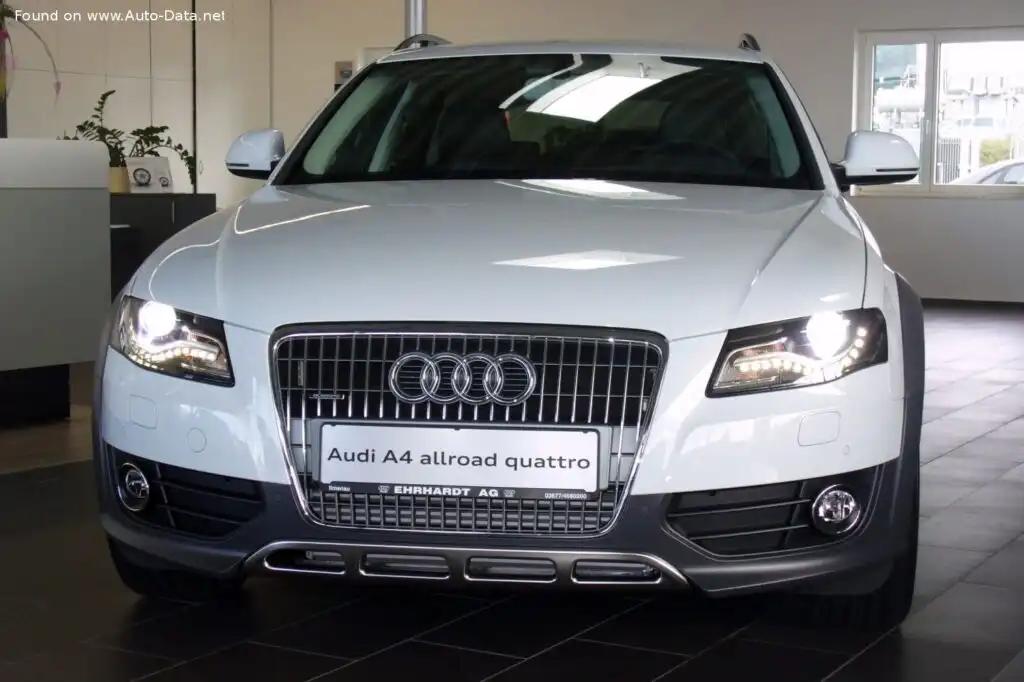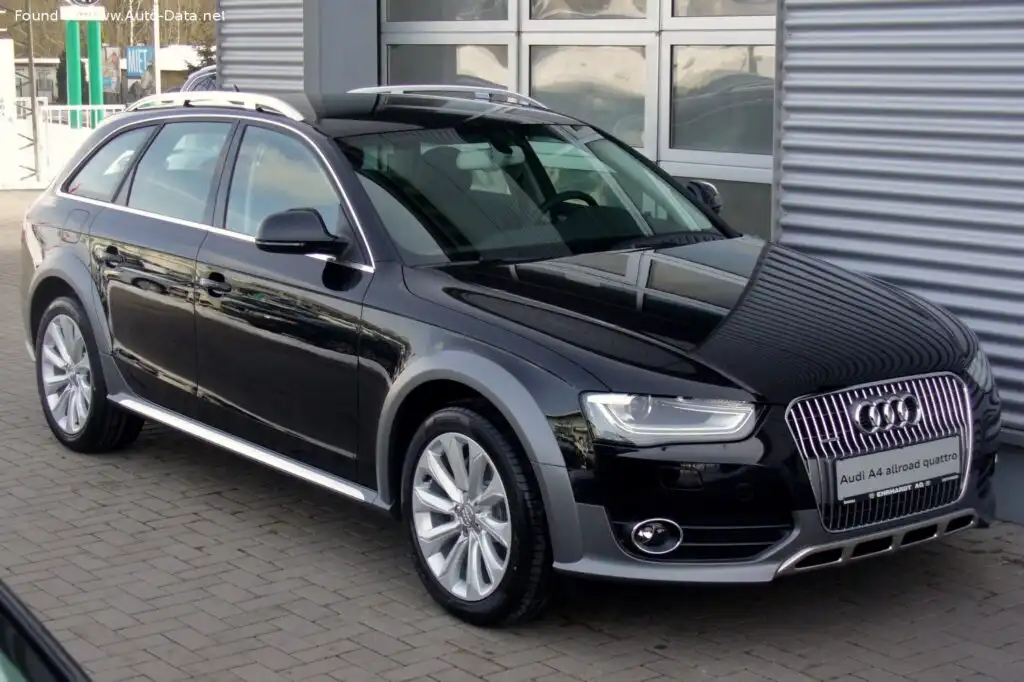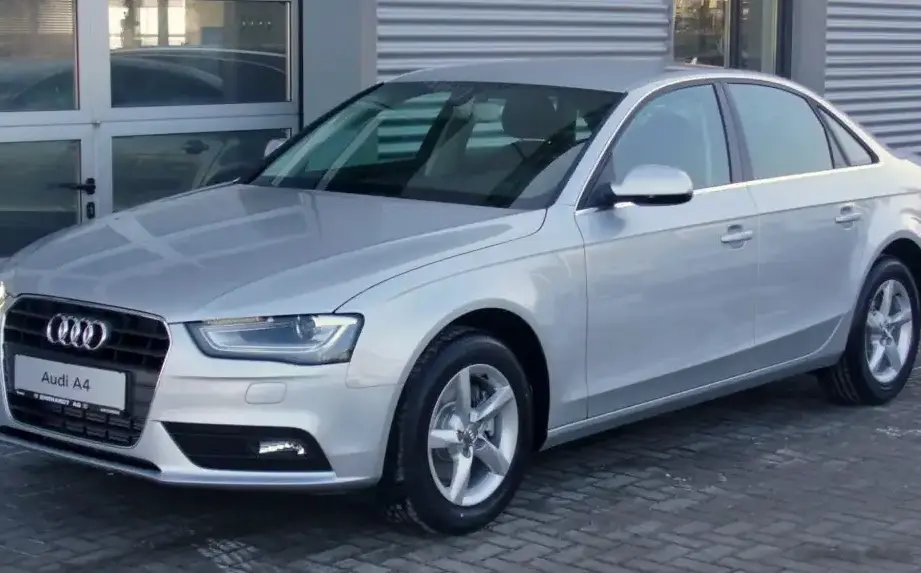
The Audi A4 (B8 8K) facelift, produced from November 2011 to 2015, represented a significant mid-cycle refresh of Audi’s popular compact executive car. Within the B8 generation, which spanned from 2008 to 2015, the facelift brought revised styling, updated technology, and refined engine options. The 2.0 TDI variant, producing 177 horsepower and paired with Audi’s Multitronic continuously variable transmission (CVT), was a key offering in many European markets, positioned as a balance between performance, fuel efficiency, and comfort. This configuration aimed to appeal to drivers seeking a refined driving experience without the higher costs associated with the more powerful or premium A4 trims.
Technical Specifications
| Brand | Audi |
| Model | A4 |
| Generation | A4 (B8 8K, facelift 2011) |
| Type (Engine) | 2.0 TDI (177 Hp) Multitronic |
| Start of production | November, 2011 |
| End of production | 2015 |
| Powertrain Architecture | Internal Combustion engine |
| Body type | Sedan |
| Seats | 5 |
| Doors | 4 |
| Fuel consumption (urban) | 5.7 l/100 km (41.3 US mpg, 49.6 UK mpg, 17.5 km/l) |
| Fuel consumption (extra urban) | 4.4 l/100 km (53.5 US mpg, 64.2 UK mpg, 22.7 km/l) |
| Fuel consumption (combined) | 4.8 l/100 km (49 US mpg, 58.9 UK mpg, 20.8 km/l) |
| CO2 emissions | 127 g/km |
| Fuel Type | Diesel |
| Acceleration 0 – 100 km/h | 7.9 sec |
| Acceleration 0 – 62 mph | 7.9 sec |
| Acceleration 0 – 60 mph | 7.5 sec |
| Maximum speed | 222 km/h (137.94 mph) |
| Emission standard | Euro 5 |
| Weight-to-power ratio | 8.6 kg/Hp, 116.8 Hp/tonne |
| Weight-to-torque ratio | 4 kg/Nm, 250.8 Nm/tonne |
| Power | 177 Hp @ 4200 rpm |
| Power per litre | 89.9 Hp/l |
| Torque | 380 Nm @ 1750-2500 rpm (280.27 lb.-ft. @ 1750-2500 rpm) |
| Engine layout | Front, Longitudinal |
| Engine Model/Code | CGLC, CMGB |
| Engine displacement | 1968 cm3 (120.09 cu. in.) |
| Number of cylinders | 4 |
| Engine configuration | Inline |
| Cylinder Bore | 81 mm (3.19 in.) |
| Piston Stroke | 95.5 mm (3.76 in.) |
| Compression ratio | 16.5:1 |
| Number of valves per cylinder | 4 |
| Fuel injection system | Diesel Commonrail |
| Engine aspiration | Turbocharger, Intercooler |
| Valvetrain | DOHC |
| Engine oil capacity | 5 l (5.28 US qt | 4.4 UK qt) |
| Kerb Weight | 1515 kg (3340 lbs.) |
| Max. weight | 2065 kg (4552.55 lbs.) |
| Max load | 550 kg (1212.54 lbs.) |
| Trunk (boot) space – minimum | 480 l (16.95 cu. ft.) |
| Trunk (boot) space – maximum | 962 l (33.97 cu. ft.) |
| Fuel tank capacity | 63 l (16.64 US gal | 13.86 UK gal) |
| Max. roof load | 90 kg (198.42 lbs.) |
| Permitted trailer load with brakes (8%) | 1900 kg (4188.78 lbs.) |
| Permitted trailer load without brakes | 750 kg (1653.47 lbs.) |
| Permitted towbar download | 80 kg (176.37 lbs.) |
| Length | 4701 mm (185.08 in.) |
| Width | 1826 mm (71.89 in.) |
| Width including mirrors | 2040 mm (80.31 in.) |
| Height | 1427 mm (56.18 in.) |
| Wheelbase | 2808 mm (110.55 in.) |
| Front track | 1564 mm (61.57 in.) |
| Rear (Back) track | 1551 mm (61.06 in.) |
| Front overhang | 862 mm (33.94 in.) |
| Rear overhang | 1031 mm (40.59 in.) |
| Drag coefficient (Cd) | 0.29 |
| Minimum turning circle (turning diameter) | 11.5 m (37.73 ft.) |
| Drivetrain Architecture | The Internal combustion engine (ICE) drives the front wheels of the vehicle. |
| Drive wheel | Front wheel drive |
| Number of gears and type of gearbox | automatic transmission Multitronic |
| Front suspension | Independent multi-link suspension |
| Rear suspension | Independent on trapezoidal lever |
| Front brakes | Ventilated discs |
| Rear brakes | Disc |
| Assisting systems | ABS (Anti-lock braking system) |
| Steering type | Steering rack and pinion |
| Power steering | Electric Steering |
| Tires size | 225/55 R16 |
| Wheel rims size | 7.5J x 16 |
Powertrain & Engine Architecture
The heart of this A4 variant is the 2.0-liter four-cylinder diesel engine, identified by engine codes CGLC or CMGB depending on specific calibration and market. This engine is a member of the Volkswagen Group’s modular engine family, known for its compact dimensions and efficiency. It features common rail direct injection, delivering fuel at extremely high pressure for optimized combustion. A turbocharger with an intercooler is employed to boost power output, providing 177 horsepower at 4200 rpm and a substantial 380 Nm (280 lb-ft) of torque between 1750 and 2500 rpm. The engine utilizes a double overhead camshaft (DOHC) valvetrain with four valves per cylinder, enhancing breathing and contributing to its power delivery. The Multitronic transmission, a continuously variable transmission (CVT), is a key component. Unlike traditional automatic transmissions with fixed gear ratios, the Multitronic uses a chain-driven system to provide a virtually infinite number of ratios, optimizing engine speed for efficiency or performance.
Driving Characteristics
The 2.0 TDI with the Multitronic transmission delivers a smooth and refined driving experience. The CVT eliminates the shift shock often associated with traditional automatics, resulting in seamless acceleration. While not as overtly sporty as the manual transmission or higher-output versions of the A4, the 177 hp engine provides adequate power for everyday driving and highway cruising. The Multitronic transmission is programmed to prioritize fuel efficiency, keeping engine speeds relatively low during normal driving conditions. However, it can quickly adjust ratios when more power is demanded, offering responsive acceleration for overtaking maneuvers. The gear ratios are continuously adjusted to keep the engine in its optimal power band. Compared to the 1.8 TFSI automatic, the 2.0 TDI offers significantly more torque at lower engine speeds, making it feel more effortless in everyday situations. However, the 1.8 TFSI provides a more rev-happy and arguably more engaging driving experience.
Equipment & Trim Levels
The 2.0 TDI Multitronic typically came equipped with a solid base level of features. Standard equipment often included automatic climate control, a multi-function steering wheel, power windows and mirrors, and an Audi Concert audio system. Interior upholstery was typically cloth, though leather options were available. Depending on the market and optional packages, features like parking sensors, a sunroof, heated seats, and a navigation system could be added. The trim level often dictated the exterior styling details, such as the type of alloy wheels and chrome accents. This variant generally sat in the mid-range of the A4 lineup, offering a step up in performance and refinement compared to the base 1.8 TFSI models, but falling short of the luxury and performance offered by the 3.0 TDI or S4 variants.
Chassis & Braking
The A4 B8 8K facelift utilizes a sophisticated chassis design. The front suspension features a multi-link setup, providing excellent ride comfort and handling precision. The rear suspension employs a trapezoidal link design, contributing to stability and minimizing body roll. Brakes are typically ventilated discs at the front and solid discs at the rear, providing ample stopping power. Anti-lock Braking System (ABS) is standard, enhancing safety in emergency braking situations. The suspension tuning is geared towards comfort and refinement, making it well-suited for long-distance driving. Stabilizer bars are fitted to both the front and rear axles to further reduce body roll during cornering.
Market Reception & Comparison
The 2.0 TDI Multitronic A4 was generally well-received by automotive critics. It was praised for its fuel efficiency, comfortable ride, and refined driving experience. However, some critics noted that the Multitronic transmission could feel somewhat detached compared to a traditional automatic or manual gearbox. Compared to the 1.8 TFSI automatic, the 2.0 TDI offered superior fuel economy and more readily available torque. Against the 3.0 TDI, it provided a more affordable entry point into the A4 range, albeit with less power and refinement. Reliability was generally good, although the Multitronic transmission required regular servicing to ensure optimal performance.
Legacy
The 2.0 TDI engine, in various iterations, became a mainstay of the Audi A4 lineup for many years. The B8 generation A4, and specifically this 2.0 TDI Multitronic variant, remains a popular choice in the used car market. The engine is known for its durability and relatively low running costs, provided it is properly maintained. The Multitronic transmission, while generally reliable, requires careful maintenance, including regular fluid changes, to prevent potential issues. Today, these A4s offer a compelling combination of German engineering, fuel efficiency, and affordability, making them a practical and desirable option for buyers seeking a well-rounded compact executive car.