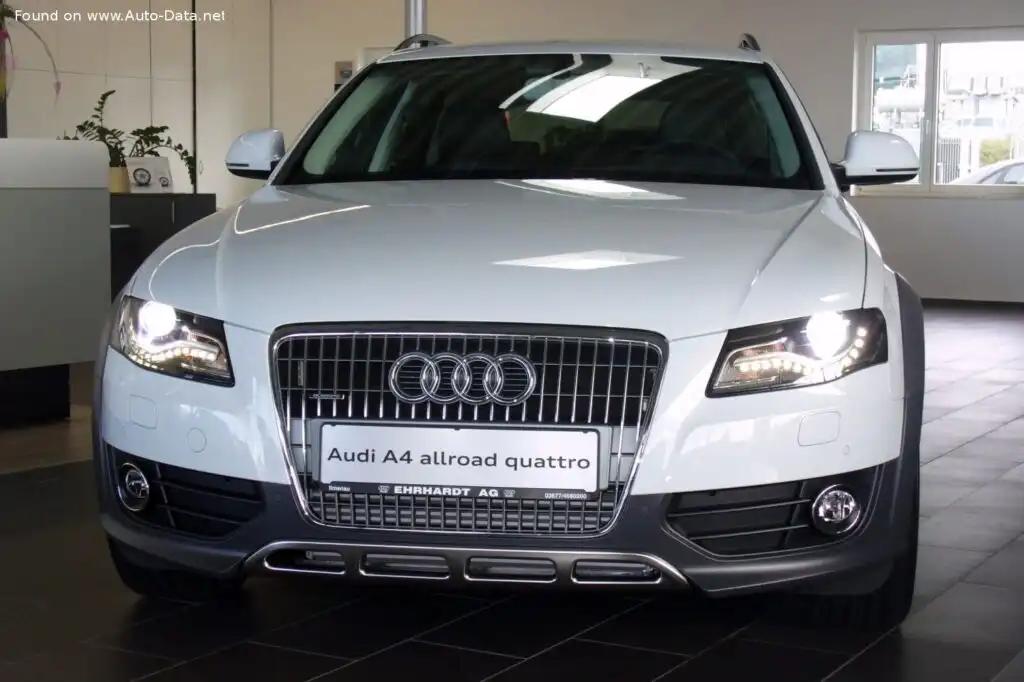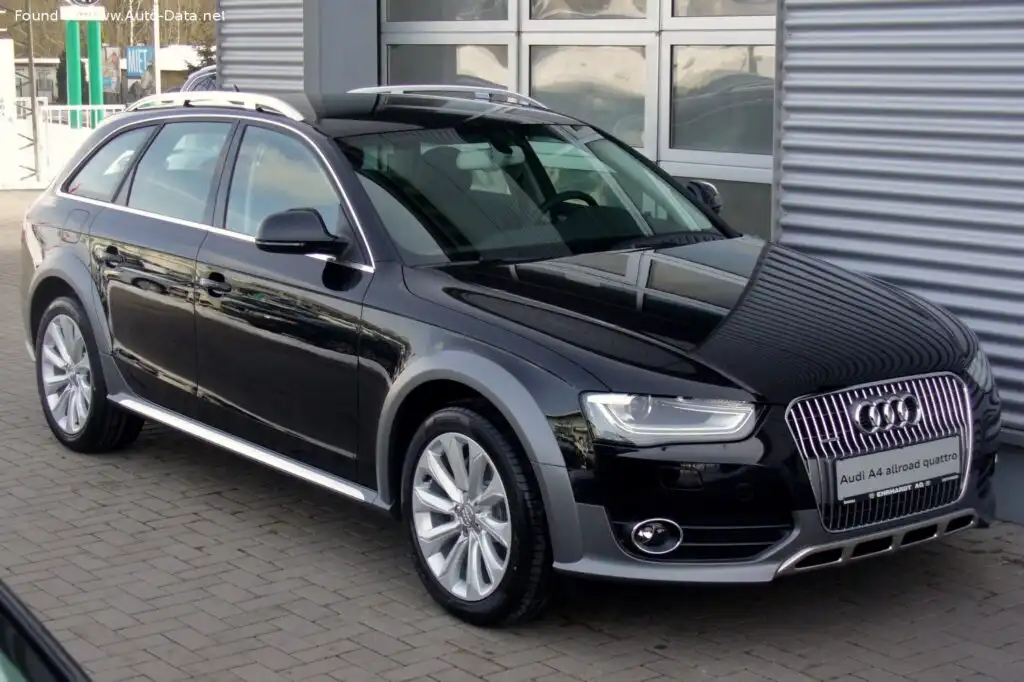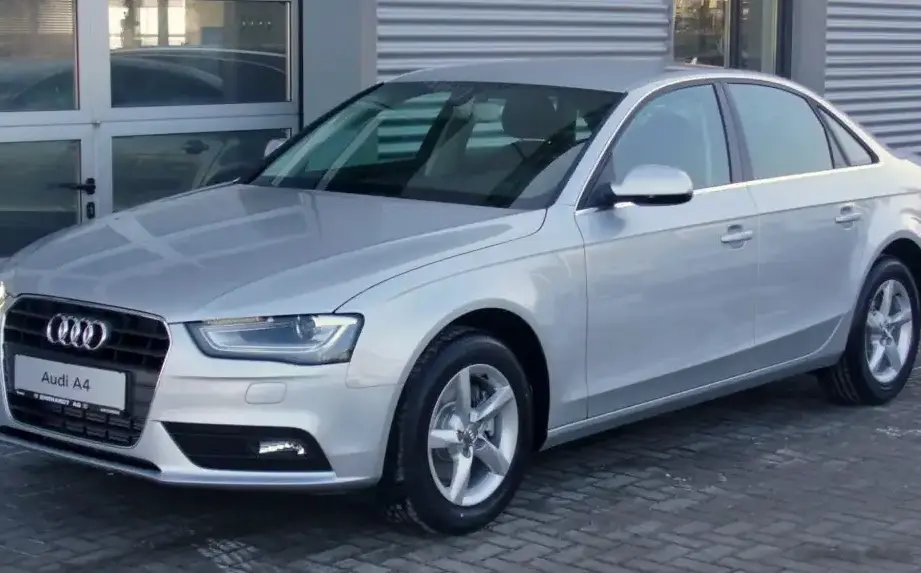
The Audi A4 (B8 8K) facelift, produced from 2012 to 2015, represented a significant mid-cycle refresh of Audi’s popular compact executive car. Among the various engine and drivetrain configurations offered, the 2.0 TDI with 177 horsepower paired with the quattro all-wheel drive system and a 7-speed S tronic dual-clutch transmission was a prominent offering, particularly in European markets. This variant aimed to balance fuel efficiency, performance, and all-weather capability, appealing to buyers seeking a refined and practical daily driver. It sat in the mid-range of the A4 lineup, offering a step up in performance from the lower-powered TDI options while remaining more accessible than the higher-output petrol engines like the 2.0 TFSI.
Technical Specifications
| Brand | Audi |
| Model | A4 |
| Generation | A4 (B8 8K, facelift 2011) |
| Type (Engine) | 2.0 TDI (177 Hp) quattro S tronic |
| Start of production | 2012 |
| End of production | 2015 |
| Powertrain Architecture | Internal Combustion engine |
| Body type | Sedan |
| Seats | 5 |
| Doors | 4 |
| Fuel consumption (urban) | 6.4 l/100 km (36.8 US mpg, 44.1 UK mpg, 15.6 km/l) |
| Fuel consumption (extra urban) | 4.7 l/100 km (50 US mpg, 60.1 UK mpg, 21.3 km/l) |
| Fuel consumption (combined) | 5.3 l/100 km (44.4 US mpg, 53.3 UK mpg, 18.9 km/l) |
| CO2 emissions | 139 g/km |
| Fuel Type | Diesel |
| Acceleration 0 – 100 km/h | 7.9 sec |
| Acceleration 0 – 62 mph | 7.9 sec |
| Acceleration 0 – 60 mph | 7.5 sec |
| Maximum speed | 224 km/h (139.19 mph) |
| Emission standard | Euro 5 |
| Weight-to-power ratio | 9 kg/Hp, 111 Hp/tonne |
| Weight-to-torque ratio | 4.2 kg/Nm, 238.2 Nm/tonne |
| Power | 177 Hp @ 4200 rpm |
| Power per litre | 89.9 Hp/l |
| Torque | 380 Nm @ 1750-2500 rpm (280.27 lb.-ft. @ 1750-2500 rpm) |
| Engine layout | Front, Longitudinal |
| Engine Model/Code | CGLC, CMGB |
| Engine displacement | 1968 cm3 (120.09 cu. in.) |
| Number of cylinders | 4 |
| Engine configuration | Inline |
| Cylinder Bore | 81 mm (3.19 in.) |
| Piston Stroke | 95.5 mm (3.76 in.) |
| Compression ratio | 16.5:1 |
| Number of valves per cylinder | 4 |
| Fuel injection system | Diesel Commonrail |
| Engine aspiration | Turbocharger, Intercooler |
| Valvetrain | DOHC |
| Engine oil capacity | 5 l (5.28 US qt | 4.4 UK qt) |
| Kerb Weight | 1595 kg (3516.37 lbs.) |
| Max. weight | 2145 kg (4728.92 lbs.) |
| Max load | 550 kg (1212.54 lbs.) |
| Trunk (boot) space – minimum | 480 l (16.95 cu. ft.) |
| Trunk (boot) space – maximum | 962 l (33.97 cu. ft.) |
| Fuel tank capacity | 61 l (16.11 US gal | 13.42 UK gal) |
| Max. roof load | 90 kg (198.42 lbs.) |
| Permitted trailer load with brakes (8%) | 1900 kg (4188.78 lbs.) |
| Permitted trailer load with brakes (12%) | 1700 kg (3747.86 lbs.) |
| Permitted trailer load without brakes | 750 kg (1653.47 lbs.) |
| Permitted towbar download | 80 kg (176.37 lbs.) |
| Length | 4701 mm (185.08 in.) |
| Width | 1826 mm (71.89 in.) |
| Width including mirrors | 2040 mm (80.31 in.) |
| Height | 1427 mm (56.18 in.) |
| Wheelbase | 2808 mm (110.55 in.) |
| Front track | 1564 mm (61.57 in.) |
| Rear (Back) track | 1551 mm (61.06 in.) |
| Front overhang | 862 mm (33.94 in.) |
| Rear overhang | 1031 mm (40.59 in.) |
| Drag coefficient (Cd) | 0.29 |
| Minimum turning circle (turning diameter) | 11.5 m (37.73 ft.) |
| Drive wheel | All wheel drive (4×4) |
| Number of gears and type of gearbox | 7 gears, automatic transmission S tronic |
| Front suspension | Independent multi-link suspension |
| Rear suspension | Independent on trapezoidal lever |
| Front brakes | Ventilated discs |
| Rear brakes | Disc |
| Assisting systems | ABS (Anti-lock braking system) |
| Steering type | Steering rack and pinion |
| Power steering | Electric Steering |
| Tires size | 225/55 R16 |
| Wheel rims size | 7.5J x 16 |
Powertrain & Engine Architecture
The heart of this A4 variant is the 2.0-liter four-cylinder diesel engine, typically identified by engine codes CGLC or CMGB. This engine belongs to the Volkswagen Group’s modular engine family, known for its compact dimensions and efficiency. It features a common rail direct injection system, delivering fuel at extremely high pressures for optimized combustion. The engine utilizes a single turbocharger with an intercooler to boost power and torque. The valvetrain employs a dual overhead camshaft (DOHC) design with four valves per cylinder, enhancing breathing and overall performance. The S tronic 7-speed dual-clutch transmission is a key component, offering rapid and smooth gear changes. Unlike a traditional automatic, the S tronic uses two separate clutches – one for odd gears and one for even gears – allowing for pre-selection of the next gear, minimizing interruption in power delivery.
Driving Characteristics
The 177 horsepower and 280 lb-ft of torque provided by this engine and transmission combination resulted in a respectable, though not overtly sporty, driving experience. Acceleration from 0-60 mph took around 7.5 to 7.9 seconds. The S tronic transmission contributed to a responsive feel, particularly during overtaking maneuvers. Compared to the 1.8 TFSI petrol engine, the 2.0 TDI offered superior low-end torque, making it more effortless in everyday driving situations. However, it lacked the higher-revving enthusiasm of the petrol engine. Against the more powerful 2.0 TDI variants (often exceeding 190 hp), this version felt less urgent, but the difference was often subtle in normal driving. The quattro all-wheel drive system provided excellent traction in adverse weather conditions, a significant advantage over front-wheel drive A4 models.
Equipment & Trim Levels
The 2.0 TDI quattro S tronic typically came equipped with a solid base level of features. Standard equipment often included automatic climate control, a multi-function steering wheel, power windows and mirrors, and an Audi Concert audio system. Interior upholstery was usually cloth, though leather options were available. Common optional extras included a sunroof, navigation system, parking sensors, and upgraded alloy wheels. Trim levels varied by market, but generally, this configuration represented a mid-range offering, bridging the gap between the entry-level A4 models and the more luxurious, higher-performance variants.
Chassis & Braking
The B8 A4 featured a sophisticated chassis design. The front suspension utilized a multi-link setup for precise handling and ride comfort. The rear suspension employed a trapezoidal link design. Braking systems typically consisted of ventilated discs at the front and solid discs at the rear. Anti-lock Braking System (ABS) was standard. The suspension tuning was geared towards providing a balance between comfort and handling, making it suitable for both long-distance cruising and spirited driving. Stabilizer bars were fitted front and rear to reduce body roll during cornering.
Market Reception & Comparison
The Audi A4 2.0 TDI quattro S tronic was generally well-received by automotive critics. It was praised for its fuel efficiency, refined driving experience, and the added security of all-wheel drive. Fuel economy figures of around 44 mpg combined were considered excellent for a vehicle in this class. Compared to other compact executive cars, such as the BMW 3 Series and Mercedes-Benz C-Class, the A4 offered a compelling blend of practicality, technology, and build quality. Reliability was generally good, although, like all modern diesel engines, it was susceptible to issues with the diesel particulate filter (DPF) if not driven on longer journeys regularly.
Legacy
The 2.0 TDI engine with the S tronic transmission proved to be a durable and reliable powertrain. Today, well-maintained examples of the 2012-2015 A4 2.0 TDI quattro S tronic are still relatively common on the used car market. They continue to appeal to buyers seeking a comfortable, efficient, and capable all-weather vehicle. However, potential buyers should be aware of the potential for DPF issues and the importance of regular maintenance. The B8 A4, in general, is considered a well-built and refined car, and this particular variant remains a solid choice for those looking for a practical and dependable compact executive saloon.