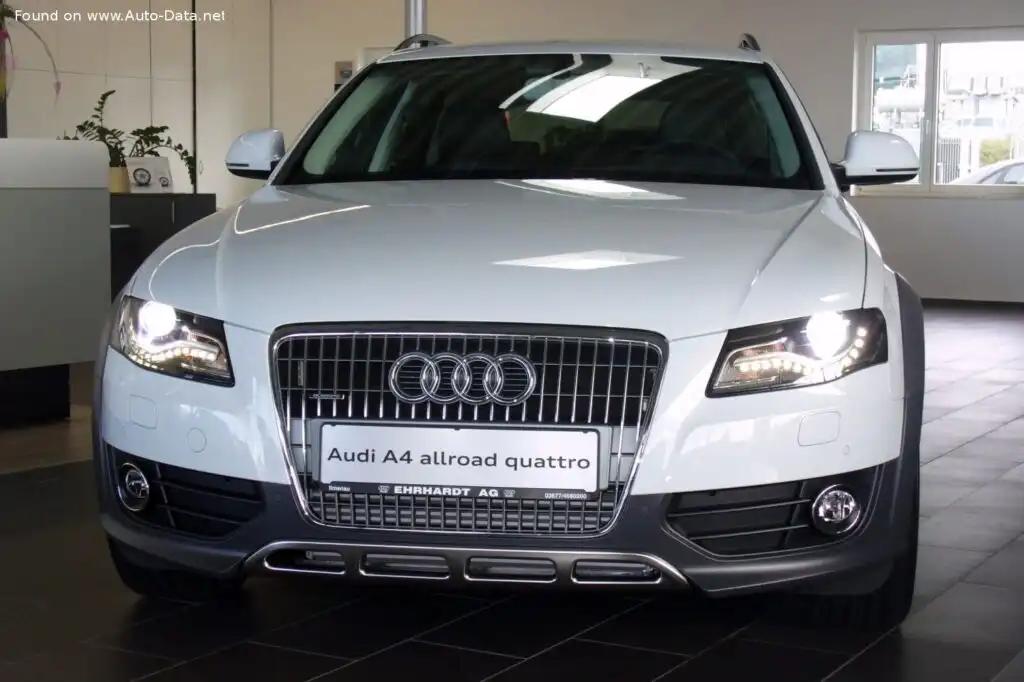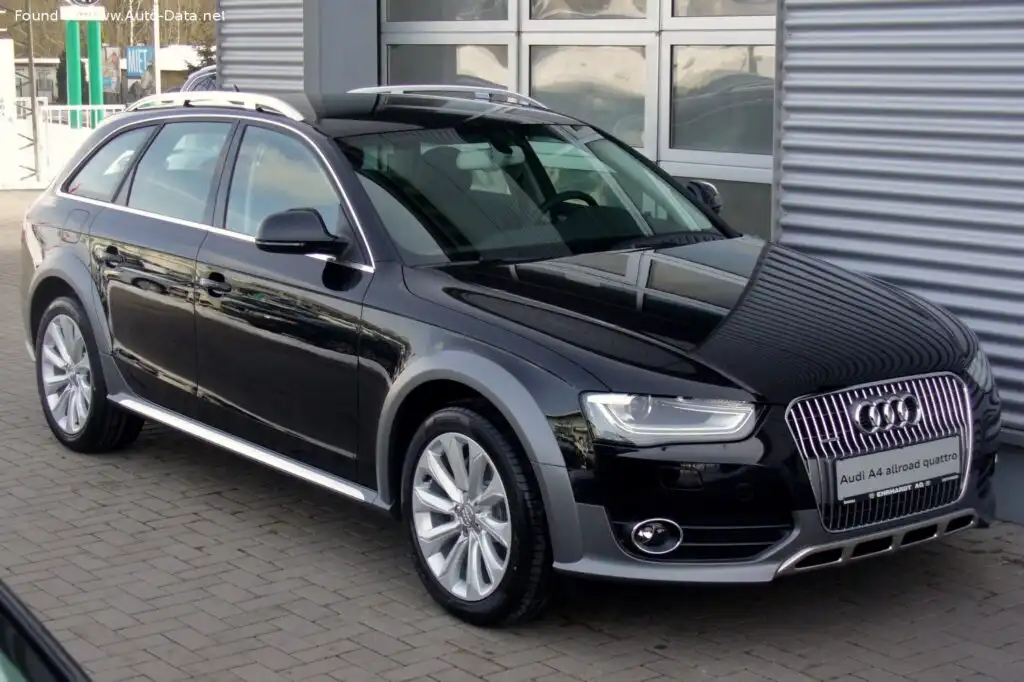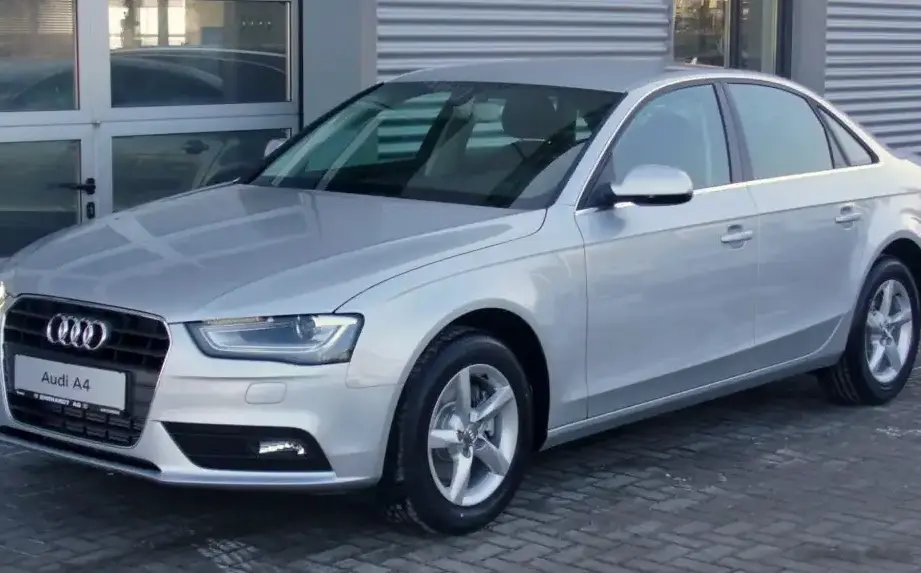
The Audi A4 (B8 8K) facelift, produced from 2011 to 2015, represented a significant mid-cycle update to the highly successful B8 generation of Audi’s compact executive car. The 2.0 TDI variant, specifically the 190 horsepower version introduced in September 2013, occupied a key position in the A4 lineup, offering a balance of performance, fuel efficiency, and refinement. This model aimed to appeal to buyers seeking a premium driving experience with lower running costs than the petrol-powered options, and served as a bridge between the entry-level TDI trims and the more potent S4. It was primarily marketed in Europe and other regions where diesel engines held significant market share.
Technical Specifications
| Brand | Audi |
| Model | A4 |
| Generation | A4 (B8 8K, facelift 2011) |
| Type (Engine) | 2.0 TDI (190 Hp) |
| Start of production | September, 2013 |
| End of production | 2015 |
| Powertrain Architecture | Internal Combustion engine |
| Body type | Sedan |
| Seats | 5 |
| Doors | 4 |
| Fuel consumption (urban) | 5.4 l/100 km (43.6 US mpg, 52.3 UK mpg, 18.5 km/l) |
| Fuel consumption (extra urban) | 3.9 l/100 km (60.3 US mpg, 72.4 UK mpg, 25.6 km/l) |
| Fuel consumption (combined) | 4.5 l/100 km (52.3 US mpg, 62.8 UK mpg, 22.2 km/l) |
| CO2 emissions | 117 g/km |
| Fuel Type | Diesel |
| Acceleration 0 – 100 km/h | 7.7 sec |
| Acceleration 0 – 62 mph | 7.7 sec |
| Acceleration 0 – 60 mph | 7.3 sec |
| Maximum speed | 240 km/h (149.13 mph) |
| Emission standard | Euro 6 |
| Weight-to-power ratio | 8.1 kg/Hp, 123.4 Hp/tonne |
| Weight-to-torque ratio | 4.1 kg/Nm, 246.8 Nm/tonne |
| Power | 190 Hp @ 3000-4200 rpm |
| Power per litre | 96.5 Hp/l |
| Torque | 380 Nm @ 1750-3000 rpm (280.27 lb.-ft. @ 1750-3000 rpm) |
| Engine layout | Front, Longitudinal |
| Engine Model/Code | CNHA |
| Engine displacement | 1968 cm3 (120.09 cu. in.) |
| Number of cylinders | 4 |
| Engine configuration | Inline |
| Cylinder Bore | 81 mm (3.19 in.) |
| Piston Stroke | 95.5 mm (3.76 in.) |
| Compression ratio | 15.5:1 |
| Number of valves per cylinder | 4 |
| Fuel injection system | Diesel Commonrail |
| Engine aspiration | Turbocharger, Intercooler |
| Valvetrain | DOHC |
| Engine oil capacity | 4.7 l (4.97 US qt | 4.14 UK qt) |
| Kerb Weight | 1540 kg (3395.12 lbs.) |
| Max. weight | 2090 kg (4607.66 lbs.) |
| Max load | 550 kg (1212.54 lbs.) |
| Trunk (boot) space – minimum | 480 l (16.95 cu. ft.) |
| Trunk (boot) space – maximum | 962 l (33.97 cu. ft.) |
| Fuel tank capacity | 63 l (16.64 US gal | 13.86 UK gal) |
| Max. roof load | 90 kg (198.42 lbs.) |
| Permitted trailer load with brakes (8%) | 1800 kg (3968.32 lbs.) |
| Permitted trailer load with brakes (12%) | 1600 kg (3527.4 lbs.) |
| Permitted trailer load without brakes | 750 kg (1653.47 lbs.) |
| Permitted towbar download | 80 kg (176.37 lbs.) |
| Length | 4701 mm (185.08 in.) |
| Width | 1826 mm (71.89 in.) |
| Width including mirrors | 2040 mm (80.31 in.) |
| Height | 1427 mm (56.18 in.) |
| Wheelbase | 2808 mm (110.55 in.) |
| Front track | 1564 mm (61.57 in.) |
| Rear (Back) track | 1551 mm (61.06 in.) |
| Front overhang | 862 mm (33.94 in.) |
| Rear overhang | 1031 mm (40.59 in.) |
| Drag coefficient (Cd) | 0.28 |
| Minimum turning circle (turning diameter) | 11.5 m (37.73 ft.) |
| Drivetrain Architecture | The Internal combustion engine (ICE) drives the front wheels of the vehicle. |
| Drive wheel | Front wheel drive |
| Number of gears and type of gearbox | 6 gears, manual transmission |
| Front suspension | Independent multi-link suspension |
| Rear suspension | Independent on trapezoidal lever |
| Front brakes | Ventilated discs |
| Rear brakes | Disc |
| Assisting systems | ABS (Anti-lock braking system) |
| Steering type | Steering rack and pinion |
| Power steering | Electric Steering |
| Tires size | 225/55 R16 |
| Wheel rims size | 7.5J x 16 |
Powertrain & Engine Architecture
The heart of this A4 variant is the 2.0-liter four-cylinder diesel engine, designated CNHA. This engine is a member of the Volkswagen Group’s modular engine family, known for its compact dimensions and efficiency. It utilizes a common rail direct injection system, injecting fuel directly into the combustion chamber at extremely high pressure for optimized combustion. The engine features a single turbocharger with an intercooler to increase air density and boost power output. The DOHC (Double Overhead Camshaft) valvetrain, with four valves per cylinder, further enhances breathing and performance. The 190 horsepower output was achieved through revised engine mapping and turbocharger calibration compared to lower-powered 2.0 TDI variants. The engine is longitudinally mounted in the front of the vehicle, driving the front wheels through a six-speed manual transmission. While an S-Tronic dual-clutch transmission was available as an option, the six-speed manual was a common choice for buyers prioritizing cost and a more traditional driving experience.
Driving Characteristics
The 190 hp 2.0 TDI offered a respectable level of performance for everyday driving. Acceleration from 0-60 mph took approximately 7.3 seconds, making it noticeably quicker than the lower-powered TDI models. The engine delivered a broad torque curve, peaking at 380 Nm (280 lb-ft) between 1750 and 3000 rpm, providing strong pulling power in most driving situations. The manual transmission, while offering greater driver engagement, had relatively long gearing, prioritizing fuel economy over outright acceleration. Compared to the more powerful petrol variants, the 2.0 TDI lacked the same level of responsiveness and high-end power, but it compensated with superior fuel efficiency and lower-speed torque. The front-wheel-drive configuration provided predictable handling, although it could exhibit some torque steer under hard acceleration.
Equipment & Trim Levels
The 190 hp 2.0 TDI typically came equipped as part of the SE or Sport trim levels in many European markets. Standard features generally included alloy wheels, air conditioning, a multi-function steering wheel, and an Audi Concert radio system. Higher trim levels, or optional packages, added features such as leather upholstery, parking sensors, a navigation system, and xenon headlights. Interior upholstery was typically cloth in the base trims, with leather options available. The dashboard layout was consistent across the B8 range, featuring a clean and functional design with a focus on ergonomics.
Chassis & Braking
The A4 B8 utilized a sophisticated chassis design featuring independent suspension all around. The front suspension employed a multi-link setup, while the rear used a trapezoidal link arrangement. This configuration provided a good balance of ride comfort and handling precision. Brakes consisted of ventilated discs at the front and solid discs at the rear. ABS (Anti-lock Braking System) was standard, providing enhanced braking performance and stability. Stabilizer bars were fitted to both the front and rear axles to reduce body roll during cornering.
Market Reception & Comparison
The 190 hp 2.0 TDI A4 was generally well-received by automotive critics. It was praised for its fuel efficiency, comfortable ride, and refined interior. Compared to the lower-powered TDI variants, the 190 hp version offered a noticeable performance improvement without significantly compromising fuel economy. Against petrol-powered A4 models, it provided a more economical alternative, although it lacked the same level of engine refinement. Reliability was generally good, although, like all modern diesel engines, it was susceptible to issues with the diesel particulate filter (DPF) if not driven on longer journeys regularly.
Legacy
The 2.0 TDI engine, in its various iterations, became one of the most common diesel engines in Europe. The CNHA code, while generally reliable, is known to have potential issues with the EGR valve and turbocharger over time. Today, used examples of the 2013-2015 A4 2.0 TDI (190 hp) represent a relatively affordable entry point into the Audi premium brand. Maintenance costs are generally reasonable, although potential repairs to the diesel emissions system can be expensive. The combination of fuel efficiency, performance, and practicality continues to make this variant a popular choice in the used car market.