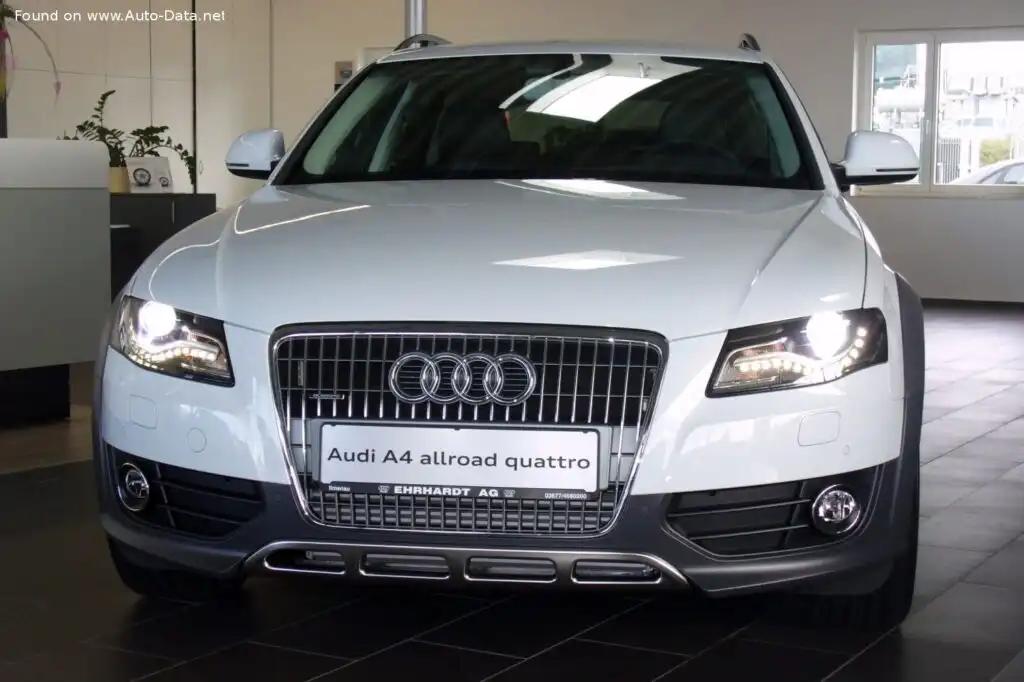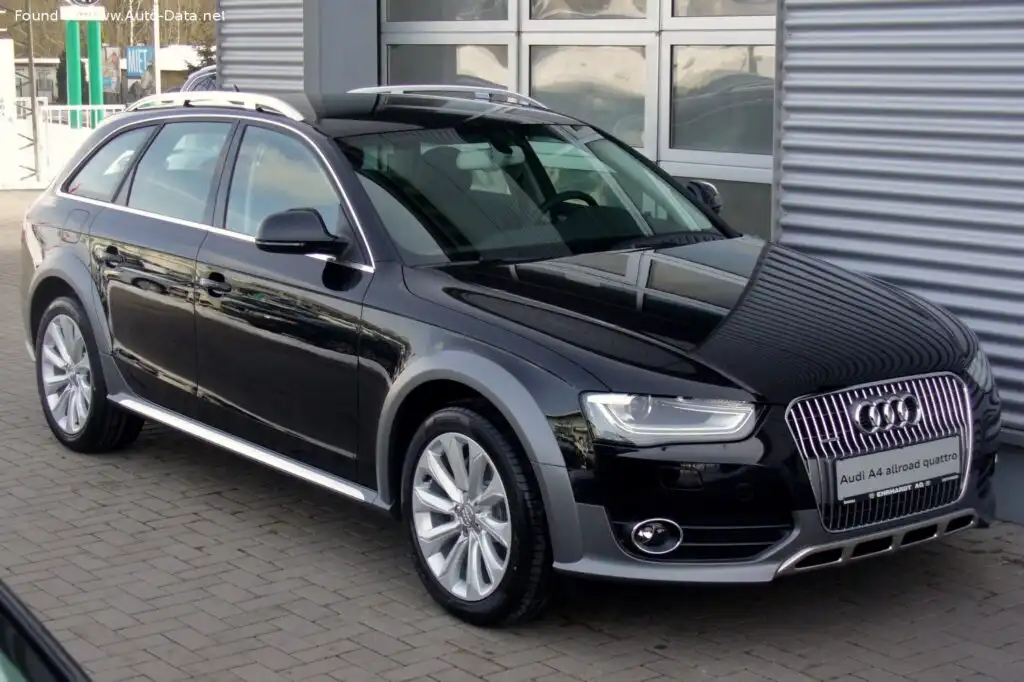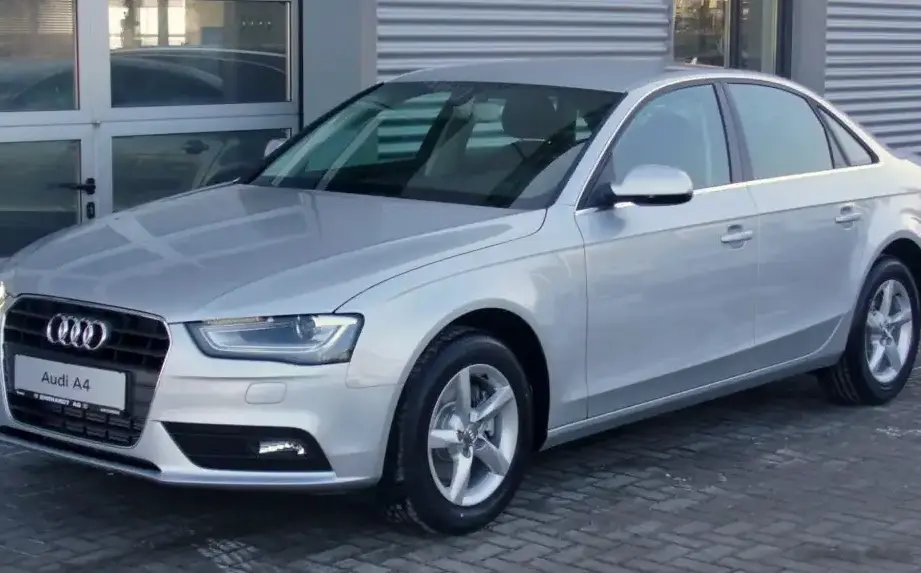
The Audi A4 (B8 8K) facelift, produced from 2011 to 2015, represented a significant mid-cycle update to the highly successful B8 generation of Audi’s compact executive car. Within this range, the 2.0 TDI ultra variant, producing 136 horsepower, occupied a key position as a fuel-efficient and cost-effective option. Introduced in April 2014 and remaining in production until 2015, this model aimed to balance performance with economy, appealing to drivers prioritizing lower running costs without sacrificing the A4’s renowned refinement. It was primarily marketed in Europe, where diesel engines held a dominant market share, and represented Audi’s commitment to improving fuel efficiency across its lineup.
Technical Specifications
| Brand | Audi |
| Model | A4 |
| Generation | A4 (B8 8K, facelift 2011) |
| Type (Engine) | 2.0 TDI ultra (136 Hp) |
| Start of production | April, 2014 |
| End of production | 2015 |
| Powertrain Architecture | Internal Combustion engine |
| Body type | Sedan |
| Seats | 5 |
| Doors | 4 |
| Fuel consumption (urban) | 4.8 l/100 km (49 US mpg, 58.9 UK mpg, 20.8 km/l) |
| Fuel consumption (extra urban) | 3.5 l/100 km (67.2 US mpg, 80.7 UK mpg, 28.6 km/l) |
| Fuel consumption (combined) | 4 l/100 km (58.8 US mpg, 70.6 UK mpg, 25 km/l) |
| CO2 emissions | 104 g/km |
| Fuel Type | Diesel |
| Acceleration 0 – 100 km/h | 9.3 sec |
| Acceleration 0 – 62 mph | 9.3 sec |
| Acceleration 0 – 60 mph | 8.8 sec |
| Maximum speed | 215 km/h (133.59 mph) |
| Emission standard | Euro 6 |
| Weight-to-power ratio | 11.3 kg/Hp, 88.3 Hp/tonne |
| Weight-to-torque ratio | 4.8 kg/Nm, 207.8 Nm/tonne |
| Power | 136 Hp @ 3000-4400 rpm |
| Power per litre | 69.1 Hp/l |
| Torque | 320 Nm @ 1500-3000 rpm (236.02 lb.-ft. @ 1500-3000 rpm) |
| Engine layout | Front, Longitudinal |
| Engine Model/Code | CSUB |
| Engine displacement | 1968 cm3 (120.09 cu. in.) |
| Number of cylinders | 4 |
| Engine configuration | Inline |
| Cylinder Bore | 81 mm (3.19 in.) |
| Piston Stroke | 95.5 mm (3.76 in.) |
| Compression ratio | 16.5:1 |
| Number of valves per cylinder | 4 |
| Fuel injection system | Diesel Commonrail |
| Engine aspiration | Turbocharger, Intercooler |
| Valvetrain | DOHC |
| Engine oil capacity | 4.7 l (4.97 US qt | 4.14 UK qt) |
| Kerb Weight | 1540 kg (3395.12 lbs.) |
| Max. weight | 2090 kg (4607.66 lbs.) |
| Max load | 550 kg (1212.54 lbs.) |
| Trunk (boot) space – minimum | 480 l (16.95 cu. ft.) |
| Trunk (boot) space – maximum | 962 l (33.97 cu. ft.) |
| Fuel tank capacity | 63 l (16.64 US gal | 13.86 UK gal) |
| Max. roof load | 90 kg (198.42 lbs.) |
| Permitted trailer load with brakes (8%) | 1500 kg (3306.93 lbs.) |
| Permitted trailer load with brakes (12%) | 1300 kg (2866.01 lbs.) |
| Permitted trailer load without brakes | 750 kg (1653.47 lbs.) |
| Permitted towbar download | 80 kg (176.37 lbs.) |
| Length | 4701 mm (185.08 in.) |
| Width | 1826 mm (71.89 in.) |
| Width including mirrors | 2040 mm (80.31 in.) |
| Height | 1427 mm (56.18 in.) |
| Wheelbase | 2808 mm (110.55 in.) |
| Front track | 1564 mm (61.57 in.) |
| Rear (Back) track | 1551 mm (61.06 in.) |
| Front overhang | 862 mm (33.94 in.) |
| Rear overhang | 1031 mm (40.59 in.) |
| Drag coefficient (Cd) | 0.26 |
| Minimum turning circle (turning diameter) | 11.5 m (37.73 ft.) |
| Drivetrain Architecture | The Internal combustion engine (ICE) drives the front wheels of the vehicle. |
| Drive wheel | Front wheel drive |
| Number of gears and type of gearbox | 6 gears, manual transmission |
| Front suspension | Independent multi-link suspension |
| Rear suspension | Independent on trapezoidal lever |
| Front brakes | Ventilated discs |
| Rear brakes | Disc |
| Assisting systems | ABS (Anti-lock braking system) |
| Steering type | Steering rack and pinion |
| Power steering | Electric Steering |
| Tires size | 225/55 R16 |
| Wheel rims size | 7.5J x 16 |
Powertrain & Engine Architecture
The heart of the A4 2.0 TDI ultra is the CSUB engine code, a 2.0-liter inline-four cylinder diesel engine. This engine is a member of the Volkswagen Group’s modular engine family, known for its compact dimensions and efficiency. The CSUB utilizes a common rail direct injection system, injecting fuel directly into the combustion chamber at extremely high pressure for optimized combustion. A single turbocharger with an intercooler provides forced induction, boosting power and torque. The engine features a double overhead camshaft (DOHC) valvetrain with four valves per cylinder, enhancing breathing and contributing to its power output. The high compression ratio of 16.5:1 is typical for diesel engines, maximizing thermal efficiency. This particular engine was designed with a focus on reducing internal friction and optimizing combustion processes to achieve its impressive fuel economy figures.
Driving Characteristics
The 136 horsepower and 320 Nm (236 lb-ft) of torque delivered by the 2.0 TDI ultra provided adequate, though not exhilarating, performance. Acceleration from 0-100 km/h (0-62 mph) took approximately 9.3 seconds. Compared to the more powerful 2.0 TDI variants (177 hp or higher) or the sporty S4 models, the ultra felt noticeably less responsive. However, the engine’s strong low-end torque made it well-suited for everyday driving and overtaking maneuvers. The six-speed manual transmission offered precise shifts, but the engine lacked the outright punch to fully exploit the gearbox. The focus was clearly on efficiency, with the engine prioritizing fuel economy over outright speed. The driving experience was refined and comfortable, typical of the A4, but lacked the dynamic flair of higher-performance models.
Equipment & Trim Levels
The 2.0 TDI ultra typically came equipped with a respectable level of standard features. Interior appointments included cloth upholstery, manual air conditioning, and a basic infotainment system with a monochrome display. Standard safety equipment included ABS, electronic stability control, and multiple airbags. Optional extras included leather upholstery, a more advanced infotainment system with navigation, parking sensors, and a sunroof. The ‘ultra’ designation itself didn’t represent a specific trim level, but rather an efficiency-focused variant available across various trim lines (SE, Sport, etc.). The target audience for this variant was cost-conscious buyers who valued fuel economy and practicality over luxury features.
Chassis & Braking
The A4 B8 8K utilized a sophisticated chassis design featuring independent multi-link suspension at the front and an independent trapezoidal lever suspension at the rear. This setup provided a comfortable ride and good handling characteristics. The 2.0 TDI ultra variant typically featured ventilated disc brakes at the front and solid discs at the rear. ABS (Anti-lock Braking System) was standard. Stabilizer bars were fitted front and rear to reduce body roll during cornering. The suspension tuning was geared towards comfort and stability, rather than outright sportiness.
Market Reception & Comparison
The Audi A4 2.0 TDI ultra was generally well-received by critics for its impressive fuel economy and low CO2 emissions. It was praised as a sensible and practical choice for drivers covering long distances. However, some reviewers noted that the engine lacked the performance of its more powerful siblings. Compared to the 177 hp 2.0 TDI, the ultra offered significantly better fuel economy but at the expense of acceleration. The 1.9 TDI models, while older, offered a similar balance of economy and performance. The ultra’s main advantage was its compliance with the latest Euro 6 emissions standards.
Legacy
The 2.0 TDI ultra powertrain has proven to be relatively reliable, although, like all modern diesel engines, it is susceptible to issues with the diesel particulate filter (DPF) if not properly maintained. Regular servicing and the use of high-quality diesel fuel are crucial for long-term reliability. On the used car market, the A4 2.0 TDI ultra represents a good value proposition for buyers seeking a fuel-efficient and refined compact executive car. Its strong fuel economy and relatively low running costs continue to make it an attractive option, even years after its production ended. The engine’s longevity and the A4’s overall build quality contribute to its continued desirability.