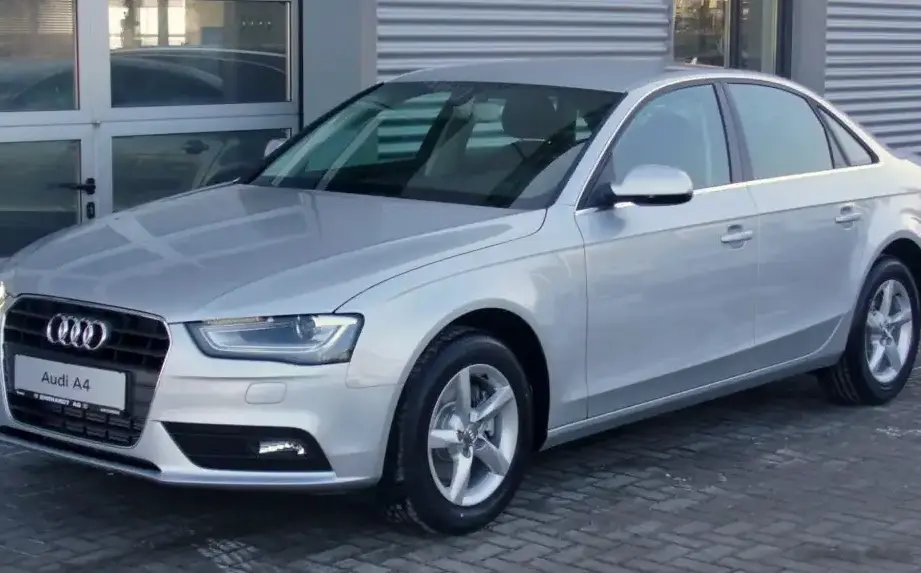
The Audi A4 (B8 8K) facelift 2.0 TDIe, produced from 2011 to 2015, represented a significant iteration of Audi’s popular compact executive car. This variant, powered by a 2.0-liter turbocharged diesel engine producing 136 horsepower, was positioned as a fuel-efficient option within the broader A4 lineup. It aimed to balance performance with economy, appealing to drivers seeking lower running costs without sacrificing the A4’s reputation for refinement and build quality. The “e” designation signified enhanced efficiency measures implemented by Audi. This model played a key role in Audi’s strategy to offer a diverse range of A4 models catering to varying customer needs across European markets, where diesel engines held a dominant share.
Technical Specifications
| Brand | Audi |
| Model | A4 |
| Generation | A4 (B8 8K, facelift 2011) |
| Type (Engine) | 2.0 TDIe (136 Hp) |
| Start of production | 2011 year |
| End of production | 2015 year |
| Powertrain Architecture | Internal Combustion engine |
| Body type | Sedan |
| Seats | 5 |
| Doors | 4 |
| Fuel consumption (economy) – urban | 5.2 l/100 km (45.2 US mpg, 54.3 UK mpg, 19.2 km/l) |
| Fuel consumption (economy) – extra urban | 3.7 l/100 km (63.6 US mpg, 76.3 UK mpg, 27 km/l) |
| Fuel consumption (economy) – combined | 4.3 l/100 km (54.7 US mpg, 65.7 UK mpg, 23.3 km/l) |
| CO2 emissions | 112 g/km |
| Fuel Type | Diesel |
| Acceleration 0 – 100 km/h | 9.3 sec |
| Acceleration 0 – 62 mph | 9.3 sec |
| Acceleration 0 – 60 mph | 8.8 sec |
| Maximum speed | 215 km/h (133.59 mph) |
| Emission standard | Euro 5 |
| Weight-to-power ratio | 10.8 kg/Hp, 92.2 Hp/tonne |
| Weight-to-torque ratio | 4.6 kg/Nm, 216.9 Nm/tonne |
| Power | 136 Hp @ 4200 rpm |
| Power per litre | 69.1 Hp/l |
| Torque | 320 Nm @ 1750-2500 rpm (236.02 lb.-ft. @ 1750-2500 rpm) |
| Engine layout | Front, Longitudinal |
| Engine Model/Code | CJCB |
| Engine displacement | 1968 cm3 (120.09 cu. in.) |
| Number of cylinders | 4 |
| Engine configuration | Inline |
| Cylinder Bore | 81 mm (3.19 in.) |
| Piston Stroke | 95.5 mm (3.76 in.) |
| Compression ratio | 16.5:1 |
| Number of valves per cylinder | 4 |
| Fuel injection system | Diesel Commonrail |
| Engine aspiration | Turbocharger, Intercooler |
| Valvetrain | DOHC |
| Engine oil capacity | 5 l (5.28 US qt | 4.4 UK qt) |
| Kerb Weight | 1475 kg (3251.82 lbs.) |
| Max. weight | 2025 kg (4464.36 lbs.) |
| Max load | 550 kg (1212.54 lbs.) |
| Trunk (boot) space – minimum | 480 l (16.95 cu. ft.) |
| Trunk (boot) space – maximum | 962 l (33.97 cu. ft.) |
| Fuel tank capacity | 63 l (16.64 US gal | 13.86 UK gal) |
| Max. roof load | 90 kg (198.42 lbs.) |
| Permitted trailer load with brakes (8%) | 1500 kg (3306.93 lbs.) |
| Permitted trailer load with brakes (12%) | 1300 kg (2866.01 lbs.) |
| Permitted trailer load without brakes | 750 kg (1653.47 lbs.) |
| Permitted towbar download | 80 kg (176.37 lbs.) |
| Length | 4701 mm (185.08 in.) |
| Width | 1826 mm (71.89 in.) |
| Width including mirrors | 2040 mm (80.31 in.) |
| Height | 1427 mm (56.18 in.) |
| Wheelbase | 2808 mm (110.55 in.) |
| Front track | 1564 mm (61.57 in.) |
| Rear (Back) track | 1551 mm (61.06 in.) |
| Front overhang | 862 mm (33.94 in.) |
| Rear overhang | 1031 mm (40.59 in.) |
| Drag coefficient (Cd) | 0.26 |
| Minimum turning circle (turning diameter) | 11.5 m (37.73 ft.) |
| Drivetrain Architecture | The Internal combustion engine (ICE) drives the front wheels of the vehicle. |
| Drive wheel | Front wheel drive |
| Number of gears and type of gearbox | 6 gears, manual transmission |
| Front suspension | Independent multi-link suspension |
| Rear suspension | Independent on trapezoidal lever |
| Front brakes | Ventilated discs |
| Rear brakes | Disc |
| Assisting systems | ABS (Anti-lock braking system) |
| Steering type | Steering rack and pinion |
| Power steering | Electric Steering |
| Tires size | 225/55 R16 |
| Wheel rims size | 7.5J x 16 |
Powertrain & Engine Architecture
The heart of the A4 2.0 TDIe was the CJCB engine, a 2.0-liter inline-four cylinder diesel. This engine utilized common rail direct injection, delivering fuel at extremely high pressure for optimized combustion. A turbocharger with an intercooler was employed to boost power and torque. The engine featured a Dual Overhead Camshaft (DOHC) valvetrain with four valves per cylinder, enhancing breathing and efficiency. The ‘e’ designation indicated specific modifications aimed at reducing fuel consumption, including optimized engine mapping and reduced friction components. The engine produced 136 horsepower at 4200 rpm and a substantial 320 Nm (236 lb-ft) of torque between 1750 and 2500 rpm. This torque curve provided strong low-end and mid-range acceleration. The engine was longitudinally mounted in the front of the vehicle, driving the front wheels. The 6-speed manual transmission was standard, offering precise gear changes and contributing to the car’s overall efficiency.
Driving Characteristics
The 2.0 TDIe with the manual transmission offered a balanced driving experience. While not overtly sporty, the engine’s torque output provided ample power for everyday driving and overtaking maneuvers. Acceleration from 0-60 mph took approximately 8.8 seconds, and top speed was rated at 133.59 mph. The gear ratios were tuned for fuel efficiency, with taller gearing in higher gears to reduce engine speed at cruising speeds. Compared to the more powerful 2.0 TDI variants (170 hp or 184 hp), the 136 hp version felt less urgent in its acceleration, but it offered significantly better fuel economy. The manual transmission allowed for greater driver control, but the long throws could feel a bit dated compared to more modern gearboxes.
Equipment & Trim Levels
The A4 2.0 TDIe typically came with a respectable level of standard equipment. This included air conditioning, alloy wheels, a multi-function steering wheel, and an audio system with CD player. Safety features such as ABS, electronic stability control, and multiple airbags were standard. Higher trim levels, such as SE or Sport, added features like automatic climate control, parking sensors, upgraded upholstery, and a more sophisticated infotainment system. Optional extras included navigation, leather seats, and a panoramic sunroof. Interior upholstery was typically cloth, but leather options were available. The dashboard layout was typical of Audi’s B8 generation, characterized by a clean and functional design.
Chassis & Braking
The A4 B8 featured a well-engineered chassis. The front suspension utilized independent multi-link suspension, providing a comfortable ride and precise handling. The rear suspension employed an independent trapezoidal link setup. The 2.0 TDIe models typically came equipped with ventilated disc brakes at the front and solid discs at the rear. ABS (Anti-lock Braking System) was standard, enhancing braking performance and stability. The steering was a rack and pinion system with electric power assistance, offering a responsive and precise feel. The suspension was tuned to provide a balance between comfort and handling, making the A4 a pleasant car to drive on a variety of road surfaces.
Market Reception & Comparison
The Audi A4 2.0 TDIe was generally well-received by automotive critics. It was praised for its fuel efficiency, comfortable ride, and refined interior. However, some critics noted that the engine lacked the outright performance of higher-powered A4 variants. Compared to the 2.0 TDI models with 170 hp or 184 hp, the 136 hp version offered significantly better fuel economy, making it an attractive option for drivers prioritizing running costs. The 1.8 TFSI petrol engine offered a different driving experience, with a more responsive engine but lower fuel economy. The TDIe’s diesel engine provided superior torque and fuel efficiency, making it a popular choice in Europe.
Legacy
The 2.0 TDIe powertrain, particularly the CJCB engine code, has proven to be relatively reliable over the long term, although, like all diesel engines, it is susceptible to issues related to the diesel particulate filter (DPF) if not properly maintained. Regular servicing and the use of high-quality diesel fuel are crucial for ensuring longevity. In the used car market, the A4 2.0 TDIe remains a popular choice due to its fuel efficiency and reputation for build quality. However, potential buyers should be aware of the potential costs associated with DPF maintenance and ensure the car has a full service history. The B8 A4, in general, is considered a well-rounded and durable vehicle, and the 2.0 TDIe variant continues to offer a compelling combination of economy and practicality.