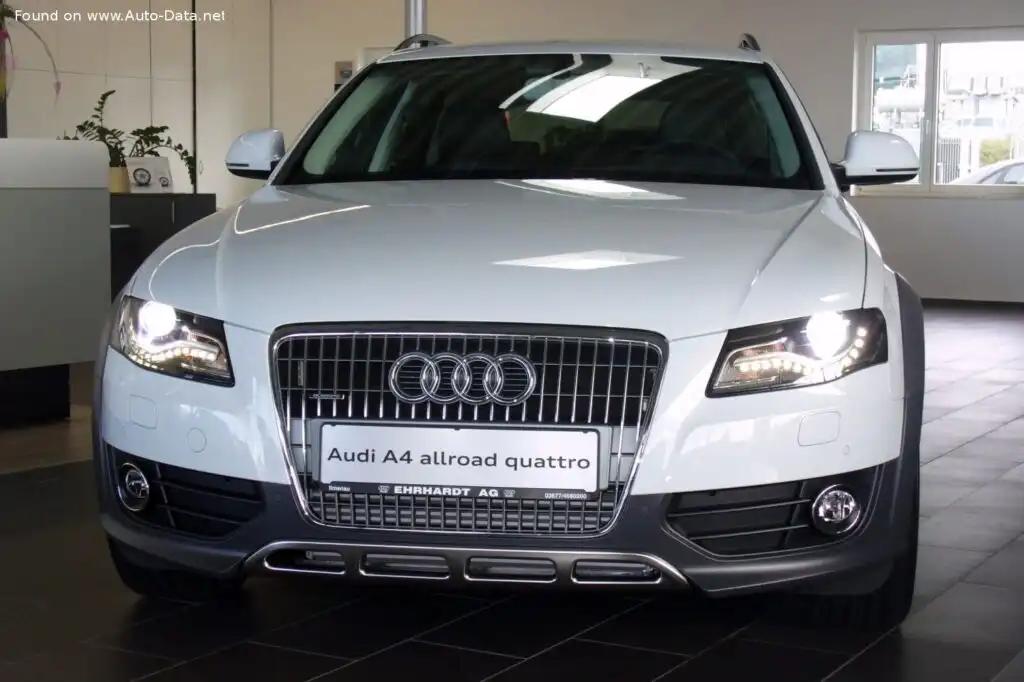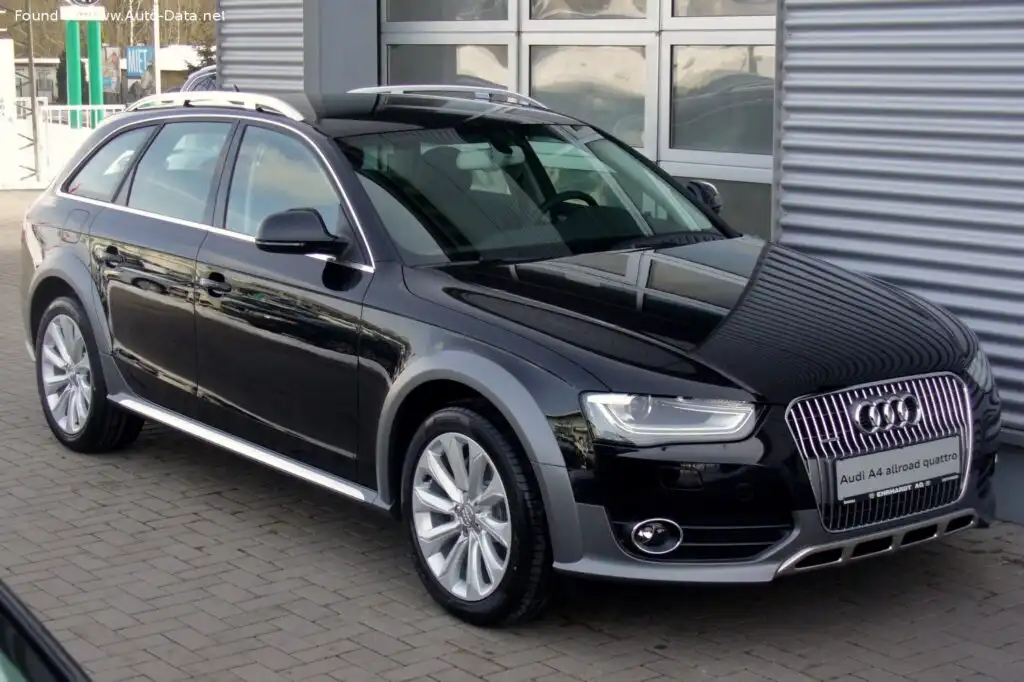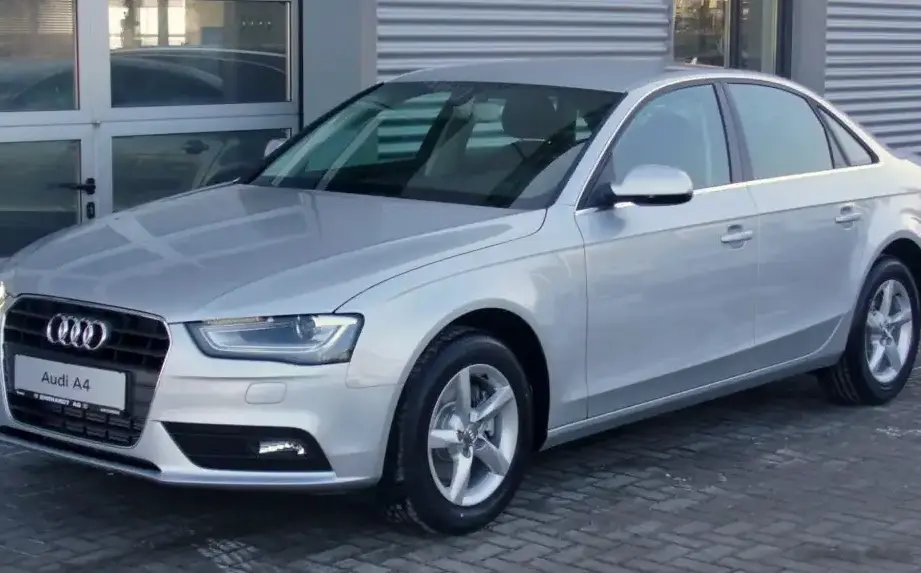
The Audi A4 (B8 8K) facelift, produced from 2011 to 2016, represented a significant mid-cycle refresh of Audi’s popular compact executive car. The 2.0 TFSI quattro variant, specifically the 220 horsepower version introduced in June 2013, occupied a sweet spot in the A4 lineup, offering a blend of performance, all-weather capability, and premium features. This model aimed at buyers seeking a more engaging driving experience than the base engine offered, without the higher price tag of the S4. It was a key offering in the North American and European markets, competing with the BMW 3 Series, Mercedes-Benz C-Class, and Lexus IS.
Technical Specifications
| Brand | Audi |
| Model | A4 |
| Generation | A4 (B8 8K, facelift 2011) |
| Type (Engine) | 2.0 TFSI (220 Hp) quattro |
| Start of production | June, 2013 |
| End of production | 2016 |
| Powertrain Architecture | Internal Combustion engine |
| Body type | Sedan |
| Seats | 5 |
| Doors | 4 |
| Fuel consumption (economy) – urban (EPA) | 10.7 l/100 km (22 US mpg, 26.4 UK mpg, 9.3 km/l) |
| Fuel consumption (economy) – extra urban (EPA) | 7.4 l/100 km (31.8 US mpg, 38.2 UK mpg, 13.5 km/l) |
| Fuel consumption (economy) – combined (EPA) | 9 l/100 km (26.1 US mpg, 31.4 UK mpg, 11.1 km/l) |
| Fuel Type | Petrol (Gasoline) |
| Acceleration 0 – 60 mph | 6.4 sec |
| Maximum speed | 210 km/h (130.49 mph), Electronically limited |
| Emission standard | ULEV II |
| Weight-to-power ratio | 7.5 kg/Hp, 133.7 Hp/tonne |
| Weight-to-torque ratio | 4.7 kg/Nm, 212.8 Nm/tonne |
| Power | 220 Hp @ 4450-6000 rpm |
| Power per litre | 110.9 Hp/l |
| Torque | 350 Nm @ 1500-4300 rpm (258.15 lb.-ft. @ 1500-4300 rpm) |
| Engine layout | Front, Longitudinal |
| Engine Model/Code | EA888 / CAED, CPMB |
| Engine displacement | 1984 cm3 (121.07 cu. in.) |
| Number of cylinders | 4 |
| Engine configuration | Inline |
| Cylinder Bore | 82.5 mm (3.25 in.) |
| Piston Stroke | 92.8 mm (3.65 in.) |
| Compression ratio | 9.6:1 |
| Number of valves per cylinder | 4 |
| Fuel injection system | Direct injection |
| Engine aspiration | Turbocharger, Intercooler |
| Valvetrain | DOHC |
| Engine oil capacity | 4.6 l (4.86 US qt | 4.05 UK qt) |
| Coolant | 10 l (10.57 US qt | 8.8 UK qt) |
| Kerb Weight | 1645-1655 kg (3626.6 – 3648.65 lbs.) |
| Trunk (boot) space – minimum | 480 l (16.95 cu. ft.) |
| Trunk (boot) space – maximum | 962 l (33.97 cu. ft.) |
| Fuel tank capacity | 61 l (16.11 US gal | 13.42 UK gal) |
| Length | 4701 mm (185.08 in.) |
| Width | 1826 mm (71.89 in.) |
| Width including mirrors | 2040 mm (80.31 in.) |
| Height | 1427 mm (56.18 in.) |
| Wheelbase | 2808 mm (110.55 in.) |
| Front track | 1564 mm (61.57 in.) |
| Rear (Back) track | 1551 mm (61.06 in.) |
| Front overhang | 862 mm (33.94 in.) |
| Rear overhang | 1031 mm (40.59 in.) |
| Drag coefficient (Cd) | 0.31 |
| Minimum turning circle (turning diameter) | 11.5 m (37.73 ft.) |
| Drivetrain Architecture | The Internal combustion engine (ICE) drives permanently the four wheels of the vehicle. |
| Drive wheel | All wheel drive (4×4) |
| Number of gears and type of gearbox | 6 gears, manual transmission |
| Front suspension | Coil spring, Independent multi-link suspension, Transverse stabilizer |
| Rear suspension | Independent on trapezoidal lever, Transverse stabilizer |
| Front brakes | Ventilated discs, 320 mm |
| Rear brakes | Disc, 300 mm |
| Assisting systems | ABS (Anti-lock braking system) |
| Steering type | Steering rack and pinion |
| Power steering | Electric Steering |
| Tires size | 245/45 R17; 245/40 R18; 255/35 R19 |
| Wheel rims size | 8J x 17; 8J x 18; 8.5J x 19 |
INTRODUCTION
The Audi A4 B8.5 2.0 TFSI quattro, launched in 2013, built upon the success of the B8 generation, offering a refined and technologically advanced compact executive sedan. Positioned as a mid-range offering, it slotted between the entry-level 1.8 TFSI and the performance-oriented S4. The “8K” designation refers to the internal platform code, while “B8.5” denotes the facelifted version, which featured revised styling, updated technology, and improved efficiency. The quattro all-wheel-drive system was a key selling point, particularly in regions with inclement weather, providing enhanced traction and stability.
Powertrain & Engine Architecture
At the heart of the A4 2.0 TFSI quattro lies the EA888 engine, specifically the CAED or CPMB code variants. This 1984cc, turbocharged, direct-injection four-cylinder engine is a cornerstone of the Volkswagen Group’s powertrain strategy. The engine utilizes a sophisticated direct injection system, delivering fuel directly into the combustion chamber for improved efficiency and power. The turbocharger, coupled with an intercooler, provides a significant boost in power output. The engine features a dual overhead camshaft (DOHC) valvetrain with four valves per cylinder, optimizing airflow for enhanced performance. The 220 horsepower and 350 Nm (258 lb-ft) of torque are delivered across a broad rev range, making it a flexible and responsive engine. The engine is longitudinally mounted, driving all four wheels through Audi’s renowned quattro system. The 6-speed manual transmission was standard, offering precise gear changes and driver engagement.
Driving Characteristics
The 2.0 TFSI quattro offered a noticeably more spirited driving experience compared to the base 1.8 TFSI model. The increased power and torque, combined with the quattro all-wheel-drive system, resulted in quicker acceleration and improved handling. The 0-60 mph sprint took approximately 6.4 seconds, making it competitive within its class. The quattro system distributed power between the front and rear axles as needed, providing excellent traction in various conditions. While not as raw or engaging as a rear-wheel-drive sports sedan, the A4 2.0 TFSI quattro offered a balanced and confident driving experience. The manual transmission provided a direct connection to the engine, allowing for precise control, while the gear ratios were well-matched to the engine’s powerband.
Equipment & Trim Levels
The A4 2.0 TFSI quattro typically came well-equipped, even in base form. Standard features included leather upholstery, tri-zone automatic climate control, a multi-function steering wheel, and Audi’s MMI infotainment system with a central display screen. Optional extras included navigation, a premium sound system (Bang & Olufsen), parking sensors, and advanced driver-assistance systems such as adaptive cruise control and blind-spot monitoring. Trim levels varied by market, but generally offered progressively more luxurious features and styling enhancements. Sport packages often included upgraded suspension, sport seats, and exterior styling cues.
Chassis & Braking
The A4 B8.5 featured a sophisticated chassis design, with a fully independent suspension system. The front suspension utilized a multi-link setup, while the rear employed a trapezoidal link design. Both ends were equipped with transverse stabilizer bars to reduce body roll. Braking duties were handled by ventilated discs at the front and solid discs at the rear. The anti-lock braking system (ABS) was standard, along with electronic brake-force distribution (EBD). The chassis was tuned to provide a comfortable ride while maintaining responsive handling. The quattro all-wheel-drive system added to the car’s stability and cornering ability.
Market Reception & Comparison
The Audi A4 2.0 TFSI quattro was generally well-received by automotive critics. It was praised for its refined interior, comfortable ride, and strong performance. The quattro all-wheel-drive system was a significant selling point, particularly in regions with harsh winters. Compared to the 1.8 TFSI model, the 2.0 TFSI offered a noticeable improvement in performance, justifying the higher price. Fuel economy was respectable, averaging around 26 mpg in combined driving. Reliability was generally good, although some owners reported issues with the turbocharger and direct injection system. Compared to its rivals, the BMW 3 Series was often considered more engaging to drive, while the Mercedes-Benz C-Class offered a more luxurious interior.
Legacy
The Audi A4 B8.5 2.0 TFSI quattro remains a popular choice in the used car market. Its combination of performance, luxury, and all-weather capability makes it a versatile and appealing option. The EA888 engine, while not without its potential issues, is generally considered robust and reliable when properly maintained. Regular oil changes and timely servicing are crucial to ensure the longevity of the engine and turbocharger. The quattro system continues to be a highly sought-after feature, adding to the car’s desirability. The B8.5 generation A4 represents a sweet spot in terms of value and features, offering a modern and refined driving experience at a reasonable price point.