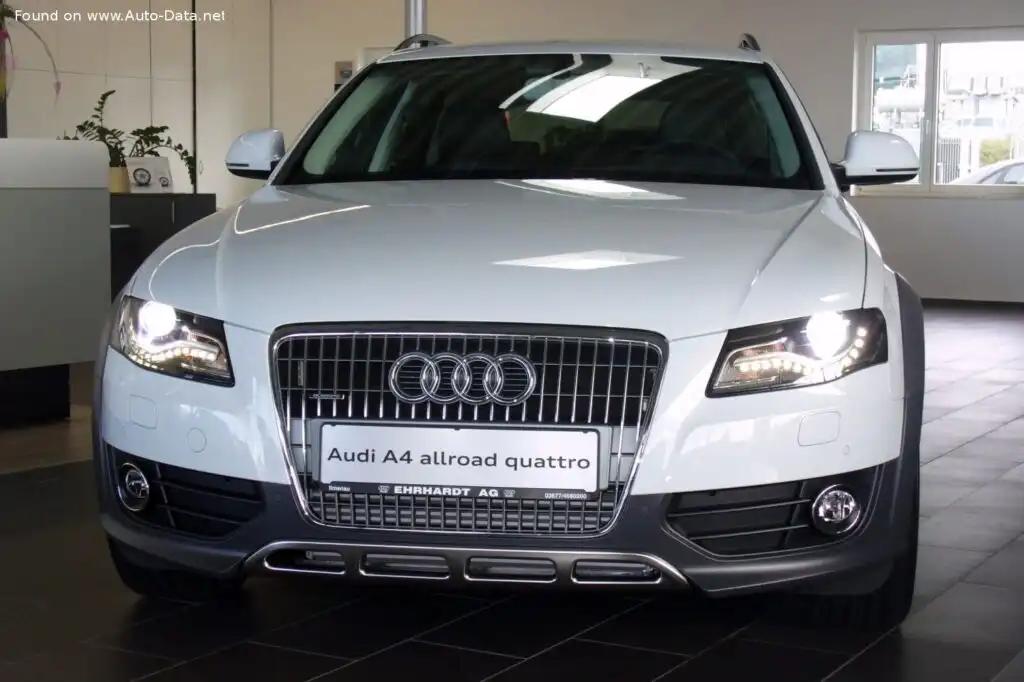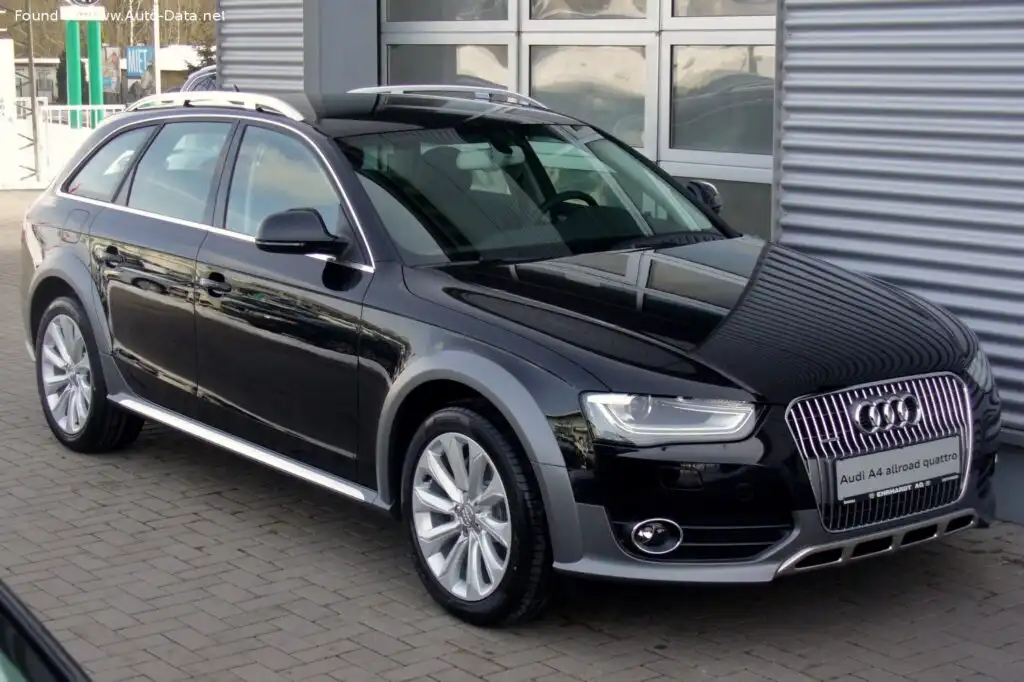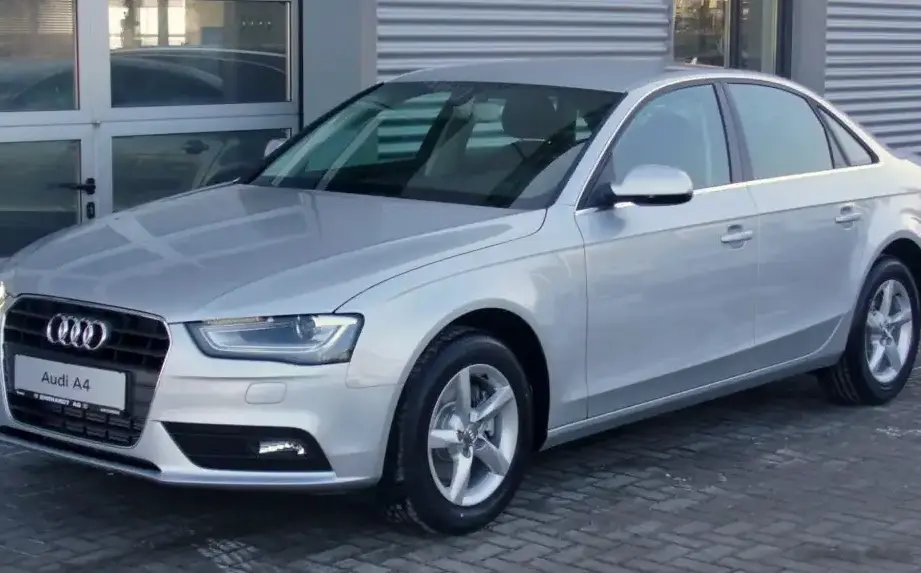
The Audi A4 (B8 8K) facelift, produced from 2011 to 2016, represented a significant mid-cycle refresh of Audi’s popular compact executive car. The 2.0 TFSI quattro Tiptronic variant, introduced in June 2013, occupied a strong position within the lineup, offering a blend of performance, all-weather capability, and convenience. This model aimed at buyers seeking a refined driving experience without sacrificing practicality or advanced technology. It sat above the base 1.8 TFSI models and below the performance-oriented S4, offering a compelling alternative for those prioritizing a balance of attributes. The B8.5 facelift brought revised styling, updated technology, and improvements to the engine range, solidifying the A4’s position as a benchmark in its class.
Technical Specifications
| Brand | Audi |
| Model | A4 |
| Generation | A4 (B8 8K, facelift 2011) |
| Type (Engine) | 2.0 TFSI (220 Hp) quattro Tiptronic |
| Start of production | June, 2013 |
| End of production | 2016 |
| Powertrain Architecture | Internal Combustion engine |
| Body type | Sedan |
| Seats | 5 |
| Doors | 4 |
| Fuel consumption (economy) – urban (EPA) | 10.7 l/100 km (22 US mpg, 26.4 UK mpg, 9.3 km/l) |
| Fuel consumption (economy) – extra urban (EPA) | 7.6 l/100 km (30.9 US mpg, 37.2 UK mpg, 13.2 km/l) |
| Fuel consumption (economy) – combined (EPA) | 9.4 l/100 km (25 US mpg, 30.1 UK mpg, 10.6 km/l) |
| Fuel Type | Petrol (Gasoline) |
| Acceleration 0 – 60 mph | 6.2 sec |
| Maximum speed | 210 km/h (130.49 mph), Electronically limited |
| Emission standard | ULEV II |
| Weight-to-power ratio | 7.6 kg/Hp, 131.3 Hp/tonne |
| Weight-to-torque ratio | 4.8 kg/Nm, 209 Nm/tonne |
| Power | 220 Hp @ 4450-6000 rpm |
| Power per litre | 110.9 Hp/l |
| Torque | 350 Nm @ 1500-4300 rpm (258.15 lb.-ft. @ 1500-4300 rpm) |
| Engine layout | Front, Longitudinal |
| Engine Model/Code | EA888 / CAED, CPMB |
| Engine displacement | 1984 cm3 (121.07 cu. in.) |
| Number of cylinders | 4 |
| Engine configuration | Inline |
| Cylinder Bore | 82.5 mm (3.25 in.) |
| Piston Stroke | 92.8 mm (3.65 in.) |
| Compression ratio | 9.6:1 |
| Number of valves per cylinder | 4 |
| Fuel injection system | Direct injection |
| Engine aspiration | Turbocharger, Intercooler |
| Valvetrain | DOHC |
| Engine oil capacity | 4.6 l (4.86 US qt | 4.05 UK qt) |
| Coolant | 10 l (10.57 US qt | 8.8 UK qt) |
| Kerb Weight | 1675 kg (3692.74 lbs.) |
| Trunk (boot) space – minimum | 480 l (16.95 cu. ft.) |
| Trunk (boot) space – maximum | 962 l (33.97 cu. ft.) |
| Fuel tank capacity | 61 l (16.11 US gal | 13.42 UK gal) |
| Length | 4701 mm (185.08 in.) |
| Width | 1826 mm (71.89 in.) |
| Width including mirrors | 2040 mm (80.31 in.) |
| Height | 1427 mm (56.18 in.) |
| Wheelbase | 2808 mm (110.55 in.) |
| Front track | 1564 mm (61.57 in.) |
| Rear (Back) track | 1551 mm (61.06 in.) |
| Front overhang | 862 mm (33.94 in.) |
| Rear overhang | 1031 mm (40.59 in.) |
| Drag coefficient (Cd) | 0.31 |
| Minimum turning circle (turning diameter) | 11.5 m (37.73 ft.) |
| Drivetrain Architecture | The Internal combustion engine (ICE) drives permanently the four wheels of the vehicle. |
| Drive wheel | All wheel drive (4×4) |
| Number of gears and type of gearbox | 8 gears, automatic transmission Tiptronic |
| Front suspension | Coil spring, Independent multi-link suspension, Transverse stabilizer |
| Rear suspension | Independent on trapezoidal lever, Transverse stabilizer |
| Front brakes | Ventilated discs, 320 mm |
| Rear brakes | Disc, 300 mm |
| Assisting systems | ABS (Anti-lock braking system) |
| Steering type | Steering rack and pinion |
| Power steering | Electric Steering |
| Tires size | 245/45 R17; 245/40 R18; 255/35 R19 |
| Wheel rims size | 8J x 17; 8J x 18; 8.5J x 19 |
INTRODUCTION
The Audi A4 B8.5 2.0 TFSI quattro Tiptronic, launched in 2013, was a key variant in Audi’s successful A4 range. Built on the Volkswagen Group’s versatile 8K platform (also underpinning the VW Passat and Skoda Superb), the B8.5 facelift brought a more aggressive front-end design, revised interior trim, and updated engine technology. This particular model combined a 2.0-liter turbocharged four-cylinder engine with Audi’s renowned quattro all-wheel-drive system and an eight-speed Tiptronic automatic transmission. It was positioned as a premium offering, appealing to buyers who desired a comfortable, capable, and technologically advanced sedan. The facelift aimed to address some criticisms of the pre-facelift B8 model, particularly regarding interior design and infotainment systems.
Powertrain & Engine Architecture
At the heart of the A4 2.0 TFSI quattro Tiptronic lies the EA888 engine, specifically the CAED or CPMB code depending on the market. This 1984cc inline-four engine utilizes direct fuel injection (FSI) and a single turbocharger with an intercooler to deliver 220 horsepower and 350 Nm (258 lb-ft) of torque. The engine features a dual overhead camshaft (DOHC) valvetrain with four valves per cylinder. The eight-speed Tiptronic automatic transmission, a ZF-sourced unit, provides smooth and responsive gear changes. ‘Tiptronic’ allows for manual gear selection alongside the automatic mode. This transmission was chosen for its efficiency and ability to handle the engine’s torque output effectively. The quattro all-wheel-drive system employs a Torsen center differential, distributing power between the front and rear axles as needed, enhancing traction and stability in various driving conditions.
Driving Characteristics
The 2.0 TFSI quattro Tiptronic offered a refined and capable driving experience. While not as overtly sporty as some of its rivals, the combination of 220 hp and the eight-speed transmission provided brisk acceleration – 0-60 mph in around 6.2 seconds. The Tiptronic transmission, while smooth, could feel slightly less engaging than a manual gearbox, but it offered convenience, especially in urban traffic. The quattro system provided excellent grip and stability, particularly in inclement weather. The gear ratios were tuned for a balance of performance and fuel efficiency, with taller gearing in higher gears for relaxed highway cruising. Compared to the 1.8 TFSI models, the 2.0 TFSI offered noticeably more power and torque, resulting in stronger acceleration and more confident overtaking. It wasn’t as raw or focused as the S4, but provided a more than adequate level of performance for most drivers.
Equipment & Trim Levels
The A4 2.0 TFSI quattro Tiptronic typically came well-equipped as standard. Features included leather upholstery, tri-zone automatic climate control, a multi-function steering wheel, and Audi’s MMI infotainment system with a central display screen. Optional extras included navigation, a premium sound system (Bang & Olufsen), parking sensors, and advanced driver-assistance systems like adaptive cruise control and blind-spot monitoring. Interior trim levels varied, with options for different wood or aluminum inlays. The standard seats provided good support and comfort, with optional sport seats available for a more bolstered feel.
Chassis & Braking
The A4 B8.5 featured a sophisticated chassis design. The front suspension utilized a multi-link setup with coil springs and a transverse stabilizer bar, while the rear suspension employed an independent trapezoidal link design, also with coil springs and a stabilizer bar. This configuration provided a good balance of ride comfort and handling precision. Braking duties were handled by ventilated discs at the front and solid discs at the rear. ABS (Anti-lock Braking System) was standard, along with electronic brake-force distribution and brake assist. The quattro system contributed to enhanced braking stability, particularly on slippery surfaces.
Market Reception & Comparison
The Audi A4 2.0 TFSI quattro Tiptronic was generally well-received by automotive critics. It was praised for its refined interior, comfortable ride, and capable all-wheel-drive system. Fuel economy was considered reasonable for its class, averaging around 25 mpg combined. Compared to rivals like the BMW 328i and Mercedes-Benz C250, the A4 offered a more technologically advanced interior and a more understated, sophisticated design. Some critics noted that the steering lacked a bit of feel, and the Tiptronic transmission wasn’t as engaging as a manual. However, the overall package was considered highly competitive.
Legacy
The EA888 2.0 TFSI engine, in various iterations, has proven to be a relatively reliable powertrain, although early versions were prone to carbon buildup on the intake valves. Regular oil changes and the use of quality fuel are crucial for long-term reliability. The Tiptronic transmission is also generally durable, but requires proper maintenance. Today, the B8.5 A4 2.0 TFSI quattro Tiptronic represents a good value on the used car market, offering a blend of luxury, performance, and all-weather capability. Well-maintained examples continue to provide a comfortable and enjoyable driving experience, and parts availability remains good. It remains a popular choice for those seeking a premium compact executive car that offers a balance of practicality and refinement.